
The S&P 500 is often referred to as the “pulse of the American economy.” Comprising 500 of the largest, most successful publicly traded companies in the United States, it represents approximately 80% of the total value of the U.S. stock market. For many investors—from beginners to seasoned professionals like Warren Buffett—buying the S&P 500 is considered the gold standard for long-term wealth creation. However, you cannot “buy” the index itself, as it is a mathematical calculation. Instead, you must invest in financial products that track it.
This guide will navigate the complexities of the S&P 500, providing a clear roadmap on how to incorporate this powerhouse index into your personal financial portfolio.
1. Understanding the S&P 500 Index
Before putting your hard-earned money into the market, it is essential to understand exactly what you are purchasing. The Standard & Poor’s 500 is a market-capitalization-weighted index. This means that larger companies, such as Apple, Microsoft, and Amazon, have a greater impact on the index’s performance than smaller members.
What is the S&P 500?
The S&P 500 is a diversified basket of stocks across 11 different sectors, including technology, healthcare, financials, and consumer discretionary. To be included, a company must meet strict criteria regarding liquidity, market cap (currently at least $15.8 billion), and profitability. Because the index is “rebalanced” periodically, underperforming companies are removed and replaced by rising stars, ensuring the index always represents the strongest tier of the U.S. corporate landscape.
Why Invest in the S&P 500?
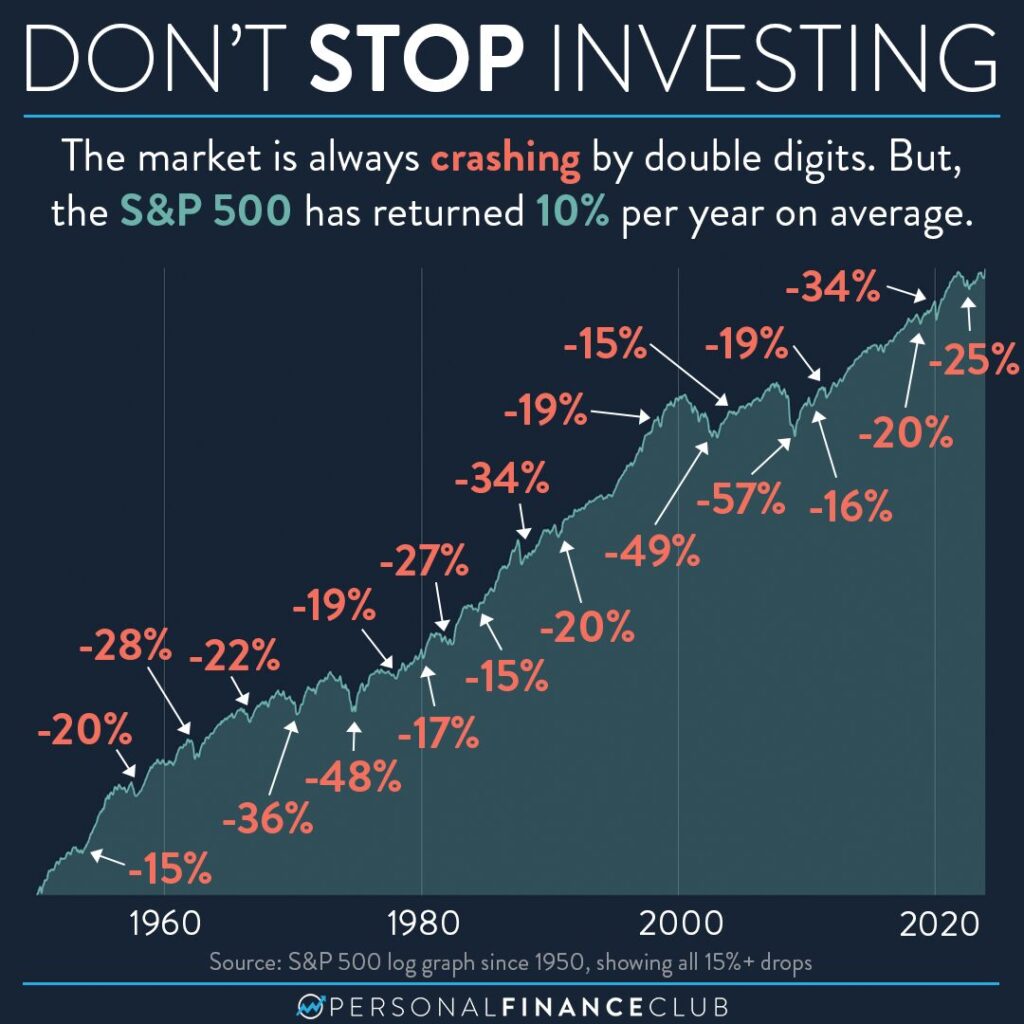
The primary allure of the S&P 500 is its historical performance and simplicity. Over the last several decades, the index has provided an average annual return of approximately 10% before inflation. While the market fluctuates year to year, the long-term trajectory has been consistently upward. By “buying the market,” you eliminate the “single-stock risk”—the danger that one company’s bankruptcy will ruin your portfolio. Instead, you are betting on the collective ingenuity and growth of the entire American corporate sector.
2. Choosing Your Investment Vehicle: ETFs vs. Mutual Funds
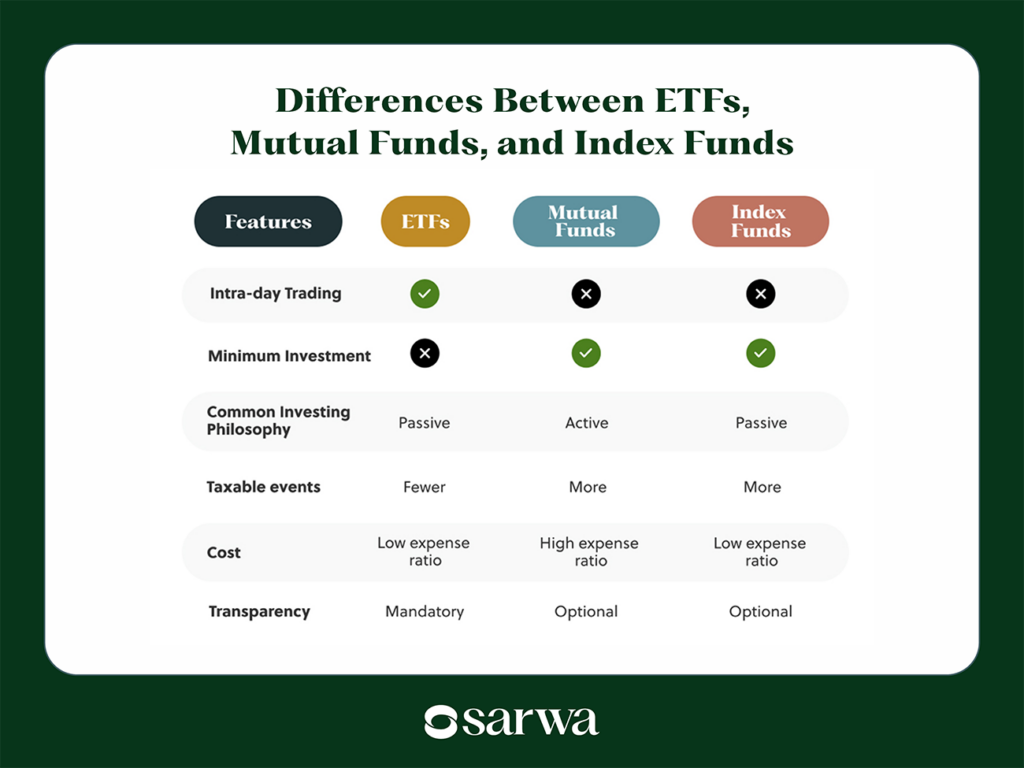
Since the S&P 500 is an index, you must choose a “passive” investment vehicle designed to mimic its movements. The two most common ways to do this are through Exchange-Traded Funds (ETFs) and Index Mutual Funds.
Exchange-Traded Funds (ETFs)
ETFs are the most popular choice for modern investors. They trade like individual stocks on an exchange, meaning their price fluctuates throughout the trading day, and you can buy or sell them at any time while the market is open.
- Liquidity: ETFs offer high liquidity.
- Low Cost: Many S&P 500 ETFs have extremely low expense ratios (the annual fee the fund charges).
- Notable Tickers: The most famous S&P 500 ETFs include the SPDR S&P 500 ETF Trust (SPY), the iShares Core S&P 500 ETF (IVV), and the Vanguard S&P 500 ETF (VOO).
Index Mutual Funds
Index mutual funds are similar to ETFs in that they hold the same 500 stocks, but they are priced only once per day at the end of the trading session.
- Automation: Mutual funds are often easier to automate for recurring investments (e.g., investing $500 every month).
- Minimums: Some mutual funds require a minimum initial investment (e.g., $3,000), whereas you can often buy a single share of an ETF.
- Notable Funds: The Fidelity 500 Index Fund (FXAIX) and the Vanguard 500 Index Fund Admiral Shares (VFIAX) are industry leaders.
Comparing Expense Ratios and Fees
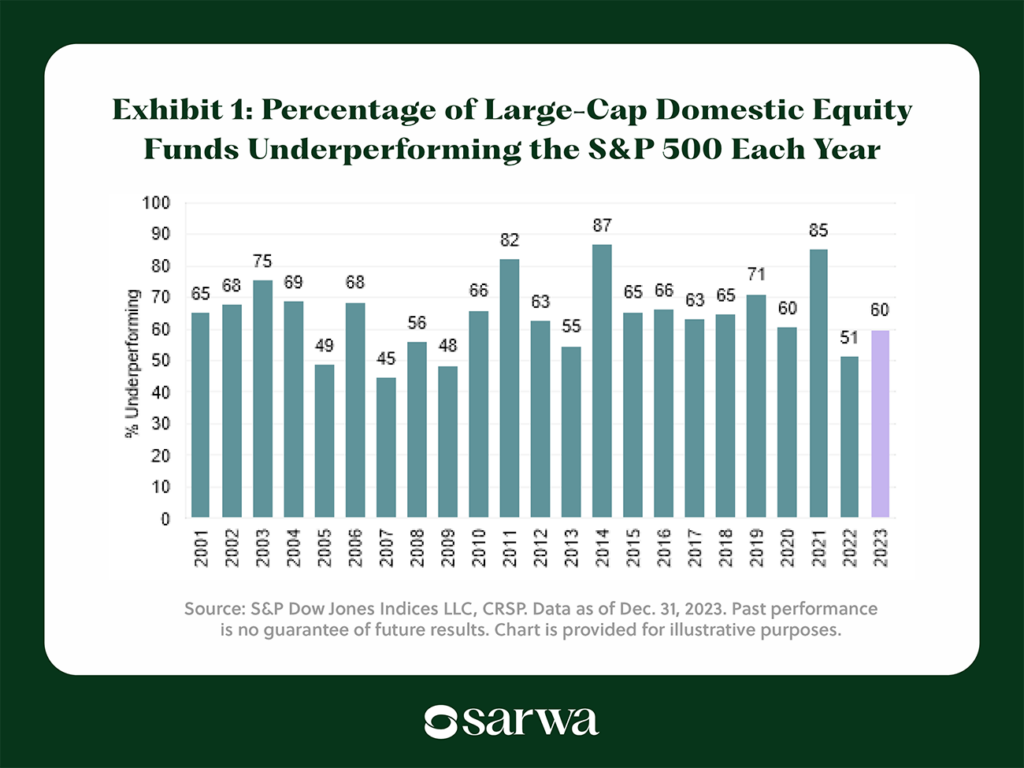
In the world of S&P 500 investing, the products are largely identical. Therefore, the most significant factor in your long-term success is the “expense ratio.” A fund with a 0.03% fee will save you tens of thousands of dollars over thirty years compared to a fund with a 0.50% fee. When choosing your fund, always look for the lowest possible cost, as higher fees rarely translate to better performance in passive index tracking.
3. Step-by-Step Guide to Buying the S&P 500
Once you have decided between an ETF and a mutual fund, the actual process of buying is straightforward. Following these steps will help you move from a saver to an investor.
Step 1: Open a Brokerage Account
To buy an index fund, you need an account with a brokerage firm. Modern platforms have eliminated trading commissions, making it cheaper than ever to start. Popular choices include:
- Discount/Online Brokers: Vanguard, Fidelity, Charles Schwab, and E*TRADE.
- App-Based Brokers: Robinhood or Acorns (often preferred by younger investors for their user-friendly interfaces).
You will need to provide your Social Security number and link a bank account to fund the brokerage.
Step 2: Decide on the Account Type
You can hold S&P 500 funds in different types of accounts, which have different tax implications:
- Individual Brokerage Account: Standard account with no contribution limits; you pay taxes on capital gains and dividends.
- Roth IRA or Traditional IRA: Retirement accounts that offer significant tax advantages but have limits on when you can withdraw the money.
- 401(k): If your employer offers a retirement plan, check if an S&P 500 index fund is one of the available options.
Step 3: Search for the Ticker Symbol and Place an Order
After funding your account, use the search bar to find your chosen ticker (e.g., VOO or SPY).
- Market Order: Buy the shares immediately at the current market price.
- Limit Order: Specify the maximum price you are willing to pay.
If you are investing for the long term, a simple market order for the number of shares you can afford is usually the most efficient route.
4. Strategies for Long-Term Success
Buying the S&P 500 is not a “get rich quick” scheme; it is a “get rich slowly” strategy. To maximize your returns, you should employ specific investment behaviors.
Dollar-Cost Averaging (DCA)
The market is volatile. If you invest a large lump sum right before a market dip, it can be psychologically taxing. Dollar-cost averaging involves investing a fixed amount of money at regular intervals (e.g., $200 every payday), regardless of whether the market is up or down. This strategy ensures you buy more shares when prices are low and fewer when prices are high, lowering your average cost per share over time.
Dividend Reinvestment (DRIP)
Most companies in the S&P 500 pay dividends—a portion of their profits distributed to shareholders. While you can take this as cash, the most powerful way to grow your wealth is through a Dividend Reinvestment Plan (DRIP). By automatically using dividends to buy more shares of the index fund, you trigger the power of compound interest, which can significantly accelerate your portfolio’s growth over decades.
Maintaining a Long-Term Perspective
The S&P 500 can experience significant “drawdowns” or bear markets, where the value drops by 20% or more. The key to success is staying the course. Historically, the index has recovered from every single recession and market crash. Investors who panic-sell during a downturn lock in their losses, while those who continue to hold (or even buy more) benefit from the eventual recovery.
5. Risks and Considerations
While the S&P 500 is a relatively safe way to invest in stocks, it is not without risk. A responsible financial plan acknowledges these variables.
Market Volatility and Concentration Risk
Because the S&P 500 is 100% equities, it is subject to market volatility. Furthermore, because it is market-cap weighted, the index has become increasingly concentrated in “Big Tech.” If the technology sector faces a major regulatory or economic hurdle, the entire index may suffer, even if other sectors like energy or utilities are performing well.
Diversification Beyond the S&P 500
While the S&P 500 provides excellent diversification within the U.S. large-cap market, it does not include small-cap companies or international stocks. Many financial advisors recommend pairing an S&P 500 fund with an international index fund and a bond fund to create a more balanced portfolio that can withstand various global economic climates.
Tax Implications
Whenever you sell your S&P 500 fund for a profit in a standard brokerage account, you will owe capital gains taxes. Holding a fund for more than a year qualifies you for “long-term capital gains” rates, which are significantly lower than standard income tax rates. Understanding these rules can help you keep more of what you earn.
In conclusion, buying the S&P 500 is one of the most effective ways to build wealth in the modern era. By choosing low-cost funds, utilizing a brokerage account, and committing to a long-term strategy of consistent investing and dividend reinvestment, you are positioning yourself to benefit from the growth of the world’s most powerful economy. Whether you start with $50 or $50,000, the best time to start tracking the S&P 500 is as soon as your financial foundation allows.
aViewFromTheCave is a participant in the Amazon Services LLC Associates Program, an affiliate advertising program designed to provide a means for sites to earn advertising fees by advertising and linking to Amazon.com. Amazon, the Amazon logo, AmazonSupply, and the AmazonSupply logo are trademarks of Amazon.com, Inc. or its affiliates. As an Amazon Associate we earn affiliate commissions from qualifying purchases.