
The rapid ascent of artificial intelligence (AI) has transformed the financial landscape, creating a new generation of market leaders. Among these, Super Micro Computer, Inc. (SMCI) has emerged as a cornerstone of the modern data center. As a primary provider of high-performance server and storage solutions, SMCI has transitioned from a specialized hardware manufacturer to a high-growth darling of the S&P 500. For investors looking to capitalize on the infrastructure layer of the AI revolution, understanding how to navigate the acquisition of SMCI shares is essential.

Investing in a high-growth technology stock requires more than just a brokerage account; it demands a strategic approach to entry points, an understanding of the company’s fundamental value drivers, and a clear-eyed assessment of the risks associated with the volatile semiconductor and server markets. This guide provides a step-by-step roadmap for adding SMCI to your investment portfolio.
Selecting a Brokerage and Establishing Your Position
Before you can purchase shares of Super Micro Computer, Inc., you must have a functional gateway to the Nasdaq Stock Market, where SMCI is listed. The choice of brokerage will depend on your specific needs as an investor, ranging from low-cost execution to institutional-grade research tools.
Evaluating Trading Platforms
For most individual investors, modern digital brokerages offer the most efficient path to ownership. When selecting a platform for buying SMCI, consider the following factors:
-
Commission Structure: Most major U.S. brokerages, such as Charles Schwab, Fidelity, and Vanguard, offer zero-commission trading for domestic stocks. This is vital for maintaining your cost basis, especially if you plan to build your position through multiple small trades.
-
Fractional Shares: Given that SMCI’s stock price can reach significant heights, check if your broker supports fractional share investing. This allows you to invest a specific dollar amount (e.g., $500) rather than being forced to buy one full share, which may exceed your desired allocation.
-
Research and Analytics: Because SMCI is a complex company operating in the technical hardware space, platforms that provide deep-dive analyst reports, earnings call transcripts, and real-time data are preferable.
Opening and Funding Your Account
Once you have selected a brokerage, the process of opening an account typically takes less than ten minutes. You will need to provide standard identification, including your Social Security number and employment information, to comply with “Know Your Customer” (KYC) regulations.
After the account is approved, the next step is funding. Most investors use Electronic Funds Transfer (EFT) to link a bank account. Note that while some brokers provide “instant buying power,” others may require three to five business days for funds to clear before you can execute a trade on a high-volatility stock like SMCI.
Executing the Trade: Market vs. Limit Orders
Purchasing shares of a company like Super Micro Computer requires a tactical understanding of order types. SMCI is known for its high beta, meaning it often experiences wider price swings than the broader market. How you enter the trade can significantly impact your initial return on investment.
Utilizing Limit Orders for Precision
In a volatile market environment, a “Market Order” can be risky. A market order instructs the broker to buy the stock immediately at the best available current price. If the stock price jumps in the seconds it takes to process the trade, you might pay significantly more than you intended.
To protect yourself, it is often wiser to use a “Limit Order.” This allows you to set a maximum price you are willing to pay. If the stock is trading at $850, you might set a limit order for $845. The trade will only execute if the price hits your target. This provides price certainty, though it carries the risk that your order may not be filled if the stock price continues to rise.
The Role of Dollar-Cost Averaging
Given the vertical price movements often seen in the AI sector, many financial advisors recommend Dollar-Cost Averaging (DCA). Instead of deploying your entire capital allocation into SMCI at once, you divide your total investment into smaller amounts and buy at regular intervals (e.g., once a month).
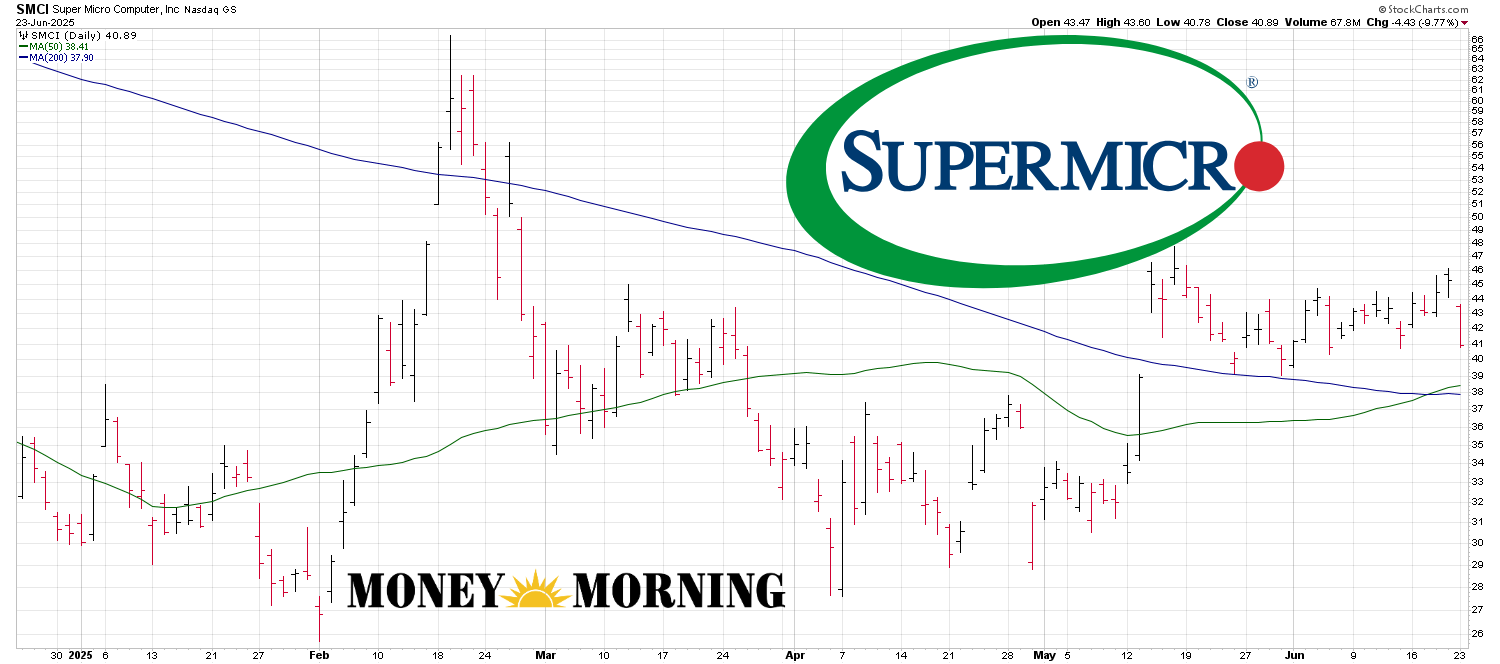
This strategy mitigates the risk of “timing the market” poorly. If you invest $10,000 all at once and the stock drops 15% the following week, your entire position is immediately underwater. By scaling in, you lower your average cost per share during market dips, smoothing out the volatility inherent in tech investing.
Analyzing SMCI’s Financial Fundamentals
To invest with confidence, you must understand what drives SMCI’s valuation. Super Micro is not a software company; it is a hardware integrator that excels in “Building Block Solutions.” They provide the chassis, cooling systems, and motherboards that house the powerful GPUs (Graphics Processing Units) produced by companies like NVIDIA.
The AI Catalyst and Revenue Trajectory
The primary driver for SMCI’s recent exponential growth is the global demand for generative AI. AI models require massive computational power, which translates to high-density server racks. SMCI has a competitive advantage in “time-to-market.” Because of their modular design philosophy, they can often bring new server configurations to market faster than traditional competitors like Dell or Hewlett Packard Enterprise.
When reviewing SMCI’s quarterly earnings, investors should pay close attention to revenue growth and backlogs. A growing backlog suggests that demand is outstripping supply—a bullish indicator for future earnings. However, investors must also monitor the cost of goods sold (COGS), as high components costs can squeeze profit margins.
Strategic Partnerships and the NVIDIA Connection
SMCI’s fate is closely tied to the semiconductor cycle. They maintain a “first-to-market” partnership with NVIDIA, ensuring they receive the latest H100 and B200 chips as soon as they are available. As an investor, you must monitor the health of these partnerships. Any supply chain disruptions at the chip foundry level will directly impact SMCI’s ability to deliver finished servers to their customers, which include major cloud service providers and enterprise data centers.
Managing Risks and Portfolio Diversification
No investment is without risk, and SMCI occupies a particularly high-risk, high-reward segment of the market. Its valuation is often tied to future expectations rather than current cash flows, which can lead to dramatic corrections if those expectations are not met.
Sensitivity to Interest Rates and Capital Expenditures
As a capital-intensive business, SMCI is sensitive to interest rate fluctuations. High rates make it more expensive for their customers—the data center operators—to finance large-scale hardware upgrades. Furthermore, SMCI itself requires significant capital to maintain its manufacturing facilities and inventory.
Investors should also consider the “cyclicality” of the hardware industry. While the current AI boom feels permanent, hardware spending historically moves in cycles. There may be periods where data centers have over-provisioned their capacity, leading to a “digestion period” where new orders slow down.
Competitive Pressures and Margin Compression
While SMCI currently enjoys a leadership position in liquid-cooled AI racks, they are not alone. Legacy giants are pivoting their resources toward AI-optimized hardware. As competition increases, SMCI may face “margin compression,” where they are forced to lower prices to maintain market share. Keeping an eye on the company’s gross margins is a critical way to track whether they still possess a “moat” or if their product is becoming a commodity.

Conclusion: Integrating SMCI into a Long-Term Strategy
Buying SMCI stock is a bet on the continued expansion of the world’s digital infrastructure. To do it successfully, you must move beyond the hype and treat the purchase as a professional financial decision. This involves choosing a robust brokerage, utilizing smart order types like limit orders to manage entry prices, and maintaining a rigorous schedule of fundamental analysis.
For most personal finance portfolios, SMCI serves best as a growth-oriented satellite holding rather than a core pillar. Its volatility makes it a challenging “all-in” candidate, but its unique position at the heart of the AI hardware ecosystem makes it an attractive option for those seeking exposure to the backbone of the next industrial revolution. By following a disciplined acquisition strategy and staying informed on the macroeconomic factors affecting the tech sector, you can position yourself to benefit from the ongoing transformation of global computing power.
aViewFromTheCave is a participant in the Amazon Services LLC Associates Program, an affiliate advertising program designed to provide a means for sites to earn advertising fees by advertising and linking to Amazon.com. Amazon, the Amazon logo, AmazonSupply, and the AmazonSupply logo are trademarks of Amazon.com, Inc. or its affiliates. As an Amazon Associate we earn affiliate commissions from qualifying purchases.