
In the realm of personal finance, travel is often categorized as a discretionary expense that can quickly erode a well-structured savings plan. However, for the astute financial planner, airfare should not be viewed as a fixed cost, but rather as a volatile commodity that can be traded, optimized, and leveraged. Learning how to buy cheap air tickets is less about “travel hacks” and more about understanding market dynamics, currency arbitrage, and the strategic deployment of financial instruments. To the disciplined investor of time and capital, the difference between a $1,200 economy seat and a $400 equivalent is a direct contribution to one’s net worth or a significant increase in the purchasing power of their leisure budget.

Decoding the Financial Matrix of Airline Pricing
Airline tickets are among the most complex financial products the average consumer will ever purchase. Unlike a retail good with a stable price tag, an airplane seat is a perishable asset subject to real-time dynamic pricing. To secure the lowest possible fare, one must understand the underlying economic principles that drive these fluctuations.
The Perishability of Inventory and Dynamic Yield Management
Airlines utilize sophisticated algorithms known as Yield Management Systems. From a financial perspective, once a plane takes off, any empty seat represents a total loss of potential revenue—the asset has expired. To mitigate this risk, airlines constantly adjust prices based on historical data, remaining inventory, and competitor pricing.
The strategy for the buyer is to identify the “inflection point” where the airline is most desperate to fill seats without cannibalizing its premium revenue. This typically occurs in a window that balances early-bird incentives with last-minute desperation. For domestic travel, this liquidity window usually opens 1 to 3 months before departure; for international routes, the timeline shifts to 2 to 8 months. Engaging with the market outside of these windows often results in paying a “convenience premium” or a “procrastination penalty.”
The Psychology of Fare Classes and Unbundling
Modern airlines have adopted a “Basic Economy” model, which is essentially a price-discrimination strategy. By unbundling services—charging separately for bags, seat selection, and boarding priority—airlines can advertise a lower “headline price” to capture price-sensitive consumers while maintaining high margins on add-ons.
As a financial strategist, you must calculate the “All-In Cost” before committing capital. A $300 ticket on a budget carrier might eventually cost $500 after fees, whereas a $450 “legacy” carrier ticket might include those amenities. Professional travel budgeting requires a spreadsheet approach to compare the Net Effective Cost rather than the advertised rate.
Maximizing ROI through Credit Card Points and Travel Arbitrage
For those focused on maximizing their financial ecosystem, the most effective way to “buy” cheap tickets is to not use cash at all. Travel hacking is the practice of treating credit card rewards as a secondary currency, often with a higher internal rate of return (IRR) than traditional investments when redeemed correctly.
The Points Economy and Transferable Currencies
Not all points are created equal. Fixed-value points (where 10,000 points always equals $100) offer a stable but low return. To achieve true financial efficiency, one must focus on “transferable currencies” issued by major financial institutions. These points can be moved to airline loyalty programs, where the value per point (VPP) can skyrocket.
For example, a business class ticket to Europe might cost $4,000 or 60,000 points. If you earned those points through a sign-up bonus or everyday spending, you are effectively achieving a valuation of 6.6 cents per point—a massive return on spend compared to a standard 1.5% cash-back card. Understanding the “Redemption Value” is the hallmark of a savvy financial mind.
Strategic Sign-Up Bonuses and Spend Optimization
Acquiring airfare at a deep discount often starts months in advance with the strategic acquisition of financial products. By timing the opening of new credit lines with large planned expenditures (such as home renovations or tuition payments), consumers can trigger large “Sign-Up Bonuses” (SUBs). These bonuses often provide enough “capital” to cover international flights for a fraction of the retail cost, reducing the out-of-pocket travel expense to near zero, save for taxes and fees.
Tactical Execution: Currency Optimization and Geographic Arbitrage
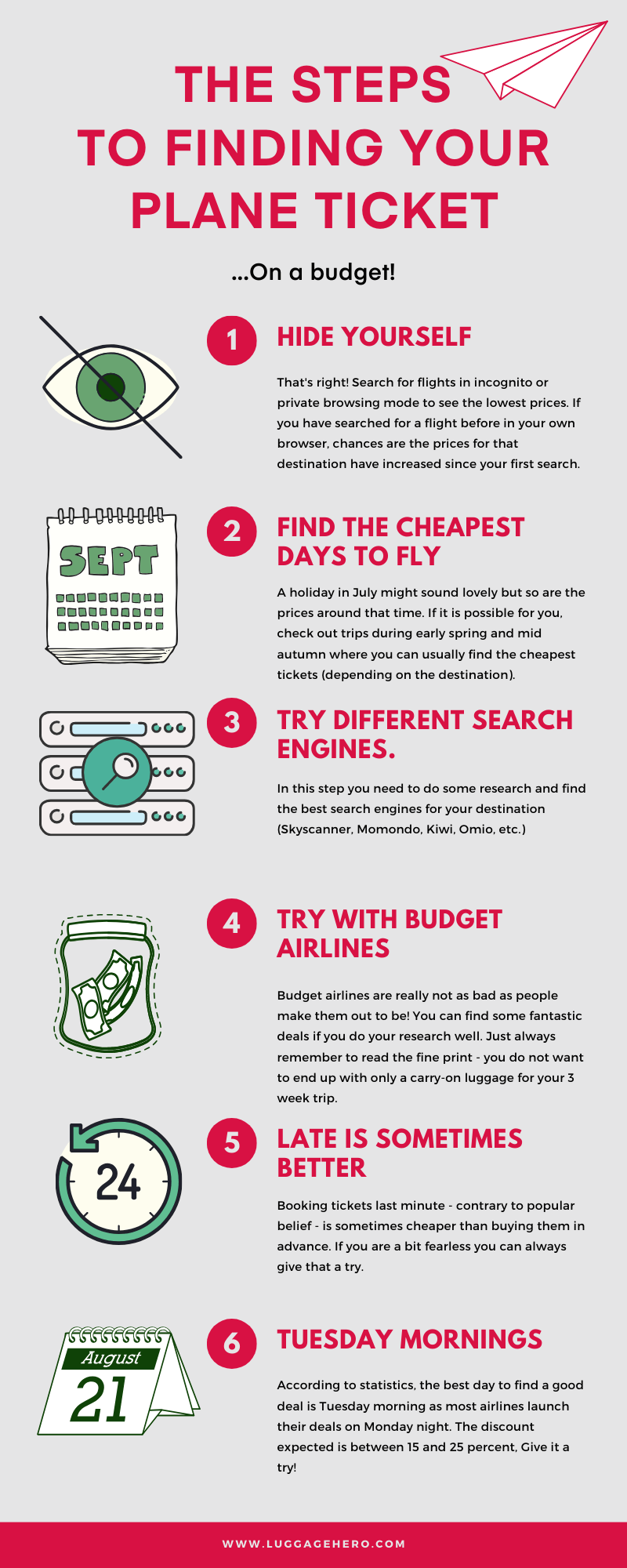
One of the most overlooked strategies in the quest for cheap airfare is the use of geographic arbitrage. Because airlines price their tickets differently based on the “point of sale,” consumers can exploit these discrepancies to their advantage.
Utilizing Foreign Currencies and Local Websites
Prices for the exact same flight can vary significantly depending on which country’s version of a website you are using or which currency you are paying in. This is often a result of local market demand or currency volatility. By using a Virtual Private Network (VPN) to set your location to a country with a weaker currency or lower cost of living, you can sometimes find “local” fares that are not advertised to the wealthier global market.
When executing this strategy, it is vital to use a financial tool—such as a credit card with no foreign transaction fees or a fintech app like Wise or Revolut—to ensure that the gains from the cheaper fare are not negated by bank conversion spreads. This is a classic form of retail arbitrage applied to the aviation industry.
The “Hidden City” and Multi-City Strategy
In the complex web of hub-and-spoke aviation, it is often cheaper to fly from Point A to Point C with a layover in Point B, than it is to fly directly from A to B. “Hidden city ticketing” involves booking the flight to Point C but exiting at the layover in Point B. While this carries certain risks (such as not being able to check luggage), from a purely mathematical standpoint, it represents an opportunity to circumvent the airline’s premium pricing on direct routes to major hubs.
Similarly, “repositioning” involves taking a low-cost flight or train to a different starting city where international fares are significantly lower. If a flight from New York to London is $900, but a flight from Boston to London is $400, the $50 cost of a bus or train to Boston represents a high-yield investment of time for a $450 savings.
The Opportunity Cost of Budget Travel: A Risk-Reward Analysis
In the pursuit of the lowest price, many travelers fall into the trap of ignoring the opportunity cost. A truly professional financial approach to travel considers the value of time and the risk of disruption as part of the total cost of ownership.
Time vs. Capital: The Layover Equation
A flight with two layovers might save $200 but add 15 hours to the travel duration. If your hourly earning potential or the subjective value of your time exceeds $13.33 per hour, the “cheaper” flight is actually a net loss. Furthermore, multiple connections increase the statistical probability of lost luggage, missed connections, and the need for unplanned expenses like airport hotels or meals. A robust financial plan for travel should include a “buffer” for these risks or prioritize direct flights when the price delta is negligible.
Protective Financial Instruments: Insurance and Protections
Buying the cheapest possible ticket often means purchasing a “non-refundable” asset. To hedge against the risk of cancellation, smart buyers utilize the inherent protections of their financial tools. Many premium credit cards offer built-in trip cancellation and interruption insurance. By paying for the “cheap” ticket with the right card, you are effectively adding a layer of insurance that would otherwise cost $50-$100 if purchased separately. This is a crucial step in de-risking your travel investment.
Advanced Budgeting: Building a Sustainable Travel Fund
Finally, the ability to buy cheap air tickets is maximized when one has the liquidity to act quickly when “mistake fares” or flash sales appear. This requires a proactive approach to personal cash flow management.
Sinking Funds and Automated Savings
Instead of treating airfare as a sudden, large hit to a monthly budget, financial professionals use “sinking funds.” By automating a monthly transfer—perhaps $100 or $200—into a dedicated high-yield savings account (HYSA), you build a “strike fund.” When a deal aggregator or a “mistake fare” (an incorrectly priced ticket due to human or technical error) is announced, you have the immediate liquidity to capitalize on the opportunity before the market corrects itself.

Tax-Efficient Travel Planning
For entrepreneurs and freelancers, travel can often be structured as a business expense. If a trip has a legitimate business purpose—such as attending a conference or meeting a client—the airfare may be tax-deductible. In this scenario, the “real” cost of the ticket is reduced by your marginal tax rate. A $1,000 ticket for someone in a 30% tax bracket effectively costs $700. Aligning travel schedules with business objectives is perhaps the most sophisticated “discount” available in the financial toolkit.
By viewing airfare through the lens of asset management, currency arbitrage, and tax efficiency, the process of buying cheap air tickets moves from a game of luck to a disciplined financial strategy. The goal is not merely to spend less, but to optimize the allocation of your capital to achieve the highest possible quality of life and global mobility.
aViewFromTheCave is a participant in the Amazon Services LLC Associates Program, an affiliate advertising program designed to provide a means for sites to earn advertising fees by advertising and linking to Amazon.com. Amazon, the Amazon logo, AmazonSupply, and the AmazonSupply logo are trademarks of Amazon.com, Inc. or its affiliates. As an Amazon Associate we earn affiliate commissions from qualifying purchases.