
In an era of market volatility and shifting economic indicators, the quest for capital preservation remains a cornerstone of a sound financial plan. For many investors, the Certificate of Deposit (CD) offers a compelling blend of security, predictability, and competitive returns. Unlike the stock market, where principal can fluctuate wildly, or a standard savings account, where interest rates can drop overnight, a CD provides a fixed roadmap for your money. However, buying a CD is not merely a matter of picking a bank and handing over cash. To maximize your returns and maintain necessary liquidity, you must understand the nuances of terms, types, and timing.

Understanding the Fundamentals of Certificates of Deposit (CDs)
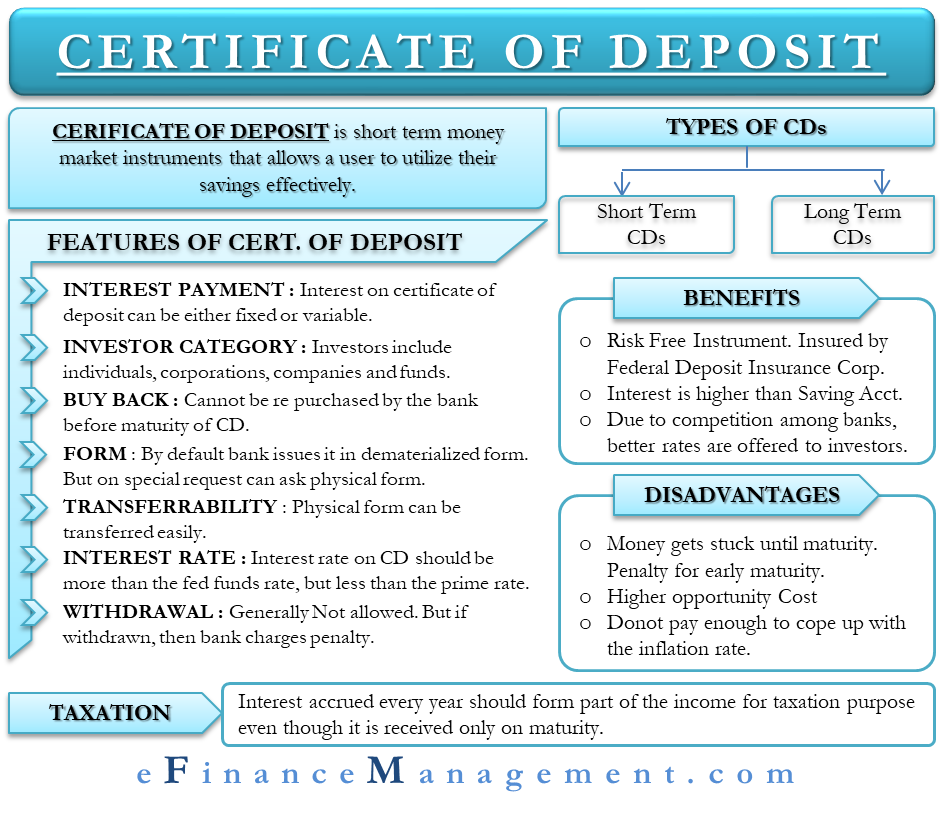
At its core, a Certificate of Deposit is a time-bound agreement between an investor and a financial institution. In exchange for leaving a specific amount of money untouched for a set period—ranging from a few weeks to several years—the bank or credit union agrees to pay a fixed interest rate that is typically higher than what is offered by a standard savings account.
What Makes a CD Unique?
The primary differentiator of a CD is the “time commitment.” When you purchase a CD, you are essentially lending your money to the bank for a predetermined duration, known as the “term.” In return, the bank provides a guaranteed Annual Percentage Yield (APY). This predictability makes CDs an ideal tool for “bucket” planning—saving for specific future expenses like a down payment on a home, a wedding, or a new vehicle.
The Role of FDIC and NCUA Insurance
One of the most significant advantages of buying a CD is the safety of the principal. Most CDs issued by banks are insured by the Federal Deposit Insurance Corporation (FDIC), while those issued by credit unions are covered by the National Credit Union Administration (NCUA). This insurance typically covers up to $250,000 per depositor, per institution, per ownership category. This makes the CD one of the safest investment vehicles available, as even if the financial institution fails, your principal and accrued interest remain protected.
How Interest Rates and Terms Interact
CD rates are heavily influenced by the federal funds rate and the broader yield curve. Generally, the longer the term of the CD, the higher the interest rate offered, as the bank compensates you for the lack of liquidity. However, in “inverted yield curve” environments, short-term CDs may occasionally offer higher rates than long-term ones. Understanding these market cycles is crucial for timing your entry into the CD market.
Step-by-Step Process to Purchase a CD
Buying a CD is a straightforward administrative process, but the strategic preparation before hitting the “open account” button is what separates a passive saver from a savvy investor.
Identifying Your Financial Goals and Horizon
Before browsing rates, you must define the purpose of the funds. Are you looking to park an emergency fund that you might need in six months, or are you investing a portion of your retirement nest egg that you won’t touch for five years? If you need the money sooner than the term expires, you will likely face an early withdrawal penalty, which can eat into your interest or even your principal. Therefore, aligning the CD term with your specific financial horizon is the first and most critical step.
Comparing Rates and Institutions
Do not assume that your local big-box bank offers the best rates. In fact, online-only banks and smaller credit unions often provide significantly higher APYs because they have lower overhead costs. When comparing, look at:
-
The APY: Ensure you are comparing the Annual Percentage Yield, which accounts for compounding, rather than just the base interest rate.
-
Compounding Frequency: Does the interest compound daily, monthly, or quarterly? More frequent compounding leads to higher overall returns.
-
Minimum Deposit Requirements: Some “Jumbo CDs” require $100,000 or more, while many online banks allow you to start with as little as $500.
Opening and Funding the Account
Once you have selected an institution, the application process is similar to opening a checking account. You will need to provide:
-
Social Security Number (SSN) or Taxpayer Identification Number.
-
A valid government-issued ID.
-
Contact information and employment details.
-
Beneficiary information (to ensure the funds are transferred smoothly in the event of your death).
After the account is approved, you must fund the CD. Most institutions allow you to transfer funds via ACH from an existing bank account, wire transfer, or by mailing a check. Once the funds are received, the “clock” on your term officially begins.
Strategic Approaches: CD Ladders and Diversification

The biggest drawback of a CD is the lack of liquidity. If you lock all your money into a five-year CD and interest rates rise or you have a financial emergency, you are stuck with a lower rate or a hefty penalty. To mitigate this risk, professional investors use specific structuring strategies.
Building a CD Ladder
A CD ladder is a strategy that involves splitting your total investment into several smaller amounts and investing them in CDs with different maturity dates. For example, if you have $25,000, you might put $5,000 each into a 1-year, 2-year, 3-year, 4-year, and 5-year CD.
As each CD matures, you have a choice: take the cash if you need it, or reinvest it into a new 5-year CD at the current market rate. This strategy provides two major benefits:
-
Liquidity: You have access to a portion of your money every year without penalty.
-
Rate Averaging: You aren’t “locked in” to one rate for your entire portfolio. If rates rise, you can capture those higher rates with your maturing funds.
The Barbell and Bullet Strategies
While the ladder is the most popular, other strategies exist for specific rate outlooks. The “Barbell Strategy” involves putting half your money in very short-term CDs and the other half in very long-term CDs. This allows you to have immediate liquidity on one end and high yields on the other, skipping the “middle” terms.
The “Bullet Strategy” involves buying CDs at different times that all mature in the same year. This is particularly useful if you know you have a large expense coming up in a specific year, such as a child’s college tuition or a planned retirement date.
Types of CDs and Where to Find Them
The financial market has evolved beyond the “standard” CD, offering various products tailored to different investor needs.
Specialized CD Variants
-
No-Penalty CDs: These allow you to withdraw your full balance and interest at any time after the first few days of funding without paying a fee. In exchange for this flexibility, the APY is usually lower than a standard CD.
-
Bump-Up CDs: These give you the option to “bump up” your interest rate once or twice during the term if market rates rise. This protects you from the opportunity cost of rising interest rates.
-
Step-Up CDs: These have a pre-scheduled interest rate increase at fixed intervals (e.g., the rate goes up every six months).
-
Add-On CDs: Most CDs do not allow you to add more money after the initial deposit. Add-on CDs permit additional contributions, which is helpful for those building their savings over time.
Bank vs. Brokered CDs
While most people buy CDs directly from a bank, you can also buy “Brokered CDs” through brokerage firms like Fidelity, Charles Schwab, or Vanguard.
-
Brokered CDs are often more liquid because they can be sold on the secondary market before maturity without a bank penalty (though you may lose principal if market rates have risen).
-
Bank CDs are simpler to understand and usually don’t involve transaction fees, but they are strictly governed by the bank’s early withdrawal policies.
Risks, Penalties, and Final Considerations
Even though CDs are “safe,” they are not without risk. Success in CD investing requires an understanding of what happens when things don’t go according to plan.
Early Withdrawal Penalties (EWP)
The EWP is the most common pitfall for CD investors. Penalties are typically calculated as a certain number of months of interest. For a 1-year CD, the penalty might be three months of interest. For a 5-year CD, it could be a full year of interest. In some cases, if you withdraw very early, the penalty could even exceed the interest earned, meaning you get back less than you deposited. Always read the fine print regarding “disclosed penalties” before signing the agreement.
Inflation and Opportunity Cost
The “silent” risk of a CD is inflation. If you lock in a 4% APY but inflation rises to 5%, your “real” rate of return is negative; your money is losing purchasing power despite the nominal growth. Additionally, there is the opportunity cost. If the stock market returns 10% while your money is locked in a 3% CD, you have missed out on significant gains. This is why CDs should generally be viewed as a component of a diversified portfolio—handling the “safe” portion of your asset allocation—rather than the sole investment vehicle for long-term wealth building.
The Maturity Grace Period
When a CD matures, most banks offer a “grace period” (usually 7 to 10 days) during which you can withdraw the money or change the term. If you do nothing, many banks will automatically renew the CD for the same term at the current rate, which might be lower than what you could find elsewhere. Mark your calendar for the maturity date to ensure you maintain control over your capital.
By understanding these mechanisms—from the basic structure of the term and APY to advanced laddering strategies and the nuances of brokered versus bank-issued certificates—you can effectively use CDs to protect your wealth and generate guaranteed income in any economic climate.
aViewFromTheCave is a participant in the Amazon Services LLC Associates Program, an affiliate advertising program designed to provide a means for sites to earn advertising fees by advertising and linking to Amazon.com. Amazon, the Amazon logo, AmazonSupply, and the AmazonSupply logo are trademarks of Amazon.com, Inc. or its affiliates. As an Amazon Associate we earn affiliate commissions from qualifying purchases.