
The evolution of Bitcoin from a niche cryptographic experiment to a trillion-dollar asset class has fundamentally transformed the landscape of personal finance. For the modern investor, Bitcoin represents a unique opportunity for portfolio diversification, acting as both a speculative growth asset and a potential hedge against fiat currency debasement. However, the decentralized nature of digital assets introduces a level of personal responsibility that traditional banking does not require. To buy Bitcoin safely, one must navigate a complex ecosystem of exchanges, digital wallets, and security protocols. This guide provides a strategic roadmap for acquiring Bitcoin while prioritizing capital preservation and financial security.
Understanding the Financial Infrastructure of Cryptocurrency
Before committing capital to the digital asset market, it is essential to understand the infrastructure that facilitates these transactions. Unlike traditional equity markets where a brokerage manages the entire lifecycle of an trade, the cryptocurrency market offers various points of entry, each with its own risk profile.
Choosing the Right Exchange: Centralized vs. Decentralized
For the majority of investors, the journey begins with a Centralized Exchange (CEX). These platforms operate similarly to traditional stock brokerages, providing a user-friendly interface to trade fiat currency (like USD or EUR) for Bitcoin. When selecting a CEX, financial security should be the primary metric. High-tier exchanges are characterized by high liquidity, robust insurance funds, and a history of regulatory compliance.
In contrast, Decentralized Exchanges (DEXs) allow for peer-to-peer trading without an intermediary. While DEXs offer greater privacy and control, they are often less “safe” for beginners due to the lack of customer support and the potential for smart contract vulnerabilities. For a secure first purchase, sticking to reputable, regulated centralized platforms is generally recommended.
Regulatory Compliance and KYC/AML Standards
A hallmark of a safe financial institution in the crypto space is its adherence to “Know Your Customer” (KYC) and “Anti-Money Laundering” (AML) regulations. While some investors seek out platforms that do not require identity verification, these unregulated entities pose a significant risk to your capital. Regulated exchanges are required to maintain strict standards regarding the storage of user funds and are subject to audits. By choosing a platform that requires identity verification, you are participating in a legal framework that provides at least some level of institutional oversight and protection.
Security Protocols for Protecting Your Financial Assets
In the world of Bitcoin, the mantra “not your keys, not your coins” is a fundamental principle of financial self-sovereignty. If you leave your Bitcoin on an exchange, you do not technically own the asset; the exchange holds it on your behalf. To buy Bitcoin safely, you must have a plan for long-term custody.
Self-Custody vs. Managed Custody
There are two primary ways to hold Bitcoin: custodial and non-custodial. Custodial setups involve a third party (like an exchange or a specialized trust) holding the private keys to your Bitcoin. While convenient, this introduces “counterparty risk”—the risk that the institution goes bankrupt or suffers a security breach.
Non-custodial setups, or self-custody, involve the investor holding their own private keys. This eliminates counterparty risk but places the burden of security entirely on the individual. For significant investments, self-custody is widely considered the gold standard of safety.
Implementing Multi-Factor Authentication and Cold Storage
If you choose to keep assets on an exchange temporarily, you must maximize account security. This starts with a unique, complex password and the implementation of Hardware Multi-Factor Authentication (MFA), such as a YubiKey. Avoid SMS-based two-factor authentication, as it is vulnerable to “SIM swapping” attacks.
For long-term storage, “Cold Storage” is the most secure method. This involves using a hardware wallet—a physical device that keeps your private keys offline and away from internet-connected threats. By keeping your Bitcoin in cold storage, you ensure that even if your computer is compromised, your financial assets remain unreachable to hackers.
Navigating the Transaction Process: A Step-by-Step Financial Strategy
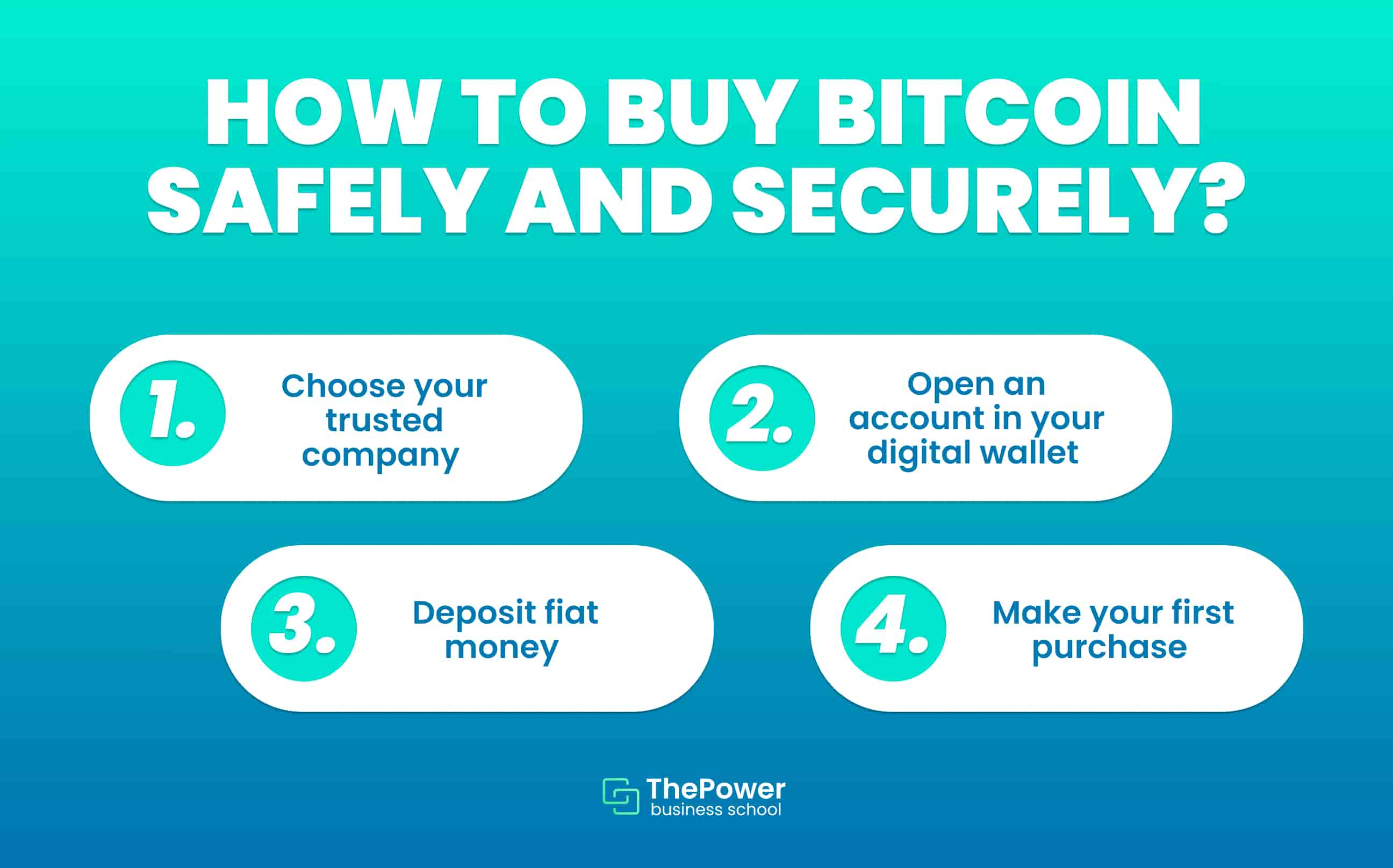
Once you have selected a platform and established a security plan, the actual process of buying Bitcoin requires a disciplined approach to minimize costs and market slippage.

Funding Your Account and Managing Transaction Fees
The safest way to fund a crypto account is through a direct bank transfer (ACH or wire transfer). While credit and debit cards offer instant gratification, they often come with high fees—sometimes upwards of 3% to 5%—which immediately erodes your investment’s principal. Furthermore, many banks flag credit card purchases of cryptocurrency as high-risk, which can lead to temporary account freezes.
Investors should also be mindful of the “spread”—the difference between the buy and sell price. High-volume exchanges typically offer tighter spreads, ensuring that you get a fair market price for your Bitcoin.
Executing the Trade: Limit vs. Market Orders
When you are ready to buy, you will likely face two main order types: Market and Limit. A Market Order executes immediately at the current best available price. While fast, it can be risky during periods of high volatility, as you might pay a significantly higher price than expected.
A Limit Order allows you to set a specific price at which you are willing to buy. This is a safer financial strategy as it provides price certainty. By using limit orders, you avoid the “slippage” that often occurs during market swings, ensuring that your entry point aligns with your financial plan.
Risk Management and Long-Term Financial Planning
Buying Bitcoin safely involves more than just secure technology; it requires a sound investment strategy. Because Bitcoin is a volatile asset, an undisciplined entry can lead to significant emotional and financial stress.
Mitigating Volatility Through Dollar-Cost Averaging (DCA)
One of the safest ways to build a Bitcoin position is through Dollar-Cost Averaging (DCA). Instead of investing a large lump sum at once—which exposes you to the risk of a sudden market downturn—you invest smaller, fixed amounts at regular intervals (e.g., $100 every week).
DCA smooths out the volatility of the asset over time. When the price is high, your fixed dollar amount buys less Bitcoin; when the price is low, it buys more. This strategy removes the psychological pressure of “timing the market” and is a proven method for long-term wealth accumulation in volatile markets.
Tax Implications and Financial Reporting
In most jurisdictions, Bitcoin is treated as property or a capital asset. Every time you sell Bitcoin, or even use it to purchase a good or service, it triggers a taxable event. Buying Bitcoin safely means maintaining meticulous records of your “cost basis”—the price you paid for the asset plus any transaction fees.
Failure to account for taxes can lead to significant legal and financial liabilities. Modern investors often use specialized crypto tax software that syncs with their exchanges to track gains and losses automatically. Integrating Bitcoin into your broader financial reporting ensures that your investment remains a legitimate part of your net worth.
Avoiding Scams and Protecting Your Capital
The final pillar of buying Bitcoin safely is maintaining a high level of skepticism. The digital asset space is unfortunately home to various fraudulent schemes designed to separate investors from their money.
Identifying Common Fraudulent Schemes
The most common scams include “Investment Clubs” that promise guaranteed daily returns, phishing emails that mimic reputable exchanges, and social media giveaways that ask you to “send Bitcoin to receive double back.” It is vital to remember that Bitcoin transactions are irreversible. Once you send Bitcoin to an address, there is no “chargeback” or “undo” button.
Always verify the URL of the exchange you are using and never share your private keys or “recovery seed phrase” with anyone. No legitimate exchange or support representative will ever ask for this information.

Best Practices for Ongoing Portfolio Security
Security is not a one-time setup but an ongoing process. Periodically review your exchange permissions, update your hardware wallet firmware, and stay informed about the latest security threats in the financial sector. As your Bitcoin portfolio grows in value, your security measures should scale accordingly. This might include moving from a single hardware wallet to a “multi-signature” setup, which requires multiple hardware devices to authorize a single transaction, providing an ultimate layer of protection against theft.
By treating Bitcoin with the same institutional rigor as any other major financial investment, you can harness the potential of this digital asset while keeping your capital secure. Safety in the Bitcoin market is the result of choosing regulated platforms, maintaining personal custody, and adhering to a disciplined investment strategy. In the modern era of finance, the most successful investors are those who balance the pursuit of profit with a commitment to security and due diligence.
aViewFromTheCave is a participant in the Amazon Services LLC Associates Program, an affiliate advertising program designed to provide a means for sites to earn advertising fees by advertising and linking to Amazon.com. Amazon, the Amazon logo, AmazonSupply, and the AmazonSupply logo are trademarks of Amazon.com, Inc. or its affiliates. As an Amazon Associate we earn affiliate commissions from qualifying purchases.