
In the ecosystem of premium credit cards, American Express Membership Rewards (MR) points are widely considered the gold standard of flexible currency. Unlike fixed-value cash-back programs, these points offer a bridge to high-value travel redemptions, luxury experiences, and strategic financial flexibility. However, there are moments when your point balance falls just short of a dream redemption or a business class upgrade. In these instances, understanding how to “buy” Amex points—both directly and through strategic financial maneuvers—becomes an essential skill for the savvy cardholder.
While buying points might seem counterintuitive to those focused on organic earning, it is a nuanced financial tool. When used correctly, purchasing points can unlock value that far exceeds the acquisition cost. This guide explores the mechanics, the mathematics, and the strategic implications of acquiring American Express Membership Rewards points.

Understanding the Direct Purchase Option: Rules and Costs
American Express does allow cardholders to purchase Membership Rewards points directly, but it is not as prominently advertised as the retail portals of major airlines or hotel chains. This is a targeted feature designed primarily for “topping off” an account rather than building a balance from scratch.
The Cost Per Point
When you go to book a trip through the Amex Travel portal or attempt to transfer points to a partner and find your balance insufficient, American Express typically offers the option to purchase the remaining points needed for the transaction. As of current standards, these points are generally sold at a rate of 2.5 cents per point ($25 per 1,000 points).
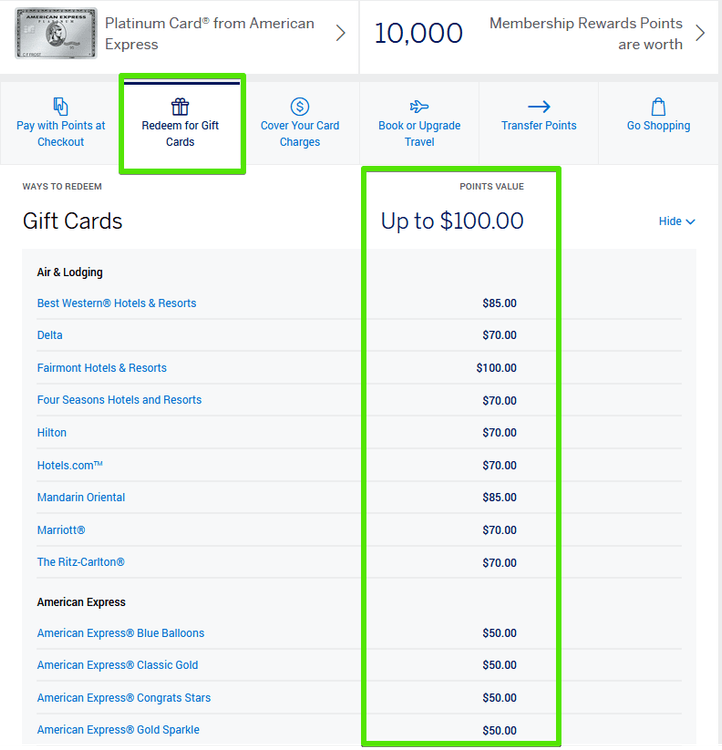
From a purely financial perspective, 2.5 cents per point is a steep price. Most valuations place the average value of an Amex point between 1.0 and 2.0 cents, depending on the redemption method. Therefore, buying points at this rate requires a specific exit strategy to ensure you aren’t losing money on the transaction.
Limitations and Eligibility
There are strict guardrails on direct purchases. Generally, you can only purchase points if you have a pending redemption. You cannot simply log in and buy 500,000 points to sit in your account for a rainy day. Furthermore, there are annual caps on how many points a cardholder can buy—often limited to 100,000 or 500,000 points per calendar year, depending on the specific card product and account standing. Eligibility also requires that your account be in good standing and has been active for a minimum period (usually 30 to 90 days).
When Buying Points Makes Financial Sense
Buying points is rarely a good “investment” in the vacuum of a savings account, but it can be a brilliant tactical move within the context of high-value travel arbitrage. The goal is to ensure that the value you receive from the redemption is significantly higher than the 2.5 cents per point you paid to acquire them.
Topping Off for a Specific Award Flight
The most common scenario for buying points is the “gap fill.” Imagine you have found a Business Class seat to Europe that costs 80,000 points. You currently have 78,000 points. If you wait another month for your statement to close to earn the extra 2,000 points, that seat will almost certainly be gone. In this case, paying $50 to “buy” the remaining 2,000 points is a logical financial decision. It secures a high-value redemption that might otherwise cost $3,000 or more if paid in cash.
Leveraging High-Value Transfer Partners
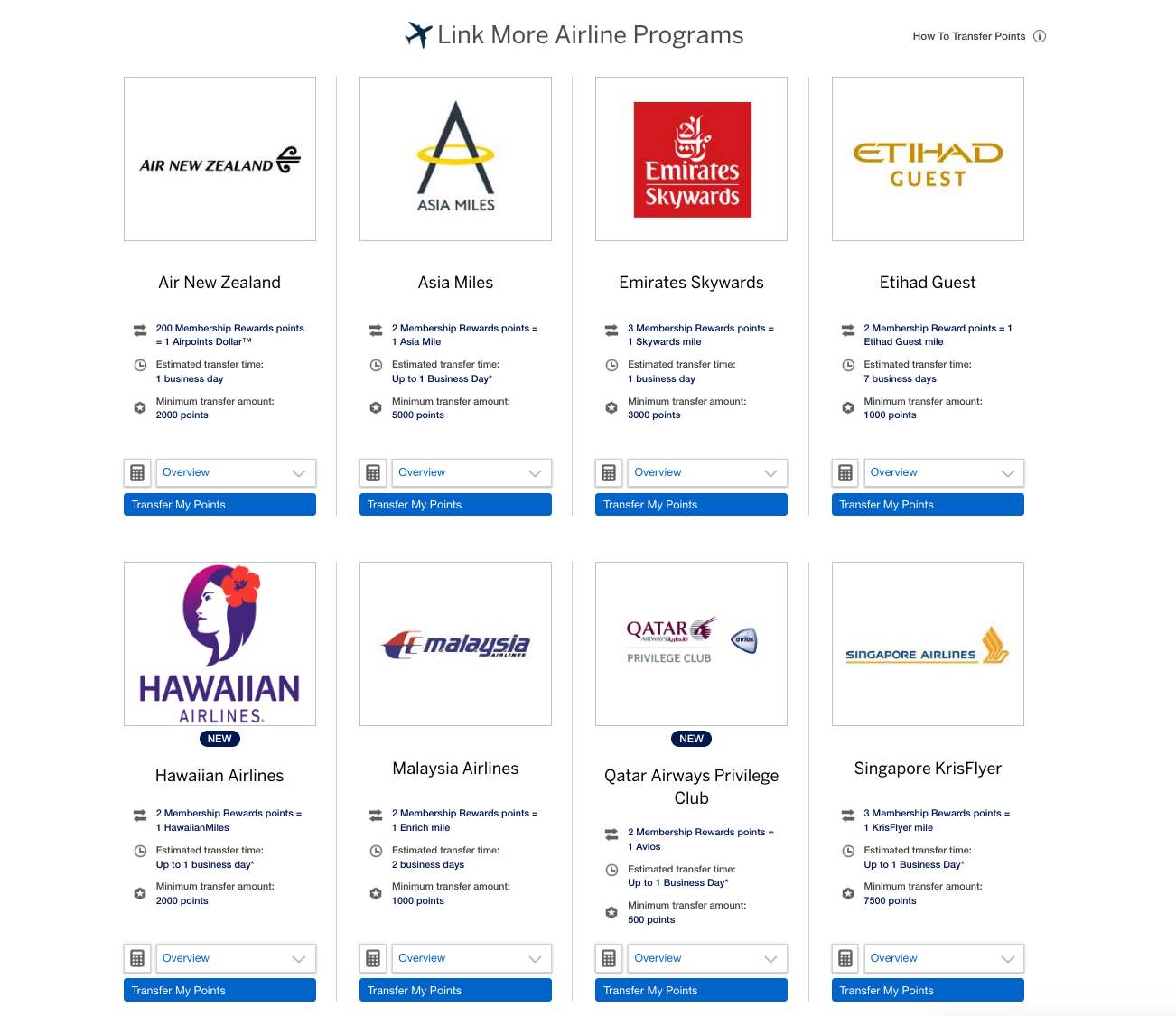
The true power of Amex points lies in their ability to transfer to over 20 airline and hotel partners, such as British Airways, Delta, Emirates, and Virgin Atlantic. Occasionally, these partners offer transfer bonuses (e.g., a 30% bonus when transferring Amex points to Virgin Atlantic).
If you are just short of a milestone for a partner redemption, the combination of buying points and a transfer bonus can create an incredible ROI. If a 100,000-point flight costs $5,000 in cash, each point is worth 5 cents. Buying the last few thousand points at 2.5 cents to unlock a 5-cent-per-point redemption is a clear mathematical win.
The Arbitrage of First and Business Class Travel
For those who prioritize luxury travel, the math of buying points becomes even more compelling. International First Class tickets can retail for $15,000 or more. These same seats can often be booked for 120,000 to 150,000 points. If you were to buy every single point at 2.5 cents (if Amex allowed it), the cost would be roughly $3,750—a fraction of the cash price. While Amex restricts large-scale direct purchases, this illustrates why “topping off” to reach these thresholds is a preferred strategy for high-net-worth individuals and business owners.
Indirect Ways to “Buy” American Express Points
Because direct purchases are expensive and limited, sophisticated users look for indirect ways to “buy” points. These methods involve spending money to generate points at a much lower cost than the 2.5 cents charged by American Express.
Strategic Spend and Welcome Bonuses
The most efficient way to “buy” points is through the acquisition of new card products. When you pay an annual fee for a card like the American Express® Gold Card or The Platinum Card®, you are effectively paying for the right to earn a massive influx of points via a welcome bonus.
For example, if a card has a $695 annual fee and offers a 125,000-point welcome bonus after meeting a spend requirement, you are essentially acquiring those points for about 0.5 cents each (assuming the credits and perks of the card offset the fee). This is five times cheaper than buying points directly. Treating the annual fee as a purchase price for a points package is a common mindset among financial optimization experts.
Rakuten: The Secret Weapon for Earning MR Points
Perhaps the most overlooked way to “buy” Amex points is through the Rakuten shopping portal. Rakuten allows users to choose between receiving cash back or earning Membership Rewards points. In this setup, 1% cash back equals 1 Amex point per dollar spent.
By making necessary business or personal purchases through Rakuten, you are effectively converting your spending power into points. During “15% cash back” events at major retailers, you are essentially buying Amex points at a rate of 15 points per dollar. If you were going to buy a $1,000 laptop anyway, doing so through Rakuten “buys” you 15,000 points—enough for a domestic round-trip flight—at no additional cost beyond the retail price of the item.
Employee Cards and Referral Bonuses
Business owners can “buy” points by adding employee cards to their accounts. While there may be a fee per card, the points generated by employee spending accrue to the primary account holder. Similarly, Amex often offers referral bonuses. While you aren’t spending money directly, you are spending “social capital” to acquire points at a zero-dollar cost basis, which is the most efficient acquisition strategy possible.
Evaluating the Math: Is the Investment Worth It?
Before clicking “purchase” on a points top-off, you must perform a cold, hard evaluation of the numbers. The financial utility of a point is not fixed; it is determined at the moment of redemption.
Calculating Your Break-Even Point
To determine if buying points is worth it, use this formula:
(Value of the Reward – Cash Cost of Taxes/Fees) / Number of Points Required = Value Per Point.
If the resulting “Value Per Point” is higher than 2.5 cents, the purchase is mathematically justified. If it is lower, you are better off paying for the flight or hotel stay with cash and saving your points for a future, higher-value opportunity.
Avoiding the Pitfalls of Point Devaluation
One of the greatest risks in “buying” points is devaluation. Unlike a savings account that earns interest, a points balance is an asset that typically depreciates over time. Airlines and hotels frequently change their award charts, often increasing the number of points required for a stay or flight.
Financial advisors in the credit world suggest a “earn and burn” philosophy. You should only buy points if you have an immediate use for them. Holding purchased points in your account is equivalent to holding an investment that pays zero dividends and is subject to unpredictable inflation by the issuer.
Safety and Compliance: Why You Should Avoid Secondary Markets
A word of caution for those looking to buy points: stay within the official American Express ecosystem. There are numerous “points brokers” and secondary marketplaces that offer Amex points at lower rates than 2.5 cents. While tempting, engaging with these entities is a violation of American Express’s terms and conditions.
American Express uses sophisticated fraud detection algorithms to monitor point transfers and account activity. If they suspect you have purchased points from a third party, they have the right to freeze your account, forfeit all earned points, and permanently blacklist you from their financial products. The risk of losing a decade’s worth of accumulated points and your credit relationship with a major bank far outweighs the small savings offered by these “grey market” vendors.
Conclusion: The Strategic Purchase
Buying Amex points is not a primary strategy for wealth building, but it is a vital secondary strategy for financial optimization. By understanding that the direct cost is 2.5 cents per point, you can set a benchmark for your redemptions.
When you leverage indirect methods like Rakuten, strategic welcome bonuses, and transfer partner arbitrage, you transform American Express Membership Rewards from a simple loyalty program into a sophisticated financial tool. The goal is never just to have the most points—it is to have the right amount of points at the exact moment they can be leveraged for maximum value. Whether it’s a $50 top-off to secure a $5,000 flight or a calculated annual fee to trigger a six-figure bonus, buying points is a game of math, timing, and discipline.
aViewFromTheCave is a participant in the Amazon Services LLC Associates Program, an affiliate advertising program designed to provide a means for sites to earn advertising fees by advertising and linking to Amazon.com. Amazon, the Amazon logo, AmazonSupply, and the AmazonSupply logo are trademarks of Amazon.com, Inc. or its affiliates. As an Amazon Associate we earn affiliate commissions from qualifying purchases.