
For the majority of individuals, purchasing a vehicle represents the second-largest financial commitment they will make, surpassed only by the purchase of a home. Yet, while real estate is often viewed as an appreciating asset, a car is a rapidly depreciating one. To navigate this acquisition successfully, one must move beyond the emotional allure of “new car smell” and approach the process with the clinical precision of a financial strategist.
Buying a car is not merely a lifestyle choice; it is a complex financial transaction involving asset valuation, interest rate arbitrage, and long-term cash flow management. This guide outlines a comprehensive framework for acquiring a vehicle through the lens of personal finance, ensuring that your next set of wheels accelerates your mobility without stalling your wealth-building goals.

1. Establishing a Rigorous Budget: The 20/4/10 Rule
The most common mistake in the car-buying process occurs before the buyer even sets foot on a dealership lot: failing to define a mathematically sound budget. Most consumers shop based on a monthly payment, a trap that allows dealers to extend loan terms and hide the true cost of the vehicle. To maintain financial health, professional financial planners often recommend the “20/4/10” rule.
The Mechanics of the 20/4/10 Rule
This rule provides a three-pronged constraint to ensure the vehicle remains affordable:
- 20% Down Payment: Putting at least 20% down ensures you have immediate equity in the vehicle. This protects you from becoming “underwater” (owing more than the car is worth) the moment you drive off the lot.
- 4-Year Loan Term: While 72-month and 84-month loans are becoming common, they are wealth-killers. A four-year (48-month) limit minimizes the total interest paid and ensures you aren’t paying for a car that has long since lost its luster and reliability.
- 10% of Gross Income: Your total monthly transportation costs—including the loan payment, insurance, fuel, and maintenance—should not exceed 10% of your gross monthly income.
Factoring in the Total Cost of Ownership (TCO)
The sticker price is only a fraction of the story. To truly understand the financial impact, you must calculate the Total Cost of Ownership. Insurance premiums vary wildly between a sensible sedan and a performance SUV. Furthermore, maintenance schedules and fuel efficiency (or charging costs for EVs) can fluctuate by thousands of dollars over the life of the vehicle. Utilizing TCO calculators allows you to compare two cars with similar MSRPs and realize that one may be significantly more expensive over a five-year horizon.
2. The Depreciation Equation: New vs. Pre-Owned
From a pure wealth-accumulation perspective, the choice between a new and a used vehicle is often a lopsided debate. Depreciation is the “silent tax” on car ownership. A new car typically loses 20% of its value in the first year and roughly 60% within the first five years.
Navigating the Depreciation Curve
The smartest financial move is often to “buy the depreciation.” This involves purchasing a vehicle that is three to four years old. At this stage, the original owner has absorbed the steepest part of the depreciation curve, yet the vehicle likely still possesses modern safety features, relatively low mileage, and several years of reliable service. By buying a three-year-old car, you are essentially acquiring a high-quality asset at a 40% discount compared to its original price.
Certified Pre-Owned (CPO) as a Risk Mitigation Strategy
For those wary of the maintenance risks associated with used cars, the Certified Pre-Owned (CPO) market offers a middle ground. CPO vehicles undergo rigorous inspections and come with manufacturer-backed warranties. While they carry a premium over standard used cars, that premium is often a fraction of the cost of the first-year depreciation on a new model. In the context of personal finance, CPO represents a “hedged” investment: you mitigate the risk of catastrophic repair costs while avoiding the capital loss of a new purchase.
3. Strategic Financing and Interest Rate Arbitrage
In the current economic climate, the method of payment is just as important as the price of the car. Financing is a product, and like the car itself, you should shop for the best “price” (interest rate).
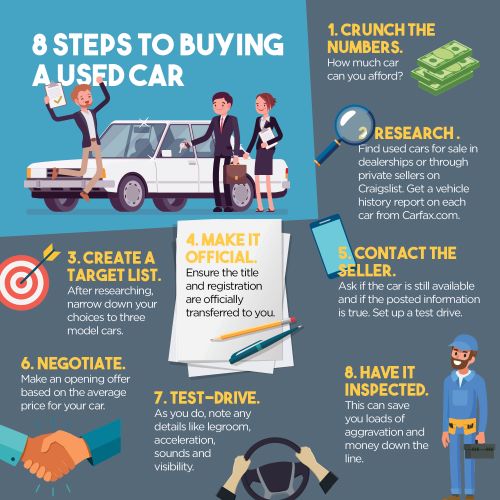
Dealership Financing vs. Independent Lenders
The Finance and Insurance (F&I) office at a dealership is often their most profitable department. Dealers often “mark up” the interest rates provided by lenders. To counter this, savvy buyers should secure a pre-approval from a credit union or an online bank before visiting the dealership. Having a pre-approved rate of, for example, 5.5% forces the dealer to either beat that rate or lose the financing business. This simple step can save a borrower thousands of dollars in interest over the life of the loan.
The Impact of Credit Scores on Capital Costs
Your credit score is the primary lever in determining your interest rate. A “prime” borrower might secure a rate 10% lower than a “subprime” borrower. In financial terms, if you are planning a car purchase and your credit score is on the cusp of a higher tier, it is often more profitable to delay the purchase by six months to optimize your score. This reduces your cost of capital, allowing more of your monthly payment to go toward the principal rather than the lender’s profit.
Cash vs. Financing: The Opportunity Cost
Even if you have the cash to buy a car outright, it may not always be the optimal financial move. If a manufacturer is offering a promotional 0.9% APR and you can earn 5% in a high-yield savings account or 7-10% in the stock market, financing the car is actually more profitable. This is the essence of interest rate arbitrage: using low-cost debt to keep your capital invested in higher-returning assets.
4. Mastery of the Negotiation Table
Negotiation is where the financial plan meets reality. The goal is to separate the various components of the deal to ensure transparency. Dealerships prefer to “bundle” the price of the new car, the value of your trade-in, and the monthly payment into one confusing package. To protect your wealth, you must unbundle them.
The “Out-the-Door” Price Strategy
Never negotiate based on a monthly payment. Dealers can manipulate a monthly payment by extending the loan term, which costs you more in the long run. Instead, focus exclusively on the “out-the-door” price—the total cost including taxes, title, and fees. Once you have agreed on the lowest possible purchase price, only then should you discuss the trade-in or financing.
Managing the Trade-In Asset
Your current vehicle is an asset with a specific market value. Do not treat it as a discount on the new car; treat it as a separate sale. Research your car’s “wholesale” and “private party” values using tools like Kelley Blue Book or Edmunds. Often, selling your car to a third-party car-buying service (like Carmax or Shift) will yield a higher price than a dealer trade-in. However, consider the tax implications: in many regions, you only pay sales tax on the “net” price of the new car (New Car Price minus Trade-In Value). Calculate if the tax savings of a trade-in outweigh the higher private sale price.
5. Avoiding the F&I “Profit Centers”
The final hurdle in a car purchase is the “box”—the business office where the final paperwork is signed. Here, you will be offered a variety of add-ons: extended warranties, gap insurance, tire and wheel protection, and ceramic coatings.
Evaluating Add-on Value
From a financial perspective, most of these products are high-margin items for the dealer and low-value for the consumer.
- Extended Warranties: If you are buying a reliable brand or a CPO vehicle, an extended warranty is often an unnecessary insurance policy. If you feel you need one, you can often buy it later or from a third party for much less.
- Gap Insurance: This is only necessary if you put down a small down payment and are “underwater.” If you followed the 20% down rule, you likely do not need gap insurance.
- Physical Protection: VIN etching, fabric protection, and paint sealants are notoriously overpriced. These services can be performed by independent shops for a fraction of the dealership’s cost.
Conclusion
Buying a car is a test of financial discipline. By viewing the vehicle as a tool for mobility and a line item in a broader wealth-management strategy, you can avoid the common pitfalls that drain the average consumer’s net worth.
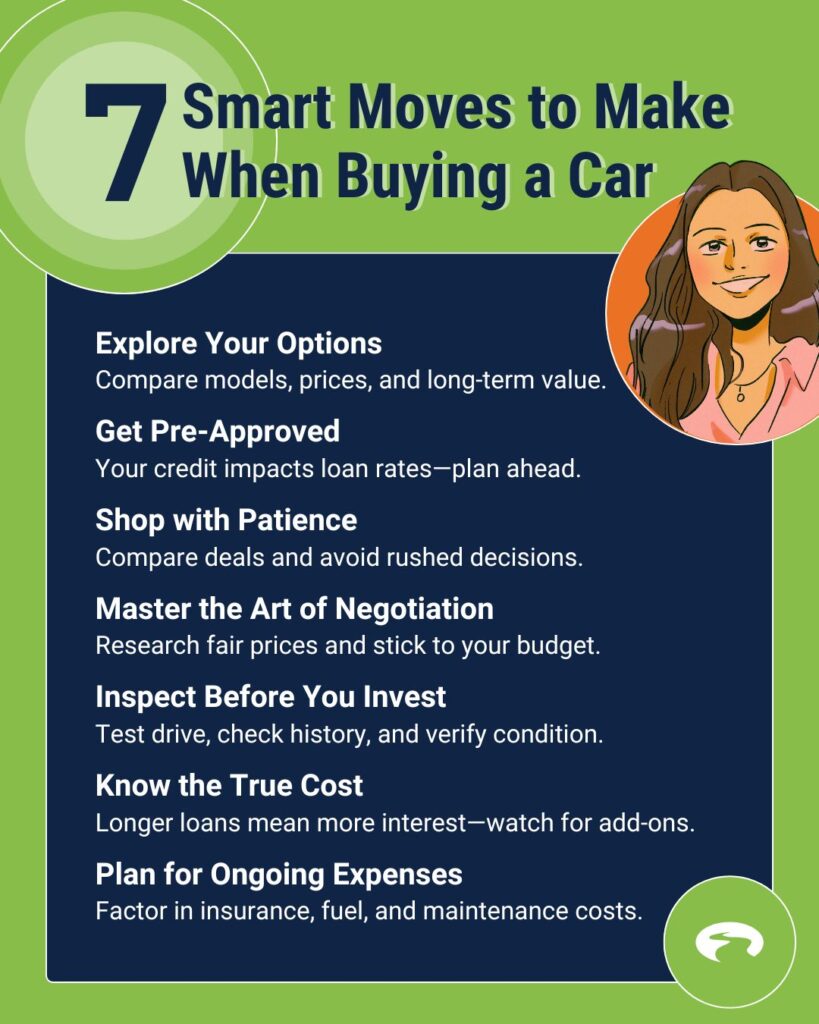
Adhering to the 20/4/10 rule, targeting the “sweet spot” of the depreciation curve, securing independent financing, and negotiating with a focus on the “out-the-door” price are the hallmarks of a sophisticated buyer. When you approach the car market with math instead of emotion, you ensure that your purchase serves your lifestyle without compromising your long-term financial freedom.
aViewFromTheCave is a participant in the Amazon Services LLC Associates Program, an affiliate advertising program designed to provide a means for sites to earn advertising fees by advertising and linking to Amazon.com. Amazon, the Amazon logo, AmazonSupply, and the AmazonSupply logo are trademarks of Amazon.com, Inc. or its affiliates. As an Amazon Associate we earn affiliate commissions from qualifying purchases.