
In the world of entrepreneurship, a business plan is often misunderstood as a mere formality—a document required by banks or a homework assignment for a startup accelerator. However, from a financial perspective, a business plan is the most critical asset in an entrepreneur’s toolkit. It is the financial architecture of your future wealth. Without a structured plan, a business is simply a collection of ideas with no mechanism to turn them into profit. Building a business plan through the lens of finance means focusing on viability, scalability, and long-term value creation. It is about proving to yourself, and eventually to investors, that your concept can generate more capital than it consumes.
The Financial Foundation: Why Capital Management Dictates Business Success
The primary reason businesses fail within the first five years is not a lack of passion or a bad product; it is a lack of financial planning. A business plan serves as a roadmap for capital management, ensuring that every dollar spent is an investment toward a specific return. When you begin drafting your plan, the focus must shift from “what we do” to “how we make money.”
Shifting from Concept to Cash Flow
A conceptual idea is worth very little until it is translated into a cash flow projection. In the early stages of building your business plan, you must identify your burn rate—the speed at which you consume capital before becoming profitable. A robust business plan identifies the “break-even point” with surgical precision. This is the moment when your revenue covers all operating expenses. By focusing on cash flow rather than just total sales, you ensure the business remains liquid. Liquidity is the lifeblood of any enterprise; without it, even a profitable-looking company can collapse.
The Role of Financial Projections in Risk Mitigation
Risk is an inherent part of investing, but a well-constructed business plan seeks to quantify and mitigate that risk. Financial projections—usually covering three to five years—allow you to run “what-if” scenarios. What if supply chain costs increase by 15%? What if the customer acquisition cost doubles? By building these contingencies into your financial model, you demonstrate financial literacy. This foresight is what separates a “side hustle” from a professional corporation. Investors look for entrepreneurs who understand the downside just as well as the upside.
Structuring Your Revenue Model for Scalability
Revenue is the engine of your business, but not all revenue is created equal. A sophisticated business plan analyzes the quality of income. To build a business that attracts high-level investment or grows into a significant asset, you must structure your revenue model for maximum efficiency and scalability.
Identifying High-Margin Revenue Streams
One of the most important sections of your financial plan is the breakdown of your margins. Gross margin—the difference between the cost of goods sold (COGS) and the selling price—tells the story of your business’s health. A business plan should prioritize high-margin products or services that allow for reinvestment. If your margins are too thin, you have no room for error, and your ability to scale will be severely limited. Your plan should detail how you intend to optimize these margins over time through economies of scale or operational efficiencies.
Unit Economics: Understanding Customer Acquisition Cost (CAC) and Lifetime Value (LTV)
Modern business finance relies heavily on unit economics. This involves looking at the profitability of a single customer rather than the business as a whole. Your plan must answer two questions: How much does it cost to get a customer (CAC)? And how much profit will that customer generate over their lifetime with the brand (LTV)? A healthy business typically maintains an LTV to CAC ratio of 3:1 or higher. If your business plan can prove these numbers through market research or early testing, you have a compelling financial case for growth.

The Capital Roadmap: Funding Your Vision
Most businesses require an injection of capital to move from the garage to the global market. Part of building a business plan is deciding how you will fund your operations and what that capital will cost you in the long run. Whether you are looking at debt or equity, your plan must justify the capital structure you choose.
Bootstrapping vs. External Investment: Choosing Your Path
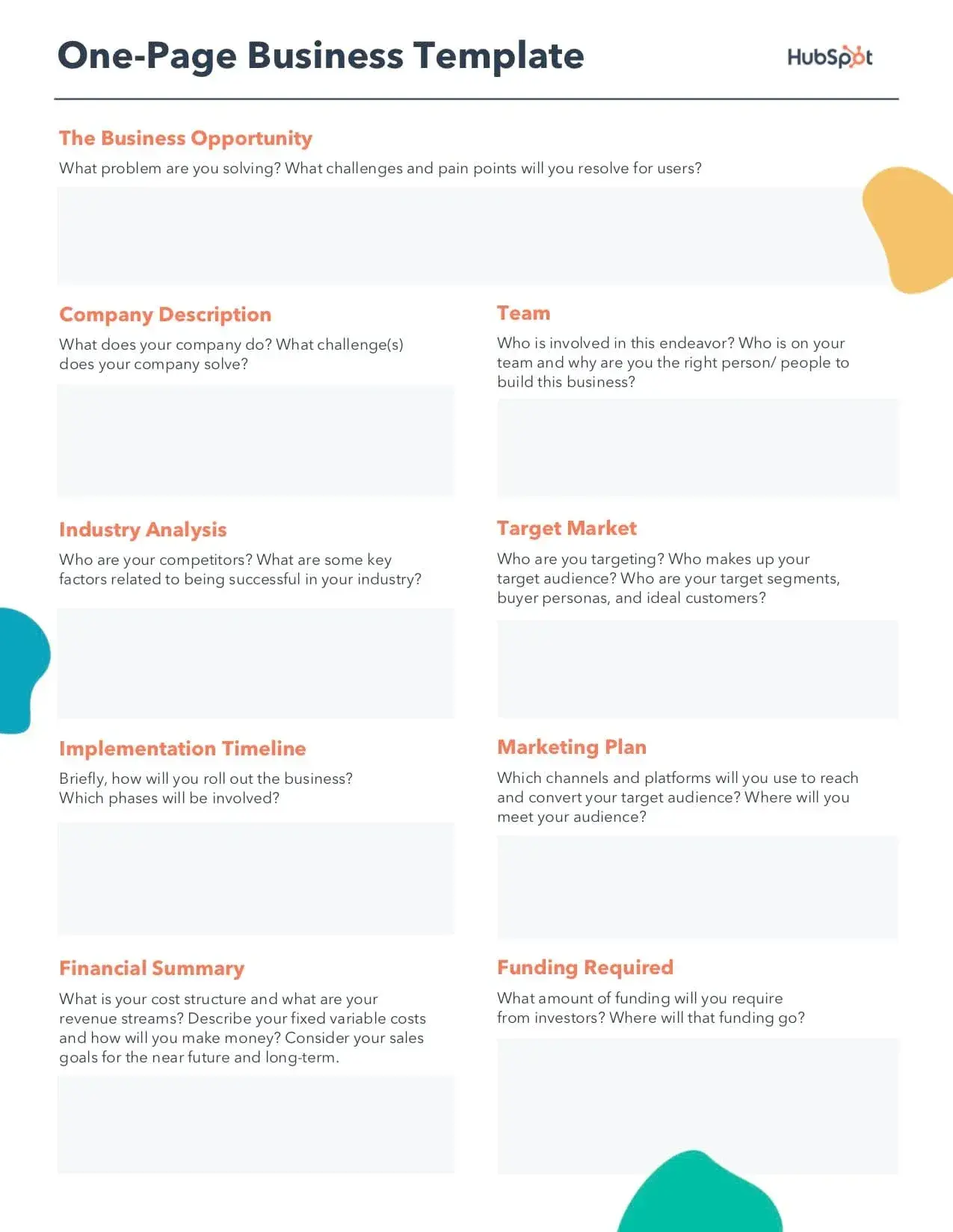
The financial section of your plan must outline your funding strategy. “Bootstrapping”—funding the business through personal savings and early sales—allows for 100% ownership but often results in slower growth. Conversely, seeking venture capital or angel investment can accelerate growth but dilutes your equity. Your business plan should include a “Use of Funds” section that explicitly states where every dollar of investment will go. Will it be spent on R&D, inventory, or market expansion? Investors are not just buying into an idea; they are buying into your ability to deploy their capital effectively.
Crafting a Pitch Deck that Speaks to Investors
While the business plan is a comprehensive document, the pitch deck is its financial highlight reel. It should focus on the “Exit Strategy” or the “Return on Investment” (ROI). Whether the goal is an Initial Public Offering (IPO), an acquisition by a larger firm, or long-term dividends, your financial plan must show a clear path to a liquidity event. Professional investors are looking for a “10x” return; your plan needs to show the mathematical possibility of that outcome based on market size and projected market share.
Operational Budgeting and Resource Allocation
Once the revenue model and funding are established, the business plan must address the day-to-day management of money. This is where the strategy meets the spreadsheet. Operational budgeting ensures that the company stays lean and focused on its core financial goals.
The Lean Startup Methodology: Optimizing Burn Rate
In the “Money” niche of business planning, the concept of “Lean” is vital. It’s about minimizing waste. Your plan should outline how the business will operate with maximum efficiency. This includes choosing variable costs over fixed costs where possible—for example, using contractors instead of full-time staff in the early stages or opting for a shared workspace instead of a long-term commercial lease. By keeping fixed costs low, you lower your financial risk and increase your “runway”—the amount of time you have before you need more funding.
Integrating Financial Management Tools for Real-Time Oversight
A static business plan is a dead document. To build a business that thrives, your plan should advocate for the use of modern financial tools. Integrating accounting software like QuickBooks, Xero, or specialized financial modeling tools allows you to track your actual performance against your projections. Your business plan should specify the Key Performance Indicators (KPIs) you will track monthly, such as net profit margin, accounts receivable turnover, and quick ratio (liquidity). This level of financial oversight ensures that you can pivot your strategy as soon as the data suggests a change is needed.
Conclusion: The Business Plan as a Wealth-Building Tool
Building a business plan is an exercise in financial discipline. It forces you to move beyond the excitement of a new idea and confront the cold, hard numbers of the marketplace. By focusing on capital management, revenue scalability, funding strategies, and operational efficiency, you create more than just a document; you create a blueprint for a profitable enterprise.
In the final analysis, a business plan is a commitment to a specific financial future. It provides the clarity needed to make tough decisions, the data needed to attract serious investors, and the structure needed to weather economic volatility. Whether you are building a small side hustle to generate passive income or a massive corporation aimed at industry disruption, the money-first approach to business planning is what ensures your vision survives the transition from a dream to a reality. Professionalism in business starts with a professional grasp of your finances, and that grasp begins with your business plan.
aViewFromTheCave is a participant in the Amazon Services LLC Associates Program, an affiliate advertising program designed to provide a means for sites to earn advertising fees by advertising and linking to Amazon.com. Amazon, the Amazon logo, AmazonSupply, and the AmazonSupply logo are trademarks of Amazon.com, Inc. or its affiliates. As an Amazon Associate we earn affiliate commissions from qualifying purchases.