
In an unpredictable world, mastering your personal finances is not just a desirable skill but an essential one. At the heart of financial mastery lies effective budgeting – a process often misunderstood and, unfortunately, dreaded by many. Far from being a restrictive exercise, budgeting is a powerful tool for empowerment, clarity, and the achievement of your financial aspirations. It’s about intentionally directing your money towards what truly matters to you, whether that’s debt repayment, a down payment on a home, a dream vacation, or simply the peace of mind that comes from knowing you’re in control.

This comprehensive guide will demystify the art of effective budgeting, offering practical strategies, actionable steps, and the mindset shifts required to transform your financial life. We’ll move beyond the simplistic notion of merely tracking expenses and delve into creating a dynamic financial plan that adapts to your life and propels you towards your goals.
Understanding the Fundamentals of Effective Budgeting
Before diving into specific methods, it’s crucial to establish a foundational understanding of what budgeting truly entails and why it’s so vital for financial well-being.
What is Budgeting and Why Does It Matter?
At its core, a budget is a financial plan that allocates your income to various expenses, savings, and debt repayments over a specific period, typically a month. However, its purpose extends far beyond simple arithmetic. A budget serves as a roadmap, guiding your spending decisions and ensuring that you live within your means while simultaneously progressing towards your financial objectives.
It matters because it provides:
- Clarity: It illuminates exactly where your money is coming from and, more importantly, where it’s going. Many people are surprised to discover how much they spend on discretionary items once they start tracking.
- Control: It shifts you from being a passive recipient of your financial circumstances to an active director. You dictate your money’s purpose, rather than letting impulse or circumstance decide.
- Goal Achievement: Whether saving for a large purchase, investing for retirement, or paying off high-interest debt, a budget is the primary mechanism through which these goals become attainable.
- Reduced Stress: Financial uncertainty is a significant source of stress. A well-managed budget provides a sense of security and reduces anxiety about unexpected expenses or future financial challenges.
Common Budgeting Myths and Misconceptions
Many shy away from budgeting due to pervasive myths that paint it in a negative light. Dispelling these misconceptions is the first step towards embracing an effective budgeting strategy.
- Myth 1: Budgeting is Restrictive and Depriving. This is perhaps the most common misconception. An effective budget isn’t about cutting out all joy; it’s about making conscious choices. It allows you to prioritize spending on things you value while reducing expenditures on things you don’t. It’s about freedom through discipline, not deprivation.
- Myth 2: Budgeting is Too Complicated. While some methods can be detailed, budgeting can be as simple or as complex as you make it. There are numerous approaches, from basic tracking to sophisticated software, ensuring there’s a method suitable for everyone, regardless of their financial literacy.
- Myth 3: Budgeting is Only for People with Financial Problems. While it’s invaluable for those struggling, budgeting is equally crucial for high-earners. The more money you make, the more opportunities there are for it to slip away without a plan. Budgeting is for anyone who wants to optimize their financial resources.
- Myth 4: Once I Create a Budget, I Can Forget About It. A budget is a living document. Life changes, income fluctuates, and priorities shift. Effective budgeting requires regular review and adjustment to remain relevant and effective.
The Psychological Aspect: Shifting Your Mindset
Successful budgeting often hinges less on mathematical prowess and more on psychological commitment. A significant mental shift is needed to view budgeting as an empowering tool rather than a chore. Embrace a growth mindset, understanding that financial mastery is a journey of continuous learning and adaptation. Connect your budget to your deepest values and life goals. When you see your budget not as a spreadsheet of numbers but as a direct path to buying a home, traveling the world, or achieving financial independence, your motivation transforms from obligation to inspiration. Celebrate small victories, learn from setbacks, and view your budget as a dynamic partner in your quest for financial well-being.
Choosing the Right Budgeting Method for You
There is no one-size-fits-all budgeting method. What works for one person might not work for another. The key is to find a system that resonates with your personality, income stability, and financial goals.
The 50/30/20 Rule: A Balanced Approach
Popularized by Senator Elizabeth Warren, this method is straightforward and excellent for beginners or those who prefer a less granular approach.
- 50% for Needs: This covers essential expenses like housing (rent/mortgage), utilities, groceries, transportation, insurance, and minimum loan payments.
- 30% for Wants: This category includes discretionary spending – dining out, entertainment, hobbies, new clothes, vacations, and subscriptions. These are things you could live without but enhance your quality of life.
- 20% for Savings & Debt Repayment: This portion is dedicated to building an emergency fund, contributing to retirement accounts, investing, and paying down additional debt beyond the minimums.
This rule provides a solid framework, but its percentages can be adjusted based on your specific situation (e.g., higher debt might warrant a 40% savings allocation).
Zero-Based Budgeting: Giving Every Dollar a Job
Inspired by accountants, zero-based budgeting ensures that every dollar of your income is assigned a specific purpose before the month begins. This means your income minus your expenses, savings, and debt repayments should equal zero.
The process involves:
- Listing all your income for the month.
- Allocating every dollar to a category: housing, food, transportation, savings, investments, entertainment, etc.
- Ensuring that your total allocations perfectly match your total income.
This method is highly effective for those who want maximum control and visibility over their money. It prevents “mystery money” and forces intentional financial decisions. Tools like YNAB (You Need A Budget) are built around this principle.
The Envelope System: A Tangible Approach
This traditional, cash-based method is perfect for visual learners or those who struggle with overspending on specific categories. You allocate a set amount of cash for certain variable expenses (like groceries, entertainment, or dining out) into physical envelopes. Once an envelope is empty, you stop spending in that category until the next budgeting period.
While less practical for all expenses in a digital world, it’s highly effective for categories where overspending is common and provides immediate feedback on your budget’s health in real-time.
Paycheck-to-Paycheck Budgeting: Managing Income Fluctuations
For those with irregular income (freelancers, commission-based sales, gig workers), budgeting can be more challenging but equally important. Paycheck-to-paycheck budgeting (or income-first budgeting) focuses on creating a budget based on your lowest estimated income. Any additional income is then allocated to a “buffer” fund, savings, or specific financial goals.
The key is to prioritize essential expenses first, build a small emergency fund quickly, and then strategically deploy surplus income when it arises to smooth out financial volatility.
Hybrid Approaches: Customizing Your Strategy
Don’t feel limited to one method. Many people find success by combining elements from different strategies. For instance, you might use the 50/30/20 rule as a broad guideline but implement a zero-based approach for your discretionary spending to keep tighter control on wants. The best budget is the one you can stick to and that serves your unique financial landscape.
Practical Steps to Build and Maintain Your Budget
Once you’ve chosen a method, it’s time to put it into action. This process is iterative and requires ongoing attention.
Track Your Income and Expenses: Know Where Your Money Goes
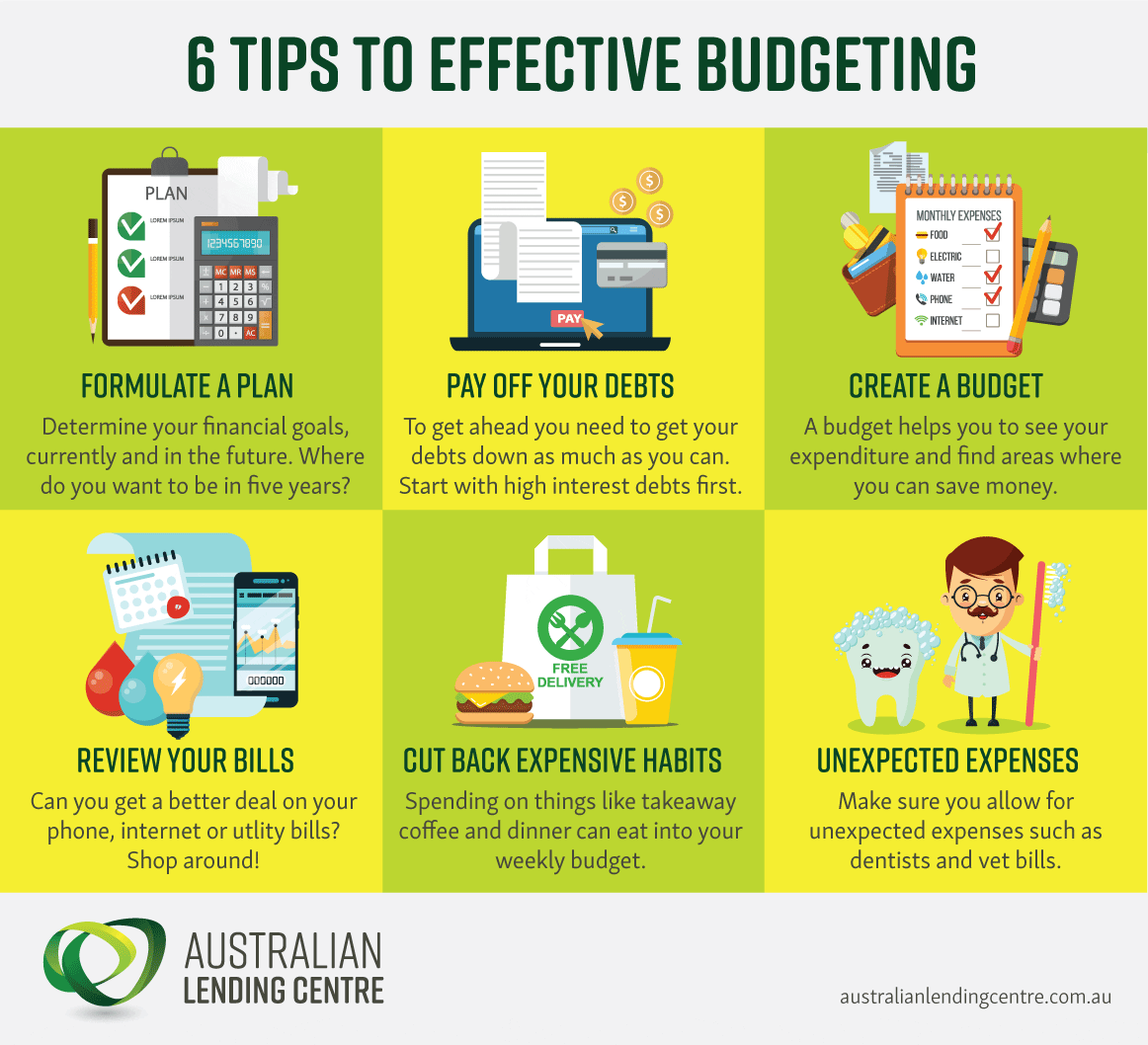
This is the non-negotiable first step, regardless of your chosen budgeting method. You cannot manage what you don’t measure.
- Identify all income sources: Salary, freelance work, side hustles, benefits, etc.
- Track every expense for at least 30 days: Use a spreadsheet, a notebook, or a budgeting app to record every dollar you spend. Be honest and thorough. This will reveal your true spending habits, including those “leaky” areas where money disappears without much thought. Categorize your expenses (e.g., housing, food, transportation, entertainment).
Set Realistic Financial Goals: Short-Term and Long-Term
Your budget is a tool to achieve your goals. Define what you’re working towards.
- Short-term goals (1-2 years): Emergency fund (3-6 months of living expenses), paying off a specific debt, saving for a down payment on a car.
- Long-term goals (5+ years): Retirement, college savings, buying a home, significant investments.
Assign a specific amount and a timeline to each goal. This gives your budget purpose and keeps you motivated.
Allocate Funds and Make Adjustments: The Iterative Process
Based on your income, tracked expenses, and goals, begin allocating your money.
- Fixed Expenses: These are usually consistent each month (rent, mortgage, loan payments, insurance premiums).
- Variable Expenses: These fluctuate (groceries, utilities, gas, entertainment). Estimate these based on your tracking data.
- Savings/Debt Repayment: Prioritize your savings goals and debt reduction.
- Review and Adjust: After your first month (or even two weeks), review your budget. Did you overestimate or underestimate in certain categories? Were there unexpected expenses? Adjust your allocations accordingly for the next period. This is crucial for creating a sustainable budget.
Cut Unnecessary Expenses Without Feeling Deprived
This doesn’t mean living a monastic life. It means making intentional choices.
- Identify “Wasteful” Spending: Look at your tracked expenses. Are there subscriptions you don’t use? Unnecessary daily coffees? Impulse purchases?
- Automate Savings: Set up automatic transfers from your checking to your savings account immediately after you get paid. “Pay yourself first.”
- Negotiate Bills: Call your internet, cable, or insurance providers to see if you can get a better rate.
- Find Alternatives: Pack your lunch, cook more meals at home, look for free entertainment options.
The goal is to free up money for your priorities, not to punish yourself.
Build an Emergency Fund: Your Financial Safety Net
This is non-negotiable. An emergency fund (typically 3-6 months of essential living expenses) is your buffer against job loss, medical emergencies, or unforeseen repairs. Without it, one unexpected event can derail your entire financial plan and plunge you into debt. Prioritize building this fund before aggressively tackling other financial goals, beyond minimum debt payments.
Leveraging Tools and Technologies for Budgeting Success
The digital age offers a plethora of tools to simplify and enhance your budgeting efforts.
Digital Budgeting Apps and Software
These tools can automate much of the tracking and categorization, providing real-time insights into your spending.
- Mint: A popular free app that links to your bank accounts and credit cards, categorizing transactions and allowing you to set budget limits.
- YNAB (You Need A Budget): A paid app built on the zero-based budgeting philosophy, offering powerful features for intentional spending.
- Personal Capital: Excellent for overall financial planning, investment tracking, and net worth analysis, with budgeting features included.
- PocketGuard, Simplifi, Fidelity Full View: Other robust options offering varying features from expense tracking to bill management.
These apps offer dashboards, reports, and alerts that can keep you informed and accountable.
Spreadsheets: The DIY Powerhouse
For those who prefer a hands-on approach or want complete customization, a simple spreadsheet (Excel, Google Sheets) can be incredibly powerful. You can create categories, track income and expenses, calculate percentages, and visualize your financial data with charts. Many free templates are available online to get you started.
Automating Savings and Bill Payments
Automation is your best friend for consistency.
- Automated Transfers: Set up automatic transfers from your checking account to your savings, investment, and debt repayment accounts on payday.
- Automatic Bill Pay: Schedule recurring bills to be paid automatically from your checking account. This ensures you never miss a payment, avoiding late fees and protecting your credit score.
By automating these processes, you reduce the mental load of budgeting and ensure that your financial goals are being met consistently.
Overcoming Budgeting Challenges and Staying Motivated
Budgeting is a marathon, not a sprint. You will encounter challenges, but perseverance is key.
Dealing with Unexpected Expenses
Life is full of surprises. This is where your emergency fund shines. If you don’t have one fully funded, create a buffer category in your budget for “miscellaneous” or “unexpected” expenses. When large, true emergencies hit, dip into your emergency fund, then prioritize replenishing it. Don’t let a single unexpected event derail your entire budget; adjust and move forward.
Staying Consistent and Avoiding Burnout
- Make it a Habit: Schedule a weekly or bi-weekly budget check-in. It could be 15-30 minutes to review transactions, adjust categories, and look ahead.
- Be Flexible: Your budget is a guide, not a rigid prison. If you overspend in one category, look for areas where you can cut back in another, or adjust next month’s allocations.
- Celebrate Small Wins: Acknowledge when you stick to your budget, pay off a debt, or hit a savings milestone. Positive reinforcement keeps you motivated.
Budgeting as a Couple or Family
Financial discussions can be sensitive.
- Open Communication: Talk openly and honestly about financial goals, spending habits, and priorities.
- Shared Goals: Work together to define common financial goals (e.g., buying a house, retirement).
- Choose a Method Together: Select a budgeting method that both partners can agree on and commit to.
- Regular Check-ins: Schedule consistent meetings to review the budget, discuss financial decisions, and address any concerns.
The Long-Term Benefits: Financial Freedom and Peace of Mind
The effort you put into effective budgeting pays dividends far beyond just having more money in your bank account. It leads to:
- Reduced Stress: Knowing where you stand financially alleviates anxiety.
- Increased Opportunities: Having savings opens doors to new experiences, investments, and greater security.
- Achieving Dreams: Your biggest life goals become tangible realities through disciplined financial planning.
- Legacy Building: Effective financial management allows you to build wealth and provide for future generations.

Conclusion
Effective budgeting is not a temporary fix but a lifelong skill and a cornerstone of financial stability and prosperity. It requires discipline, self-awareness, and a willingness to adapt, but the rewards are profound. By understanding the fundamentals, choosing a method that suits you, diligently tracking your money, leveraging available tools, and maintaining a resilient mindset, you can transform your financial trajectory. Embrace the journey, empower yourself with knowledge, and watch as your budget becomes the most powerful tool in your pursuit of financial freedom and a life lived on your own terms.
aViewFromTheCave is a participant in the Amazon Services LLC Associates Program, an affiliate advertising program designed to provide a means for sites to earn advertising fees by advertising and linking to Amazon.com. Amazon, the Amazon logo, AmazonSupply, and the AmazonSupply logo are trademarks of Amazon.com, Inc. or its affiliates. As an Amazon Associate we earn affiliate commissions from qualifying purchases.