
In the landscape of personal finance and strategic wealth management, few tools are as versatile and potent as American Express Membership Rewards. Often cited as the gold standard of “transferable” currencies, these points represent more than just a loyalty perk; they are a secondary form of capital that, when leveraged correctly, can unlock thousands of dollars in travel value. Mastering the art of booking flights with Amex points requires a shift in perspective, moving from a casual consumer mindset to that of a strategic optimizer who understands the underlying mechanics of the airline industry and financial arbitrage.

Understanding the American Express Membership Rewards Ecosystem
Before diving into the mechanics of booking, one must understand what makes American Express Membership Rewards (MR) points uniquely valuable compared to fixed-value points offered by many retail banks. In the world of financial tools, MR points are considered “flexible currency.” Unlike a specific airline’s miles, which are subject to the devaluation and availability constraints of a single carrier, Amex points can be deployed across a vast network of partners.
The Value of “Flexible” Currency
The primary strength of the Membership Rewards program lies in its versatility. While you can use points to pay for charges on your statement or buy gift cards, doing so generally yields a poor return on investment—often as low as 0.5 to 0.7 cents per point. However, when these points are applied to travel, specifically through strategic transfers, the valuation can soar to 2.0 cents per point or higher. This effectively doubles or triples the purchasing power of your rewards. From a personal finance standpoint, this optimization is equivalent to finding a high-yield investment vehicle for your accumulated spending.
How Points Are Earned and Valued
To maximize the booking process, you must first understand the “cost of goods.” Points are typically earned through tiered multipliers on cards like the American Express® Gold Card or The Business Platinum Card®. For instance, earning 4x points on dining and groceries means that for every dollar spent, you are essentially receiving a 4% to 8% return, depending on how you redeem those points for flights. Understanding this “return on spend” is the first step in treating your points as a financial asset rather than a marketing gimmick.
Direct Booking vs. Strategic Transfers: Which Is Better?
When you are ready to book a flight, American Express offers two primary paths: booking directly through the Amex Travel portal or transferring points to a frequent flyer partner. Each method serves a different financial strategy.
Booking via the Amex Travel Portal
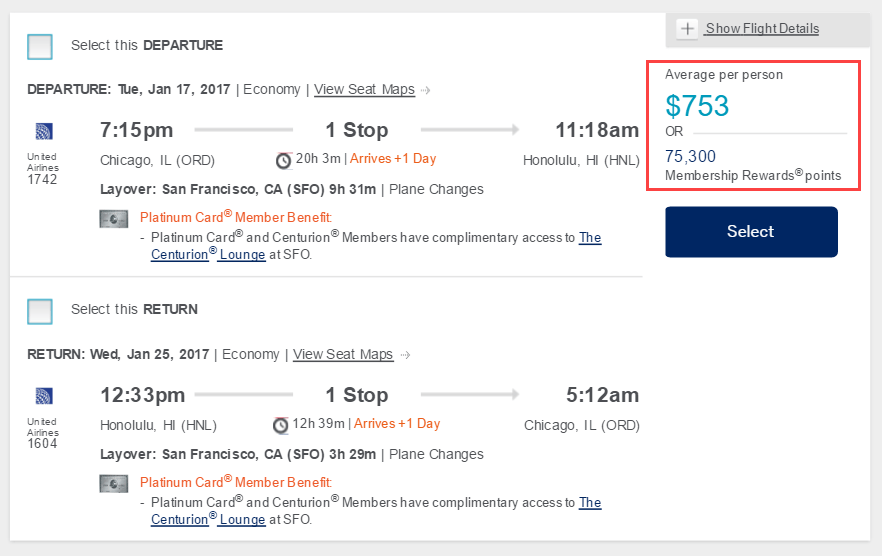
The Amex Travel portal functions similarly to an online travel agency like Expedia. You search for a flight, and you can choose to “Pay with Points.” In this scenario, your points typically have a fixed value of 1 cent each.
The advantage of this method is simplicity and ubiquity. There are no “blackout dates” or “award seat availability” issues; if a seat is for sale, you can buy it with points. Furthermore, because the airline views this as a “cash” booking, you will earn frequent flyer miles and elite status credits on the flight. This is often the best route for domestic economy flights where the cash price is low, or for users of the Business Platinum Card, which offers a 35% points rebate on select flights, effectively boosting the value to roughly 1.54 cents per point.
The Power of Transfer Partners
For those seeking the highest possible return on investment, transferring points to airline partners is the superior strategy. American Express currently maintains partnerships with nearly 20 airlines, including Delta SkyMiles, British Airways Executive Club, Air Canada Aeroplan, and Singapore Airlines KrisFlyer.
When you transfer points to these partners, you are no longer tied to a 1-cent-per-point valuation. Instead, you are purchasing an “award seat.” For example, a business class ticket to Europe might cost $4,000 in cash but only 60,000 points. In this scenario, your points are worth over 6.6 cents each. This is where the “Money” aspect of point management becomes truly lucrative, allowing you to access luxury experiences for a fraction of the market cost.
Step-by-Step Guide to Transferring Points for Maximum Value
The process of transferring points is irreversible, making it the most critical phase of the booking process. Following a disciplined workflow ensures that you do not “orphan” your points in an airline program without a confirmed flight.
Finding Award Space Before You Transfer
The biggest mistake novices make is transferring points to an airline before verifying that an award seat is available. Just because an airline has seats for sale doesn’t mean they have seats available for points. You must use the airline’s own website or a dedicated search tool to find “Saver” level award availability. Only when you have confirmed that the flight exists and the price in miles is acceptable should you proceed to the transfer stage.
Linking Your Accounts and Executing the Transfer
To move points, your American Express account must be linked to your frequent flyer account. This usually requires your name to match exactly on both platforms. Once linked, most transfers are instantaneous, though some partners (like ANA or Cathay Pacific) can take 24 to 48 hours.
Financial discipline is key here: always account for taxes and fees. While the flight “price” may be 50,000 points, the airline will still charge cash for government taxes and carrier-imposed fuel surpluses. Always factor these “out-of-pocket” costs into your valuation to ensure the redemption still makes financial sense compared to a cash booking.
Top Strategic Transfer Partners for Global Travel
Not all transfer partners are created equal. Depending on your destination, certain programs offer “sweet spots” that provide outsized value.
Domestic Flights via International Partners
One of the most insightful secrets of the points world is using international partners to book domestic flights. For example, you can transfer Amex points to British Airways to book American Airlines flights, or to Air Canada to book United Airlines flights. Because these partners often use distance-based or fixed-price award charts, you can frequently find domestic short-haul flights for significantly fewer points than the domestic carriers would charge their own members.
Luxury Travel and Business Class Redemptions
For long-haul international travel, partners like Virgin Atlantic, Emirates, and Singapore Airlines offer the highest ROI. Using 80,000 points for a suite on Emirates that retails for $10,000 is a prime example of high-level financial optimization. It turns a luxury expense into a manageable point redemption, preserving your cash for other investments while still enjoying a premium experience.
Advanced Tips for Maximizing Your Point Valuation
As you become more proficient in managing your Amex points, you can employ advanced strategies to further squeeze value out of every point earned.
Watching for Transfer Bonuses
Periodically, American Express offers transfer bonuses to specific partners. For instance, they may offer a 30% bonus when transferring points to Virgin Atlantic or Hilton Honors. If you have a planned trip, waiting for these bonuses can drastically reduce the number of points required. A 100,000-point flight suddenly only costs roughly 77,000 points, providing an immediate 23% “discount” on your redemption.
The 35% Airline Rebate for Business Platinum Holders
For business owners, The Business Platinum Card® offers a unique feature: a 35% points rebate when you use “Pay with Points” for a first or business-class flight on any airline, or for any class of travel on your selected qualifying airline. This caps at 1,000,000 points back per calendar year. This feature bridges the gap between the simplicity of the portal and the value of transfers, creating a “floor” valuation of 1.54 cents per point. For many busy professionals, this is the most efficient way to book flights, as it bypasses the need to search for award availability while still providing a respectable return.

Strategic Diversification
Finally, treat your points like a portfolio. While Amex points are incredibly valuable, they should be part of a broader financial strategy that includes cash reserves and perhaps other point currencies. By understanding the “exchange rates” between your points and various airlines, you can make informed decisions about when to spend points and when to spend cash, ensuring that your travel remains a rewarded asset rather than a drain on your net worth.
Booking flights with Amex points is a sophisticated financial maneuver that rewards patience, research, and strategic thinking. By moving away from the “1 cent per point” baseline and toward high-value partner transfers, you transform your everyday business and personal spending into a powerful engine for global mobility and financial efficiency.
aViewFromTheCave is a participant in the Amazon Services LLC Associates Program, an affiliate advertising program designed to provide a means for sites to earn advertising fees by advertising and linking to Amazon.com. Amazon, the Amazon logo, AmazonSupply, and the AmazonSupply logo are trademarks of Amazon.com, Inc. or its affiliates. As an Amazon Associate we earn affiliate commissions from qualifying purchases.