
In the realm of personal finance, travel is often categorized as a discretionary expense—a “want” rather than a “need.” However, for the modern professional, travel is more than a luxury; it is an investment in global networking, cultural capital, and mental well-being. The challenge lies in the volatility of the aviation market. Airfare prices are not fixed; they are the products of complex algorithms designed to maximize “yield” for the airline.
To the financially savvy traveler, booking a flight is an exercise in arbitrage. It is about identifying market inefficiencies and leveraging specific tools to secure the highest value for the lowest possible capital outlay. This guide approaches flight booking through the lens of financial optimization, moving beyond basic “tips” to explore the strategic management of travel costs.
1. The Macroeconomics of Airline Pricing Models
To beat the system, one must first understand the mechanics of the market. Airlines utilize sophisticated Revenue Management Systems (RMS) that adjust prices in real-time based on supply, demand, and competitor behavior. Understanding these patterns is the first step toward significant cost reduction.
The Myth of the “Magic Day” vs. Real-Time Data
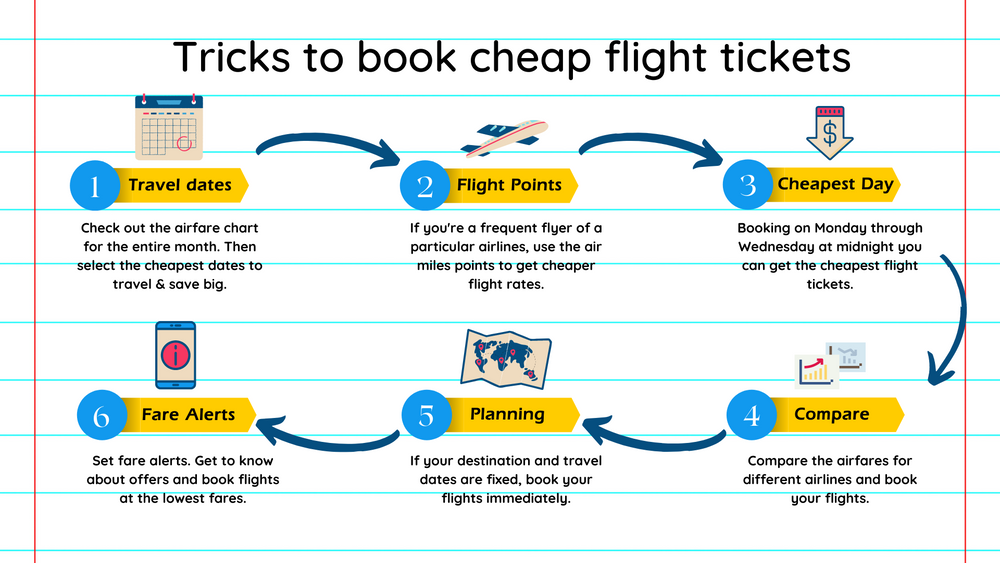
For years, the prevailing wisdom suggested that booking on a Tuesday at midnight would yield the lowest prices. In the modern era of high-frequency algorithmic trading, this is largely a fallacy. Airline prices fluctuate based on “buckets” of seats. As one price bucket sells out, the system automatically moves to the next, more expensive tier. Instead of looking for a specific day of the week to buy, focus on the “booking window.” For domestic flights, the financial “sweet spot” typically occurs 1–3 months in advance, while international routes require a 2–8 month lead time to avoid the “proximity premium” charged to last-minute business travelers.
Understanding Dynamic Pricing and Yield Management
Airlines categorize travelers into two groups: price-sensitive (leisure) and time-sensitive (business). Yield management is the practice of squeezing the maximum amount of money from the latter while filling seats with the former. By understanding that airlines are desperate to fill “distressed inventory” as the departure date approaches—but only if demand is low—you can use volatility to your advantage. Tools that track historical price data allow you to see if the current “ask price” is a fair market value or an inflationary spike.
2. Leveraging Financial Tools and Digital Aggregators
In any financial endeavor, the quality of your data determines the quality of your results. To book cheap flights, you must utilize metasearch engines that aggregate data from hundreds of sources, allowing you to perform a comprehensive market analysis in seconds.
The Power of Metasearch Engines
Google Flights, Skyscanner, and Kayak are the “Bloomberg Terminals” of the travel world. Google Flights, in particular, offers a robust interface for “Exploration Mode.” If your goal is to minimize expenditure, you should prioritize “destination agnosticism.” By inputting your home airport and leaving the destination open, you can identify which global markets are currently experiencing a price dip, allowing you to allocate your travel budget toward undervalued regions.
Predictive AI and Price Tracking
Software like Hopper uses trillions of historical data points to predict whether a fare will rise or fall. Using these tools converts a “gamble” into a calculated risk. By setting price alerts, you are essentially “limit ordering” your flight; you wait for the market to hit your target price before executing the transaction. This disciplined approach removes the emotional impulse to buy when prices are high due to FOMO (Fear Of Missing Out).
3. Strategic Credit Card Management and Points Arbitrage

The most advanced method of reducing travel costs is not paying with currency at all, but rather with “loyalty equity.” Travel rewards and credit card points represent a secondary currency that, when used correctly, can offer a significantly higher Return on Investment (ROI) than cash.
The Role of Transferable Points in Personal Finance
Financial experts often recommend “transferable points” programs (such as Chase Ultimate Rewards, American Express Membership Rewards, or Capital One Miles). These points act as a hedge against airline-specific devaluations. Instead of being locked into one airline’s ecosystem, you can move your “capital” to whichever partner offers the best redemption rate for a specific route. For example, a flight that costs $1,200 might be available for 60,000 points. If those points were earned through a sign-up bonus or everyday business spending, the effective cost of the flight is near zero.
Maximizing “Value Per Point” (VPP)
To truly master travel finance, you must calculate the Value Per Point. If you redeem 50,000 points for a $500 flight, you are getting 1 cent per point (CPP). However, if you redeem those same 50,000 points for a $2,500 Business Class upgrade, you have achieved 5 CPP. This is the ultimate form of travel arbitrage: using “cheap” points to purchase “expensive” inventory, thereby preserving your liquid cash for other investments.
4. Alternative Booking Strategies: Exploiting Market Inefficiencies
Sometimes, the best way to save money is to look where others are not. This requires a shift in perspective from “point A to point B” to a more holistic view of global transit networks.
Error Fares and Position-Based Savings
Error fares occur when a technical glitch or human error causes an airline to list a flight for a fraction of its intended price (e.g., a $1,000 flight listed for $100). While rare, these are the “black swans” of the travel market. Additionally, “positioning flights” can save thousands. If a flight from London to New York is $800, but a flight from Dublin to New York is $400, it may be financially prudent to buy a $50 “positioning” ticket to Dublin to take advantage of the lower long-haul fare.
The “Hidden City” and Multi-City Strategy
“Hidden City” ticketing involves booking a flight with a layover in your actual intended destination and simply walking away at the layover. While this carries risks—such as airline loyalty account suspension—it highlights the illogical nature of airline pricing where a longer flight (A to C via B) is often cheaper than a shorter flight (A to B). A safer, more professional alternative is the “Open Jaw” itinerary, where you fly into one city and out of another. This reduces “backtracking” costs and maximizes the efficiency of your time and transportation budget within the destination.
5. Long-term Financial Planning for Travel
The most successful travelers treat their travel budget with the same rigor as an investment portfolio. This involves consistent saving, risk mitigation, and understanding the opportunity cost of every dollar spent.
Sinking Funds and Budgetary Allocation
Rather than relying on credit card debt to fund a trip, savvy individuals utilize “sinking funds.” By automating a monthly transfer into a dedicated high-yield savings account labeled “Travel,” you ensure that the capital is available when a market opportunity (like a flash sale) arises. This allows for “opportunistic buying”—the ability to pull the trigger on a cheap flight because the liquidity is already designated for that purpose.
The Opportunity Cost of Convenience
Every booking decision involves a trade-off between time and money. A direct flight may cost $200 more than a flight with a six-hour layover. From a financial perspective, you must calculate your hourly rate. If your time is worth $100 an hour, the “cheaper” flight actually costs you $400 in lost productivity or rest. True financial mastery in booking flights is knowing when to pay more to preserve your most valuable asset: time.

Conclusion
Booking cheap flights is far more than a series of “hacks” or “tricks.” It is a sophisticated financial strategy that requires market knowledge, the right technological tools, and a disciplined approach to capital allocation. By viewing airfare as a volatile commodity and leveraging credit card rewards as a secondary currency, you can significantly reduce your travel overhead. Whether it is through timing the market, exploiting algorithmic errors, or maximizing point redemptions, the goal remains the same: to experience the world without compromising your long-term financial health. In the economy of travel, the informed passenger always pays the least.
aViewFromTheCave is a participant in the Amazon Services LLC Associates Program, an affiliate advertising program designed to provide a means for sites to earn advertising fees by advertising and linking to Amazon.com. Amazon, the Amazon logo, AmazonSupply, and the AmazonSupply logo are trademarks of Amazon.com, Inc. or its affiliates. As an Amazon Associate we earn affiliate commissions from qualifying purchases.