
In the intricate world of personal and business finance, numbers tell a story, and percentages are often the most compelling narrators. From calculating sales tax on a purchase to understanding the interest accrued on a loan, assessing profit margins, or even just leaving a gratuity, the ability to confidently add a percentage to an amount is not merely a mathematical exercise—it’s a foundational skill for informed financial decision-making. This seemingly simple calculation underpins a vast array of financial operations, making its mastery indispensable for anyone looking to navigate their monetary landscape with precision and foresight.
This article delves into the core mechanics of adding a percentage to an amount, translating abstract mathematical concepts into tangible financial applications. We’ll explore not only the “how-to” but also the critical “why,” demonstrating its pervasive relevance across personal finance, business strategy, and investment analysis. By the end, you’ll possess a clearer understanding of this vital skill, empowering you to approach financial figures with greater confidence and insight.
The Core Mechanics: Understanding and Calculating Percentages
Before we can effectively add a percentage to an amount, we must first grasp what a percentage truly represents and how to calculate its value. This understanding forms the bedrock of all subsequent financial computations.
Demystifying the Percentage: What It Really Means
At its heart, a percentage is simply a way of expressing a number as a fraction of 100. The term “percent” literally means “per hundred.” So, 25% means 25 out of 100, or 25/100. This makes percentages incredibly useful for comparing proportions and expressing changes in a standardized way.
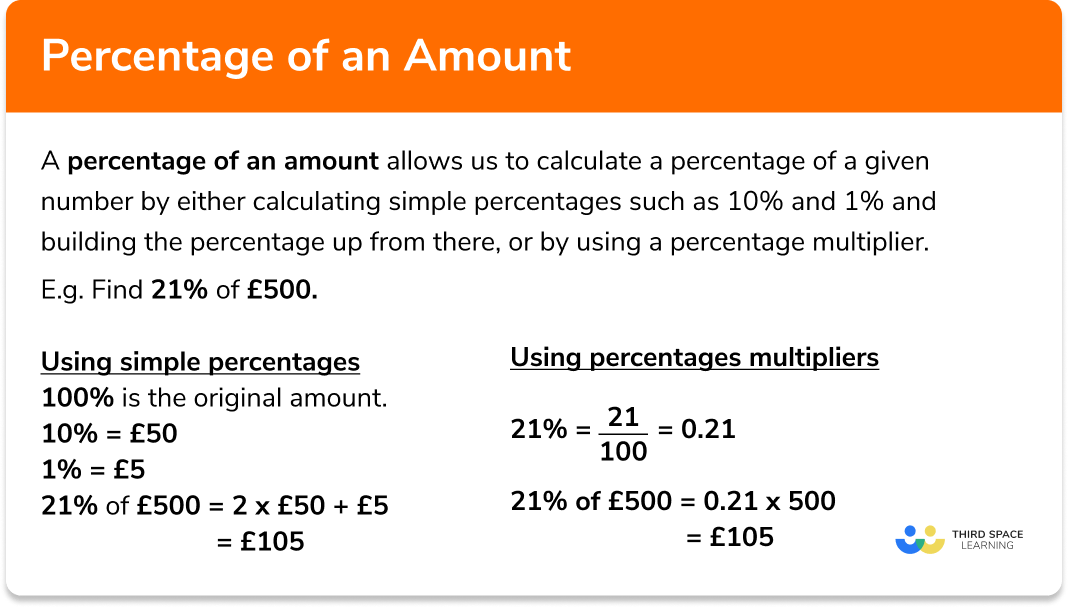
For financial calculations, it’s often easiest to convert percentages into their decimal equivalents. To do this, you simply divide the percentage by 100.
- 25% = 25 / 100 = 0.25
- 5% = 5 / 100 = 0.05
- 120% = 120 / 100 = 1.20
This conversion is crucial because it allows us to perform straightforward multiplication in our calculations.
The Fundamental Formula: Finding a Percentage of a Number
The first step in adding a percentage to an amount is to determine the actual value that the percentage represents. This is done by multiplying the original amount by the decimal equivalent of the percentage.
Formula:
Percentage Value = Original Amount × (Percentage / 100)
Example:
If you want to find 15% of $200:
- Convert 15% to a decimal: 15 / 100 = 0.15
- Multiply the original amount by the decimal: $200 × 0.15 = $30
So, 15% of $200 is $30.
Step-by-Step: Adding the Percentage to Your Original Amount
Once you have the percentage value, adding it to the original amount is straightforward.
Method 1: Two-Step Calculation
- Calculate the percentage value (as shown above).
- Add the calculated percentage value to the original amount.
Formula:
Final Amount = Original Amount + Percentage Value
Example:
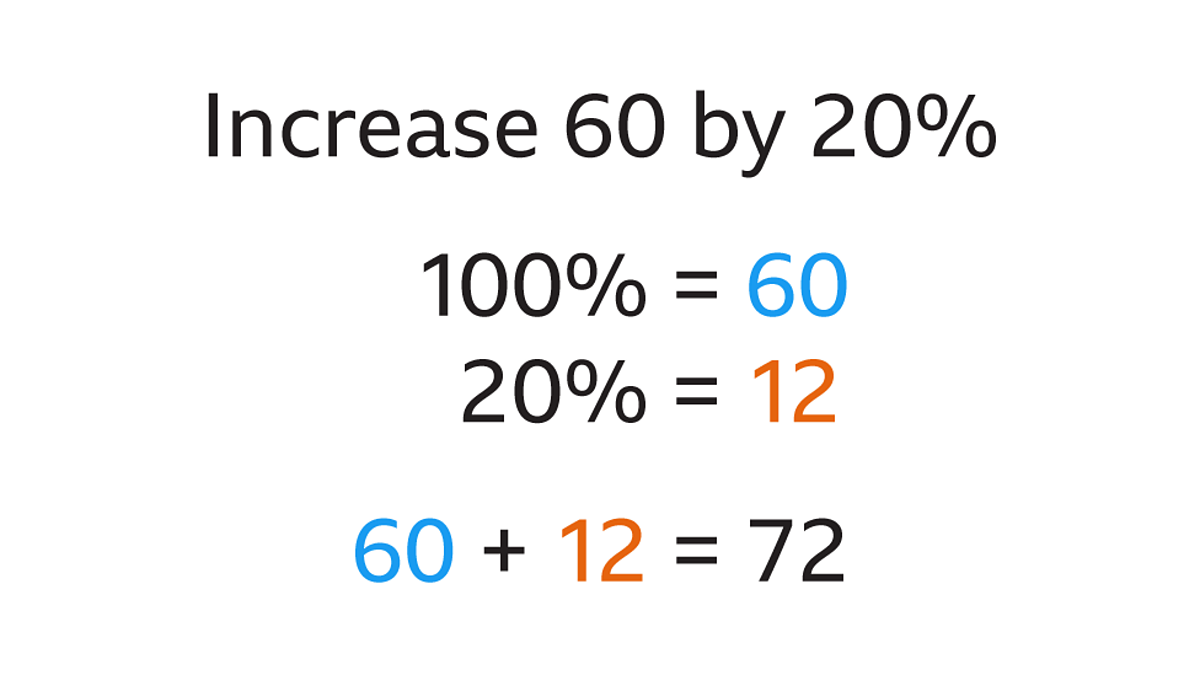
If you want to add 15% to $200:
- Percentage Value = $200 × 0.15 = $30
- Final Amount = $200 + $30 = $230
Method 2: One-Step Calculation (More Efficient)
This method is often preferred for its efficiency, especially in financial software and spreadsheets. It involves adding the percentage (as a decimal) directly to 1, and then multiplying this sum by the original amount. The “1” represents the original 100% of the amount.
Formula:
Final Amount = Original Amount × (1 + (Percentage / 100))
Example:
If you want to add 15% to $200:
- Convert 15% to decimal: 0.15
- Add 1 to the decimal: 1 + 0.15 = 1.15
- Multiply the original amount by this factor: $200 × 1.15 = $230
Both methods yield the same result, but the second method is generally more streamlined, particularly when dealing with multiple calculations or programming.
Real-World Personal Finance Applications
The ability to add a percentage to an amount is a cornerstone of effective personal finance management. It empowers individuals to make informed decisions about their spending, saving, borrowing, and budgeting.
Navigating Sales Tax, Tips, and Discounts
Perhaps the most common everyday application of adding percentages is dealing with sales tax, tips, and understanding final prices.
- Sales Tax: When you buy a product, sales tax is added to the listed price. If an item costs $50 and the sales tax is 7%, you would calculate: $50 × (1 + 0.07) = $50 × 1.07 = $53.50. This gives you the total cost.
- Tips/Gratuities: In many service industries, leaving a tip is customary. If a meal costs $75 and you want to leave a 20% tip, the total payment would be: $75 × (1 + 0.20) = $75 × 1.20 = $90.
- Discounts (Reverse Logic): While this involves subtracting a percentage, understanding how percentages work is key. If an item is $100 and has a 20% discount, you pay 80% of the original price: $100 × (1 – 0.20) = $100 × 0.80 = $80. Knowing how to add a percentage helps you verify these calculations.
Decoding Interest: Savings, Loans, and Credit
Interest is a fee paid for borrowing money, or money earned for lending it. It’s almost always expressed as a percentage.
- Savings Accounts: If you have $1,000 in a savings account earning a 2% annual interest rate, and the interest is compounded annually, after one year you would have: $1,000 × (1 + 0.02) = $1,000 × 1.02 = $1,020. Understanding this helps you project growth.
- Loans and Mortgages: When you take out a loan, interest is added to the principal. A $10,000 personal loan at a 5% annual interest rate will incur interest charges. While actual loan calculations are more complex due to amortization schedules and compounding frequency, the basic principle of adding a percentage to an amount forms the underlying structure of how interest accrues.
- Credit Card Balances: If you carry a balance on a credit card, interest is added, often monthly. A $500 balance with a 1.5% monthly interest rate would grow to: $500 × (1 + 0.015) = $500 × 1.015 = $507.50 in one month (excluding payments). This illustrates how quickly balances can increase if not managed.
Budgeting for Salary Increases, Inflation, and Price Changes
Budgeting is a dynamic process, and percentages help us anticipate and adjust to changes in income and expenses.
- Salary Raises: If your current salary is $60,000 and you receive a 3% raise, your new salary will be: $60,000 × (1 + 0.03) = $60,000 × 1.03 = $61,800. This impacts your take-home pay and overall budget.
- Inflation: The rising cost of goods and services is often expressed as an annual inflation rate. If your current living expenses are $3,000 per month and the inflation rate is 2%, those same expenses might cost: $3,000 × (1 + 0.02) = $3,000 × 1.02 = $3,060 next year. Understanding this helps you adjust your savings and spending plans.
- Price Increases: From utility bills to subscription services, prices often increase by a percentage. Knowing how to calculate the new amount helps you update your budget accurately.
Strategic Uses in Business and Investing
For businesses and investors, adding percentages is not just about calculation; it’s about strategy, profitability, and growth. These calculations inform pricing, measure performance, and guide investment decisions.
Profit Margins, Markups, and Pricing Strategies
Businesses rely heavily on percentages to set prices, analyze profitability, and manage costs.
- Markups: A markup is the amount a seller adds to the cost of a product to arrive at its selling price. If a product costs a retailer $10 to acquire, and they want a 30% markup, the selling price would be: $10 × (1 + 0.30) = $10 × 1.30 = $13. This ensures they cover costs and make a profit.
- Pricing for Profit: Understanding how to add percentages allows businesses to strategically price products to achieve desired gross profit margins. If a company aims for a 40% profit margin on a product that costs $60 to produce, they need to price it carefully. (Note: this is often margin on revenue, so the calculation is slightly different, but the principle of percentage addition is fundamental).
- Cost Plus Pricing: Many businesses use a “cost-plus” model, where they calculate all costs for a product or service and then add a desired percentage for profit.
Analyzing Growth Rates and Investment Returns
In investing, percentages are the language of performance.
- Investment Returns: If you invest $5,000 and it grows by 8% in a year, its new value is: $5,000 × (1 + 0.08) = $5,000 × 1.08 = $5,400. This simple calculation is the basis for understanding investment performance, compounded growth, and future value.
- Compound Annual Growth Rate (CAGR): While more complex, CAGR builds upon the concept of adding percentages over multiple periods. Understanding how an initial investment grows year after year (or period after period) at a certain percentage rate is crucial for long-term financial planning.
- Business Growth: Businesses measure their growth year-over-year or quarter-over-quarter using percentages. For example, if a company’s revenue was $1 million last year and grew by 15% this year, its current revenue is: $1,000,000 × (1 + 0.15) = $1,000,000 × 1.15 = $1,150,000.
Understanding Depreciation and Asset Valuation
While depreciation typically subtracts from an asset’s value, the principle of percentage calculation remains the same. Understanding how an asset’s value decreases by a certain percentage each year is crucial for accounting, tax planning, and business valuation. Similarly, valuing assets that appreciate (like real estate) often involves adding a percentage to their base value.
Ensuring Accuracy: Common Errors and Smart Tools
Even with a clear understanding, missteps can occur. Recognizing common pitfalls and leveraging appropriate tools are essential for consistent accuracy in financial calculations.
Avoiding Misinterpretations: Percentage Points vs. Percentage Change
One frequent area of confusion is distinguishing between a “percentage change” and a “percentage point” change.
- Percentage Change: This is what we’ve been discussing—the relative change in a quantity. If an interest rate goes from 4% to 5%, that’s a (5-4)/4 = 1/4 = 25% increase.
- Percentage Point Change: This refers to the absolute difference between two percentages. In the example above, the interest rate increased by 1 percentage point.
Confusing these can lead to significant errors in financial analysis, especially when discussing interest rates, market share, or survey results.
The Power of Spreadsheets and Financial Calculators
While mental math is useful for quick estimates, for critical financial decisions, accuracy is paramount.
- Spreadsheets (e.g., Excel, Google Sheets): These are invaluable tools. They allow you to set up formulas (like
=A1*(1+B1)) that automatically calculate percentages. This is particularly useful for budgeting, financial modeling, and scenario planning, where you might change a percentage (e.g., interest rate) and instantly see the impact. - Financial Calculators: Dedicated financial calculators and online percentage calculators can quickly perform these operations, reducing the chance of manual error. Many even have built-in functions for common financial calculations involving percentages.
Beyond Simple Addition: Compound Changes
Many financial scenarios involve compound changes, where a percentage is added (or subtracted) multiple times over different periods, and each subsequent calculation is based on the new amount.
- Compound Interest: The most famous example. Interest is earned not only on the initial principal but also on the accumulated interest from previous periods. Understanding
A = P(1 + r/n)^(nt)(whereris the annual interest rate,nis the number of times interest is compounded per year, andtis the number of years) requires a firm grasp of adding percentages iteratively. - Successive Discounts/Markups: If an item is marked up by 10%, then marked up by another 5%, these don’t simply add up to a 15% total markup on the original price. Instead, the second 5% is added to the already increased price.
Original Amount × (1 + 0.10) × (1 + 0.05)will give the correct result, demonstrating the power of sequential percentage addition.

Conclusion
The ability to add a percentage to an amount is far more than a basic arithmetic skill; it is a fundamental pillar of financial literacy. Whether you are managing your household budget, analyzing investment opportunities, or making strategic business decisions, percentages are the common language used to express growth, cost, profit, and change.
By understanding the simple yet powerful formulas, recognizing their ubiquitous applications in personal and business finance, and leveraging tools like spreadsheets, you empower yourself to decode complex financial information, anticipate future outcomes, and make more informed, confident decisions. Mastering this skill isn’t just about crunching numbers; it’s about taking control of your financial narrative and steering it towards your desired outcomes. Embrace the power of percentages, and unlock a clearer, more insightful perspective on your financial world.
aViewFromTheCave is a participant in the Amazon Services LLC Associates Program, an affiliate advertising program designed to provide a means for sites to earn advertising fees by advertising and linking to Amazon.com. Amazon, the Amazon logo, AmazonSupply, and the AmazonSupply logo are trademarks of Amazon.com, Inc. or its affiliates. As an Amazon Associate we earn affiliate commissions from qualifying purchases.