
In the intricate world of personal and business finance, understanding percentages isn’t just a mathematical curiosity; it’s a fundamental skill that underpins countless decisions. From calculating tips and sales tax to projecting investment growth and negotiating salaries, the ability to quickly and accurately add a percentage to a number is an invaluable asset. While 10 percent might seem like a simple figure, mastering its application can unlock deeper insights into financial planning, budgeting, and wealth creation. This article will demystify the process of adding 10 percent to any number, focusing squarely on its myriad applications within the realm of money, offering practical methods, and revealing the strategic advantages of this seemingly basic calculation.

The Fundamental Math: Understanding 10 Percent for Financial Clarity
At its core, adding 10 percent to a number involves a straightforward arithmetic operation. However, understanding the ‘why’ behind the ‘how’ can solidify your grasp and allow for more intuitive application in various financial contexts. This isn’t just about rote memorization; it’s about building a foundational fluency that empowers you to interpret financial data and make informed choices.
What is a Percentage? The Financial Context
A percentage, denoted by the symbol ‘%’, is simply a way of expressing a number as a fraction of 100. So, 10 percent literally means 10 out of every 100, or 10/100. In financial terms, this fraction often represents a portion of a whole amount, whether it’s a part of your income allocated to savings, a portion of a product’s price for tax, or a slice of an investment’s value that has grown. When we talk about adding 10 percent, we are essentially increasing the original number by one-tenth of its value. This perspective is crucial because it helps us visualize the impact of the percentage on the principal amount, making it easier to estimate and verify calculations, especially when dealing with significant sums of money.
For example, if you have $100 and want to add 10 percent, you are adding 10/100 of $100, which is $10. Your new total would be $110. This concept extends seamlessly to any number, large or small, allowing for universal application across different financial scenarios, from micro-transactions to macroeconomic forecasts. Grasping this fractional relationship is the first step toward financial literacy and confidence in handling figures.
The Basic Calculation Method: Step-by-Step Financial Application
There are two primary methods to add 10 percent to a number, both equally valid but offering different mental pathways. The first method breaks down the process into two distinct steps, which can be particularly useful for those who prefer to see the increment before adding it to the original sum.
Step 1: Calculate 10 percent of the original number.
To find 10 percent of any number, you multiply that number by 0.10 (which is the decimal equivalent of 10/100).
- Example: If an item costs $75 and you want to calculate a 10% sales tax, you’d multiply $75 by 0.10.
- $75 * 0.10 = $7.50 (This is the amount of the sales tax).
Step 2: Add this calculated percentage back to the original number.
Once you have the value of 10 percent, you simply add it to your starting figure to get the final increased amount.
- Example: Continuing with the $75 item and $7.50 tax, you’d add these together.
- $75 + $7.50 = $82.50 (This is the total cost including tax).
This method is highly transparent, allowing you to clearly see the absolute value of the 10 percent increment. This transparency can be particularly helpful when reviewing invoices, analyzing financial statements, or explaining cost breakdowns, as it distinctly separates the base amount from the percentage addition.
The Shortcut: Multiplying by 1.10 Directly
For speed and efficiency, especially in fast-paced financial environments or when performing mental arithmetic, the shortcut method is invaluable. This approach combines the two steps above into a single multiplication.
Instead of calculating 10 percent and then adding it, you can simply multiply the original number by 1.10. Why 1.10? Because the “1” represents 100 percent of the original number (the number itself), and the “.10” represents the additional 10 percent. So, you are effectively calculating 110 percent of the original number.
- Example: Let’s reuse the $75 item.
- $75 * 1.10 = $82.50.
As you can see, this method yields the same accurate result in a single step. This efficiency is a game-changer when you’re quickly checking prices with tax, estimating a tip on a bill, or making quick mental calculations during a negotiation. Mastering this shortcut not only saves time but also enhances your confidence in on-the-spot financial assessments. It’s a hallmark of practical financial literacy that allows you to move beyond basic arithmetic to quicker, more strategic thinking.
Everyday Financial Applications of Adding 10 Percent
The ability to add 10 percent to a number is far more than a classroom exercise; it’s a practical skill with daily financial relevance. From personal spending to understanding business operations, this simple calculation informs a wide array of economic interactions. Recognizing these common applications transforms a theoretical concept into a powerful tool for managing and understanding your money.
Calculating Sales Tax and Gratuities with Ease
Perhaps the most frequent application of adding 10 percent in personal finance comes in the form of sales tax and gratuities (tips). While sales tax rates vary, and tips can be discretionary, understanding a 10 percent base provides a quick estimate or a component of a larger calculation.
- Sales Tax: Imagine you’re in a region with a 10% sales tax (or perhaps you’re using 10% as a quick, conservative estimate for a slightly lower tax rate). If an item costs $50, you can instantly calculate the tax as $5 ($50 x 0.10) and the total as $55 ($50 + $5 or $50 x 1.10). This rapid calculation prevents surprises at the register and helps you stick to your budget when shopping.
- Gratuities (Tips): When dining out, leaving a tip is customary. While 15-20% is common, calculating 10% first provides a quick mental anchor. If your bill is $85, 10% is $8.50. From there, you can easily double it for a 20% tip ($17) or add half of the 10% for a 15% tip ($8.50 + $4.25 = $12.75). This systematic approach ensures fair compensation for service while maintaining control over your dining expenses. The simplicity of calculating 10% makes it an excellent starting point for any tip calculation.
Understanding Price Markups and Profit Margins
For entrepreneurs, small business owners, and even astute consumers, adding 10 percent is crucial for understanding how prices are set and how businesses generate profit. While markups are often more complex, starting with a 10% increase illustrates a fundamental business principle.
- Price Markups: Businesses purchase goods at a wholesale cost and then add a markup to arrive at a retail price. If a retailer buys an item for $100 and applies a 10% markup, the markup amount is $10. The selling price would then be $110. This simple calculation helps business owners quickly assess the impact of a proposed markup on their selling price and potential revenue. It’s a building block for more sophisticated pricing strategies, allowing for initial profit margin estimations.
- Profit Margins: While markup is added to the cost to get the selling price, profit margin is the percentage of revenue that represents profit. Understanding a 10% markup helps to illustrate the concept of profit. If you sell an item for $110 that cost you $100, your gross profit is $10. As a percentage of the selling price, this is approximately a 9.09% profit margin ($10/$110). While distinct from a simple 10% addition, the initial calculation of adding 10% to cost provides the foundation for comprehending these critical business metrics.
Projecting Simple Growth and Income Adjustments
Beyond immediate transactions, adding 10 percent can be a valuable tool for future financial planning, particularly when projecting simple growth or anticipating income adjustments.
- Simple Investment Growth: While actual investment returns fluctuate, imagining a consistent 10% annual growth provides a straightforward way to project potential future values. If you invest $1,000 and it grows by 10% in the first year, it becomes $1,100. This foundational understanding can be extended for multi-year projections, though compound interest would be more accurate for actual investment scenarios. It helps build an intuition for how capital can grow over time, motivating saving and investing.
- Income Adjustments: When discussing potential salary increases or anticipating cost-of-living adjustments, a 10% figure can serve as a quick benchmark. If your current salary is $50,000 and you’re aiming for a 10% raise, you know you’re targeting an additional $5,000, bringing your total to $55,000. This empowers you to set realistic financial goals and articulate your expectations during negotiations, providing a clear numerical target for income growth.
Beyond Basic Calculations: Strategic Financial Insights
While the mechanical process of adding 10 percent is straightforward, its true power lies in its application to broader financial strategy. Mastering this skill isn’t just about getting the right answer; it’s about developing financial intuition that informs smarter decisions in budgeting, investing, and negotiation.

Budgeting for Contingencies and Buffers
Effective budgeting is a cornerstone of financial stability. By strategically adding 10 percent, you can build resilience into your financial plan, preparing for unexpected expenses or creating growth opportunities.
- Emergency Fund Buffers: A common financial recommendation is to have an emergency fund covering 3-6 months of living expenses. When setting up this fund, consider adding a 10% buffer to your base calculation. If your monthly expenses are $3,000, and you aim for 3 months, that’s $9,000. Adding a 10% buffer means aiming for an extra $900 ($9,000 x 0.10), totaling $9,900. This extra cushion provides peace of mind against unforeseen cost increases or prolonged periods of income disruption, preventing you from dipping below your essential safety net.
- Projecting Variable Expenses: For categories like utilities, groceries, or entertainment, expenses can fluctuate. Instead of budgeting at the absolute minimum, adding 10% to your average spending in these categories creates a more realistic and forgiving budget. If your average utility bill is $150, budgeting $165 ($150 x 1.10) provides room for seasonal spikes or slight increases, reducing the stress of budget overruns and making your financial plan more sustainable. This proactive approach to budgeting minimizes financial surprises and promotes long-term adherence.
Analyzing Simple Investment Returns and Projections
While advanced investment analysis involves complex algorithms and market dynamics, understanding the impact of a 10% return is fundamental for any investor. It helps in setting expectations, evaluating performance, and making comparisons.
- Hypothetical Growth Scenarios: When evaluating potential investments, knowing how a 10% return affects your principal is a vital starting point. If you consider investing $10,000, a 10% annual return means an extra $1,000 each year (before compounding). This simple projection allows you to quickly assess the potential upside of an investment and compare it against other opportunities or your personal financial goals. It demystifies the growth process and makes investment concepts more tangible.
- Understanding “Rule of 72” Context: The “Rule of 72” states that to find the number of years it takes for an investment to double, you divide 72 by the annual rate of return. If an investment yields 10% annually, it would take approximately 7.2 years (72/10) to double. While not directly adding 10%, understanding the initial 10% growth calculation helps contextualize such rules of thumb, providing a mental model for how consistent returns, even modest ones, can lead to significant wealth accumulation over time. This foundational understanding is crucial for long-term financial planning and retirement strategy.
Negotiating Salaries and Business Deals with Confidence
In professional and business environments, the ability to quickly perform percentage calculations empowers you to negotiate more effectively, whether you’re discussing your salary or striking a deal with a vendor.
- Salary Negotiations: When discussing a potential raise or a new job offer, knowing how to quickly calculate a 10% increase from your current salary (or an offer) allows you to set clear, data-driven targets. If you earn $60,000, aiming for a 10% raise means you’re seeking an additional $6,000, for a total of $66,000. This confidence in numbers allows you to articulate your value and negotiate from a position of strength, demonstrating financial acumen.
- Vendor and Client Negotiations: In business, price adjustments, volume discounts, or service fee increases are common. If a vendor proposes a 10% increase on their services, being able to instantly calculate the absolute monetary impact allows you to assess its fairness and affordability, or to counter-propose effectively. Similarly, if you’re offering a 10% discount to a client, you can immediately quantify the reduced revenue and weigh it against the potential benefits, such as securing a larger contract or retaining a valuable client. This quick numerical insight can be the difference between a favorable and an unfavorable outcome in business dealings.
Tools and Techniques for Accuracy and Efficiency
While understanding the underlying math is paramount, the practical application of adding 10 percent often benefits from leveraging tools and techniques that ensure accuracy and enhance efficiency. In the fast-paced financial world, having reliable methods to perform these calculations quickly is a significant advantage.
Leveraging Calculators and Spreadsheets for Precision
For calculations involving larger numbers, multiple steps, or the need for absolute precision, digital tools are indispensable. They eliminate the risk of human error and can significantly speed up complex financial analyses.
- Physical and Digital Calculators: Basic calculators, whether a physical device or an app on your smartphone, are perfect for quick, accurate calculations. Simply input the original number, multiply by 1.10, and you have your result. This method is reliable for on-the-go financial assessments, from checking a restaurant bill to verifying a loan payment. For instance, if you want to add 10% to $4,578.23, a calculator will quickly give you $5,036.05.
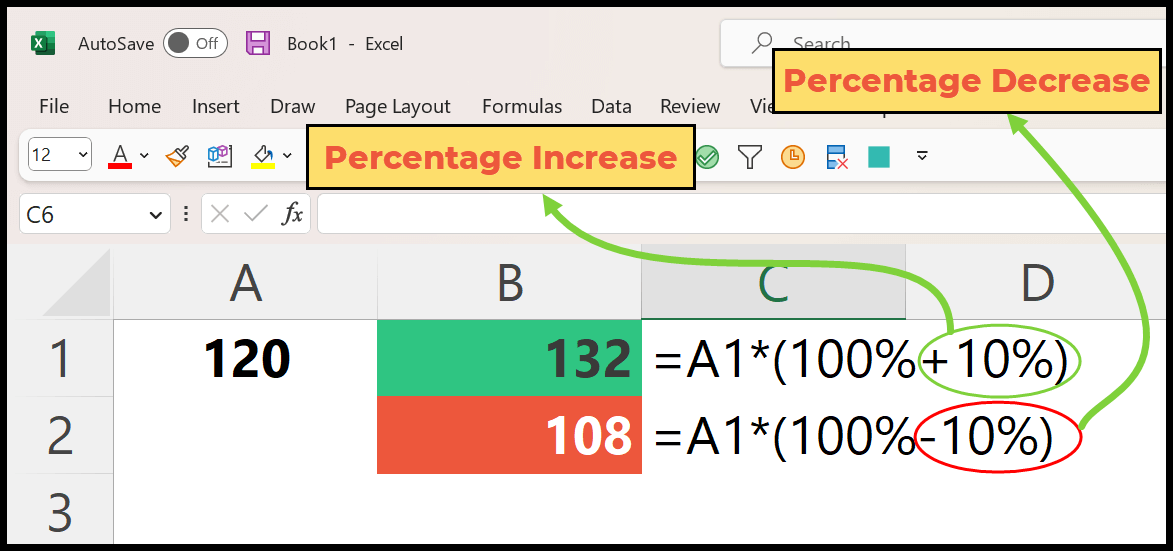
- Spreadsheets (Excel, Google Sheets): For more extensive financial planning, budgeting, or business analysis, spreadsheets are the ultimate tool. They allow you to set up formulas once and apply them across numerous data points. For example, you can have a column for “Original Amount,” another for “10% Increase,” and a final column for “Total.” The formula in the “10% Increase” column would be
=[Original Amount Cell]*0.10, and in the “Total” column=[Original Amount Cell]*1.10or=[Original Amount Cell]+[10% Increase Cell]. This capability is essential for managing large datasets, such as inventory pricing, payroll projections, or multi-year investment forecasts, ensuring consistency and accuracy across all calculations.
Mental Math Tricks for Quick Estimates
While digital tools offer precision, developing strong mental math skills for percentages allows for quick estimations, which are invaluable for on-the-spot decisions, double-checking calculations, and building financial intuition.
- Shifting the Decimal Point: This is the easiest and most powerful mental trick for 10 percent. To find 10 percent of any number, simply move the decimal point one place to the left.
- Example: 10% of $150 is $15.00.
- Example: 10% of $2,345 is $234.50.
- Example: 10% of $8.75 is $0.875 (or 88 cents rounded).
Once you have this 10% value, you can quickly add it back to the original number. This technique is particularly useful for estimating tips, sales tax, or a quick assessment of a discount or increase. It empowers you to react quickly to financial figures without needing a calculator.
- Breaking Down Larger Numbers: For more complex numbers, you can break them down into easier-to-manage chunks. For instance, to add 10% to $345:
- 10% of $300 is $30.
- 10% of $40 is $4.
- 10% of $5 is $0.50.
- Total 10% increment = $30 + $4 + $0.50 = $34.50.
- Original + Increment = $345 + $34.50 = $379.50.
This method builds confidence and flexibility in mental arithmetic, allowing you to tackle more challenging numbers efficiently.
Avoiding Common Pitfalls
Even simple percentage calculations can lead to errors if not approached carefully. Being aware of common pitfalls can save you from financial miscalculations.
- Confusing Markup with Margin: As mentioned earlier, a 10% markup (on cost) is different from a 10% profit margin (on selling price). Always be clear about the base number to which the percentage is being applied. Misunderstanding this can lead to incorrect pricing or profit projections in business.
- Rounding Errors: When dealing with currency, be mindful of rounding. While 10% of $8.75 is $0.875, you’ll typically round to two decimal places ($0.88). Be consistent with rounding rules, especially in official financial documents, to maintain accuracy and prevent discrepancies. Small rounding errors can accumulate over many transactions.
- Percentage of What? Always clarify what the 10% is being added to. Is it the pre-tax amount? The discounted price? The original price? Ambiguity here is a common source of error in financial agreements and calculations. Always confirm the base figure for any percentage calculation.
Empowering Your Financial Decisions with Percentage Mastery
The ability to proficiently add 10 percent to a number, and by extension, master percentage calculations, is a cornerstone of financial literacy. It transcends mere arithmetic, becoming a powerful lens through which to view and interact with the financial world. This skill is not just about crunching numbers; it’s about building confidence, making informed choices, and ultimately, taking control of your financial destiny.
From Simple Calculations to Complex Scenarios
The humble 10 percent calculation serves as a gateway to understanding more complex financial concepts. Once you’re comfortable with adding 10 percent, you’re well-equipped to tackle:
- Compound Interest: The magic of compound interest, where your earnings also earn interest, is fundamentally built on repeatedly adding a percentage to an accumulating sum. Understanding a simple 10% annual growth sets the stage for grasping how your investments can exponentially grow over decades.
- Inflation: Inflation erodes purchasing power, essentially reducing the value of your money by a certain percentage each year. Knowing how to add (or subtract) percentages allows you to conceptualize how much more expensive goods and services become over time, informing your savings and investment strategies to outpace inflation.
- Financial Ratios and Analysis: In business finance, critical metrics like debt-to-equity ratios, gross profit margins, and return on investment are all expressed as percentages. Mastering the basics of percentage addition allows you to more easily interpret these ratios and understand their implications for a company’s financial health and performance.
By building proficiency in adding 10 percent, you lay a solid foundation for comprehending these sophisticated financial mechanisms, moving from being a passive observer to an active, engaged participant in your financial journey.
Building Financial Literacy and Confidence
Perhaps the most significant benefit of mastering percentage calculations, especially something as common as adding 10 percent, is the boost it provides to your overall financial literacy and confidence.
- Informed Decision-Making: When you can quickly calculate the impact of a 10% increase (or decrease) on a price, a salary, an investment, or a budget item, you are better equipped to make informed decisions. You can assess whether a deal is truly good, if a budget allocation is sufficient, or if a financial goal is realistic. This reduces reliance on others and empowers you to critically evaluate financial information.
- Reduced Financial Anxiety: A significant source of financial anxiety stems from a lack of understanding or control. By mastering fundamental skills like adding percentages, you gain a sense of control over your money. You’re less likely to be surprised by hidden costs, better prepared for financial fluctuations, and more confident in managing your resources effectively.
- Empowerment and Growth: Financial literacy is a journey, not a destination. Each skill mastered, like adding 10 percent, adds another tool to your financial toolkit. This continuous learning fosters a sense of empowerment, enabling you to set more ambitious financial goals, navigate economic challenges with greater ease, and ultimately build a more secure and prosperous future.
In conclusion, “how to add 10 percent to a number” is far more than a simple math problem. It’s a foundational financial skill that, when mastered, unlocks a deeper understanding of money, empowers smarter decision-making, and builds the confidence necessary to navigate the complexities of personal and business finance. Embrace this simple calculation, for within its simplicity lies a powerful key to financial wisdom and control.
aViewFromTheCave is a participant in the Amazon Services LLC Associates Program, an affiliate advertising program designed to provide a means for sites to earn advertising fees by advertising and linking to Amazon.com. Amazon, the Amazon logo, AmazonSupply, and the AmazonSupply logo are trademarks of Amazon.com, Inc. or its affiliates. As an Amazon Associate we earn affiliate commissions from qualifying purchases.