
In today’s dynamic commercial landscape, the ability to accept credit card payments is no longer a luxury but a fundamental necessity for businesses aiming for sustainable growth and broad market reach. From burgeoning startups to established enterprises, facilitating card payments directly impacts revenue streams, customer acquisition, and overall financial health. This article delves into the financial imperative of integrating credit card acceptance, exploring the strategic choices, cost implications, and financial security measures essential for optimizing this critical business function within the broader context of managing your business’s money effectively.
Understanding the Financial Imperative of Accepting Credit Cards
For any business focused on financial prosperity, the decision to accept credit cards is less about convenience and more about strategic financial positioning. It directly addresses market demand, optimizes cash flow, and enhances a business’s professional standing, all contributing to a robust financial foundation.
Expanding Your Revenue Streams and Customer Base
The most immediate financial benefit of accepting credit cards is the dramatic expansion of your potential revenue streams. A significant percentage of consumers prefer to pay with credit cards, whether for the convenience, security, or rewards points. By not accepting cards, businesses inadvertently put a cap on their customer base, alienating a large segment of potential buyers who either don’t carry cash or prefer not to use it. This limitation directly translates to lost sales and foregone revenue. Embracing credit card payments allows businesses to tap into a wider market, including online shoppers, tourists, and impulse buyers, thereby increasing sales volume and overall profitability. It’s a direct investment in accessibility that yields higher transaction rates and larger average order values.
Improving Cash Flow and Reducing Payment Delays
Effective cash flow management is the lifeblood of any financially healthy business. Traditional payment methods, such as checks or invoices requiring manual bank transfers, often lead to delayed payments and unpredictable cash flow cycles. Credit card payments, by contrast, offer near-instantaneous authorization and settlement, typically depositing funds into your business account within a few business days. This expedited process significantly improves cash flow predictability, allowing businesses to better manage expenses, invest in new opportunities, and maintain financial stability without the strain of waiting for funds. Reduced payment delays also mean less time spent on accounts receivable, freeing up valuable financial resources and personnel time that can be redirected to core revenue-generating activities.
Professionalism and Market Competitiveness
In the eyes of customers and financial institutions alike, accepting credit cards signals a level of professionalism and legitimacy. It indicates that a business is modern, customer-centric, and equipped to handle standard financial transactions. This perception is crucial for building trust, which in turn fosters customer loyalty and repeat business—both vital for long-term financial success. Furthermore, in highly competitive markets, failing to offer credit card payments can place a business at a significant disadvantage. Competitors who do accept cards will naturally attract a larger share of the market, making it harder for a cash-only business to grow its revenue. By adopting credit card payments, businesses not only level the playing field but also position themselves as forward-thinking entities capable of meeting contemporary consumer expectations.
Key Financial Considerations for Choosing a Payment Solution
Selecting the right payment processing solution is a critical financial decision that impacts transaction costs, operational efficiency, and scalability. It’s essential to understand the different models and their suitability for various business structures.
Merchant Accounts vs. Payment Service Providers (PSPs): A Cost-Benefit Analysis
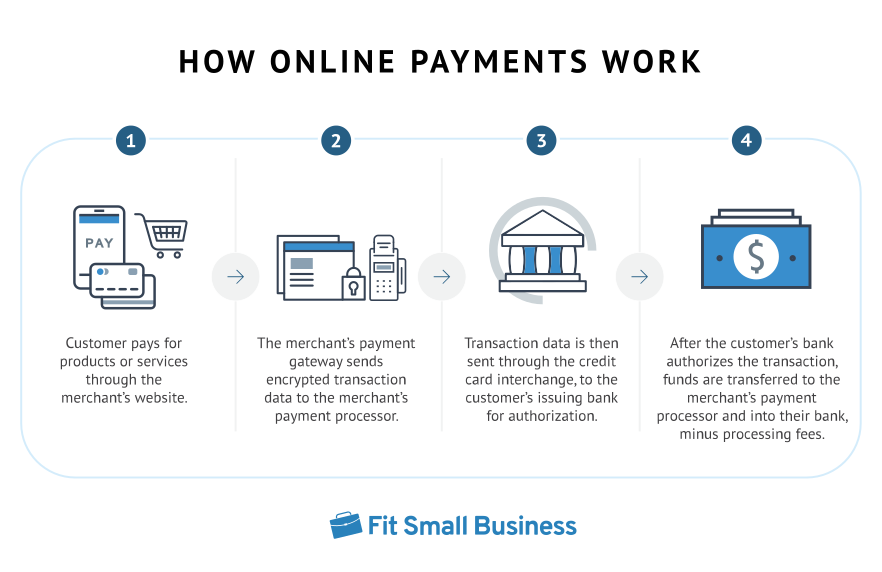
At the heart of credit card processing are two primary models: traditional merchant accounts and Payment Service Providers (PSPs). A merchant account is a dedicated bank account that holds funds from credit card sales before they are transferred to your business’s primary bank account. These accounts often involve a direct relationship with an acquiring bank, leading to potentially lower transaction fees for high-volume businesses and more transparent interchange-plus pricing. However, they typically come with more stringent application processes, higher setup fees, and sometimes monthly minimums or longer contract terms, which can be a barrier for smaller businesses.
Payment Service Providers (PSPs), such as Square, Stripe, or PayPal, offer a more streamlined, “aggregator” model. They combine multiple businesses under one large merchant account, simplifying the setup process significantly. PSPs are generally easier and quicker to set up, often with no monthly fees or long-term contracts, making them highly attractive to startups and small businesses. Their pricing is often a flat rate per transaction, which can be higher than interchange-plus for high-volume businesses but offers predictability. The trade-off often lies in less control over specific fees and potentially slower customer support for complex financial issues. A careful cost-benefit analysis considering your transaction volume, average transaction size, and financial stability is crucial in determining which model offers the best economic advantage for your business.
Point-of-Sale (POS) Systems for Physical Transactions
For brick-and-mortar businesses, a robust Point-of-Sale (POS) system is the financial backbone of physical transactions. Modern POS systems do much more than just process credit cards; they integrate inventory management, sales reporting, employee management, and customer relationship management (CRM) functionalities. From a financial perspective, a well-chosen POS system can significantly enhance operational efficiency, reduce errors, and provide valuable financial insights through detailed sales analytics.
Investing in a POS system involves considering hardware costs (card readers, terminals, receipt printers), software subscriptions, and transaction fees. The right system can streamline checkout processes, improve customer experience, and provide data essential for financial forecasting and inventory optimization, ultimately contributing to better profit margins. Businesses must evaluate the total cost of ownership against the efficiency gains and revenue opportunities.
E-commerce Gateways for Online Revenue
For businesses operating online, an e-commerce payment gateway is indispensable for capturing digital revenue. A payment gateway is a service that authorizes credit card payments for online businesses. It securely transmits payment information from the customer to the acquiring bank, ensuring the transaction is valid and protecting sensitive data.
Choosing an e-commerce gateway involves assessing transaction fees, security features (like PCI compliance), integration capabilities with your existing website or e-commerce platform (e.g., Shopify, WooCommerce), and support for various payment methods (e.g., digital wallets, international cards). The financial implications extend beyond direct transaction costs to the potential for increased sales through a seamless checkout experience and reduced cart abandonment rates. A clunky or insecure payment gateway can deter customers, directly impacting online revenue.
Mobile Payment Solutions for On-the-Go Sales
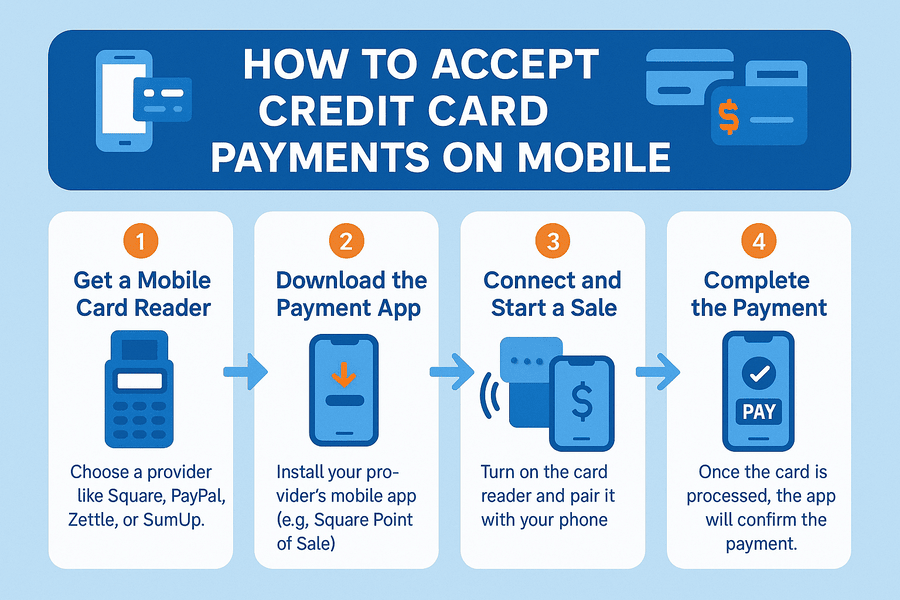
Mobile payment solutions, such as mobile card readers that attach to smartphones or tablets, have revolutionized payment acceptance for businesses that operate outside traditional storefronts. This includes food trucks, market vendors, service providers, and pop-up shops. These solutions offer unparalleled flexibility and portability, enabling businesses to capture sales wherever their customers are.
Financially, mobile payment solutions are often characterized by low upfront hardware costs (sometimes even free with account setup) and straightforward, flat-rate transaction fees, similar to PSPs. They are ideal for businesses with variable sales locations or those just starting out with limited capital. The primary financial benefit is the ability to easily accept payments on the go, broadening sales opportunities and preventing lost revenue due to an inability to process card payments away from a fixed location.
Navigating the Costs: Fees, Charges, and Hidden Expenses
Understanding the fee structure associated with credit card processing is paramount for managing your business’s financial outflow and preserving profit margins. The costs can be complex, involving multiple layers of charges.
Interchange Fees and Assessment Fees Explained
At the foundation of credit card processing costs are interchange fees and assessment fees. Interchange fees are paid by the acquiring bank (your processor) to the issuing bank (the customer’s bank) for each transaction. These fees compensate the issuing bank for the risk and cost of handling the credit card transaction. They are set by Visa, Mastercard, Discover, and American Express and vary based on card type (e.g., rewards card, corporate card), transaction type (e.g., in-person, online), and industry. Interchange fees are typically the largest component of processing costs and are non-negotiable by processors.
Assessment fees are smaller fees paid by the acquiring bank directly to the credit card networks (Visa, Mastercard, etc.) for using their network infrastructure. Like interchange fees, they are non-negotiable and are a fixed cost for processors. While businesses don’t pay these fees directly, they are incorporated into the overall processing rates charged by your payment processor. Understanding these baseline costs helps businesses evaluate the transparency and fairness of their processor’s pricing model.
Processing Fees: Flat Rate, Tiered, or Interchange-Plus?
The fees charged by your payment processor are layered on top of interchange and assessment fees and represent their profit margin. These can be structured in several ways, each with distinct financial implications:
- Flat Rate Pricing: Common with PSPs (e.g., 2.9% + $0.30 per transaction). This offers simplicity and predictability, as the rate is the same regardless of card type or transaction details. It’s often ideal for small businesses with lower transaction volumes or average transaction sizes, as it avoids complex fee breakdowns. However, it can be more expensive for businesses with high volumes of standard debit card transactions, which have lower interchange rates.
- Tiered Pricing: This model categorizes transactions into “qualified,” “mid-qualified,” and “non-qualified” tiers, each with a different processing rate. While it might appear simpler than interchange-plus, it’s often the least transparent and can be financially detrimental. Processors set their own definitions for each tier, often pushing more transactions into the higher-cost “mid-qualified” or “non-qualified” tiers, leading to unexpectedly high overall processing costs.
- Interchange-Plus Pricing: Often preferred by larger businesses, this model adds a fixed markup (e.g., 0.20% + $0.10) to the raw interchange and assessment fees. It is the most transparent pricing model, as you can clearly see the underlying interchange costs separate from the processor’s markup. This transparency allows businesses to track and often negotiate their overall processing costs more effectively, making it potentially the most cost-effective option for businesses with significant transaction volumes.
Monthly Fees, Setup Fees, and Chargeback Fees

Beyond per-transaction costs, businesses need to account for various other fees:
- Monthly Fees: Some processors charge a recurring monthly fee for account maintenance, statement generation, or access to specific features.
- Setup Fees: While many newer PSPs have eliminated setup fees, traditional merchant accounts may still charge an initial fee to establish your account.
- PCI Compliance Fees: Although PCI DSS compliance is a requirement for all businesses accepting card payments, some processors charge a monthly or annual fee for compliance validation or to cover the costs of tools they provide to help you comply.
- Chargeback Fees: When a customer disputes a transaction, resulting in a chargeback, the business is typically hit with a chargeback fee (e.g., $15-$25 per instance) by the processor, in addition to losing the transaction amount. These fees are a significant financial risk and highlight the importance of fraud prevention and clear customer service policies.
- Early Termination Fees: Be wary of long-term contracts that include hefty early termination fees, which can lock you into an unfavorable financial arrangement.
A thorough review of the complete fee schedule and contract terms is crucial before committing to any payment processor to avoid hidden costs that can erode profit margins.
Optimizing Your Payment Acceptance for Financial Growth
Beyond merely accepting credit cards, businesses can strategically optimize their payment processing to enhance financial growth, improve efficiency, and gain deeper insights into their revenue streams.
Negotiating Rates and Understanding Contract Terms
For businesses with significant transaction volumes, there is often room to negotiate processing rates, especially with traditional merchant account providers. Armed with knowledge about interchange rates and your business’s processing history, you can advocate for better interchange-plus markups. It’s vital to regularly review your statements and compare them against your contract terms and market rates.
Furthermore, a deep understanding of contract terms can prevent future financial pitfalls. Pay close attention to contract length, early termination clauses, automatic renewals, and any stipulations regarding rate increases. A proactive approach to contract management and periodic re-evaluation of your processing relationship can lead to substantial long-term savings and more favorable financial arrangements. Don’t be afraid to solicit bids from multiple processors every few years to ensure you’re getting the most competitive rates and terms.
Leveraging Reporting and Analytics for Financial Insights
Modern payment processing solutions offer robust reporting and analytics tools that are invaluable for financial management. These tools provide detailed breakdowns of sales data, transaction types, average transaction sizes, peak selling times, and even customer spending patterns.
From a financial perspective, these insights enable businesses to:
- Forecast Revenue More Accurately: By analyzing historical sales trends, businesses can make more informed financial projections.
- Optimize Inventory Management: Understanding product popularity and sales cycles helps in better inventory planning, reducing carrying costs and avoiding stockouts that lead to lost sales.
- Identify Cost-Saving Opportunities: Detailed reports can highlight trends in chargebacks or high-cost transaction types, prompting strategies to mitigate these financial drains.
- Gauge Marketing Campaign Effectiveness: Connecting payment data with marketing efforts allows businesses to assess the ROI of different campaigns and allocate marketing budgets more effectively.
Treating your payment processing data as a rich source of financial intelligence is key to making data-driven decisions that foster growth and profitability.
Integrating Payment Solutions with Accounting Software
Seamless integration between your payment processing system and your accounting software (e.g., QuickBooks, Xero) is a powerful financial efficiency tool. Manual data entry of transactions is not only time-consuming but also prone to errors, which can lead to inaccuracies in financial reporting and auditing issues.
Integration automates the reconciliation process, posting sales data directly from your payment processor to your general ledger. This automation saves considerable administrative time and reduces the risk of human error, ensuring your financial records are consistently accurate and up-to-date. The financial benefits include:
- Reduced Operational Costs: Less time spent on manual bookkeeping means lower labor costs.
- Improved Accuracy: Accurate financial statements are crucial for tax compliance, investor relations, and internal decision-making.
- Faster Financial Closures: Automated reconciliation accelerates the month-end or quarter-end financial closing process.
- Better Audit Preparedness: Clean, integrated data simplifies audits and reduces associated costs.
Investing in an integrated solution pays dividends in operational efficiency and financial accuracy, allowing your team to focus on strategic financial planning rather than tedious data entry.
Scaling Your Payment Infrastructure with Business Growth
As your business grows, your payment processing needs will evolve. What worked for a startup with a few transactions a day may not be suitable for a rapidly expanding enterprise handling thousands. A key aspect of financial foresight is selecting a payment solution that can scale with your business without requiring a complete overhaul down the line.
Consider solutions that offer:
- Increased Transaction Capacity: Ensure your processor can handle growing volumes without service interruptions or prohibitive cost increases.
- Support for New Payment Methods: As your customer base diversifies or expands internationally, you may need to accept additional card types, digital wallets, or even local payment methods.
- Multi-Channel Capabilities: If you plan to expand from online-only to brick-and-mortar, or vice-versa, choose a solution that supports both seamlessly.
- Advanced Fraud Protection: Growing businesses are often larger targets for fraud, necessitating more sophisticated security tools.
Planning for scalability from the outset helps avoid costly migrations and ensures your payment infrastructure remains a facilitator, not an impediment, to financial growth.
Ensuring Financial Security and Compliance
Protecting customer payment data and adhering to industry standards are not just legal obligations but critical financial safeguards. Data breaches and non-compliance can result in devastating financial penalties, reputational damage, and lost customer trust.
Protecting Your Business from Fraud and Chargebacks
Fraudulent transactions and subsequent chargebacks represent a direct financial loss for businesses, encompassing the lost revenue from the sale, the cost of goods sold, and often an additional chargeback fee from the processor. Implementing robust fraud prevention measures is therefore an essential financial strategy.
Key tactics include:
- Address Verification Service (AVS): Verifies the cardholder’s billing address to prevent unauthorized use.
- Card Verification Value (CVV/CVC): Checks the security code on the back of the card.
- 3D Secure (e.g., Verified by Visa, Mastercard SecureCode): Adds an extra layer of authentication for online transactions, shifting liability for fraudulent charges away from the merchant in many cases.
- IP Geolocation: Identifying suspicious transaction locations.
- Fraud Scoring Tools: Utilizing algorithms to assess the risk level of each transaction.
- Clear Return and Refund Policies: Well-defined policies, communicated clearly, can often prevent chargebacks initiated due to customer dissatisfaction.
- Prompt Customer Service: Addressing customer inquiries and complaints quickly can often resolve issues before they escalate to a chargeback.
Proactive fraud management is an investment that protects your bottom line from direct losses and preserves your financial reputation.
Adhering to PCI DSS Standards for Data Security
The Payment Card Industry Data Security Standard (PCI DSS) is a set of security standards designed to ensure that all companies that accept, process, store, or transmit credit card information maintain a secure environment. Compliance is mandatory, not optional, and non-compliance carries severe financial risks.
Adhering to PCI DSS involves:
- Building and maintaining a secure network: Including firewalls and secure configurations.
- Protecting cardholder data: Encrypting data during transmission and never storing sensitive authentication data.
- Maintaining a vulnerability management program: Regularly updating anti-virus software and systems.
- Implementing strong access control measures: Restricting access to cardholder data on a need-to-know basis.
- Regularly monitoring and testing networks: Including security systems and processes.
- Maintaining an information security policy: And providing regular training to personnel.
While achieving PCI compliance may involve upfront costs for security measures and audits, these costs are minimal compared to the potential financial devastation of a data breach.
The Financial Impact of Data Breaches and Non-Compliance
The financial repercussions of a data breach or failure to comply with PCI DSS can be catastrophic. These include:
- Fines and Penalties: Card brands and acquiring banks can impose substantial fines (ranging from thousands to hundreds of thousands of dollars per month) on non-compliant businesses following a breach.
- Forensic Investigation Costs: Businesses are typically required to hire forensic investigators to determine the scope and cause of the breach, which can be very expensive.
- Customer Notification Costs: Depending on regulations, businesses may need to notify affected customers, often incurring mailing, call center, and credit monitoring service costs.
- Lawsuits and Legal Fees: Class-action lawsuits from affected customers are a significant financial risk.
- Reputational Damage and Lost Business: The erosion of customer trust can lead to a long-term decline in sales and brand value, often the most damaging financial consequence.
- Increased Processing Fees: Post-breach, payment processors may increase your rates or even terminate your merchant account due to the increased risk.
Prioritizing financial security and compliance is not just about avoiding penalties; it’s about protecting your business’s long-term financial viability and safeguarding the trust that underpins your customer relationships and revenue streams.
In conclusion, accepting credit card payments is a multifaceted financial decision that touches every aspect of a business’s monetary operations. From strategically expanding revenue and optimizing cash flow to meticulously managing costs, choosing scalable solutions, and rigorously protecting sensitive data, each step in this process requires careful financial consideration. By navigating these complexities with insight and diligence, businesses can transform credit card acceptance from a mere transaction necessity into a powerful engine for sustained financial growth and stability.
aViewFromTheCave is a participant in the Amazon Services LLC Associates Program, an affiliate advertising program designed to provide a means for sites to earn advertising fees by advertising and linking to Amazon.com. Amazon, the Amazon logo, AmazonSupply, and the AmazonSupply logo are trademarks of Amazon.com, Inc. or its affiliates. As an Amazon Associate we earn affiliate commissions from qualifying purchases.