
In the modern economic landscape, the ability to accept credit card payments is no longer a luxury reserved for large-scale retailers; it is a fundamental requirement for business viability. As physical currency continues to see a decline in usage, the transition toward a cashless society has placed digital transactions at the forefront of commerce. For the business owner, understanding how to accept credit card payments is not merely a technical hurdle, but a strategic financial decision that impacts cash flow, accounting accuracy, and the overall bottom line. This guide explores the financial architecture of payment processing, the cost structures involved, and how to select the right tools to maximize your business’s financial health.
Understanding the Financial Infrastructure of Credit Card Processing
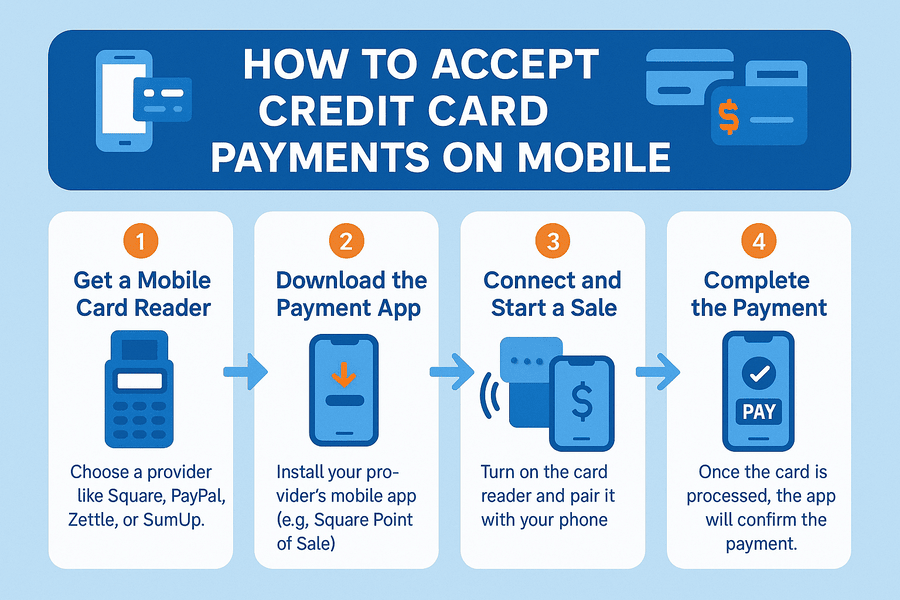
Before a business can process its first dollar, it must understand the ecosystem that facilitates the movement of funds from a customer’s bank to the business’s treasury. This infrastructure is comprised of several key players: the merchant, the acquiring bank (the business’s bank), the card networks (Visa, Mastercard, etc.), and the issuing bank (the customer’s bank).
The Role of Merchant Accounts vs. Payment Aggregators
There are two primary financial paths for a business looking to accept credit card payments: opening a dedicated merchant account or utilizing a payment aggregator.
A merchant account is a specific type of bank account that allows businesses to accept credit and debit card payments. These are typically established through an acquiring bank or a specialized merchant service provider (MSP). The benefit of a dedicated account is stability and customization; because the bank performs a full underwriting process on your business upfront, there is a lower risk of sudden account freezes.
On the other hand, payment aggregators (such as Square, Stripe, or PayPal) allow businesses to process payments under a single “master account.” This is often the preferred route for startups and small businesses due to the ease of setup and lack of monthly maintenance fees. However, the financial trade-off is often higher transaction rates and a higher propensity for the aggregator to hold funds if they detect unusual activity.
Decoding Interchange Fees and Assessment Costs
Every time a credit card is swiped, dipped, or keyed in, a series of fees are triggered. The largest component is the interchange fee, which is paid to the card-issuing bank to cover the risk of credit and the cost of processing. These fees are set by the card networks and vary based on the industry, the type of card (e.g., rewards cards vs. basic debit cards), and the transaction method.
In addition to interchange fees, there are assessment fees paid directly to the card networks for the use of their systems. For a business to manage its finances effectively, it must distinguish between these non-negotiable costs and the “markup” charged by the processor. Understanding this breakdown is the first step in auditing your financial statements for hidden costs.
Selecting the Right Payment Model for Your Business Cash Flow
The financial impact of payment processing is largely determined by the pricing model you choose. A business’s volume, average transaction size, and industry will dictate which model provides the most significant cost savings.
Flat-Rate Pricing: Simplicity for Small Businesses
Flat-rate pricing is common among aggregators. Under this model, the business pays a fixed percentage (and usually a small cent-per-transaction fee) regardless of the card type or the interchange rate. For example, a business might pay 2.9% + $0.30 for every online transaction.
The primary advantage here is financial predictability. It simplifies accounting because the business owner knows exactly what the cost of goods sold (COGS) will be regarding transaction overhead. However, for businesses with high sales volumes, flat-rate pricing can become significantly more expensive than other models, as the processor pockets the difference when interchange rates are low.
Interchange-Plus Pricing: Transparency for High Volume
Often considered the gold standard for established businesses, interchange-plus pricing separates the actual cost of the transaction (the interchange and assessment fees) from the processor’s profit (the “plus”).
For instance, a statement might show an interchange fee of 1.65% plus a processor markup of 0.20%. This model offers the highest level of transparency and usually results in the lowest total cost for the merchant. It allows the business to benefit from lower rates on debit cards or non-rewards cards, though it does require a more sophisticated understanding of monthly financial statements to reconcile.
Tiered Pricing: Navigating Complex Fee Structures
Tiered pricing categorizes transactions into “qualified,” “mid-qualified,” and “non-qualified” tiers. While the qualified rates may look attractively low on a marketing brochure, many transactions—such as corporate cards or international cards—often fall into the higher-cost “non-qualified” tier. From a financial management perspective, tiered pricing can be frustratingly opaque and often leads to higher effective rates than anticipated.
Optimizing Revenue Through Strategic Payment Integration
Accepting credit cards is not just about the transaction; it’s about how that transaction integrates into the broader financial strategy of the company. The method of acceptance can influence customer behavior and operational efficiency.
Mobile and Point-of-Sale (POS) Systems for Retail
For brick-and-mortar businesses, the POS system is the central hub of financial data. Modern POS systems do more than just process cards; they integrate inventory management, employee hours, and sales analytics. By choosing a system that syncs directly with accounting software (like QuickBooks or Xero), a business can automate its bookkeeping, reducing the risk of human error and providing real-time insights into liquidity and stock levels.
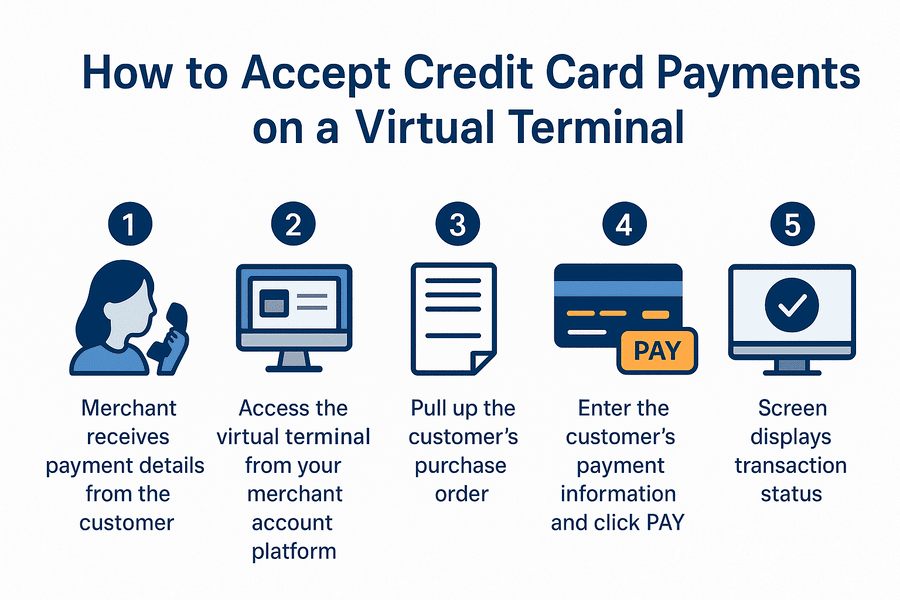
E-commerce Gateways and Virtual Terminals
For online businesses or service providers who bill remotely, a payment gateway is the digital equivalent of a physical card reader. A virtual terminal allows a business to manually enter card details into a secure web browser. From a financial perspective, “Card Not Present” (CNP) transactions carry a higher risk of fraud, and therefore, higher processing fees. To protect margins, businesses should ensure their gateway utilizes advanced security features like Address Verification Systems (AVS) to minimize these costs.
The Impact of Subscription Billing on Recurring Revenue
For service-based businesses, implementing recurring credit card billing can drastically improve cash flow predictability. Instead of waiting for a client to pay an invoice, automated billing ensures funds are captured on a set schedule. This reduces “Days Sales Outstanding” (DSO) and provides a steady stream of income that makes financial planning and investment much more manageable.
Mitigating Financial Risk and Protecting Your Bottom Line
Accepting credit cards introduces certain financial risks that must be managed to protect the business’s assets. Failure to address these risks can lead to lost revenue and hefty penalties.
Managing Chargebacks and Friendly Fraud
A chargeback occurs when a customer disputes a transaction with their bank rather than seeking a refund from the merchant. If the merchant loses the dispute, the funds are pulled from their account, and they are usually hit with a chargeback fee ranging from $15 to $100.
High chargeback rates are a significant financial red flag and can lead to the termination of a merchant account. Implementing clear refund policies, using recognizable “doing business as” (DBA) names on credit card statements, and providing excellent customer service are financial defense strategies designed to keep revenue in the business’s pocket.
PCI Compliance and Financial Security Standards
The Payment Card Industry Data Security Standard (PCI DSS) is a set of requirements designed to ensure that all companies that process, store, or transmit credit card information maintain a secure environment. While the technical side of PCI compliance involves encryption and firewalls, the financial side involves risk management.
Non-compliance can result in monthly fines from banks and catastrophic financial liability in the event of a data breach. Many modern processors include PCI compliance tools in their service, which acts as an insurance policy for the business’s financial reputation.
Conclusion: Leveraging Payment Processing as a Growth Engine
Accepting credit card payments is far more than a technical necessity; it is a critical component of a business’s financial strategy. By carefully selecting the right merchant architecture, understanding the nuances of interchange fees, and choosing a pricing model that aligns with sales volume, a business can significantly reduce its overhead.
Furthermore, by integrating payment systems with broader financial tools, business owners gain a clearer picture of their cash flow and financial health. In an era where the speed of transaction often dictates the speed of growth, mastering the art of credit card acceptance is an essential step for any business looking to scale efficiently and securely. Through diligent management and strategic selection of financial partners, the cost of accepting cards becomes not just an expense, but an investment in the business’s future scalability.
aViewFromTheCave is a participant in the Amazon Services LLC Associates Program, an affiliate advertising program designed to provide a means for sites to earn advertising fees by advertising and linking to Amazon.com. Amazon, the Amazon logo, AmazonSupply, and the AmazonSupply logo are trademarks of Amazon.com, Inc. or its affiliates. As an Amazon Associate we earn affiliate commissions from qualifying purchases.