
The world of stocks and the stock market, while often perceived as complex and exclusive, is fundamentally built upon principles of ownership, capital, and collective valuation. At its core, the stock market is a dynamic ecosystem where companies raise capital, and investors buy and sell pieces of those companies, aiming for growth or income. Understanding how this intricate system operates is crucial for anyone looking to engage with the financial markets, whether for personal wealth building or simply comprehending global economic news.
The Fundamentals of Stocks: Ownership and Value
A stock represents a fractional ownership in a company. When you purchase a share of stock, you literally own a tiny piece of that corporation. This simple concept underpins the entire stock market, turning individuals into stakeholders in some of the world’s largest enterprises.

What is a Stock?
A stock, or equity, signifies a claim on the company’s assets and earnings. Companies issue stocks primarily to raise capital for various purposes, such as expanding operations, funding research and development, paying down debt, or making acquisitions. By selling ownership stakes, companies avoid taking on debt, which requires regular interest payments, or they diversify their funding sources.
There are generally two main types of stock: common stock and preferred stock. Common stock typically grants voting rights at shareholder meetings, allowing investors to influence company management and policies, and offers the potential for higher returns through capital appreciation and dividends. Preferred stock usually does not carry voting rights but often provides a fixed dividend payment and has a higher claim on assets and earnings than common stock if the company faces liquidation. Most individual investors deal primarily with common stock.
How Stock Value is Determined
The value of a stock is a constantly fluctuating figure, influenced by a multitude of factors, both internal to the company and external market forces. Primarily, a stock’s price is determined by the basic economic principles of supply and demand. If more investors want to buy a particular stock than sell it, its price will generally rise. Conversely, if there are more sellers than buyers, the price will fall.
Beyond this immediate dynamic, a stock’s perceived value is heavily tied to the issuing company’s performance and future prospects. Strong earnings reports, robust revenue growth, innovative product launches, and effective management can all boost investor confidence, driving demand and price upwards. Conversely, poor financial results, negative news, or industry challenges can depress a stock’s value.
Broader economic factors also play a significant role. Interest rates set by central banks can influence borrowing costs for companies and make alternative investments (like bonds) more or less attractive. Inflation erodes the purchasing power of future earnings. Overall economic growth rates, unemployment figures, and consumer confidence also paint a picture of the business environment, influencing investor sentiment across the market. Ultimately, market sentiment, often driven by a combination of rational analysis and emotional responses, can lead to significant price swings, creating both opportunities and risks.
Navigating the Stock Market Ecosystem
The “stock market” isn’t a single physical location but rather a vast, interconnected network of exchanges and marketplaces where buyers and sellers meet to trade shares of companies. This ecosystem facilitates the efficient transfer of ownership, allowing capital to flow to businesses that need it.
What is the Stock Market?
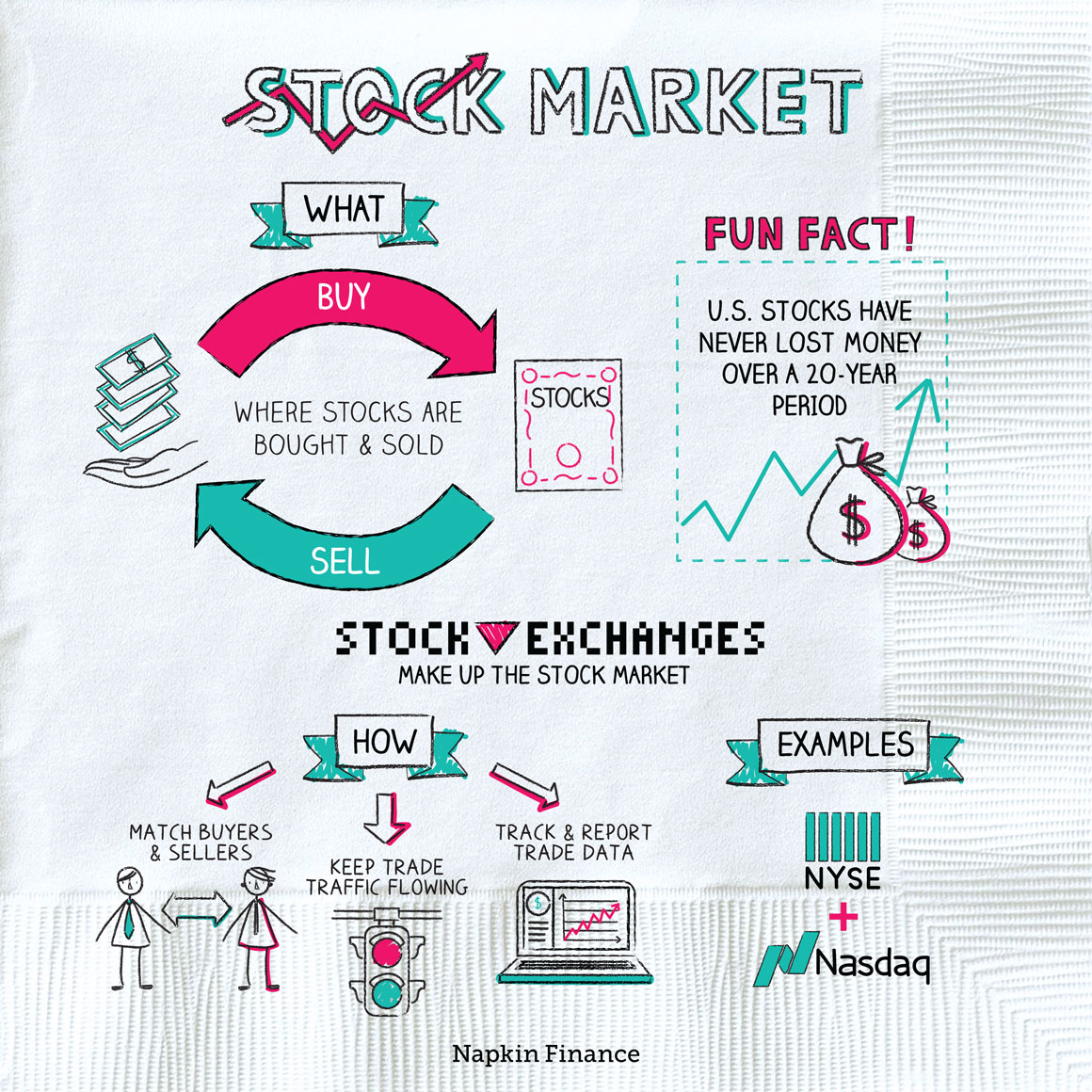
The stock market is a collection of markets and exchanges where the issuing and trading of publicly held company stocks take place. It serves two main functions: primary markets and secondary markets.
In the primary market, companies issue new stocks for the first time through an Initial Public Offering (IPO). This is where a company transitions from private ownership to public ownership, selling shares directly to institutional investors and the public to raise significant capital.
The secondary market is where the vast majority of stock trading occurs. Once shares are issued in the primary market, they are bought and sold among investors on exchanges like the New York Stock Exchange (NYSE) or Nasdaq. Companies whose shares are traded here do not directly receive money from these transactions; rather, ownership is simply transferred between investors. The secondary market provides liquidity, meaning investors can easily buy and sell shares, which is crucial for encouraging investment in the first place. Without it, investors would be reluctant to buy shares they couldn’t later sell.
Key Market Participants
A diverse group of participants keeps the stock market functioning. Investors are the driving force, ranging from individual retail investors managing their personal portfolios to massive institutional investors like pension funds, mutual funds, hedge funds, and insurance companies, which collectively manage trillions of dollars.
Brokers act as intermediaries, executing buy and sell orders on behalf of investors. In today’s digital age, many individual investors use online brokerage platforms, which provide direct access to market functionalities. Market makers play a critical role by standing ready to buy and sell specific stocks, ensuring liquidity even when there might not be a direct buyer or seller at a given moment. They profit from the “spread” – the difference between the bid (buy) and ask (sell) price.
Finally, regulators, such as the Securities and Exchange Commission (SEC) in the United States, oversee the market to protect investors, maintain fair and orderly markets, and facilitate capital formation. Their rules and oversight are essential for maintaining public trust and stability.
How Orders are Executed
When an investor decides to buy or sell stock, they place an order through their broker. The most common order types are:
- Market Order: This is an instruction to buy or sell a stock immediately at the best available current price. Market orders prioritize speed of execution but do not guarantee a specific price.
- Limit Order: This specifies a maximum price an investor is willing to pay to buy or a minimum price they are willing to accept to sell. A limit order will only execute if the stock reaches or surpasses the specified price, meaning it might not execute at all if the price never hits the limit.
Once an order is placed, the broker routes it to the appropriate exchange or market maker. Sophisticated electronic trading systems match buyers and sellers almost instantaneously, processing millions of transactions daily. The price at which a trade executes becomes the new market price, visible to all participants.
Understanding Investment Strategies and Risks
Investing in stocks offers significant potential for wealth creation but also comes with inherent risks. Navigating this landscape requires a thoughtful approach, combining well-defined strategies with a clear understanding of potential downsides.
Common Investment Approaches

Investors employ various strategies tailored to their goals, risk tolerance, and time horizon. Value investing involves identifying companies whose stocks appear to be trading below their intrinsic value, often based on financial metrics. Proponents believe the market will eventually recognize the true worth, leading to price appreciation. Legendary investor Warren Buffett is a prominent advocate of this approach.
Growth investing, conversely, focuses on companies expected to grow at an above-average rate compared to the overall market. These companies often reinvest their earnings back into the business, leading to rapid expansion, and their stock prices can appreciate significantly, though they often trade at higher valuations and carry higher risk.
Dividend investing prioritizes companies that consistently pay out a portion of their earnings to shareholders in the form of dividends. This strategy provides a regular income stream and can be particularly appealing to retirees or those seeking passive income.
Finally, index investing involves buying a broad market index fund or ETF (Exchange Traded Fund) that tracks a specific market segment, like the S&P 500. This passive approach emphasizes diversification and aims to match market returns rather than outperform them, often at lower costs.
The Inherent Risks of Stock Investing
While stocks offer growth potential, they are not without risk. Market risk, also known as systematic risk, refers to the possibility that the entire market or a broad segment of it will decline, affecting even fundamentally sound stocks. This risk cannot be eliminated through diversification within the stock market.
Company-specific risk, or unsystematic risk, pertains to factors unique to a particular company or industry. This could include poor management decisions, product failures, legal challenges, or intense competition. This risk can be mitigated through diversification across different companies and sectors.
Other risks include liquidity risk, where it might be difficult to sell a stock quickly without significantly affecting its price, particularly for thinly traded small-cap stocks. Inflation risk refers to the erosion of purchasing power over time, meaning even if your investments grow, their real value might decrease if inflation outpaces returns. Volatility, the degree of variation in a stock’s price over time, is a constant presence, leading to significant fluctuations that can test an investor’s resolve.
Mitigating Risk through Diversification
One of the most fundamental principles of investing is diversification. The adage “don’t put all your eggs in one basket” holds true. By spreading investments across various asset classes (stocks, bonds, real estate), different industries, geographic regions, and company sizes, investors can reduce the impact of poor performance from any single investment. Diversification helps smooth out portfolio returns over time and is a cornerstone of prudent risk management. Asset allocation, the strategic distribution of investments among different asset classes, is a key component of this strategy, tailored to an individual’s risk tolerance and financial goals.
The Impact of Economic Factors and News
The stock market is intrinsically linked to the broader economy and is highly sensitive to news, both macroeconomic and company-specific. Understanding these influences is vital for interpreting market movements and making informed decisions.
Macroeconomic Influences
Large-scale economic factors cast a long shadow over the stock market. Interest rates are particularly impactful; higher rates typically increase borrowing costs for businesses, potentially dampening profits and making future growth harder to achieve. They also make fixed-income investments like bonds more attractive, drawing capital away from stocks.
Inflation, a sustained increase in the general price level of goods and services, can erode corporate profits as input costs rise, and it diminishes the real return on investments. Conversely, Gross Domestic Product (GDP) growth signals a healthy and expanding economy, which generally translates to higher corporate earnings and stronger stock prices. Unemployment rates provide insight into consumer spending power and economic stability, directly influencing demand for goods and services.
Company-Specific News and Events
Beyond macro trends, individual stock prices react sharply to news directly related to the issuing company. Earnings reports, released quarterly, are critical; they reveal a company’s financial health, profitability, and future outlook. Surpassing or missing analyst expectations can lead to dramatic swings in stock price.
Other significant events include product launches or failures, which can signal future revenue streams or missed opportunities. Mergers and acquisitions (M&A) can create or destroy shareholder value, often leading to immediate price adjustments for the involved companies. Changes in company leadership or significant regulatory announcements (e.g., anti-trust investigations, new industry regulations) can also significantly alter a company’s prospects and investor perception.
The Role of Investor Psychology
Despite all the data and analysis, human psychology plays a surprisingly large role in market dynamics. Emotions like fear and greed can drive irrational behavior, leading to market bubbles and crashes. The herd mentality, where investors follow the actions of a larger group, can amplify these emotional swings. Understanding that markets are not always rational is crucial. Successful investors often emphasize the importance of remaining disciplined, adhering to a long-term strategy, and making decisions based on thorough analysis rather than succumbing to emotional impulses during periods of high volatility.
Getting Started: A Practical Outlook for Investors
For those considering entering the stock market, a structured and informed approach is essential. Starting with clear goals and a commitment to continuous learning can significantly improve the chances of long-term success.
Setting Investment Goals
Before investing, it’s crucial to define your financial goals. Are you saving for retirement, a down payment on a house, or a child’s education? Your goals will dictate your investment horizon (short-term vs. long-term) and your risk tolerance. A younger investor saving for retirement may have a higher risk tolerance, focusing on growth stocks, while someone nearing retirement might prioritize capital preservation and income from less volatile investments. A careful assessment of your personal financial situation, including your income, expenses, existing debts, and emergency savings, is a necessary first step.
Opening a Brokerage Account
To buy and sell stocks, you’ll need to open an investment account with a brokerage firm. These firms offer platforms for executing trades and holding your investments. You can choose from various account types, including taxable brokerage accounts, Individual Retirement Accounts (IRAs) like Traditional or Roth IRAs, which offer tax advantages for retirement savings, or 401(k)s through an employer. When choosing a broker, consider factors like fees, available investment products, research tools, customer service, and ease of use. Many reputable online brokers cater to both novice and experienced investors.
The Importance of Research and Continuous Learning
Successful investing is rarely a passive endeavor; it requires ongoing research and a commitment to continuous learning. Fundamental analysis involves evaluating a company’s financial health by examining its financial statements (income statements, balance sheets, cash flow statements), management quality, industry position, and economic moat (sustainable competitive advantages). This helps investors determine a company’s intrinsic value.
While less common for long-term investors, technical analysis involves studying past market data, primarily price and volume charts, to identify patterns and predict future price movements. Regardless of the approach, staying informed about economic trends, industry developments, and specific company news is vital. The financial landscape is constantly evolving, and a well-informed investor is better equipped to adapt and make sound decisions, avoiding common pitfalls and maximizing opportunities for wealth accumulation.
aViewFromTheCave is a participant in the Amazon Services LLC Associates Program, an affiliate advertising program designed to provide a means for sites to earn advertising fees by advertising and linking to Amazon.com. Amazon, the Amazon logo, AmazonSupply, and the AmazonSupply logo are trademarks of Amazon.com, Inc. or its affiliates. As an Amazon Associate we earn affiliate commissions from qualifying purchases.