
Social Security remains the cornerstone of retirement planning for millions of Americans. Yet, despite its importance, the methodology used to determine the monthly check remains a mystery to most. Understanding how Social Security benefits are estimated is not just an academic exercise; it is a critical component of personal finance that dictates when you can retire, how much you need to save in private accounts, and how to optimize your lifetime earnings.
The calculation is not a simple percentage of your final salary. Instead, it is a complex, multi-step process that accounts for inflation, career longevity, and the progressive nature of the U.S. social safety net. By deconstructing the Social Security Administration’s (SSA) formula, individuals can better navigate their financial futures.

The Foundation: Understanding AIME and the 35-Year Rule
The journey toward an estimated benefit begins with your earnings history. The SSA does not look at your entire career in a vacuum; it focuses on your “Average Indexed Monthly Earnings” (AIME). This figure represents the raw material from which your benefit is forged.
The 35-Year Career Benchmark
One of the most significant factors in the estimation process is the 35-year rule. The SSA identifies your 35 highest-earning years. If you have worked for 40 years, they will drop the five lowest-earning years. Conversely, if you have only worked for 30 years, the formula will still divide by 35, inserting five years of “zero” earnings into the calculation. From a financial planning perspective, this highlights the “cost” of early retirement or long career gaps; every year of zero earnings significantly drags down the average, reducing the final estimated benefit.
The Importance of Inflation Adjustment (Indexing)
A dollar in 1985 does not have the same purchasing power as a dollar today. To ensure that your early career contributions are treated fairly, the SSA “indexes” your past earnings. Using the Average Wage Index (AWI), the SSA adjusts your historical earnings to reflect the current value of the dollar at the time you turn 60. This ensures that the $15,000 you earned in your first job out of college is weighted appropriately against the $80,000 you might earn later in life. This indexing process is what transforms your raw historical data into the AIME, providing a consistent baseline for the next stage of the calculation.
The Calculation Phase: From AIME to Primary Insurance Amount (PIA)
Once the SSA has established your AIME, they apply a formula to determine your Primary Insurance Amount (PIA). The PIA is the base amount you would receive if you chose to begin collecting benefits exactly at your Full Retirement Age (FRA). The formula for the PIA is “progressive,” meaning it is designed to replace a higher percentage of income for lower-wage earners than for higher-wage earners.
How “Bend Points” Work
The PIA formula uses three distinct percentages applied to different portions of your AIME. These transition points are known as “bend points,” and they change annually based on national wage trends. For a worker reaching eligibility in 2024, the formula might look like this:
- 90% of the first $1,174 of AIME.
- 32% of AIME between $1,174 and $7,078.
- 15% of AIME above $7,078.
This structure is a fundamental element of the “Money” niche, as it demonstrates the diminishing returns of Social Security for high-income earners. While a high earner will receive a larger check in absolute terms, their “replacement rate” (the percentage of their pre-retirement income covered by Social Security) will be significantly lower than that of a middle-income worker.
The Impact of Progressive Replacement Rates
Understanding these bend points is vital for high-net-worth individuals and middle-class families alike. For those in the 15% bracket (the highest tier), additional earnings contribute much less to the final Social Security check than they did in the 90% bracket. This insight often leads savvy investors to prioritize other retirement vehicles—such as 401(k)s, IRAs, or brokerage accounts—to bridge the gap that Social Security is structurally designed to leave for high earners.
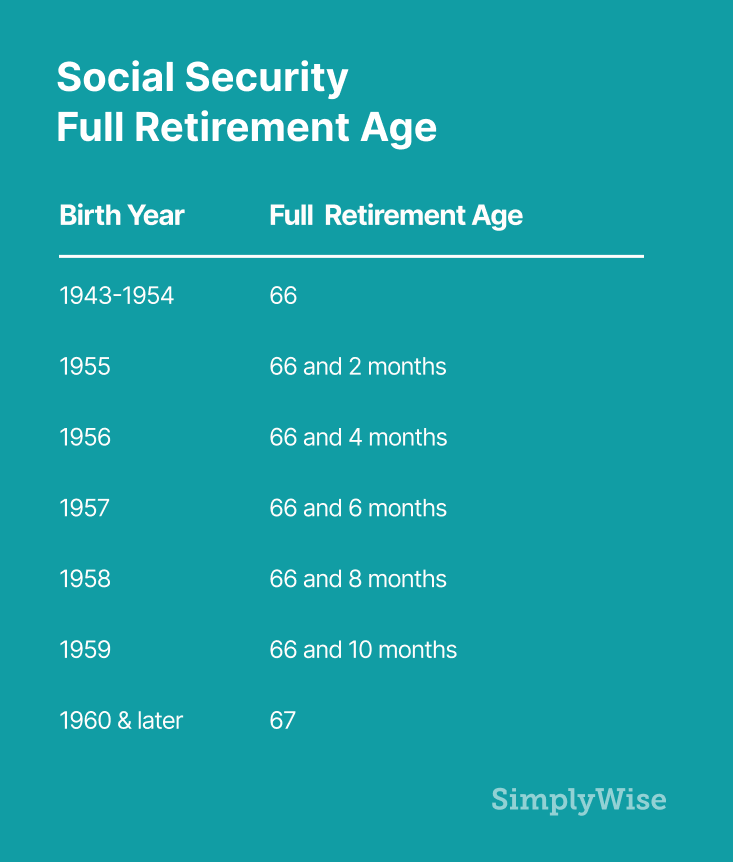
The Timing Factor: Full Retirement Age and Early/Late Claims
The PIA is merely the starting point. The actual amount you see deposited into your bank account is heavily influenced by when you choose to claim. The SSA establishes a “Full Retirement Age” (FRA), which is currently 67 for anyone born in 1960 or later.
The Reduction for Early Retirement
You can claim Social Security as early as age 62, but doing so comes at a steep financial cost. For every month you claim before your FRA, your benefit is reduced. If your FRA is 67 and you claim at 62, your monthly benefit will be reduced by approximately 30% for the rest of your life. This reduction is actuarially calculated to account for the fact that you will likely receive checks for a longer period. However, from a wealth-building perspective, claiming early can drastically reduce your “safe withdrawal rate” from other assets, as you are permanently locked into a lower guaranteed income stream.
Delayed Retirement Credits: Boosting the Payout
On the opposite end of the spectrum, the SSA offers an incentive for those who delay benefits past their FRA. For every year you wait beyond age 67 (up until age 70), your benefit increases by 8% per year. This is known as a Delayed Retirement Credit (DRC). There are very few financial instruments in the private market that offer a guaranteed, inflation-adjusted 8% annual return. Consequently, for many retirees with the health and resources to wait, delaying until age 70 is often the most effective way to maximize the estimated lifetime value of their Social Security benefits.
External Influences: Taxes, Earnings Tests, and Future Adjustments
An estimate is only as good as the context in which it exists. Several external factors can decrease the net value of your benefits, even after the SSA has calculated your gross amount.
The Impact of Working While Collecting
A common pitfall in financial planning is the “Retirement Earnings Test.” If you are under your Full Retirement Age and continue to work while collecting Social Security, the SSA may temporarily withhold a portion of your benefits if your earnings exceed a certain threshold (which changes annually). In 2024, the SSA deducts $1 from benefits for every $2 earned above $22,320. While these withheld funds are eventually added back to your benefit once you reach FRA, the immediate cash flow impact can be a shock to those who haven’t planned for it.
Cost-of-Living Adjustments (COLA)
One of the most valuable features of Social Security is the Cost-of-Living Adjustment (COLA). Unlike most private pensions or annuities, Social Security is indexed to inflation via the Consumer Price Index for Urban Wage Earners and Clerical Workers (CPI-W). Every October, the SSA announces the COLA for the following year. This adjustment ensures that your benefit maintains its purchasing power as the cost of goods and services rises. In high-inflation environments, the COLA is the primary tool that prevents the erosion of a retiree’s standard of living.
Strategizing for the Future: Maximizing Your Estimated Benefit
Knowing how the estimate is calculated allows for proactive financial management. Instead of passively waiting for a statement, individuals can take steps during their working years to influence the final number.
Filling the “Zero” Years
If your earnings record currently shows fewer than 35 years of work, every additional year you work will replace a “zero” in the SSA’s calculation. Even a part-time job or a side hustle in your later years can have a disproportionately positive impact on your AIME if it replaces a year of no income. For those nearing retirement, staying in the workforce for just one or two more years can serve a triple purpose: it increases the AIME, avoids early-claiming penalties, and allows for more private savings.

Leveraging the Social Security Administration Tools
The most effective way to monitor your status is through the “my Social Security” portal on the SSA website. This tool provides personalized estimates based on your actual earnings history. However, these estimates usually assume you will continue to earn your current salary until you retire. If you plan on “downshifting” to a lower-paying job or retiring early but waiting to claim, the standard estimate may be overly optimistic. Utilizing professional financial software or manual calculations using the bend points mentioned earlier can provide a more nuanced “what-if” analysis for your specific retirement strategy.
In conclusion, Social Security is not a “set it and forget it” system. It is a dynamic financial asset that responds to your career choices, your timing, and the broader economy. By understanding the interaction between the 35-year rule, the progressive PIA formula, and the timing of your claim, you can move from a place of uncertainty to a position of strategic control over your financial legacy.
aViewFromTheCave is a participant in the Amazon Services LLC Associates Program, an affiliate advertising program designed to provide a means for sites to earn advertising fees by advertising and linking to Amazon.com. Amazon, the Amazon logo, AmazonSupply, and the AmazonSupply logo are trademarks of Amazon.com, Inc. or its affiliates. As an Amazon Associate we earn affiliate commissions from qualifying purchases.