
Social Security is often described as the “third leg” of the retirement stool, alongside personal savings and employer-sponsored pensions. For millions of Americans, it represents the most reliable source of inflation-protected income available in their later years. However, despite its importance, the mechanism behind how the Social Security Administration (SSA) determines your monthly check remains a mystery to many.
Understanding the mathematics of Social Security is not just an academic exercise; it is a vital component of financial planning. The difference between filing at age 62 versus age 70 can result in hundreds of thousands of dollars in cumulative lifetime benefits. By deconstructing the formula—from the indexing of your historical earnings to the application of “bend points”—you can make informed decisions that optimize your long-term financial security.

The Foundation: Determining Your Average Indexed Monthly Earnings (AIME)
The calculation process begins with your lifetime earnings history. Unlike many private pension plans that might only look at your final few years of work, Social Security considers your entire career. However, it doesn’t simply add up every paycheck you’ve ever received. Instead, it uses a specific metric called the Average Indexed Monthly Earnings (AIME).
Identifying Your Highest-Earning 35 Years
The SSA looks at your record of “covered” earnings—income on which you paid Social Security taxes. To calculate your AIME, the administration identifies the 35 years in which you earned the most. If you have worked for more than 35 years, only the highest-earning years are used. If you have worked fewer than 35 years, the SSA must still use a 35-year divisor, meaning “zero” income years are averaged in. For a high-earner, even a few “zero” years can significantly drag down the final benefit amount, which is why working just a few more years later in life can often boost a benefit by replacing those zeros with higher current earnings.
Wage Indexing: Adjusting Past Income for Inflation
A dollar in 1980 bought significantly more than a dollar does today. To ensure that your past contributions are weighted fairly, the SSA applies an “indexing factor” to your earnings. This process adjusts your historical wages to reflect the general increase in standard of living that has occurred over your working life. Generally, earnings are indexed to the average wage level at age 60. Earnings from years after age 60 are taken at face value. This indexing ensures that a person who earned $15,000 in 1975 is credited with an amount that reflects the relative value of that income in today’s economy.
The Formula: From AIME to Primary Insurance Amount (PIA)
Once your AIME is established, the SSA applies a formula to determine your Primary Insurance Amount (PIA). This is the base amount you are entitled to receive if you file for benefits exactly at your Full Retirement Age (FRA). The formula is designed to be “progressive,” meaning it replaces a higher percentage of income for lower-wage earners than it does for higher-wage earners.
Navigating the Three “Bend Points”
The PIA is calculated by breaking your AIME into three distinct segments, separated by dollar amounts known as “bend points.” These bend points are adjusted annually to keep pace with national wage trends. For a worker reaching age 62 in 2024, the formula is:
- 90% of the first $1,174 of AIME.
- 32% of AIME between $1,174 and $7,078.
- 15% of AIME above $7,078.
The sum of these three figures is rounded down to the nearest dime to become your PIA. This tiered structure ensures a safety net for all workers while still rewarding those who contributed more to the system over their careers.
The Progressive Nature of the Benefit
Because of the 90/32/15 split, the “replacement rate” (the percentage of your working income that Social Security covers) varies significantly. A lower-income worker might see Social Security replace 75% of their pre-retirement income, whereas a high-income earner might see only 25% or 30% replaced. This highlights why high-earners must rely more heavily on 404(k)s, IRAs, and other investment vehicles to maintain their lifestyle in retirement, as the Social Security formula naturally caps the benefit for the highest earners.
The Impact of Timing: When You Claim Matters
The PIA is the amount you get at your Full Retirement Age, but very few people actually claim at that exact moment. You have a window—typically between ages 62 and 70—to begin receiving benefits. Your choice within this window acts as a multiplier (or a divisor) on your PIA, permanently altering your monthly cash flow.
Filing at Age 62: The Cost of Early Retirement
The earliest age you can claim retirement benefits is 62. However, doing so comes with a permanent reduction. If your FRA is 67 and you claim at 62, your benefit is reduced by 30%. This reduction is calculated at a rate of 5/9 of 1% for each month before FRA, up to 36 months, and 5/12 of 1% for each month beyond that. While claiming early provides immediate liquidity, it significantly reduces the “inflation protection” of your benefit, as all future Cost-of-Living Adjustments (COLAs) will be applied to that smaller base number.
Waiting Until Age 70: Maximizing the Monthly Payout
For every month you delay claiming past your FRA, your benefit increases. These are known as “delayed retirement credits.” The increase is roughly 8% per year. If your FRA is 67 and you wait until age 70, you will receive 124% of your PIA. There is no financial incentive to wait past age 70, as the credits stop accumulating. From a pure personal finance perspective, waiting until 70 is often viewed as one of the best “investments” available, as it offers a guaranteed, government-backed 8% annual return that is also inflation-indexed.
Understanding Full Retirement Age by Birth Year
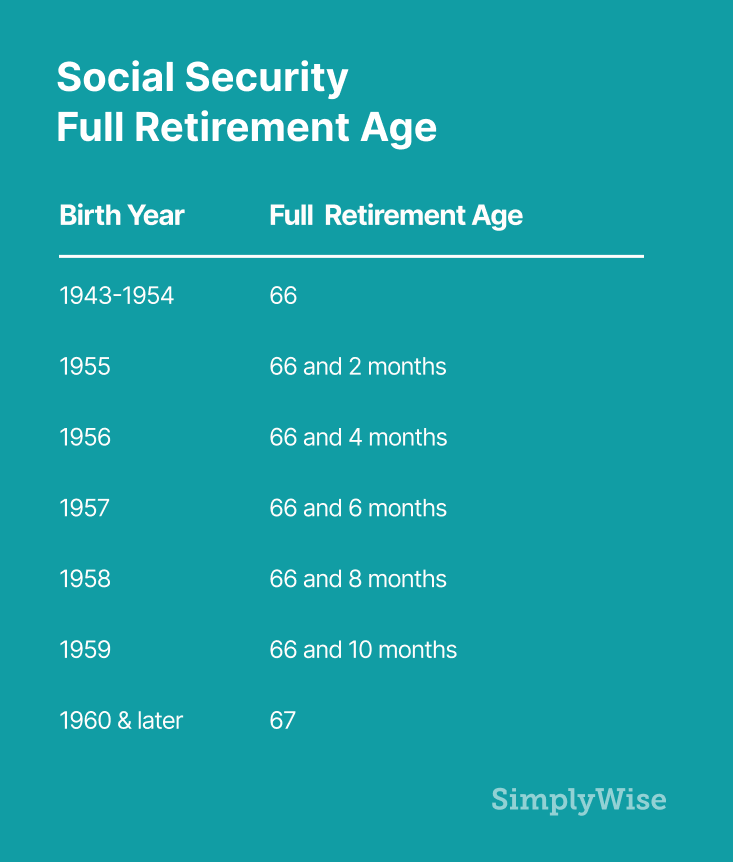
It is essential to know your specific FRA, as it has shifted over time. For those born between 1943 and 1954, the FRA was 66. It increased in two-month increments for every year of birth thereafter, until reaching age 67 for anyone born in 1960 or later. Miscalculating your FRA by even a few months can result in an unexpected reduction in your monthly check.
External Factors Influencing Your Monthly Check
Calculating the base benefit is only part of the equation. Several external factors can increase or decrease the actual amount deposited into your bank account.
Cost-of-Living Adjustments (COLA)
One of the most valuable features of Social Security is the annual Cost-of-Living Adjustment. Unlike most private annuities, Social Security benefits are adjusted to keep pace with inflation based on the Consumer Price Index for Urban Wage Earners and Clerical Workers (CPI-W). If inflation spikes, your benefit increases accordingly. This ensures that your purchasing power remains relatively stable, even if you live 30 years into retirement.
Taxation of Social Security Benefits
A common surprise for retirees is that Social Security benefits may be taxable. If your “combined income” (adjusted gross income + nontaxable interest + half of your Social Security benefits) exceeds certain thresholds, you will owe federal income tax on a portion of your benefits.
- If you file as an individual and your combined income is between $25,000 and $34,000, you may pay tax on up to 50% of your benefits.
- If it exceeds $34,000, up to 85% of your benefits may be taxable.
Strategic withdrawals from Roth IRAs (which do not count toward combined income) can be a powerful tool for staying under these thresholds.
The Windfall Elimination Provision (WEP)
For those who worked in “non-covered” employment—such as certain government or civil service jobs where they did not pay Social Security taxes but earned a pension—a different formula may apply. The Windfall Elimination Provision (WEP) reduces the 90% multiplier in the first bend point of the PIA formula, often resulting in a lower benefit than expected. Understanding WEP is crucial for teachers, police officers, and firefighters when calculating their total retirement income.

Strategic Planning: How to Maximize Your Benefit
Understanding the calculation is the first step; applying that knowledge to a financial plan is the second. To maximize your benefit, consider the following strategies:
- Work at Least 35 Years: Ensure you don’t have “zeros” in your calculation. If you have 33 years of high earnings, working two more years can significantly raise your AIME.
- The “Social Security Bridge”: If you retire at 65 but want to wait until 70 to claim Social Security, you can use your 401(k) or IRA funds to “bridge” the gap. This allows your Social Security benefit to grow by 8% annually while you live off your private savings.
- Coordinate with a Spouse: Spousal benefits allow a lower-earning spouse to claim up to 50% of the higher earner’s PIA. Strategic timing between couples can maximize the total household lifetime benefit, especially considering survivor benefits.
By mastering the mechanics of how Social Security is calculated, you move from guesswork to precision. In the landscape of personal finance, Social Security remains one of the few guaranteed components of a retirement plan. Knowing how to leverage its formulas allows you to build a more resilient and prosperous financial future.
aViewFromTheCave is a participant in the Amazon Services LLC Associates Program, an affiliate advertising program designed to provide a means for sites to earn advertising fees by advertising and linking to Amazon.com. Amazon, the Amazon logo, AmazonSupply, and the AmazonSupply logo are trademarks of Amazon.com, Inc. or its affiliates. As an Amazon Associate we earn affiliate commissions from qualifying purchases.