
Understanding percentages is not merely an academic exercise; it is a fundamental pillar of financial literacy that empowers individuals and businesses to make informed decisions. From deciphering interest rates on loans to calculating investment returns, budgeting effectively, or analyzing business performance, percentages provide a universal language for proportional relationships within the realm of money. Without a solid grasp of how percentages work, navigating the complexities of modern finance becomes significantly more challenging, potentially leading to missed opportunities or costly mistakes.
The Core Concept of Percentage in Finance
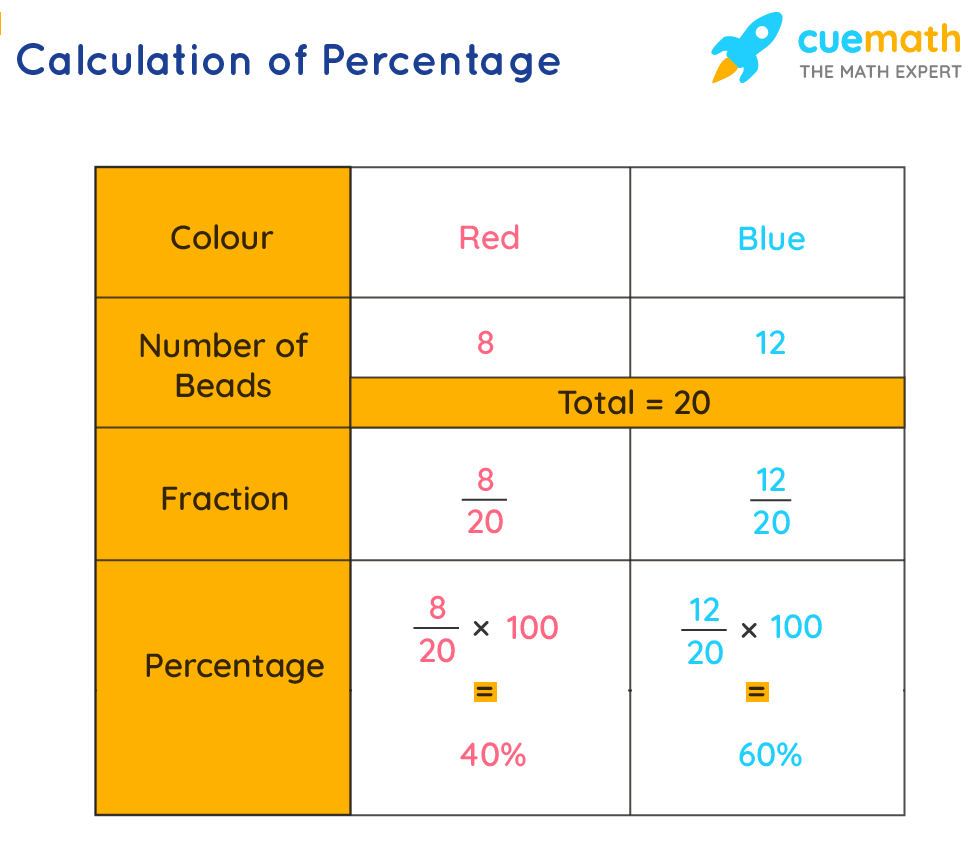
At its heart, a percentage is simply a way to express a number as a fraction of 100. The term “per cent” literally means “per hundred” or “out of one hundred.” This standardization makes it an incredibly powerful tool for comparing different quantities or measuring changes, regardless of their original scale. In finance, this normalization is crucial for comparing apples to apples across diverse financial scenarios.
What is a Percentage?
A percentage (%) represents a part of a whole, where the whole is considered to be 100 units. For example, if you have 50% of something, it means you have 50 out of every 100 parts of that thing. Mathematically, it’s expressed as a fraction with a denominator of 100. So, 50% is equivalent to 50/100, which simplifies to 1/2 or 0.50 in decimal form. The ability to convert between percentages, fractions, and decimals is a foundational skill for any financial calculation.
Basic Calculation: Part of a Whole
The most common application of percentages is to find a certain percentage of a given number. This is fundamental for calculating things like sales tax, discounts, or commissions.
To find X% of a number Y, the formula is: (X/100) * Y.
For instance, if you want to calculate a 15% discount on an item priced at $200:
- Convert the percentage to a decimal: 15% = 0.15
- Multiply by the original amount: 0.15 * $200 = $30.
So, a 15% discount on $200 is $30. The final price would be $200 – $30 = $170.
Conversely, to find what percentage one number (part) is of another number (whole), the formula is: (Part / Whole) * 100.
If your income is $5,000 per month, and you spend $1,500 on rent, to find the percentage of your income spent on rent:
- Divide the part by the whole: $1,500 / $5,000 = 0.30
- Multiply by 100 to convert to a percentage: 0.30 * 100 = 30%.
Thus, 30% of your income goes towards rent. These basic operations form the bedrock for more complex financial analyses.
Everyday Applications: Managing Personal Finances
Percentages are indispensable for effective personal financial management, enabling clarity and control over income and expenses.
Budgeting and Expense Allocation
Budgeting is inherently percentage-driven. Many financial experts recommend allocating specific percentages of your income to different categories, such as the 50/30/20 rule (50% for needs, 30% for wants, 20% for savings and debt repayment). This framework provides a clear, scalable guide for managing your money, regardless of your income level. By understanding what percentage of your income goes to housing, groceries, transportation, or entertainment, you can easily identify areas for adjustment or improvement. It shifts the focus from raw dollar amounts, which can vary wildly, to proportional allocations that remain consistent in their financial impact.
Discounts, Sales, and Markups
Shopping savvy heavily relies on understanding percentages. Whether it’s a “25% off” sale, a “buy one get one 50% off” offer, or calculating sales tax, percentages dictate the final price you pay. Businesses also use percentages extensively for markups to determine their selling prices from their cost prices. Knowing how to quickly calculate these percentages allows consumers to make smart purchasing decisions and businesses to price products competitively while maintaining profitability. Failing to understand how discounts are applied, especially on multiple discounted items, can lead to overspending or missing out on potential savings.
Savings Goals and Progress Tracking

Setting financial goals, such as saving for a down payment on a house, retirement, or an emergency fund, becomes more manageable with percentages. You might aim to save 10% of every paycheck. As your savings grow, tracking your progress as a percentage of your total goal provides a clear, motivating visual of how close you are to achieving it. If your goal is $10,000 and you have saved $2,500, you are 25% of the way there. This progress tracking, expressed in percentages, can motivate consistent saving habits and allow for easy adjustments to your saving rate if necessary.
Leveraging Percentages in Investing and Business
Beyond personal budgeting, percentages are the universal language of investment performance and business metrics, critical for evaluating opportunities and strategic planning.
Understanding Returns on Investment (ROI)
ROI is perhaps one of the most vital percentage calculations for investors and business owners. It measures the profitability of an investment relative to its cost. The formula is: ((Current Value of Investment – Original Cost of Investment) / Original Cost of Investment) * 100. A positive ROI indicates a gain, while a negative ROI signifies a loss. Comparing the ROI of different investment options, such as stocks, real estate, or business ventures, allows for informed decision-making about where to allocate capital most effectively. An investment might have a high dollar return, but a low percentage ROI if the initial capital was very large, indicating less efficient use of capital.
Interest Rates: Loans, Savings, and Credit
Interest rates are almost universally expressed as percentages. From the annual percentage rate (APR) on credit cards and loans to the interest earned on savings accounts or certificates of deposit (CDs), these percentages dictate how much you pay to borrow money or how much you earn by lending it (through savings). A small difference in an interest rate percentage can amount to thousands of dollars over the lifetime of a mortgage or significantly impact the growth of your savings through compounding. Understanding fixed versus variable interest rates and the effect of compounding interest (interest calculated on the initial principal and also on the accumulated interest of previous periods) is paramount for both borrowers and savers.
Profit Margins and Business Growth Metrics
For businesses, percentages are vital for assessing financial health and growth. Gross profit margin ((Revenue – Cost of Goods Sold) / Revenue * 100) and net profit margin ((Net Income / Revenue) * 100) are key indicators of a company’s efficiency and profitability. These percentages allow businesses to benchmark their performance against competitors, identify trends, and make strategic decisions about pricing, cost control, and expansion. Growth rates, such as year-over-year revenue growth or customer acquisition growth, are also expressed as percentages, offering a clear, comparable metric for measuring business expansion and success.
Common Pitfalls and Advanced Considerations
While percentages seem straightforward, certain nuances can lead to misinterpretations if not understood correctly.
Percentage Point vs. Percentage Change
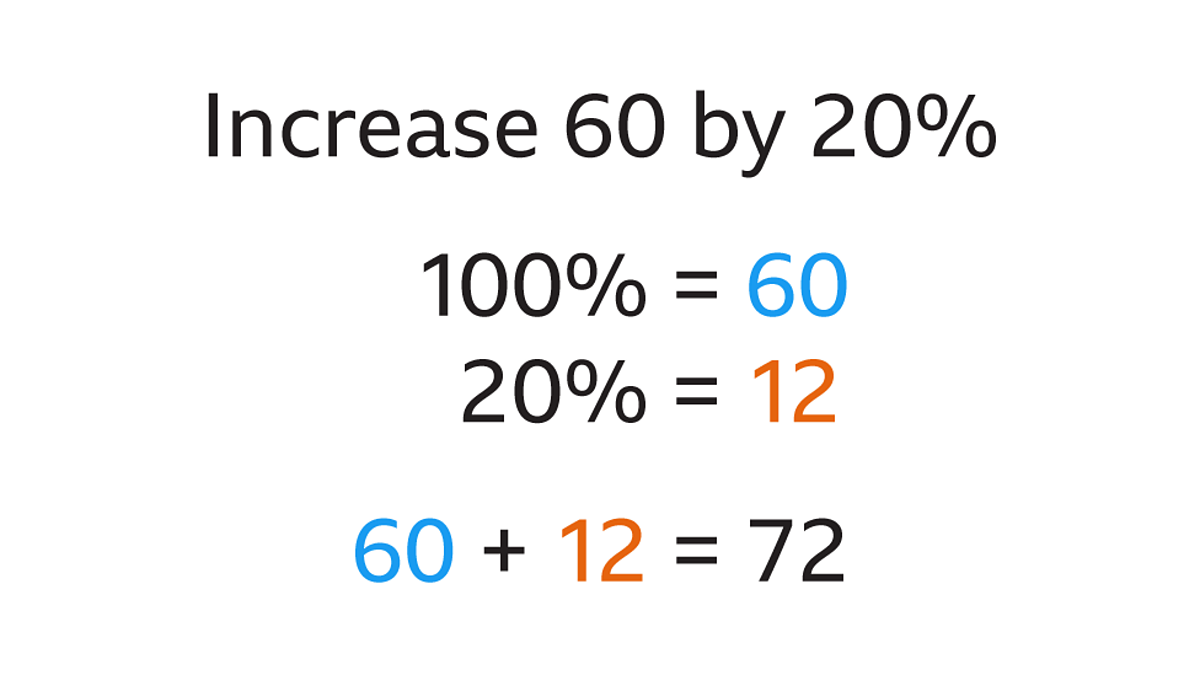
One common source of confusion is the distinction between a “percentage point” and a “percentage change.” If an interest rate increases from 5% to 6%, it has increased by 1 percentage point. However, the percentage change is calculated relative to the original value: ((6% – 5%) / 5%) * 100 = (1% / 5%) * 100 = 20%. This means the rate has increased by 20% of its original value. This distinction is crucial in financial news and analysis, where misinterpreting it can lead to vastly different conclusions about the magnitude of a change.
Compounding and Its Impact
The power of compounding is often referred to as the “eighth wonder of the world” by Albert Einstein, and it’s entirely percentage-driven. Compounding interest means earning interest not only on your initial principal but also on the accumulated interest from previous periods. This exponential growth, even with seemingly small percentage rates, can lead to substantial wealth accumulation over time for investments or significant debt accrual for loans. Understanding how compounding periods (monthly, quarterly, annually) affect the effective annual rate is essential for maximizing savings and minimizing borrowing costs.
Inflation and Purchasing Power
Inflation, expressed as a percentage, measures the rate at which the general level of prices for goods and services is rising, and consequently, the purchasing power of currency is falling. If inflation is 3% annually, your money buys 3% less than it did a year ago. Understanding this percentage allows investors to aim for returns that outpace inflation to preserve or grow their real purchasing power. Similarly, salary increases or cost-of-living adjustments need to be viewed in relation to the inflation rate to determine their true impact on your financial well-being.
Mastering Percentages for Financial Success
From the simple calculation of a discount to the complex analysis of investment portfolios and economic trends, percentages are an omnipresent and indispensable tool in finance. They provide a clear, standardized way to compare, evaluate, and track financial information, transforming raw numbers into actionable insights. By dedicating time to understand “how percentage” works in its various financial contexts, individuals and businesses can gain greater clarity, make more informed decisions, and ultimately pave a more secure and prosperous financial path. It is not just about crunching numbers; it’s about unlocking the story those numbers tell about your financial health and future.
aViewFromTheCave is a participant in the Amazon Services LLC Associates Program, an affiliate advertising program designed to provide a means for sites to earn advertising fees by advertising and linking to Amazon.com. Amazon, the Amazon logo, AmazonSupply, and the AmazonSupply logo are trademarks of Amazon.com, Inc. or its affiliates. As an Amazon Associate we earn affiliate commissions from qualifying purchases.