
To answer the question “how old is the Apple,” one must look beyond a simple calendar date. While Apple Inc. was officially incorporated on April 1, 1976, its age is better measured by the epochs of technological innovation it has defined. For nearly half a century, the company has transitioned from a garage-based hobbyist project into the world’s most influential technology powerhouse. Understanding the age of Apple requires a deep dive into the evolution of its hardware, the sophistication of its software, and the strategic pivots that have allowed it to remain at the forefront of the digital revolution for forty-eight years.
The Genesis of Personal Computing (1976–1984)
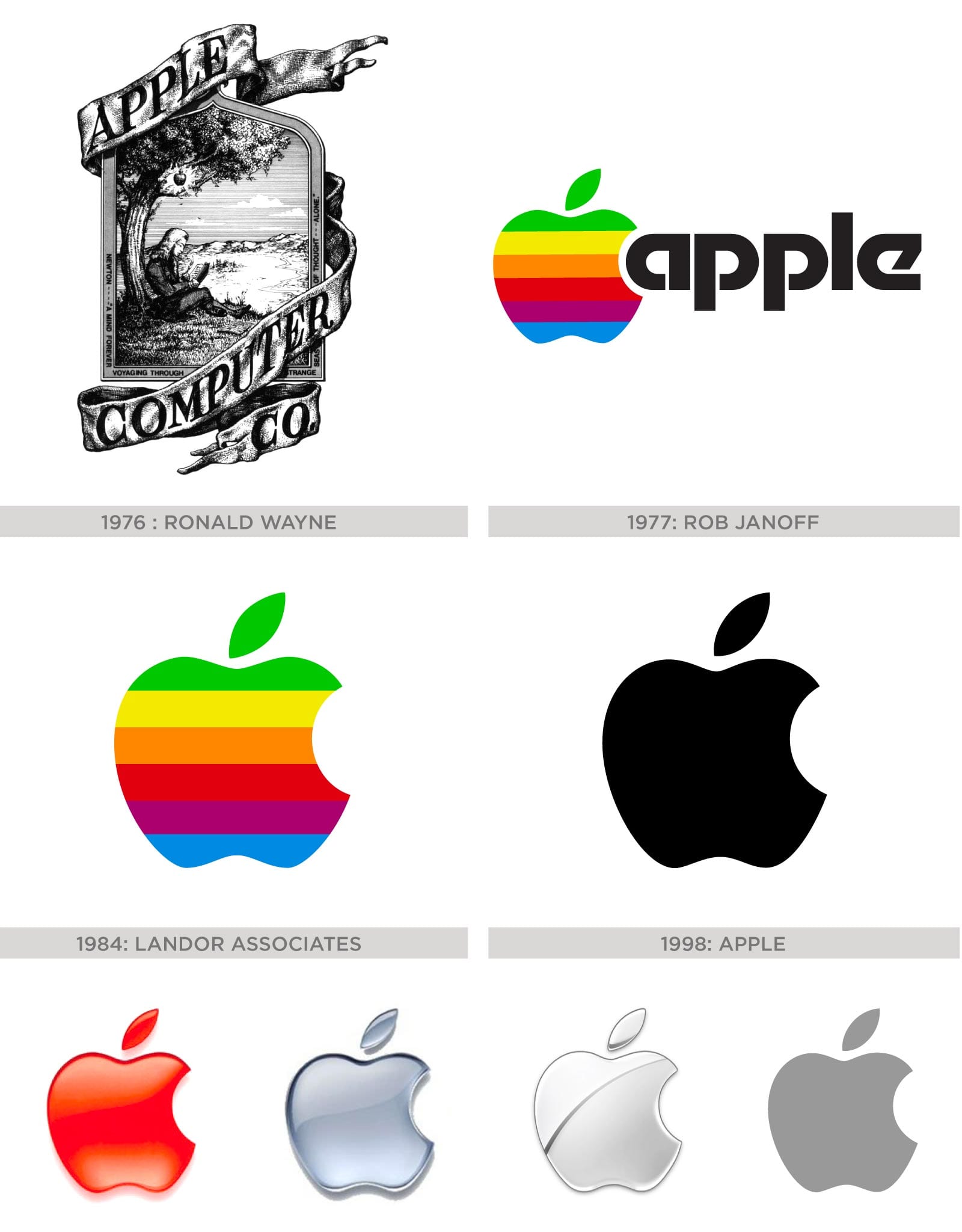
The “age” of Apple began in a suburban garage in Los Altos, California. Steve Wozniak and Steve Jobs, alongside Ronald Wayne, founded the company to sell the Apple I—a single-board computer that required users to provide their own keyboard and monitor. While the Apple I was a niche tool for enthusiasts, it laid the groundwork for the Apple II, released in 1977. The Apple II was arguably the first “true” personal computer for the masses, featuring color graphics and an open architecture that invited third-party developers to create software.
The 8-Bit Revolution and the Apple II
The Apple II enjoyed a remarkably long lifecycle, with various iterations remaining in production until 1993. This longevity is a testament to the robust engineering of the era. It introduced the world to VisiCalc, the first spreadsheet program, which transformed the personal computer from a toy into a vital business tool. This era defined Apple’s initial identity: a company that democratized complex technology through intuitive design and integrated hardware-software solutions.
1984: The Macintosh and the Graphical User Interface
The next major milestone in Apple’s age occurred in 1984 with the launch of the Macintosh. While the Apple II was a text-based machine, the Macintosh introduced the Graphical User Interface (GUI) to the public. Driven by the Motorola 68000 processor, the Macintosh replaced cryptic command lines with icons, windows, and a mouse. This shift didn’t just change Apple; it changed the entire trajectory of the tech industry. The Macintosh established the “Point and Click” paradigm that remains the standard for desktop computing today.
The NeXT Era and the OS X Transformation
As Apple entered its second decade, it faced significant internal and market challenges. By the mid-1990s, the company’s operating system, System 7, was aging poorly compared to the modern kernels of its competitors. The turning point came in 1996 when Apple acquired NeXT, the company Steve Jobs founded after his departure from Apple. This acquisition brought Jobs back to the company and, more importantly, provided the foundation for a new technical architecture.
The Unix Foundation
The “modern age” of Apple software began with the release of Mac OS X in 2001. Built on a Unix-based foundation (Darwin), OS X provided the stability, memory management, and multitasking capabilities that the previous “Classic” Mac OS lacked. This architectural shift was critical; the core technologies introduced in OS X—such as the Mach kernel and the Cocoa API framework—are the direct ancestors of the software currently powering macOS, iOS, watchOS, and tvOS.
The iMac and the Return to Hardware Elegance
Under Jobs’ renewed leadership and Jony Ive’s design direction, Apple entered a period of hardware rejuvenation. The 1998 iMac G3, with its translucent “Bondi Blue” casing, signaled the end of the “beige box” era of computing. This period saw Apple aggressively adopting new tech standards while discarding legacy ones, such as the floppy disk and serial ports, in favor of USB. This willingness to kill off older technologies to make room for the new has become a hallmark of the Apple engineering philosophy.
The Mobile Dominance: From iPhone to iPad

If the first thirty years of Apple’s age were defined by the desktop, the subsequent years have been defined by the pocket. The launch of the iPhone in 2007 is often cited as the single most important event in modern tech history. It wasn’t just a phone; it was a mobile computer that utilized a revolutionary multi-touch interface, doing away with physical styluses and keyboards.
The Evolution of Mobile Silicon
In its early years, Apple relied on off-the-shelf components from third-party manufacturers like Samsung for its mobile processors. However, the 2010 release of the iPad and the iPhone 4 marked the debut of the A4 chip—the first “Apple Silicon.” By designing its own System-on-a-Chip (SoC), Apple gained the ability to optimize software specifically for its hardware, leading to unprecedented gains in power efficiency and performance. This move toward vertical integration is why an iPhone that is five years old can often outperform newer competitors with higher raw specifications.
The App Store and the Service Ecosystem
The true maturity of the Apple mobile age arrived with the App Store in 2008. By providing a secure, centralized marketplace for software, Apple created a massive developer ecosystem. This transformed the hardware into a versatile tool capable of everything from professional video editing to high-end gaming. Today, the “age” of an Apple device is often measured by its ability to run the latest version of iOS, with Apple typically providing software updates for five to seven years, a duration rarely matched in the Android ecosystem.
Apple Silicon: The Sovereignty of Internal Engineering
In 2020, Apple initiated perhaps its most ambitious technological transition: the move from Intel processors to Apple Silicon for its Mac lineup. This transition marked the beginning of a new “Golden Age” for the company’s hardware, bridging the gap between the efficiency of mobile devices and the power of desktop workstations.
The M-Series Revolution
The introduction of the M1 chip shattered the industry’s expectations regarding the trade-off between performance and battery life. By utilizing an ARM-based architecture similar to its mobile chips, Apple was able to produce laptops that ran cool and silent while outperforming power-hungry desktop CPUs. The subsequent releases of the M2 and M3 families have solidified this lead, integrating high-performance CPU cores, massive GPU clusters, and dedicated Neural Engines for artificial intelligence tasks.
Unified Memory and Neural Engines
The current age of Apple tech is characterized by “Unified Memory Architecture” (UMA). Unlike traditional PCs where the CPU and GPU have separate pools of RAM, Apple Silicon allows both to access the same high-speed memory. This significantly reduces latency and improves efficiency in data-heavy tasks like 4K video rendering and Large Language Model (LLM) processing. Furthermore, the inclusion of the Neural Engine across all product lines demonstrates Apple’s long-term commitment to on-device AI, ensuring that privacy and speed are maintained by processing data locally rather than in the cloud.
The Legacy of Innovation: How Apple Stays Young in a Mature Market
As Apple nears its 50th anniversary, it faces the challenge of staying innovative in a mature market. The tech industry is no longer in its infancy, and the rapid gains seen in the 2000s have slowed. However, Apple continues to push the boundaries of what is considered “personal computing.”
Spatial Computing and the Vision Pro
The release of the Apple Vision Pro marks the company’s entry into “spatial computing.” By blending digital content with the physical world through high-resolution displays and advanced eye-tracking, Apple is attempting to move beyond the screen. This is a bold bet on the next phase of human-computer interaction, suggesting that the company is far from finished with its cycle of reinvention.

The Philosophy of Longevity
When asking “how old is the apple,” it is also important to consider the lifespan of the products themselves. Apple has increasingly focused on environmental sustainability and hardware longevity. The use of recycled aluminum, the removal of hazardous materials, and the transition toward carbon-neutral manufacturing are part of a strategy to ensure the company remains relevant in a future defined by resource constraints. Moreover, the robust secondary market for Apple products—where iPhones and MacBooks retain value far better than their peers—reflects a consumer perception that an “old” Apple device is still a high-quality machine.
In conclusion, the age of Apple is not just a count of years since its founding in 1976. It is a chronicle of the personal computer, the smartphone, and the integrated ecosystem. From the 8-bit Apple II to the 3-nanometer M3 chip, Apple has consistently aged by evolving, proving that in the world of technology, maturity is not about slowing down—it is about refining the future.
aViewFromTheCave is a participant in the Amazon Services LLC Associates Program, an affiliate advertising program designed to provide a means for sites to earn advertising fees by advertising and linking to Amazon.com. Amazon, the Amazon logo, AmazonSupply, and the AmazonSupply logo are trademarks of Amazon.com, Inc. or its affiliates. As an Amazon Associate we earn affiliate commissions from qualifying purchases.