
In an increasingly digital world, financial transactions are no longer confined to brick-and-mortar banks or physical cash. Mobile payment applications have revolutionized how we send, receive, and manage money, offering unparalleled convenience and speed. Among these, Cash App stands out as a popular choice, widely used for everything from splitting dinner bills to direct deposits. However, as with any financial tool, its accessibility comes with certain stipulations, particularly concerning age. The question, “how old for Cash App,” is more than a simple query about eligibility; it opens a broader discussion about financial literacy, parental guidance, and the responsible integration of digital finance into the lives of younger generations. This article delves into Cash App’s age requirements, the rationale behind them, and how families can navigate the landscape of digital financial tools to foster sound money habits.

Understanding Cash App’s Age Requirements: A Gateway to Digital Finance
Cash App, like many financial service providers, operates under specific age restrictions designed to comply with legal regulations and protect its users. Initially, Cash App required users to be at least 18 years old to open an account and access its full suite of features. This threshold aligns with the legal age of majority in most jurisdictions, where individuals are deemed capable of entering into contracts, including financial agreements, independently.
However, recognizing the growing need for digital financial tools among younger demographics, particularly for everyday transactions and allowance management, Cash App introduced a significant change in late 2021. The platform now allows users aged 13 to 17 to open an account, albeit with specific limitations and crucial parental oversight. This tiered approach reflects a thoughtful balance between accessibility and responsibility, acknowledging that while younger users can benefit from digital payment tools, they also require guidance and protection.
The 18+ Account: Full Autonomy and Features
For individuals aged 18 and older, opening a Cash App account grants full access to all its features without parental consent. This includes:
-
Sending and Receiving Money: Unrestricted peer-to-peer transfers.
-
Cash Card: Ordering and using a personalized Visa debit card linked to their Cash App balance, enabling purchases online and in-store, and ATM withdrawals.
-
Direct Deposit: Receiving paychecks, tax refunds, or government benefits directly into their Cash App account.
-
Investing: Buying and selling stocks and Bitcoin directly within the app.
-
Borrowing: Accessing Cash App’s loan feature (where available and eligible).
Users typically need to verify their identity (KYC – Know Your Customer) by providing their full name, date of birth, and the last four digits of their Social Security Number (SSN) to unlock higher transaction limits and access certain features like direct deposit and investing. This verification process is a standard practice across the financial industry to prevent fraud and comply with anti-money laundering (AML) regulations.
The 13-17 Account: Supervised Digital Spending
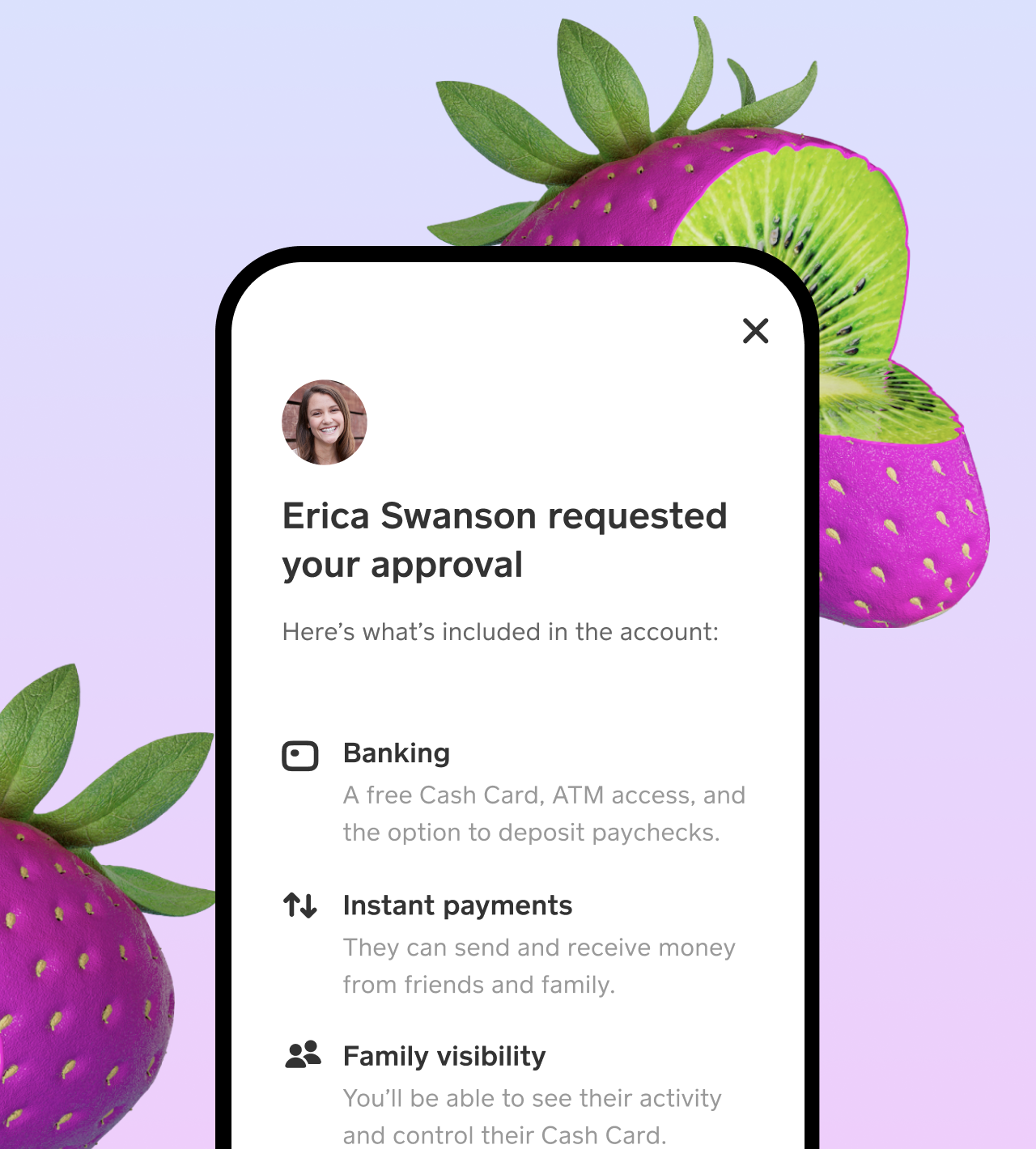
The introduction of accounts for 13 to 17-year-olds marks a significant step towards financial inclusion for teenagers. However, these accounts come with important caveats:
-
Parental/Guardian Sponsorship: A parent or legal guardian (who is 18 or older and has their own verified Cash App account) must sponsor and approve the teen’s account. This sponsorship links the teen’s account to the parent’s, allowing for a degree of oversight.
-
Limited Features: Teen accounts are primarily designed for sending and receiving money, and using a Cash Card for purchases. Features like investing, borrowing, and connecting to external bank accounts for direct deposits (though teens can receive direct deposits if the account is activated for it, usually by the parent) are generally restricted or require additional parental approval and verification steps specific to those features.
-
Transaction Limits: These accounts may have lower daily or weekly transaction limits compared to adult accounts, further mitigating risks.
-
Oversight Capabilities: The sponsoring adult can monitor the teen’s activity, view transactions, and potentially set spending limits. This parental control is crucial for guiding teens as they learn to manage their money digitally.
This structured approach allows teenagers to gain practical experience with digital banking in a controlled environment, making it a valuable tool for learning about personal finance with real-world applications.
The Rationale Behind Age Limits: Protecting Young Users and Ensuring Compliance
The seemingly arbitrary age limits for financial products like Cash App are, in fact, rooted in fundamental legal, ethical, and practical considerations. They are not merely bureaucratic hurdles but essential safeguards designed to protect both the users and the financial system. Understanding this rationale is key to appreciating the importance of responsible financial tool usage.
Legal and Regulatory Compliance
One of the primary drivers for age restrictions is adherence to a complex web of financial regulations. In most countries, individuals must reach the age of majority (typically 18) to legally enter into contracts. A financial services agreement, such as opening a bank account or a Cash App account, is a legally binding contract. Allowing minors to enter these agreements without adult consent could render the contracts unenforceable and expose financial institutions to significant legal risks.
Furthermore, regulations like the Bank Secrecy Act (BSA) in the U.S. and similar anti-money laundering (AML) and counter-terrorist financing (CTF) laws globally mandate that financial institutions “Know Your Customer” (KYC). This involves verifying the identity of account holders to prevent fraud, money laundering, and other illicit activities. Verifying the identity of minors can be more complex, and allowing unsupervised accounts could inadvertently create loopholes for financial crime. The 13-17 account with parental sponsorship helps bridge this gap by placing ultimate responsibility and legal accountability on the adult.
Financial Responsibility and Maturity
Managing money, especially digitally, requires a certain level of cognitive maturity and understanding of financial concepts. While a 13-year-old might be adept at using a smartphone, they may not fully grasp the implications of overdrafts, debt, transaction fees, privacy risks, or the permanence of digital transfers. Age limits reflect a societal consensus that younger individuals may lack the life experience and judgment necessary to make complex financial decisions independently.
Digital financial tools also introduce new dimensions of responsibility, such as protecting account credentials, recognizing phishing scams, and understanding the security implications of sharing personal financial information. A sponsored account structure ensures that an adult, presumably with greater financial literacy, is there to guide the minor through these intricacies and intervene if necessary.
Protection Against Fraud and Exploitation
Minors can be particularly vulnerable targets for scams, fraud, and online exploitation. Without adequate understanding or supervision, they might inadvertently share sensitive information, fall for deceptive schemes, or misuse financial tools, leading to monetary loss. Age restrictions, particularly those that mandate parental oversight, act as a protective layer, reducing the likelihood of young users falling victim to sophisticated fraudsters or making impulsive financial decisions they later regret. The limits on features like investing or borrowing for minors also shield them from engaging in higher-risk financial activities before they are equipped to understand and manage those risks.
Cash App for Minors: Empowering Financial Independence (Under Adult Supervision)

The availability of Cash App accounts for 13-17-year-olds presents a unique opportunity for parents to introduce their teenagers to the world of digital finance in a controlled and educational manner. Rather than being a mere payment tool, it can serve as a powerful teaching aid for fostering financial independence and literacy.
The Benefits of Early Exposure to Digital Money Management
Allowing teenagers to manage their own digital money, even with supervision, offers several benefits:
-
Practical Experience: Teens learn by doing. Managing a Cash App balance, tracking spending, and understanding transaction histories provide practical experience that traditional allowances often lack.
-
Budgeting Skills: They can learn to budget for their wants and needs, seeing how quickly money can be spent and the importance of saving.
-
Understanding Value: Direct experience with digital transactions can help them grasp the concept that digital numbers represent real money with real value.
-
Convenience and Safety: For parents, Cash App offers a convenient way to send allowance, emergency funds, or money for specific purchases without needing physical cash. It’s also safer than carrying large amounts of cash.
-
Preparation for Adulthood: Early exposure prepares them for managing their finances independently when they reach adulthood and gain full access to banking and other financial services.
Parental Guidance: The Cornerstone of Responsible Use
The success of a teen’s Cash App experience largely hinges on active parental involvement. Parents should view this as an ongoing educational journey rather than just setting up an account.
-
Open Communication: Discuss financial goals, spending habits, and the difference between needs and wants.
-
Setting Limits and Expectations: Clearly define how the Cash App should be used. Are there spending limits? Are certain types of purchases off-limits?
-
Reviewing Transactions Together: Regularly sit down with your teen to review their transaction history. Discuss where their money went, identify any impulsive spending, and celebrate responsible saving.
-
Educating on Digital Security: Teach them about strong passwords, two-factor authentication, recognizing phishing attempts, and the dangers of sharing personal information online.
-
Explaining Fees and Charges: Discuss potential ATM fees, instant transfer fees, or other charges associated with using the app and its Cash Card.
-
Financial Literacy Lessons: Use the Cash App experience as a springboard for broader discussions on saving for larger goals, understanding debt (even if they can’t incur it directly through Cash App), the concept of interest, and the importance of emergency funds.
Beyond Cash App: Fostering Financial Literacy for Younger Generations
While Cash App provides a valuable practical tool, it’s just one component of a comprehensive approach to financial literacy. True financial empowerment for younger generations extends beyond simply managing a digital wallet; it involves a deeper understanding of economic principles, prudent decision-making, and long-term planning.
Integrating Financial Education into Daily Life
Financial literacy isn’t a subject best taught in isolation; it should be integrated into everyday conversations and experiences.
-
Budgeting and Saving: Involve children in family budgeting discussions. Help them set saving goals for toys, gadgets, or experiences. Use clear jars for “spend,” “save,” and “give” as a tangible representation of money allocation.
-
Understanding Income and Expenses: Explain how income is earned and how expenses (rent, groceries, bills) consume a portion of it. Discuss the concept of earning through chores, part-time jobs, or entrepreneurial efforts.
-
The Power of Compound Interest: Introduce the concept of compound interest early, even with small numbers, to illustrate how money can grow over time. This can be a powerful motivator for saving.
-
Differentiating Needs vs. Wants: Engage in discussions about discretionary spending versus essential needs, helping them prioritize their financial decisions.
-
Credit and Debt: As they get older, introduce the concepts of credit scores, responsible borrowing, and the pitfalls of high-interest debt, long before they need to apply for their first loan or credit card.
Utilizing Other Financial Tools and Resources
While Cash App serves a specific purpose, a range of other financial tools and resources can complement a child’s financial education journey:
-
Youth Savings Accounts: Many traditional banks offer savings accounts specifically designed for minors, often with no fees and sometimes with small interest rates, providing a more formal introduction to banking.
-
Prepaid Debit Cards: Similar to Cash App cards but often not linked to a full banking app, these can be a good stepping stone for controlled spending.
-
Educational Apps and Games: Numerous apps and online games are designed to teach financial concepts in an engaging and interactive way for different age groups.
-
Books and Workshops: Age-appropriate books on money management and financial literacy, along with workshops offered by schools or community centers, can provide structured learning.
-
Investment Education: For older teens, discussing concepts of investing, diversification, and the stock market (even through模拟 investing games) can be invaluable.
Making Informed Decisions: Choosing the Right Financial Tools for Your Family
The decision of when and how to introduce digital financial tools like Cash App to children is a highly personal one, dependent on a family’s values, a child’s maturity, and specific financial needs. There’s no one-size-fits-all answer, but making an informed choice is paramount.
Assessing Readiness and Needs
Before setting up a Cash App account for a minor, consider:
-
Maturity Level: Does your child demonstrate a basic understanding of money, responsibility, and the consequences of their actions?
-
Specific Needs: Is there a genuine need for a digital payment tool (e.g., for allowance, chores, emergency funds, or school activities)? Or can current methods suffice?
-
Parental Capacity: Are you prepared to actively supervise the account, have ongoing financial discussions, and dedicate time to teaching?
-
Family Values: Does using such an app align with your family’s broader approach to money and technology?
Comparing Options and Features
Explore various options beyond just Cash App. Many traditional banks offer youth checking and savings accounts that provide a more robust banking experience, often with parental oversight features. There are also other fintech apps designed specifically for children and teens, which might offer different educational tools, spending controls, or investment features.
-
Fees: Compare any associated fees (monthly, transaction, ATM) across different platforms.
-
Features: Evaluate which features are most important for your family (e.g., direct deposit, investment options, strong budgeting tools, ease of parental control).
-
Security: Understand the security measures and consumer protections offered by each platform.
-
Educational Value: Some apps are more explicitly designed with educational components than others.
In conclusion, the age requirement for Cash App is not just a hurdle but an entry point into a significant learning opportunity. By understanding the rules, embracing parental oversight, and committing to ongoing financial education, families can leverage tools like Cash App to equip younger generations with the essential skills and knowledge needed to thrive in an increasingly digital financial landscape. The goal is not merely to facilitate transactions but to cultivate financially literate, responsible, and independent individuals prepared for the complexities of modern money management.
aViewFromTheCave is a participant in the Amazon Services LLC Associates Program, an affiliate advertising program designed to provide a means for sites to earn advertising fees by advertising and linking to Amazon.com. Amazon, the Amazon logo, AmazonSupply, and the AmazonSupply logo are trademarks of Amazon.com, Inc. or its affiliates. As an Amazon Associate we earn affiliate commissions from qualifying purchases.