
The question “how much would my investment be worth?” is a cornerstone of personal finance, a query that resonates with anyone looking to build wealth, plan for retirement, or achieve specific financial goals. It’s not merely a theoretical exercise; understanding the potential future value of your investments is crucial for making informed decisions today. Whether you’re a novice investor or seasoned veteran, the ability to project the growth of your capital empowers you to set realistic goals, evaluate different investment strategies, and make necessary adjustments along your financial journey.
This exploration delves into the core principles that govern investment growth, unpacks the critical variables that dictate future value, provides practical methods for calculation, and outlines strategies to maximize your potential returns. By demystifying the mechanics behind investment appreciation, we aim to provide you with a clearer roadmap to understanding and ultimately realizing your financial aspirations. The journey to financial independence begins with clarity, and few questions are more central to that clarity than knowing the potential of your invested capital.
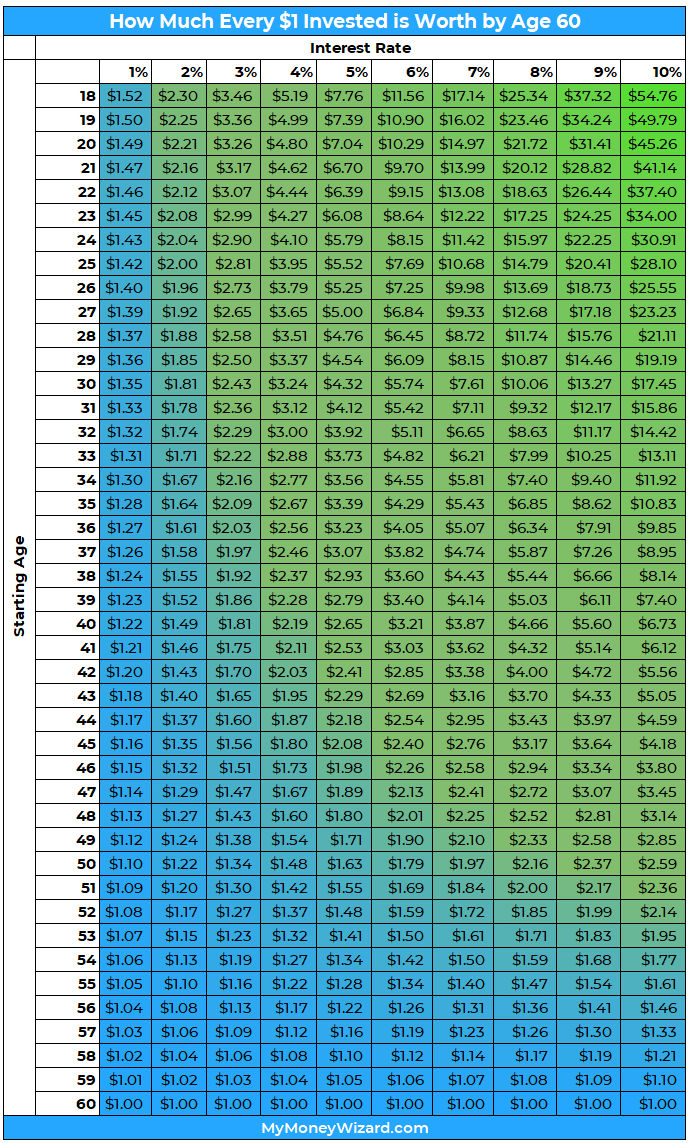
The Fundamentals of Investment Growth
Before we delve into calculations, it’s essential to grasp the foundational concepts that drive investment growth. Understanding these principles provides the bedrock for accurate projections and effective strategy formulation.
Understanding Compound Interest
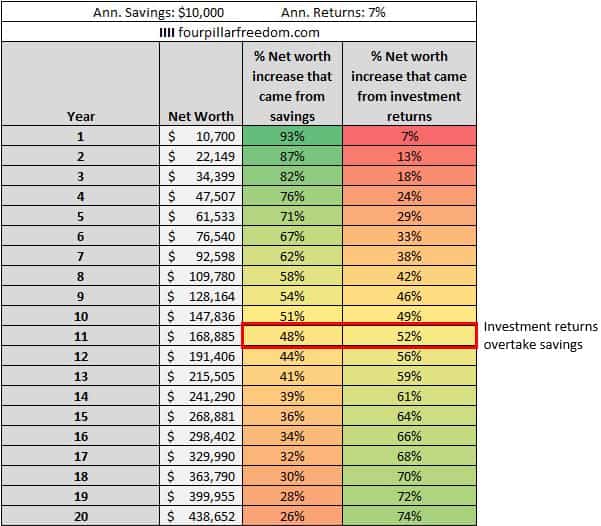
Often hailed as the “eighth wonder of the world” by Albert Einstein, compound interest is the engine of wealth creation. In simple terms, it’s the interest you earn on your initial investment plus the accumulated interest from previous periods. Unlike simple interest, which is only calculated on the principal amount, compound interest continually reinvests the earnings, allowing your money to grow exponentially over time.
Imagine investing $1,000 at a 5% annual return. In the first year, you earn $50. With simple interest, you’d continue to earn $50 each year. With compound interest, in the second year, you’d earn 5% on $1,050, resulting in $52.50. This seemingly small difference accrues significantly over decades, demonstrating why starting early and consistently reinvesting returns are paramount. The magic of compounding lies in its ability to turn modest beginnings into substantial sums, provided enough time and consistent returns.
The Power of Time in Investing
Time is arguably the most powerful ally an investor has. The longer your money is invested, the more opportunities it has to compound, and the more significant the impact of even modest returns. This concept is vividly illustrated by comparing an early starter with a late starter, even if the late starter contributes more money. An individual who starts investing $200 a month at age 25 could potentially accumulate more wealth by age 65 than someone who starts investing $400 a month at age 35, assuming similar returns.
This phenomenon underscores the importance of beginning your investment journey as early as possible. Procrastination is the silent enemy of investment growth, as every year lost is a year of compounding missed. Even small, consistent contributions over a long period can outperform larger, sporadic investments made later in life.
The Role of Risk and Return
In the world of investing, risk and return are inextricably linked. Generally, investments with the potential for higher returns also carry a higher degree of risk, and vice-versa. Understanding this relationship is crucial for setting realistic expectations about your investment’s future worth.
-
Risk: The possibility that an investment’s actual return will be different from what was expected, including the possibility of losing some or all of your initial investment. Common types of risk include market risk, interest rate risk, inflation risk, and company-specific risk.
-
Return: The gain or loss of an investment over a specified period, expressed as a percentage of the initial investment. Returns can come from capital appreciation (the increase in the value of the asset) or income (dividends, interest payments).
A diversified portfolio aims to balance risk and return according to an individual’s risk tolerance and financial goals. A conservative investor might prioritize capital preservation and accept lower returns, while an aggressive investor might seek higher returns, understanding they bear greater potential for losses. Your expected rate of return, a crucial factor in calculating future worth, must always be viewed through the lens of the risk you are willing to undertake.
Key Variables Influencing Future Value
Projecting the future worth of an investment is not guesswork; it’s a calculation based on several quantifiable variables. Understanding how each factor contributes to the overall outcome is essential for accurate forecasting.
Initial Capital and Regular Contributions
The starting point for any investment calculation is the initial capital – the lump sum you begin with. Naturally, a larger initial investment has a greater base from which to grow. However, the power of regular contributions cannot be overstated. Consistent, periodic investments, even small ones, significantly enhance the future value of your portfolio. This is due to dollar-cost averaging (investing a fixed amount regularly, regardless of market fluctuations, potentially buying more shares when prices are low) and the continuous feeding of the compounding machine. Even if your initial capital is modest, disciplined ongoing contributions can lead to substantial wealth accumulation over time.
The Expected Rate of Return
Perhaps the most influential variable in projecting future worth is the expected rate of return. This is the annual percentage increase you anticipate your investment will yield. It’s critical to be realistic here. While past performance can offer guidance, it’s not a guarantee of future results. Different asset classes have historically provided different average returns:
-
Savings accounts/CDs: Low returns (e.g., 0.5% – 2%) with very low risk.
-
Bonds: Moderate returns (e.g., 2% – 5%) with moderate risk.
-
Stocks (broad market index funds): Higher returns (e.g., 7% – 10% historically, adjusted for inflation) with higher risk.
When estimating your rate of return, consider the asset allocation of your portfolio, your risk tolerance, and historical averages for similar investments. Overly optimistic projections can lead to disappointment, while overly conservative ones might underestimate your potential.
The Investment Horizon (Time)
As discussed earlier with compound interest, the investment horizon – the length of time your money remains invested – is a colossal determinant of future value. The longer the horizon, the greater the potential for compounding to work its magic. A seemingly small difference in annual return can lead to dramatically different outcomes over decades. For example, an extra 1% annual return on a $10,000 investment over 30 years can result in tens of thousands of dollars more. Time gives investments the necessary runway to overcome short-term market volatility and leverage exponential growth.
The Impact of Inflation and Taxes
While calculations often focus on nominal returns, it’s crucial to consider the real-world erosion of purchasing power due to inflation and the reduction of gains due to taxes.
-
Inflation: This is the rate at which the general level of prices for goods and services is rising, and subsequently, the purchasing power of currency is falling. If your investment earns 7% but inflation is 3%, your “real” return is only 4%. When planning for long-term goals like retirement, it’s essential to project future values in “real” terms to understand what your money will actually be able to buy.
-
Taxes: Investment gains are typically subject to taxes, such as capital gains tax or income tax on dividends and interest. The type of investment account (e.g., taxable brokerage account, IRA, 401(k)) significantly impacts when and how these taxes are paid. Tax-advantaged accounts (like IRAs and 401(k)s) can allow your investments to grow tax-deferred or even tax-free, substantially increasing their net future worth. Ignoring the impact of taxes can lead to an overestimation of your usable future wealth.
Calculating Your Investment’s Future Worth
With a grasp of the underlying principles and key variables, we can now turn to the practical methods for calculating your investment’s future value.
Basic Future Value Formulas
For a single lump-sum investment with a fixed interest rate, the future value (FV) can be calculated using a simple formula:
FV = PV * (1 + r)^n
Where:
-
FV = Future Value
-
PV = Present Value (your initial investment)
-
r = Annual interest rate (as a decimal, e.g., 5% = 0.05)
-
n = Number of years
If you’re making regular, equal contributions (an annuity), the formula becomes more complex, but online calculators handle this effortlessly. The key is to understand what each variable represents and to input realistic figures.
Utilizing Online Investment Calculators
For most investors, the easiest and most accurate way to calculate future worth is by using readily available online investment calculators. These tools are incredibly versatile, allowing you to input:
-
Initial investment amount
-
Regular contribution amount and frequency (monthly, quarterly, annually)
-
Expected annual rate of return
-
Number of years
-
Sometimes even inflation and tax rates
Many financial institutions, investment platforms, and personal finance websites offer these calculators free of charge. They provide instant projections, often with accompanying charts and graphs, making it simple to visualize your investment’s potential growth. Experimenting with different scenarios (e.g., increasing contributions, extending the time horizon) can be highly insightful.
Scenario Planning and Sensitivity Analysis
Rather than relying on a single future value projection, it’s wise to engage in scenario planning and sensitivity analysis. This involves calculating your investment’s worth under a range of different assumptions. For example:
-
Best-case scenario: A slightly higher than expected rate of return, consistent contributions, and minimal inflation.
-
Expected-case scenario: Your most likely estimate for all variables.
-
Worst-case scenario: A lower rate of return, missed contributions, or higher inflation.
By understanding the potential range of outcomes, you can better prepare for different market conditions and adjust your financial plans accordingly. Sensitivity analysis helps identify which variables have the most significant impact on your future worth, allowing you to focus your efforts on optimizing those factors (e.g., increasing your savings rate versus chasing an extra 0.5% return).
Strategies to Maximize Your Investment’s Potential
Calculating future worth is one thing; actively working to enhance that worth is another. Several strategies can significantly boost your investment’s potential over the long term.
Diversification and Asset Allocation
Diversification is the practice of spreading your investments across various asset classes, industries, and geographic regions to reduce risk. The old adage, “Don’t put all your eggs in one basket,” perfectly encapsulates this principle. If one investment underperforms, others may compensate, leading to more stable and consistent overall returns.
Asset allocation is a specific form of diversification that involves strategically distributing your investment portfolio among different asset categories, such as stocks, bonds, and cash equivalents. Your optimal asset allocation depends on your age, financial goals, and risk tolerance. A younger investor with a long time horizon might opt for a higher percentage of stocks, while someone nearing retirement might favor a more conservative mix with more bonds. Regular rebalancing of your portfolio ensures your allocation remains aligned with your goals.
Reinvesting Dividends and Gains
Many investments, particularly stocks and mutual funds, generate dividends (periodic payments to shareholders) or capital gains (profits from selling an asset for more than its purchase price). Opting to reinvest these dividends and gains back into the investment, rather than taking them as cash, significantly accelerates the power of compounding. Each reinvested dollar buys more shares or units, which then generate their own dividends and capital appreciation, creating a powerful snowball effect. This seemingly small decision can add substantial value to your portfolio over decades.
Regular Review and Adjustment
The investment landscape is dynamic, and your personal circumstances will evolve. Therefore, it’s crucial to conduct regular reviews of your investment portfolio and make adjustments as needed. This typically involves:
-
Annual portfolio review: Assess performance, rebalance your asset allocation, and ensure it still aligns with your risk tolerance and goals.
-
Life events: Major life changes such as marriage, having children, career changes, or approaching retirement should trigger a reassessment of your financial plan and investment strategy.
-
Market changes: While you shouldn’t react to every market fluctuation, significant shifts in economic conditions or interest rates might warrant consideration.
Being proactive and adaptable ensures your investments remain on track to achieve their maximum potential and your long-term objectives.
Minimizing Fees and Taxes
Fees and taxes are silent wealth destroyers. Over decades, even seemingly small percentages can erode a significant portion of your returns.
-
Fees: Pay close attention to expense ratios on mutual funds and ETFs, advisory fees, trading commissions, and account maintenance fees. Opt for low-cost index funds or ETFs where appropriate. Understand what you are paying for if you use a financial advisor.
-
Taxes: Leverage tax-advantaged accounts like 401(k)s, IRAs, HSAs, and 529 plans. Understand the difference between tax-deferred and tax-free growth. Strategically manage capital gains and losses in taxable accounts. Working with a tax professional can help optimize your tax efficiency.
By diligently minimizing these drains on your returns, you allow more of your money to stay invested and compound, directly increasing your investment’s future worth.
Beyond the Numbers: Professional Guidance and Financial Tools
While formulas and calculators provide the mathematical framework, navigating the complexities of investing often benefits from additional support and resources.
When to Consult a Financial Advisor
For many individuals, especially those with complex financial situations, substantial assets, or a lack of time and expertise, consulting a qualified financial advisor can be invaluable. A good advisor can help you:
-
Define your financial goals and risk tolerance.
-
Develop a personalized investment strategy and asset allocation.
-
Assist with retirement planning, estate planning, and tax-efficient investing.
-
Provide unbiased advice and emotional discipline during market volatility.
-
Help you understand how much your investments would be worth in various scenarios.
When choosing an advisor, look for a fiduciary (legally obligated to act in your best interest) and understand their fee structure. Their expertise can offer peace of mind and potentially lead to better long-term outcomes than going it alone.
Leveraging Financial Planning Software
Beyond simple investment calculators, comprehensive financial planning software offers a more holistic view of your financial life. Tools like Personal Capital, YNAB (You Need A Budget), or more advanced professional platforms can:
-
Aggregate all your financial accounts in one place.
-
Track your net worth over time.
-
Project future investment values alongside other financial goals (e.g., paying off debt, saving for a home).
-
Run more sophisticated “what-if” scenarios, considering various inflation rates, market returns, and life events.
-
Help you visualize your progress towards specific financial milestones, including understanding how much your investment would be worth under a variety of conditions, and how those conditions impact your overall financial picture.
These tools empower you to take a proactive approach to managing your wealth and ensuring your investment growth aligns with your broader financial objectives.
Staying Informed and Educated
Finally, one of the most powerful tools an investor possesses is knowledge. Staying informed and continually educating yourself about personal finance, economic trends, and investment strategies is crucial. Read reputable financial news, books, and articles. Understand basic economic principles and how they might affect markets. While you don’t need to be an expert, a foundational understanding empowers you to make better decisions, ask intelligent questions of advisors, and avoid common investment pitfalls. The more informed you are, the better equipped you will be to maximize the future worth of your investments and achieve lasting financial security.
Understanding how much your investment would be worth is more than just a calculation; it’s an exercise in foresight, planning, and empowerment. By embracing the principles of compounding, diligently managing variables, leveraging tools, and consistently refining your approach, you can turn a simple question into a powerful roadmap for your financial future.
aViewFromTheCave is a participant in the Amazon Services LLC Associates Program, an affiliate advertising program designed to provide a means for sites to earn advertising fees by advertising and linking to Amazon.com. Amazon, the Amazon logo, AmazonSupply, and the AmazonSupply logo are trademarks of Amazon.com, Inc. or its affiliates. As an Amazon Associate we earn affiliate commissions from qualifying purchases.