
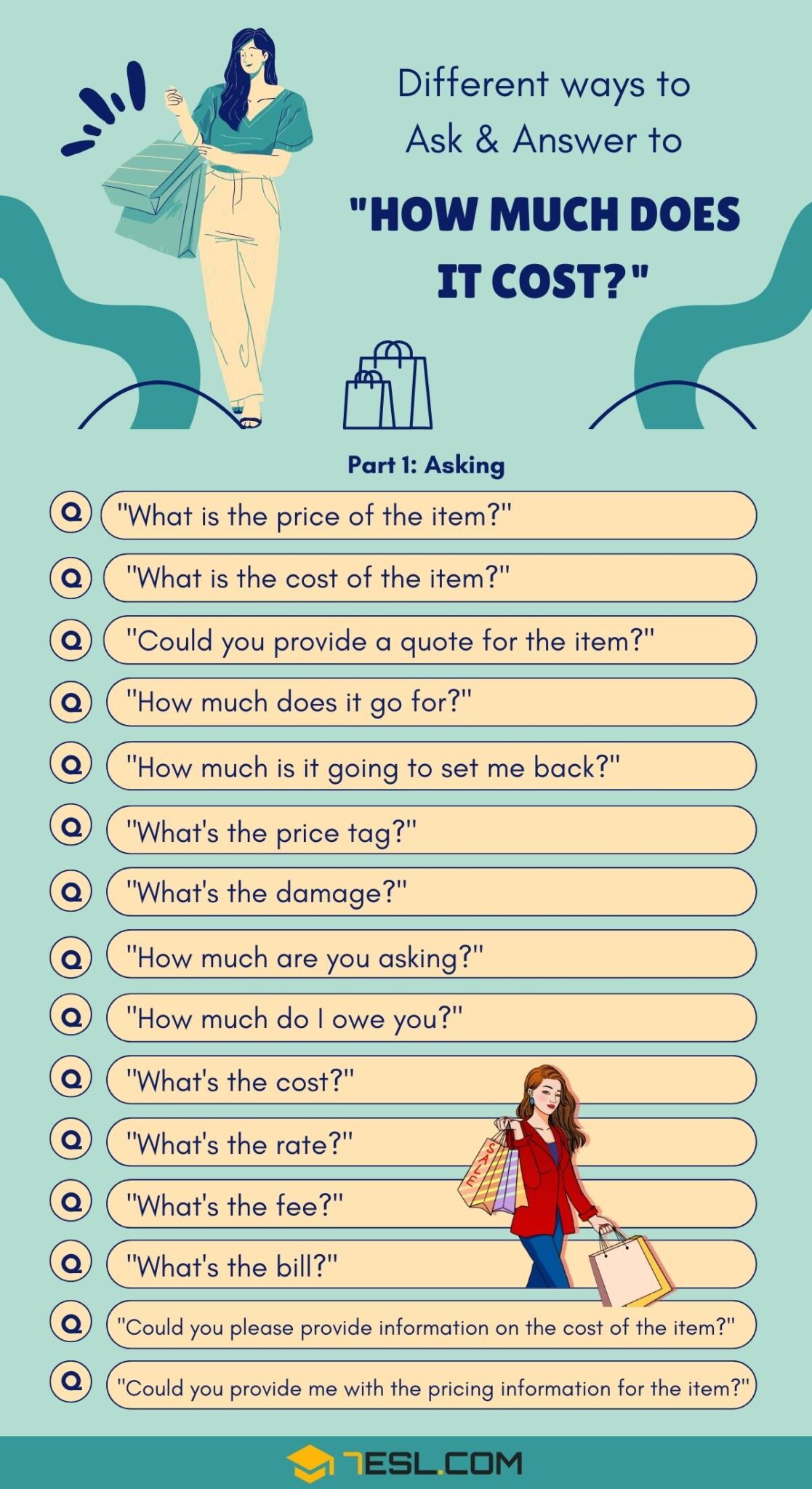
The question “how much would it be?” is deceptively simple, yet it underpins nearly every financial decision we make, both personally and professionally. It’s not merely a query about a price tag; it’s a gateway to understanding value, assessing risk, and planning for the future. From buying a coffee to investing in a multinational corporation, every action carries a monetary implication that extends far beyond the immediate exchange of currency. In a world of increasing complexity, where options proliferate and information overwhelms, the ability to accurately answer “how much would it be?”—and, more importantly, “what’s it truly worth?”—is a cornerstone of financial literacy and strategic planning. This article delves into the multi-faceted nature of cost, value, and financial assessment, guiding you through the intricate layers behind that simple, yet profound, question.
Beyond the Price Tag: Understanding Different Types of Costs
When we ask “how much would it be?”, our immediate thought is often the direct monetary expense. However, this is just the tip of the iceberg. A truly insightful financial perspective requires understanding a broader spectrum of costs that impact our financial well-being and decision-making.
Direct vs. Indirect Costs
Direct costs are straightforward: the explicit price paid for a good or service. This is the amount listed on a receipt, an invoice, or a contract. For instance, the direct cost of a new smartphone is its retail price. The direct cost of a financial advisor is their stated fee. These are easy to quantify and are typically the first figures considered.
However, indirect costs often lurk beneath the surface, significantly impacting the total financial burden. These are expenses that are not directly attributable to a specific item but are incurred as a result of possessing or utilizing it. For our smartphone example, indirect costs might include ongoing data plans, accessories (cases, screen protectors), app subscriptions, insurance, and eventual repair costs or depreciation. For a financial advisor, indirect costs could include the time spent gathering documents, the opportunity cost of implementing certain strategies, or even the emotional toll of making difficult financial decisions. Recognizing these hidden costs is crucial for accurate budgeting and avoiding unpleasant financial surprises down the line.
Opportunity Costs: The Unseen Price
Perhaps the most frequently overlooked, yet profoundly impactful, cost is opportunity cost. This refers to the value of the next best alternative that you forego when making a choice. Every decision, by definition, means choosing one path over another. The opportunity cost is the benefit you miss out on by not choosing that alternative.
For example, if you decide to spend $500 on a new gadget, the opportunity cost isn’t just the $500. It’s what else you could have done with that $500. Perhaps you could have invested it in a high-yield savings account, paid down a credit card with high interest, or put it towards a down payment on a house. The lost interest, saved interest, or progress towards a larger goal represents your opportunity cost. In business, choosing to invest in one project means foregoing the potential returns of another. Understanding opportunity cost forces a more holistic view of financial decisions, emphasizing that money is a finite resource with competing demands. It transforms “how much would it be?” into “what am I giving up by choosing this?”
Lifetime Value and Total Cost of Ownership
For significant purchases or long-term commitments, simply looking at the upfront cost or even the immediate indirect costs is insufficient. Concepts like Lifetime Value (LTV) and Total Cost of Ownership (TCO) provide a more comprehensive financial perspective.
Total Cost of Ownership (TCO) is a financial estimate intended to help consumers and enterprises determine the direct and indirect costs of a product or system over its entire lifespan. For a car, TCO includes not just the purchase price, but also fuel, insurance, maintenance, repairs, depreciation, and even the cost of parking or tolls over the years you own it. For software, it includes licensing fees, implementation costs, training, ongoing support, and upgrades. TCO helps in making smarter purchasing decisions by comparing the true long-term costs of different options, rather than just their initial price.
Lifetime Value (LTV), primarily used in business context, particularly for customer relationships, is the predicted revenue that a customer will generate throughout their relationship with a company. While often a revenue metric, it has a cost counterpart. Understanding the “lifetime cost” of a customer (Customer Acquisition Cost + Customer Retention Cost) helps businesses decide how much they should be willing to spend to acquire and retain that customer. For individuals, applying a similar logic to services like gym memberships or streaming subscriptions – how much value do you truly derive versus the total cost over the time you use it – can lead to more financially sound choices.
Strategic Valuation: When “How Much” Becomes “What’s It Worth?”
The question “how much would it be?” often stems from an underlying desire to understand value. In the world of finance, value is not always synonymous with price. Price is what you pay; value is what you get. Strategic valuation involves moving beyond mere cost assessment to understand the inherent worth, potential returns, and future implications of financial commitments.
Personal Investments: Assets vs. Liabilities
In personal finance, distinguishing between assets and liabilities is fundamental to assessing your true net worth. An asset is something that puts money in your pocket or has the potential to appreciate in value (e.g., stocks, bonds, real estate, a profitable business). A liability is something that takes money out of your pocket or is a financial obligation (e.g., credit card debt, mortgages, car loans, depreciating consumer goods).
When asking “how much would it be?” in the context of personal investments, the focus shifts from a pure cost to a potential return on investment (ROI). “How much would it be” to buy this stock? The answer lies not just in its current price, but its projected growth, dividend yield, and alignment with your financial goals. Conversely, “how much would it be” to take on this loan? Here, the answer is the total cost of borrowing, including interest, fees, and the impact on your debt-to-income ratio, which are liabilities. A clear understanding of this distinction helps build a robust financial future, prioritizing assets that generate wealth and minimizing liabilities that drain it.
Business Valuations: Beyond Revenue and Profit
For businesses, understanding “how much would it be?” can pertain to the value of the entire enterprise, a specific project, or an acquisition target. Business valuation is a complex process that goes far beyond simply looking at current revenue or profit figures. It considers a multitude of factors, including:
-
Future Earnings Potential: What are the projected cash flows and growth rates?
-
Asset Value: The tangible assets (property, equipment) and intangible assets (brand reputation, intellectual property, customer lists).
-
Market Conditions: Industry trends, competitive landscape, and overall economic health.
-
Synergies: For acquisitions, the potential for cost savings or revenue generation when two entities combine.
-
Risk Factors: Operational risks, market risks, regulatory risks.
Sophisticated valuation methodologies, such as Discounted Cash Flow (DCF), asset-based valuation, and market multiple analysis, are employed to arrive at an estimated value. For an investor or entrepreneur, asking “how much would it be?” for a business or project requires a deep dive into these financial metrics to determine its true worth and potential return.
Assessing the Value of Time and Expertise
Money isn’t the only valuable currency; time and expertise are equally, if not more, precious. When considering “how much would it be?”, it’s crucial to factor in the monetary value of your time and the expertise you either possess or need to acquire.
For an individual, outsourcing tasks like cleaning, meal prep, or accounting might seem like an added expense. However, if these tasks free up your time to pursue higher-income activities, professional development, or personal well-being, the “cost” might actually be an investment. The question becomes: “How much is my time worth per hour, and is it more valuable to delegate this task or do it myself?”
Similarly, investing in education, certifications, or professional coaching might have a significant upfront cost. “How much would it be?” for an MBA or a specialized certification? While the direct tuition cost is clear, the value lies in the potential for increased earning power, career advancement, and expanded opportunities over a lifetime. This is a classic example of an investment where the long-term ROI significantly outweighs the initial outlay, effectively increasing the value of your expertise.
Navigating the Landscape of Personal Finance: Making Informed Choices
For most individuals, the question “how much would it be?” frequently arises in the context of managing personal finances. Making informed choices here is critical for financial stability and achieving personal goals.
Budgeting and Expense Tracking: Knowing Where Your Money Goes
The foundational step to answering “how much would it be?” effectively in your daily life is to understand your current financial landscape. Budgeting is the process of creating a plan to spend and save your money, based on your income and expenses. It allows you to allocate funds strategically, ensuring essential needs are met, savings goals are pursued, and discretionary spending is controlled.

Expense tracking is the complementary practice of recording where every dollar goes. Whether through a spreadsheet, a budgeting app, or simply a notebook, tracking expenses reveals patterns, highlights areas of overspending, and helps identify indirect costs you might not have realized. Without a clear picture of your income and outflow, asking “how much would it be?” for a new purchase is akin to navigating blindfolded. Robust budgeting and diligent expense tracking provide the data necessary to make financially sound decisions and prevent financial surprises.
Debt Management: The Cost of Borrowing
One of the most significant answers to “how much would it be?” often comes from the cost of borrowing money. Debt management is about strategically handling your financial obligations to minimize interest payments and accelerate repayment. High-interest debts, such as credit card balances or personal loans, can significantly inflate the “true cost” of any purchase made with borrowed money.
When you ask “how much would it be?” for an item you finance, the answer isn’t just the sticker price; it’s the sticker price plus all accrued interest and fees over the life of the loan. This can effectively double or even triple the initial cost. Understanding compound interest, prioritizing high-interest debt repayment, and exploring options like debt consolidation or balance transfers are crucial strategies to mitigate the hidden costs of borrowing and liberate more of your income for savings and investments.
Saving and Investing: The Power of Compounding
On the flip side of debt, saving and investing represent the power of “how much would it be?” working for you. Instead of calculating how much something costs, you’re calculating how much something could be worth in the future. Saving involves setting aside money for short-term goals or emergencies, typically in low-risk, liquid accounts. Investing involves deploying capital into assets with the expectation of generating a return, allowing your money to grow over time.
The magic of compound interest is central here. It’s the interest earned on your initial principal plus the accumulated interest from previous periods. When you ask “how much would it be?” if I save $100 per month for 30 years at an 8% annual return? The answer, thanks to compounding, is dramatically higher than just the sum of your contributions. Financial tools like retirement calculators and investment simulators help visualize this growth, demonstrating the incredible long-term value of consistent saving and strategic investing, even with relatively small initial amounts.
The Entrepreneurial Perspective: Pricing for Profit and Value
For entrepreneurs and business owners, “how much would it be?” is a dual-edged question: how much does it cost to run the business, and how much should we charge for our products or services? Effective pricing strategies are vital for sustainability and growth.
Cost-Plus vs. Value-Based Pricing
When determining the price for a product or service, businesses typically employ various strategies. Cost-plus pricing is straightforward: calculate the total cost of producing a good or service (direct materials, labor, overhead) and then add a desired profit margin. This ensures that every sale covers expenses and contributes to profit. While simple, it doesn’t account for market demand or perceived value.
Value-based pricing, on the other hand, sets prices primarily based on the perceived value to the customer, rather than on the cost of production. If a product solves a critical problem or offers significant benefits that save a customer time, money, or provides a unique experience, its price can be set higher, even if its production cost is low. For example, a specialized software solution that automates a complex business process might have a relatively low development cost but delivers immense value to its users, allowing for a premium price point. Understanding the true value proposition helps businesses answer “how much should it be?” from the customer’s perspective.
Understanding Market Dynamics and Competitor Pricing
No business operates in a vacuum. When setting prices, entrepreneurs must rigorously analyze market dynamics and competitor pricing. What are similar products or services selling for? What are customers willing to pay? Is there price sensitivity in the market, or is brand loyalty and perceived quality more influential?
Pricing too high might deter potential customers, while pricing too low could signal inferior quality or erode profit margins. Market research, customer surveys, and competitive analysis are indispensable tools. They help entrepreneurs benchmark their offerings, identify unique selling propositions, and strategically position their pricing within the market to maximize both sales volume and profitability.
The Hidden Costs of Starting and Scaling a Business
“How much would it be?” is a question every aspiring entrepreneur grapples with when starting a business. Beyond obvious costs like initial inventory, equipment, or rent, there are numerous hidden costs that can quickly deplete capital. These include:
-
Legal and Regulatory Fees: Business registration, licenses, permits, legal advice for contracts.
-
Marketing and Advertising: Website development, social media campaigns, advertising spend.
-
Technology and Software: Subscriptions for CRM, accounting software, project management tools.
-
Insurance: Liability insurance, property insurance, workers’ compensation.
-
Professional Services: Accountants, consultants, HR support.
-
Employee-Related Costs: Salaries, benefits, payroll taxes, training.
-
Contingency Funds: Unexpected expenses, market downturns, operational hiccups.
Scaling a business also introduces new “how much would it be?” questions related to expanding infrastructure, hiring more talent, entering new markets, and investing in research and development. A realistic assessment of these costs, often underestimated, is vital for creating robust financial projections and securing adequate funding.
Tools and Strategies for Accurate Financial Assessment
Effectively answering “how much would it be?” in its various forms requires more than just intuition; it demands reliable tools and a commitment to continuous learning.
Financial Planning Software and Calculators
In the digital age, a plethora of financial planning software and calculators are available to assist individuals and businesses. These tools can help:
-
Budgeting: Track income and expenses, categorize spending, and set financial goals (e.g., Mint, YNAB).
-
Investment Planning: Project investment growth, calculate retirement savings, compare different investment vehicles (e.g., robo-advisors like Betterment, Vanguard’s tools).
-
Debt Management: Calculate loan amortization schedules, compare debt repayment strategies.
-
TCO Analysis: Specialized calculators for vehicles, equipment, or software.
These tools automate complex calculations, provide visual representations of financial data, and offer insights that empower users to make more informed decisions about future costs and potential returns.
Professional Financial Advice
While self-service tools are powerful, the complexity of certain financial questions often warrants professional financial advice. Financial advisors, wealth managers, accountants, and business consultants specialize in navigating intricate financial landscapes.
For individuals, an advisor can help with retirement planning, estate planning, investment strategies, and tax optimization, providing tailored answers to “how much would it be?” for various life stages and financial goals. For businesses, a CFO or financial consultant can assist with valuation, fundraising, budgeting, tax strategy, and risk management, offering expert perspectives on capital allocation and profitability. The “cost” of such advice is often an investment that yields significant returns in optimized financial outcomes and reduced stress.

Continuous Learning and Market Research
Finally, the financial world is dynamic, with economic conditions, market trends, and product offerings constantly evolving. Therefore, a commitment to continuous learning and market research is paramount.
Stay informed about changes in interest rates, inflation, tax laws, and investment opportunities. Read financial news, follow reputable economic analysts, and consider financial education courses. For businesses, ongoing market research helps identify emerging trends, understand customer needs, and adapt pricing strategies. The more knowledgeable you are, the better equipped you will be to accurately answer “how much would it be?” not just for today, but for all your future financial endeavors.
In conclusion, “how much would it be?” is a fundamental question that drives financial inquiry. By looking beyond the obvious, understanding direct, indirect, and opportunity costs, strategically valuing assets, and utilizing available tools and expertise, we can transform a simple query into a powerful mechanism for making insightful, informed, and ultimately, more prosperous financial decisions.
aViewFromTheCave is a participant in the Amazon Services LLC Associates Program, an affiliate advertising program designed to provide a means for sites to earn advertising fees by advertising and linking to Amazon.com. Amazon, the Amazon logo, AmazonSupply, and the AmazonSupply logo are trademarks of Amazon.com, Inc. or its affiliates. As an Amazon Associate we earn affiliate commissions from qualifying purchases.