
Interest is the fundamental “price” of money. Whether you are looking to purchase a home, finance a vehicle, or carry a balance on a credit card, understanding how interest is calculated is the difference between financial mastery and chronic debt. To answer the question “how much would I pay in interest,” one must look beyond a simple percentage and examine the mechanics of principal, time, and compounding.
In this guide, we will dissect the variables that dictate your interest costs, explore how different financial products structure their charges, and provide strategies to minimize the amount you pay over the life of a loan.

The Mechanics of Interest: Understanding Simple vs. Compound Calculations
To understand the total cost of a loan, you must first understand the mathematical engine driving it. Interest is essentially a fee paid by a borrower to a lender for the use of assets. However, not all interest is calculated the same way.
Simple Interest: The Basics
Simple interest is the most straightforward calculation. It is determined by multiplying the daily interest rate by the principal by the number of days that elapse between payments. It is most commonly found in short-term personal loans or specific types of auto financing.
The formula is: Principal × Interest Rate × Time = Interest.
For example, if you borrow $10,000 at a 5% annual simple interest rate for three years, you would pay $500 in interest each year, totaling $1,500. Because the interest does not “roll over” into the principal, the cost remains linear and predictable.
Compound Interest: The Exponential Factor
Compound interest is often described as “interest on interest.” This is the method used by the vast majority of credit cards and many investment accounts. When interest compounds, the interest earned or charged over a specific period is added back to the principal balance. In the next period, interest is calculated on that new, larger amount.
If you carry a balance on a credit card with a 20% APR that compounds monthly, your debt doesn’t just grow by 20% a year; it grows faster because each month’s interest charge increases the base for the following month. This is why credit card debt can feel impossible to escape; you are effectively paying interest on the interest you couldn’t pay last month.
The Rule of 72 and the Time Value of Money
In finance, the “Time Value of Money” (TVM) posits that money available now is worth more than the same amount in the future due to its potential earning capacity. When you ask “how much will I pay,” you are essentially asking what the lender’s “opportunity cost” is. A helpful shortcut to understand the impact of interest over time is the Rule of 72. By dividing 72 by your interest rate, you can estimate how long it will take for your debt (or investment) to double. At a 10% interest rate, your balance would double in roughly 7.2 years if no payments were made.
Calculating Interest Across Different Loan Types
The structure of your loan significantly impacts how much interest you pay. Even if two loans have the same interest rate, the “type” of loan dictates the cadence and total volume of interest.
Mortgages and the Amortization Schedule
Mortgages are usually “amortized” loans. In the early years of a 30-year mortgage, the vast majority of your monthly payment goes toward interest, while only a small fraction touches the principal.
For instance, on a $400,000 mortgage at a 6.5% interest rate, your first monthly payment might be roughly $2,528. Of that, approximately $2,166 goes straight to interest, and only $362 reduces your debt. Over 30 years, you would end up paying over $510,000 in interest alone—more than the original cost of the house. Understanding your amortization schedule is vital because it shows why making extra principal payments early in the loan can save you tens of thousands of dollars in interest.
Credit Card Interest and the Daily Periodic Rate
Credit cards use a “Daily Periodic Rate” (DPR). To find this, the lender divides your Annual Percentage Rate (APR) by 365. If your APR is 24%, your DPR is roughly 0.065%. Every day that you carry a balance, the bank multiplies that balance by the DPR and adds it to your account. This daily compounding is why credit card debt is considered one of the most expensive forms of capital. To avoid paying interest entirely, most cards offer a “grace period” where no interest is charged if the statement balance is paid in full every month.
Auto and Personal Loans: Front-Loaded Interest
Many auto loans use the “simple interest” method but are structured so that interest is calculated based on the balance at the time of payment. Similar to mortgages, these are often “front-loaded.” Because the principal is highest at the beginning of the loan, the interest charges are also highest during the first year. As you pay down the balance, the amount of each payment directed toward interest decreases, while the amount directed toward principal increases.

Factors That Determine Your Interest Rate
When you apply for a loan, the interest rate you are offered is a reflection of the risk the lender perceives. Several macroeconomic and personal factors converge to decide that number.
Credit Scores and Financial History
Your credit score (FICO or VantageScore) is the primary tool lenders use to gauge your reliability. A “prime” borrower with a score above 760 will almost always receive the lowest available rates. Conversely, a “subprime” borrower (scores below 620) may be charged interest rates two or three times higher. Over the life of a 5-year auto loan, the difference between a 4% interest rate and a 14% interest rate can amount to thousands of dollars for the exact same vehicle.
The Role of the Federal Reserve and Inflation
Interest rates are influenced by the “Federal Funds Rate” set by the central bank. When inflation is high, the Federal Reserve raises rates to cool the economy. This makes it more expensive for banks to borrow money, a cost they pass on to you in the form of higher APRs on mortgages, credit cards, and business loans. Keeping an eye on the Fed’s trajectory can help you time a large purchase, such as a home, to capture a lower rate.
Loan-to-Value (LTV) and Debt-to-Income (DTI) Ratios
Lenders also look at your “skin in the game.” In mortgage and auto lending, the Loan-to-Value ratio compares the loan amount to the value of the asset. A higher down payment reduces the LTV, lowering the lender’s risk and often resulting in a lower interest rate. Similarly, your Debt-to-Income ratio (the percentage of your gross monthly income that goes to paying debts) signals whether you can afford to take on more interest.
Strategies to Minimize Interest Payments
Paying less interest is the most effective way to increase your net worth. You do not need to wait for a lender to offer a lower rate; there are proactive steps you can take to reduce the cost of borrowing.
Refinancing and Debt Consolidation
If your credit score has improved since you took out a loan, or if market rates have dropped, refinancing is a powerful tool. Refinancing involves taking out a new loan with a lower interest rate to pay off an old, more expensive one. For credit card debt, “Balance Transfer” cards often offer a 0% introductory APR for 12–21 months, allowing you to pay down the principal without the “drag” of interest charges.
Accelerated Payment Schedules
Most loans allow for “prepayment” without penalty. By making one extra mortgage payment a year or rounded-up payments on an auto loan, you reduce the principal faster. Since interest is calculated based on the remaining principal, reducing the balance early has a compounding effect on your savings. A 30-year mortgage can often be shaved down to 22 or 23 years simply by making bi-weekly payments instead of monthly ones.
The Debt Avalanche Method
When managing multiple debts, the “Debt Avalanche” method is the mathematically superior way to minimize interest. In this strategy, you make the minimum payments on all debts but direct every extra cent of your budget toward the loan with the highest interest rate. Once that is paid off, you move to the next highest. This ensures that you are eliminating the most “expensive” debt first, regardless of the balance size.
The Flip Side: When Interest Works for You
While interest is a cost when you borrow, it is a primary source of income when you save or invest. Transitioning from being an “interest payer” to an “interest earner” is a hallmark of financial independence.
High-Yield Savings and Certificates of Deposit (CDs)
In a high-interest-rate environment, your liquid cash can finally work for you. High-Yield Savings Accounts (HYSAs) and CDs allow you to earn compound interest on your deposits. While these rates rarely beat the stock market over long periods, they provide a risk-free way to grow your emergency fund.
The Power of Compound Growth in Investing
In the context of the stock market, “interest” takes the form of capital gains and dividends. If you reinvest your dividends, they begin to compound just like credit card debt—but in your favor. This is why “time in the market” is more important than “timing the market.” Small, consistent investments made early in life can grow exponentially because the interest earned today begins earning its own interest tomorrow.
Conclusion: Empowering Your Financial Decisions
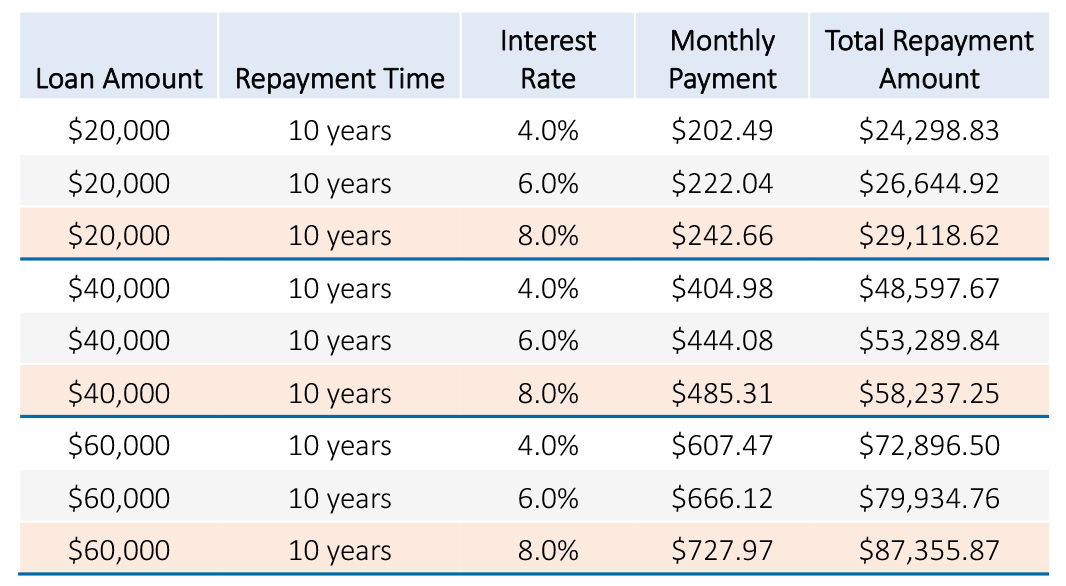
To accurately answer “how much would I pay in interest,” you must look at the total lifecycle of the debt. Interest is not just a secondary fee; it is a significant financial commitment that can double the cost of a purchase if left unchecked.
By understanding the difference between simple and compound interest, monitoring the factors that influence your creditworthiness, and utilizing aggressive repayment strategies, you can minimize the wealth-eroding effects of interest. Ultimately, the goal is to shift your financial profile from one that services the interest of others to one that reaps the benefits of compound growth for yourself. Mastering the math of interest is the first step toward true financial agency.
aViewFromTheCave is a participant in the Amazon Services LLC Associates Program, an affiliate advertising program designed to provide a means for sites to earn advertising fees by advertising and linking to Amazon.com. Amazon, the Amazon logo, AmazonSupply, and the AmazonSupply logo are trademarks of Amazon.com, Inc. or its affiliates. As an Amazon Associate we earn affiliate commissions from qualifying purchases.