
The question “How much would I get when I retire?” is one of the most significant and complex financial inquiries individuals face throughout their working lives. It’s a question loaded with implications for lifestyle, security, and peace of mind in our later years. Unlike a simple calculation, determining your retirement income involves a multifaceted analysis of various income streams, personal spending habits, economic factors, and strategic financial planning. There isn’t a single, universally applicable answer, as the amount you receive will be profoundly shaped by the choices you make today and the circumstances that unfold tomorrow.

Retirement is no longer a static concept of ceasing work entirely at a fixed age. For many, it’s a gradual transition, a second act, or an opportunity to pursue passions unconstrained by daily employment. Regardless of your personal vision for retirement, understanding the financial landscape is paramount. This article aims to demystify the process, exploring the various components that contribute to your retirement income, the factors that influence its size, and the proactive steps you can take to shape your financial future. By breaking down this complex query, we can illuminate a clearer path towards a secure and fulfilling retirement.
Understanding the Pillars of Retirement Income
Your retirement income will likely be a mosaic of different sources, each contributing a piece to your overall financial picture. Relying on a single source can be risky; a diversified approach generally offers greater stability and potential for growth.
Social Security: Your Foundational Benefit
For most Americans, Social Security serves as a foundational layer of retirement income. It’s a government-run insurance program that provides benefits based on your lifetime earnings. The amount you receive is influenced by your highest 35 years of earnings and the age at which you claim your benefits. While you can start receiving benefits as early as age 62, waiting until your Full Retirement Age (FRA)—typically between 66 and 67, depending on your birth year—will result in a higher monthly payment. Delaying even further, up to age 70, can lead to an additional 8% increase in benefits for each year you wait beyond your FRA. It’s crucial to understand that Social Security is generally intended to replace only a portion of your pre-retirement income, often around 40% for the average earner, necessitating other savings.
Employer-Sponsored Plans: 401(k)s, 403(b)s, and Pensions
Many individuals benefit from employer-sponsored retirement plans, which represent a significant pillar of retirement savings.
-
401(k)s and 403(b)s: These are defined contribution plans where you (and often your employer, through matching contributions) contribute a portion of your salary to an investment account. The “defined contribution” means that the amount going into the plan is fixed, but the eventual payout depends on investment performance. These plans offer tax advantages, such as tax-deferred growth (traditional 401(k)) or tax-free withdrawals in retirement (Roth 401(k)). Employer matching contributions are essentially “free money” and should be maximized whenever possible.
-
Pensions (Defined Benefit Plans): Less common in the private sector today but still prevalent in government and some older industries, defined benefit plans promise a specific monthly payment in retirement based on factors like your salary, years of service, and age. The employer bears the investment risk. While increasingly rare, if you are fortunate enough to have a pension, it can provide a reliable stream of income.
Personal Retirement Accounts: IRAs and Roth IRAs
Beyond employer plans, Individual Retirement Accounts (IRAs) offer a powerful way to supplement your retirement savings.
-
Traditional IRA: Contributions may be tax-deductible, and your investments grow tax-deferred until withdrawal in retirement, at which point they are taxed as ordinary income.
-
Roth IRA: Contributions are made with after-tax dollars, meaning they are not tax-deductible. However, qualified withdrawals in retirement are entirely tax-free, making it an excellent option for those who anticipate being in a higher tax bracket in retirement or want tax diversification.
Both types of IRAs have annual contribution limits, but they provide flexibility and control over your investment choices, allowing you to tailor your portfolio to your risk tolerance and financial goals.
Other Savings and Investments: Brokerage Accounts, Real Estate, Annuities
A comprehensive retirement strategy often includes other forms of savings and investments that can provide liquidity, growth, or guaranteed income.
-
Taxable Brokerage Accounts: Investments held in standard brokerage accounts offer flexibility as there are no age-related restrictions on withdrawals, unlike retirement accounts. However, capital gains and dividends are typically taxed annually or when assets are sold. These accounts can be excellent for diversified investments or for bridging the gap between early retirement and when you can access your tax-advantaged accounts penalty-free.
-
Real Estate: Rental properties can provide a steady stream of passive income in retirement. Owning a paid-off primary residence also significantly reduces your housing expenses, freeing up other retirement income for lifestyle costs. Downsizing or utilizing a reverse mortgage are other strategies tied to real estate.
-
Annuities: These are contracts with an insurance company where you pay a lump sum or a series of payments in exchange for regular disbursements starting immediately or at some point in the future. Annuities can offer a guaranteed income stream for a set period or for life, providing a degree of certainty that other investments might not. However, they can be complex and often come with fees, so thorough research and professional advice are essential.
Projecting Your Retirement Spending Needs
Understanding where your money will come from is only half the equation; you also need a realistic grasp of how much you’ll need. Estimating your retirement expenses is a critical step in determining the adequacy of your projected income.
Assessing Your Current Lifestyle and Future Desires
A common misconception is that expenses dramatically decrease in retirement. While some costs, like commuting or work-related attire, might diminish, others could increase, such as travel, hobbies, or healthcare. Start by meticulously tracking your current monthly expenses to get a baseline. Then, envision your ideal retirement lifestyle: Do you plan to travel extensively, pursue expensive hobbies, or simply enjoy a comfortable life at home? Will you downsize your home, or stay put? These choices will significantly impact your spending. Many financial planners suggest you’ll need 70-80% of your pre-retirement income to maintain your lifestyle, but this is a broad guideline that needs personalization.
Accounting for Healthcare Costs and Long-Term Care
One of the most significant and often underestimated expenses in retirement is healthcare. Medicare covers many costs, but it doesn’t cover everything, and supplemental insurance or out-of-pocket expenses can be substantial. Prescription drugs, dental care, vision care, and hearing aids are often not fully covered. Furthermore, the possibility of needing long-term care—whether in-home care, assisted living, or a nursing home—is a critical consideration. Long-term care costs can be astronomical and quickly deplete even a substantial nest egg. Planning for these potential expenses, whether through dedicated savings, long-term care insurance, or other strategies, is imperative.
The Impact of Inflation on Your Purchasing Power
Inflation is the silent assassin of retirement savings. What seems like a comfortable sum today will have less purchasing power in 10, 20, or 30 years. A consistent inflation rate of just 3% can halve the value of your money over two decades. Your retirement projections must account for this erosion of purchasing power. Your investments need to grow at a rate that outpaces inflation to maintain your standard of living. This is why a static cash hoard is generally not an effective long-term retirement strategy; investments that offer growth potential are essential.
The “Safe Withdrawal Rate” Concept
A core concept in retirement planning is the “safe withdrawal rate”—the percentage of your retirement portfolio you can withdraw each year without running out of money. The “4% rule” is a widely cited guideline, suggesting that if you withdraw 4% of your initial portfolio value (adjusted for inflation each subsequent year), your money has a high probability of lasting 30 years. While a helpful starting point, the 4% rule isn’t universally applicable and has been subject to debate, especially in periods of low returns or high inflation. Factors like your portfolio allocation, retirement duration, and willingness to adjust spending are crucial. It serves as a valuable benchmark for understanding sustainable income generation from your savings.
Key Factors Influencing Your Retirement Nest Egg
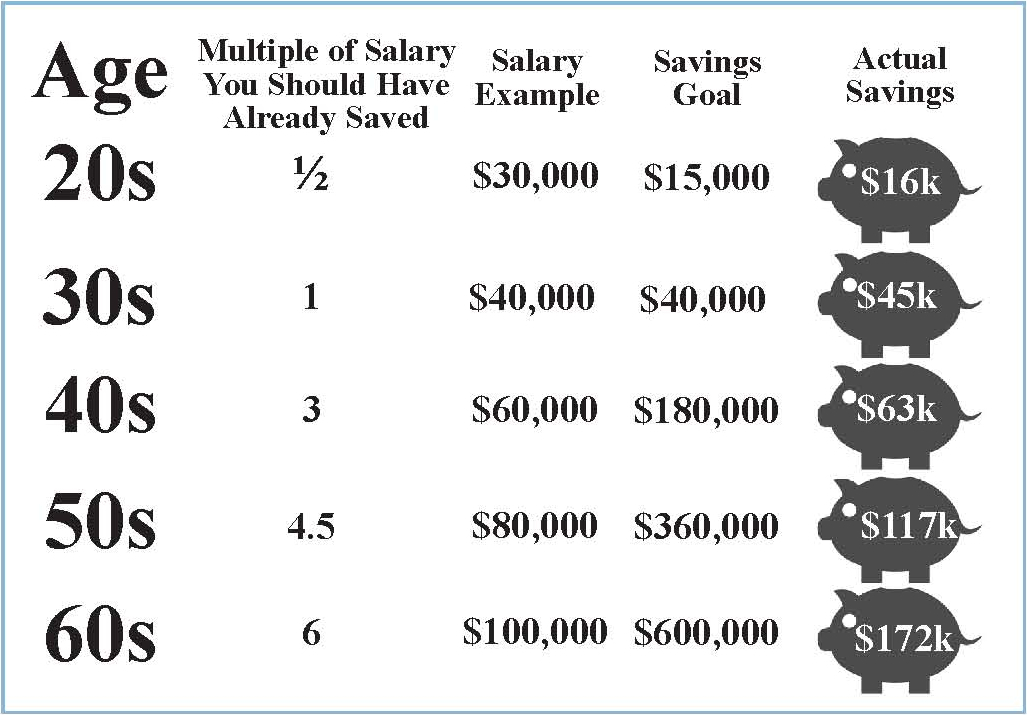
The size of your retirement payout isn’t just about how much you save; it’s also about how effectively your money works for you and how you manage various external factors.
The Power of Compound Interest: Starting Early and Saving Consistently
Albert Einstein reportedly called compound interest the “eighth wonder of the world.” This principle dictates that your earnings also earn returns, leading to exponential growth over time. The earlier you start saving, the more time your money has to compound, resulting in a significantly larger nest egg. A consistent savings habit, even if modest initially, can far outweigh larger, sporadic contributions made later in life. Time truly is your greatest asset when it comes to retirement savings.
Investment Performance and Risk Tolerance
The growth of your retirement accounts is directly tied to the performance of your investments. Your asset allocation—how you divide your investments among stocks, bonds, and other assets—should align with your risk tolerance and time horizon. Younger individuals with a long runway to retirement can generally afford to take on more risk (e.g., higher stock allocation) for potentially higher returns. As you approach and enter retirement, a more conservative approach might be warranted to preserve capital, though a complete shift away from growth assets could make it harder to outpace inflation. Regularly reviewing and rebalancing your portfolio to match your evolving risk profile is vital.
Your Retirement Age and Longevity Projections
The age at which you retire has a dual impact. Firstly, it dictates how many years you’ll be drawing down your savings. A longer retirement period requires a larger nest egg. Secondly, retiring later allows you more time to save, more years for your investments to grow, and fewer years you’ll need to rely solely on your savings. Your longevity is also a significant factor; with increasing lifespans, planning for a retirement that could last 25-30 years or more is prudent. Healthy individuals need to factor in this extended period, which means their savings need to stretch further.
Tax Implications of Different Income Streams
Taxes can significantly erode your retirement income if not properly managed. Different income sources are taxed differently:
-
Traditional 401(k)s/IRAs: Withdrawals are taxed as ordinary income.
-
Roth 401(k)s/IRAs: Qualified withdrawals are tax-free.
-
Social Security: A portion of your benefits may be taxable depending on your “provisional income.”
-
Brokerage Accounts: Capital gains and dividends are taxed.
-
Pensions: Typically taxed as ordinary income.
Understanding these tax implications allows for strategic withdrawals from different accounts (known as “tax-efficient withdrawal strategies”) to minimize your overall tax burden in retirement and maximize your net income.
Strategies to Boost Your Retirement Income
It’s never too late to enhance your retirement prospects. Several proactive strategies can significantly boost the amount you’ll receive when you retire.
Maximizing Contributions and Catch-Up Provisions
One of the most direct ways to increase your retirement income is to save more. Max out your contributions to your 401(k), 403(b), IRA, or Roth IRA annually. If your employer offers a match, contribute at least enough to get the full matching contribution—it’s essentially a 100% return on your investment. For those aged 50 and over, the IRS allows for “catch-up contributions” to most retirement accounts, enabling you to save an additional amount beyond the standard limits. These provisions are powerful tools for accelerating your savings in the years leading up to retirement.
Diversifying Your Investment Portfolio
A well-diversified portfolio across various asset classes (stocks, bonds, real estate, cash equivalents) and geographies helps mitigate risk and potentially enhance returns. Don’t put all your eggs in one basket. Within each asset class, further diversification (e.g., large-cap vs. small-cap stocks, domestic vs. international equities) can provide added protection and opportunities for growth. Regular review and rebalancing ensure your portfolio remains aligned with your goals and risk tolerance. Diversification doesn’t guarantee profits or protect against loss, but it’s a fundamental principle of sound investing.
Considering Part-Time Work or a “Retirement Side Hustle”
Retirement doesn’t have to mean a complete cessation of work. Many retirees find fulfillment and financial benefit from working part-time, freelancing, or pursuing a “retirement side hustle.” This can provide additional income, allowing you to draw less from your savings in the early years of retirement, thereby making your nest egg last longer. It also offers mental stimulation and social engagement. Even a modest amount of part-time income can make a substantial difference, especially if it covers discretionary spending or allows for delayed Social Security claiming.
Exploring Annuities and Other Income Generators
While sometimes complex, annuities can play a role in providing guaranteed income. Immediate annuities convert a lump sum into a stream of payments, while deferred annuities guarantee payments beginning at a future date. For individuals seeking certainty in their income, particularly to cover essential expenses, annuities can offer peace of mind. Other income generators might include drawing rental income from investment properties, royalties from creative work, or even leveraging intellectual property. These streams, when carefully planned, can supplement traditional retirement savings.
Taking Control: Planning and Monitoring Your Retirement Journey
The journey to a secure retirement is ongoing. It requires proactive planning, regular monitoring, and a willingness to adapt.
Utilizing Retirement Calculators and Financial Planning Tools
Numerous online retirement calculators and financial planning tools can help you estimate how much you need to save, project your future income, and assess different scenarios. These tools can illustrate the impact of changing your savings rate, investment returns, or retirement age. While they provide estimates, they are invaluable for visualizing your financial future and identifying potential shortfalls or surpluses. Many brokerage firms and financial websites offer robust, free resources that can serve as a great starting point for your planning.
The Value of a Financial Advisor
For many, navigating the complexities of retirement planning warrants professional guidance. A qualified financial advisor can help you:
-
Create a personalized retirement plan tailored to your specific goals and risk tolerance.
-
Optimize your investment portfolio.
-
Develop a tax-efficient withdrawal strategy.
-
Plan for healthcare and long-term care costs.
-
Understand complex financial products like annuities.
-
Provide unbiased advice and emotional support during market fluctuations.
The cost of an advisor can be outweighed by the value of their expertise in maximizing your retirement income and ensuring financial peace of mind.

Regular Reviews and Adjustments to Your Plan
Your retirement plan shouldn’t be a static document. Life changes—market conditions shift, personal circumstances evolve, and economic landscapes transform. It’s crucial to review your retirement plan at least annually, or whenever significant life events occur (e.g., job change, marriage, birth of a child, inheritance). Adjust your savings rate, investment allocation, or projected expenses as needed. Flexibility and adaptability are key to successfully navigating the long journey to and through retirement.
In conclusion, the question “How much would I get when I retire?” doesn’t have a simple dollar figure answer, but rather a personalized strategy. It’s a testament to the power of early and consistent saving, smart investing, strategic tax planning, and diligent monitoring. By understanding the diverse pillars of retirement income, realistically projecting your future needs, and employing smart financial strategies, you can take control of your financial destiny and build the secure, comfortable retirement you envision. The journey may seem daunting, but with informed decisions and consistent effort, a fulfilling retirement is well within reach.
aViewFromTheCave is a participant in the Amazon Services LLC Associates Program, an affiliate advertising program designed to provide a means for sites to earn advertising fees by advertising and linking to Amazon.com. Amazon, the Amazon logo, AmazonSupply, and the AmazonSupply logo are trademarks of Amazon.com, Inc. or its affiliates. As an Amazon Associate we earn affiliate commissions from qualifying purchases.