
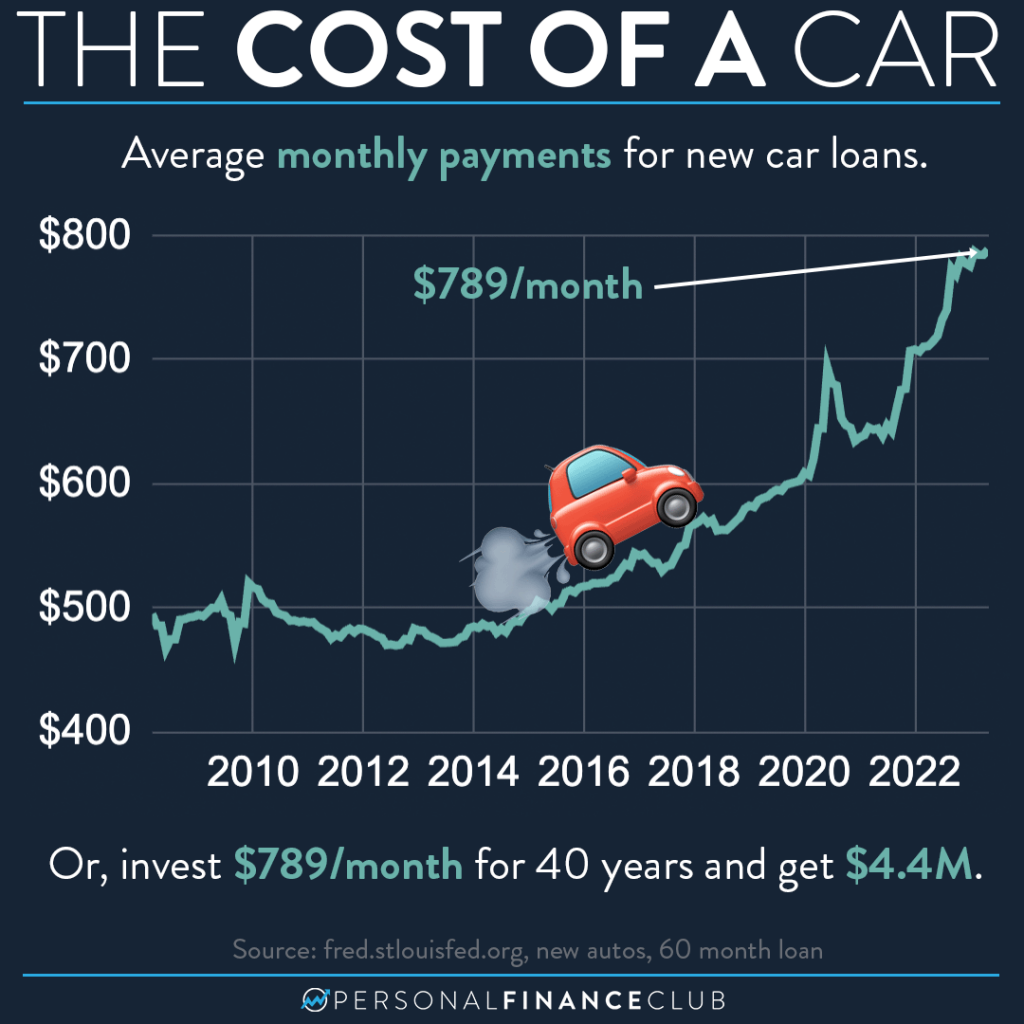
Understanding how much a car payment will be is one of the most critical steps in the car-buying process. It’s not just a number on a contract; it’s a monthly commitment that can significantly impact your personal finances for several years. For many individuals, a car payment represents one of their largest recurring expenses, secondary only to housing. Navigating the world of auto loans can seem daunting, with numerous variables influencing the final figure you’ll pay each month. From the vehicle’s price tag and your credit score to the loan term and prevailing interest rates, each factor plays a pivotal role in shaping your financial obligation.

This article delves deep into the mechanics of car payments, dissecting the primary components, unveiling often-overlooked ancillary costs, guiding you through calculation methods, and offering strategies to manage or reduce your monthly outlay. Our aim is to equip you with the knowledge necessary to approach car financing with confidence, ensuring your next vehicle purchase aligns seamlessly with your financial goals and capabilities. By understanding the intricate interplay of these elements, you can make an informed decision that safeguards your financial well-being and prevents the unwelcome surprise of an unaffordable monthly bill.
The Core Components of a Car Payment
At its heart, a car payment is an amortized loan, meaning each monthly payment contributes to both the principal balance and the interest accrued. However, several foundational elements dictate the size of this payment before any calculations even begin. Grasping these basics is essential for anyone looking to budget for a new or used vehicle.
Vehicle Price and Down Payment
The most direct determinant of your car payment is the vehicle’s total sale price. Naturally, a more expensive car will lead to a higher payment, assuming all other factors remain constant. Equally crucial is the down payment you make. A down payment is the initial amount of money you pay upfront, directly reducing the principal amount you need to borrow. The larger your down payment, the less money you finance, which directly translates to a lower monthly payment and less interest paid over the life of the loan. Financial advisors often recommend a down payment of at least 10-20% for new cars and 10% for used cars to mitigate depreciation and reduce the loan burden.
Loan Term (Duration)
The loan term, or the duration over which you agree to repay the loan, is another significant factor. Common loan terms range from 36 months (3 years) to 72 months (6 years), and sometimes even extend to 84 months (7 years). A longer loan term typically results in lower monthly payments because the total loan amount is spread out over more installments. However, this convenience comes at a cost: a longer term usually means you’ll pay more in total interest over the life of the loan. Conversely, a shorter loan term will have higher monthly payments but will save you money on interest and allow you to own the car outright sooner. Striking the right balance between affordability and total cost is key.
Interest Rate (APR)
The Annual Percentage Rate (APR) is essentially the cost of borrowing money, expressed as a yearly percentage. It encompasses not only the interest rate but also any additional fees charged by the lender. A higher APR means more of your monthly payment goes towards interest, increasing your overall cost of borrowing. Your credit score is the primary determinant of the APR you’ll qualify for; individuals with excellent credit scores (typically 720 and above) can secure significantly lower rates compared to those with fair or poor credit. Lenders also consider factors like the loan term, the age of the vehicle, and economic conditions when setting rates. Shopping around for the best APR from various lenders—banks, credit unions, and dealership financing—can lead to substantial savings over the life of the loan.
Trade-in Value
If you’re trading in an existing vehicle, its value can act much like a down payment. The agreed-upon trade-in value is deducted from the new vehicle’s sale price, reducing the amount you need to finance. This not only lowers your monthly payment but can also help reduce sales tax in some states where tax is calculated on the net price after trade-in. To maximize your trade-in’s impact, research its market value beforehand using online tools like Kelley Blue Book or Edmunds, and consider selling it privately if you can achieve a higher price than the dealership offers.
Beyond the Sticker Price: Hidden Costs and Factors
While the principal components form the basis of your car payment, focusing solely on them provides an incomplete picture of your total monthly automotive expenditure. Several other costs, often overlooked in the initial excitement of car buying, can significantly inflate your overall financial commitment. These “hidden costs” are crucial to budget for to avoid financial strain down the road.
Sales Tax and Fees
Almost every car purchase is subject to sales tax, which varies significantly by state and even by local municipality. This tax is typically calculated on the vehicle’s purchase price (or the net price after trade-in in some states) and can add hundreds or even thousands of dollars to the total cost. While some states allow you to roll the sales tax into your car loan, increasing your monthly payment, others may require it upfront. Beyond sales tax, a host of other fees can pop up. These include documentation fees (doc fees) charged by dealerships, registration and plate fees required by your state’s DMV, title fees, and sometimes even environmental or luxury taxes. Always ask for a clear breakdown of all fees before signing any paperwork.
Insurance Premiums
Car insurance is a non-negotiable expense for virtually every vehicle owner. The cost of your monthly premium can fluctuate wildly based on numerous factors: your age, driving record, location, the make and model of the car, safety features, chosen coverage limits, and deductible. High-performance or luxury vehicles typically cost more to insure than economy cars. It’s imperative to get insurance quotes before finalizing your car purchase, as a seemingly affordable car payment can be overshadowed by exorbitant insurance premiums, especially for younger drivers or those with a less-than-perfect driving history. Factor this into your monthly budget to understand the true cost of car ownership.
Maintenance and Repairs
Unlike a fixed car payment, maintenance and repair costs are variable but inevitable. All vehicles require regular maintenance, such as oil changes, tire rotations, brake inspections, and fluid checks. As a car ages, the likelihood and expense of repairs typically increase. While new cars often come with a warranty that covers major issues for a few years, used cars might require more immediate attention. Budgeting a separate amount each month for maintenance and potential repairs is a wise financial practice. Websites like Edmunds or RepairPal can offer estimates for typical maintenance costs for specific makes and models. Ignoring maintenance can lead to more significant, costlier repairs down the line, affecting your car’s longevity and reliability.
Fuel Costs
Unless you’re purchasing an electric vehicle (and even then, electricity isn’t free), fuel will be a recurring and substantial expense. Your monthly fuel bill depends on your daily commute, driving habits, the car’s fuel efficiency (miles per gallon or MPG), and fluctuating gas prices. A large SUV, for example, will cost significantly more to fuel than a compact sedan. When considering a car, research its MPG ratings and estimate your likely monthly fuel expenditure based on your driving patterns. This cost, while separate from the car payment itself, is a critical component of your overall transportation budget and should not be underestimated.
Calculating Your Potential Car Payment
Armed with an understanding of the various components and hidden costs, the next logical step is to calculate what your actual monthly car payment might look like. While the exact figure will depend on the final deal you strike, several tools and methods can provide a robust estimate, empowering you to budget effectively and negotiate from a position of strength.
The Role of Online Car Payment Calculators
The easiest and most accessible way to estimate a car payment is by using online car payment calculators. These ubiquitous tools are available on dealership websites, bank and credit union sites, and independent financial planning platforms. You simply input the vehicle price, down payment amount, desired loan term, and an estimated interest rate (APR). The calculator then instantly provides an estimated monthly payment. These tools are invaluable for quickly assessing different scenarios, such as how a larger down payment or a longer loan term impacts the monthly figure. They allow for rapid experimentation, helping you visualize the trade-offs involved in various financing structures.
Manual Calculation (Amortization Formula Overview)
For those who prefer a deeper understanding or wish to verify calculator outputs, the monthly payment can be derived using an amortization formula. While detailed manual calculation can be complex, understanding the variables involved is beneficial. The basic formula for a fixed-rate loan payment is:
$M = P [ i(1 + i)^n ] / [ (1 + i)^n – 1]$

Where:
-
M = Monthly payment
-
P = Principal loan amount (vehicle price minus down payment and trade-in)
-
i = Monthly interest rate (annual APR divided by 12)
-
n = Total number of payments (loan term in years multiplied by 12)
While most people won’t perform this calculation by hand, knowing the inputs highlights how each element directly contributes to the monthly payment. For instance, even a small reduction in the principal (P) or interest rate (i), or an increase in the number of payments (n), can have a noticeable effect on M.
Understanding Your Debt-to-Income Ratio
Beyond calculating the payment itself, it’s crucial to understand how a car payment fits into your overall financial picture. Lenders often look at your debt-to-income (DTI) ratio, which compares your total monthly debt payments (including the proposed car payment) to your gross monthly income. A high DTI ratio signals a higher risk to lenders and can affect your loan approval or the interest rate you’re offered. Generally, lenders prefer a DTI ratio of 36% or less, though some may approve loans with a DTI up to 43-50%. Calculating your current DTI before applying for a car loan will give you a realistic idea of how much additional debt you can comfortably take on and what lenders might be willing to approve. This self-assessment is a vital step in responsible financial planning for a car purchase.
Strategies for Managing and Reducing Your Car Payment
Once you have an estimated car payment in mind, you might find that it’s higher than you initially hoped or simply want to optimize for the lowest possible cost. Fortunately, several proactive strategies can help you manage and potentially reduce your monthly car payment, leading to greater financial flexibility.
Improving Your Credit Score
Your credit score is arguably the most influential factor in determining your interest rate, which in turn significantly impacts your monthly payment and the total cost of the loan. Lenders offer the best rates to borrowers with excellent credit scores because they are deemed lower risk. To improve your credit score, focus on paying all bills on time, reducing existing debt, avoiding opening multiple new credit accounts in a short period, and checking your credit report for errors. Even a modest improvement in your credit score can translate into a lower APR, saving you hundreds or thousands of dollars over the life of the loan. Start working on your credit well in advance of a car purchase.
Increasing Your Down Payment
As discussed, a larger down payment directly reduces the amount of money you need to borrow. This not only lowers your monthly payment but also diminishes the total interest you’ll pay over the loan’s term. Furthermore, a substantial down payment can sometimes help you qualify for a better interest rate, as it signals less risk to the lender. If possible, save diligently for a larger down payment. Consider waiting a few extra months to save more if it means significantly reducing your loan amount and payment. A general guideline is to aim for at least 20% down for a new car and 10% for a used car to minimize negative equity (when you owe more than the car is worth).
Extending the Loan Term (with caveats)
One immediate way to lower your monthly payment is to extend the loan term. Spreading the cost over a longer period (e.g., 72 or 84 months instead of 48 or 60) results in smaller individual payments. However, this strategy comes with significant caveats. A longer loan term almost always means paying substantially more in total interest because you’re borrowing the money for a longer duration. It also prolongs the period you’ll be making payments, potentially leading to a situation where you’re still paying off a car that is old, depreciating rapidly, or even needs replacing. Use this strategy cautiously and only if absolutely necessary for affordability, always balancing the monthly saving against the increased total cost.
Shopping Around for Loans
Never settle for the first loan offer you receive, especially if it’s from a dealership. It is highly recommended to shop around and get pre-approved for a loan from multiple lenders—banks, credit unions, and online lenders—before you even step foot in a dealership. Credit unions, in particular, are often known for offering competitive interest rates. Having pre-approved loan offers in hand gives you leverage when negotiating with the dealership’s finance department; they may be willing to beat or match outside offers to secure your business. This competitive process can secure you a lower APR and thus a lower monthly payment.
Considering Used vs. New Vehicles
The most straightforward way to reduce your car payment is to buy a less expensive car. New cars depreciate rapidly the moment they’re driven off the lot. A used car, especially one that’s a few years old, has already absorbed the steepest part of this depreciation curve, making it significantly cheaper while still offering modern features and reliability. Opting for a certified pre-owned (CPO) vehicle from a reputable dealership can offer a good balance, providing a warranty and assurance of quality at a lower price point than a brand-new model. Carefully weigh the benefits of a new car against the substantial cost savings (and lower payments) of a quality used vehicle.
Making an Informed Decision: Is That Car Payment Affordable?
Ultimately, calculating your car payment is only half the battle. The more crucial step is to determine whether that payment, alongside all other associated costs, is truly affordable for your personal financial situation. An informed decision requires a comprehensive view of your budget and future financial goals, not just the monthly car payment figure in isolation.
The 20/4/10 Rule (or similar financial guidelines)
Financial experts often recommend the “20/4/10 rule” as a guideline for car affordability:
-
20% Down Payment: Aim for at least 20% down to build equity quickly and reduce your loan amount.
-
4-Year Loan Term: Keep your loan term to four years (48 months) or less to minimize total interest paid and avoid being “upside down” on your loan as the car depreciates.
-
10% of Gross Income: Your total monthly car expenses (payment, insurance, fuel, maintenance) should not exceed 10% of your gross monthly income. Some more conservative guidelines suggest 15-20% including insurance, fuel, and maintenance, but a strict 10% for the payment alone is often a wise target.
While these are guidelines and not rigid rules, they provide a strong framework for assessing whether a car payment is sustainable within your budget. Deviating too far from these benchmarks can signal potential financial strain.
Budgeting for Total Car Ownership Costs
It’s a common mistake to budget solely for the car payment. As we’ve explored, several other significant costs contribute to the true expense of owning a vehicle. To make an informed decision, you must create a comprehensive budget that includes:
-
Monthly Car Payment: The principal and interest portion of your loan.
-
Car Insurance Premiums: Your monthly or semi-annual insurance cost, broken down monthly.
-
Estimated Fuel Costs: Based on your driving habits and the car’s fuel efficiency.
-
Maintenance Fund: A dedicated savings fund for routine maintenance and unexpected repairs.
-
Registration and Licensing Fees: Annual costs that should be factored in monthly.
-
Parking Fees/Tolls: If applicable to your daily commute or lifestyle.
By tallying these up, you arrive at the true total cost of car ownership. This holistic view is essential for understanding the actual financial impact of your vehicle.
The Impact on Your Overall Financial Health
An affordable car payment is one that allows you to meet all your other financial obligations, save for future goals, and still enjoy a comfortable lifestyle. An over-extended car payment can impede your ability to save for retirement, pay down other debts, build an emergency fund, or save for a down payment on a home. It can lead to financial stress and limit your options during unexpected expenses. Before committing, consider how the proposed car payment impacts your ability to achieve long-term financial stability and freedom. Sometimes, opting for a less expensive vehicle or delaying a purchase to save more can have profound positive effects on your overall financial health, providing peace of mind far more valuable than a luxury car you can barely afford.
Conclusion
Determining “how much would a car payment be” is a multi-faceted exercise that extends far beyond a simple calculation. It requires a thorough understanding of the vehicle’s price, your down payment, the loan term, and the interest rate you secure. Crucially, it also demands an honest assessment of additional, often overlooked costs such as sales tax, insurance, maintenance, and fuel. By meticulously evaluating each of these components, you can arrive at a realistic figure for your total monthly car-related expenses.
The strategies for managing and reducing your car payment, from improving your credit score and increasing your down payment to judiciously shopping for loans and considering used vehicles, offer powerful levers to control your financial outlay. However, the most vital step remains the final one: making an informed decision about affordability. Leveraging financial guidelines like the 20/4/10 rule and, more importantly, integrating all car-related costs into your personal budget will illuminate the true impact of a car purchase on your overall financial health.
Ultimately, your goal should be to find a car that not only meets your transportation needs and desires but also fits comfortably within your budget, allowing you to achieve both short-term financial stability and long-term financial success. Approach car financing with diligence and foresight, and you’ll drive away with confidence, knowing you’ve made a financially sound choice.
aViewFromTheCave is a participant in the Amazon Services LLC Associates Program, an affiliate advertising program designed to provide a means for sites to earn advertising fees by advertising and linking to Amazon.com. Amazon, the Amazon logo, AmazonSupply, and the AmazonSupply logo are trademarks of Amazon.com, Inc. or its affiliates. As an Amazon Associate we earn affiliate commissions from qualifying purchases.