
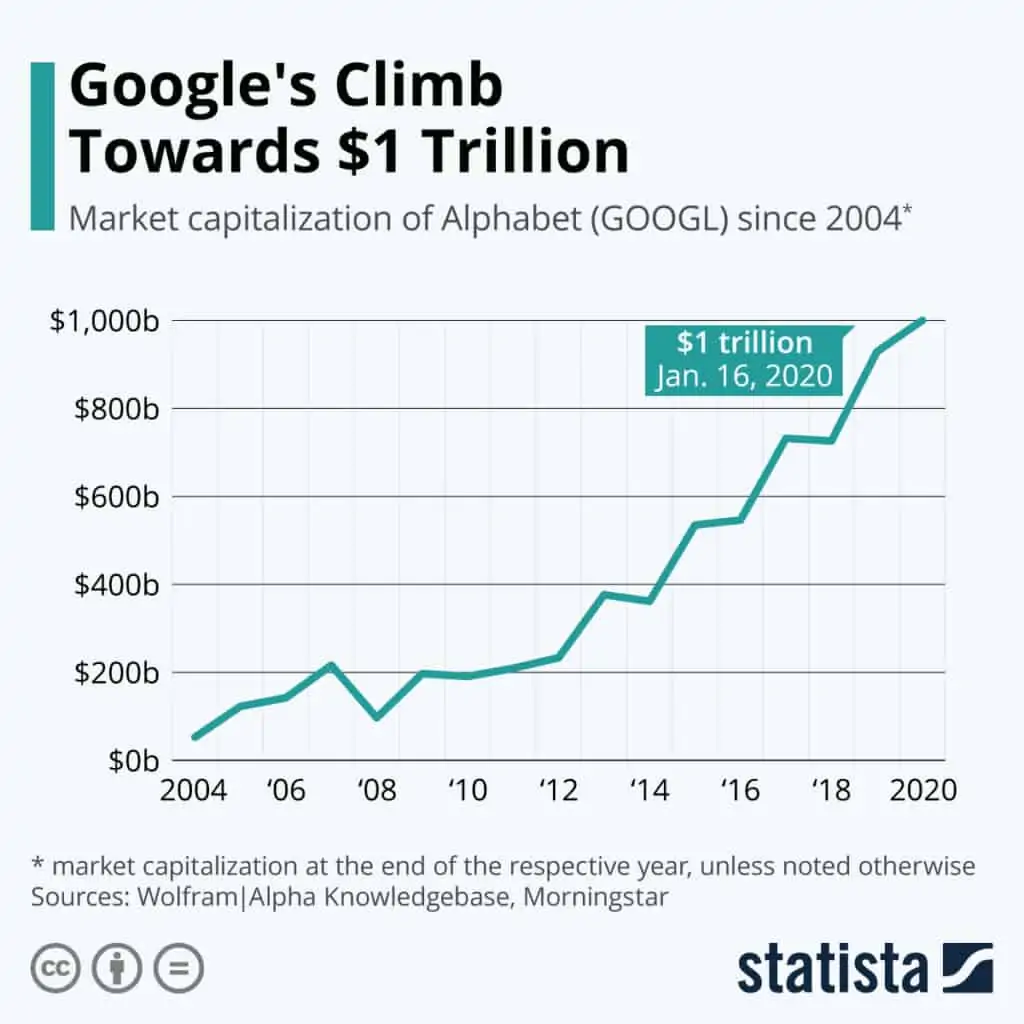
When investors and market analysts ask “how much is Google worth,” they are rarely referring to the search engine alone. Instead, they are looking at Alphabet Inc., the parent conglomerate that houses one of the most sophisticated revenue-generating machines in human history. As of 2024, Google sits comfortably within the “Trillion-Dollar Club,” a group of elite technology companies whose market valuations fluctuate between $1.5 trillion and $2 trillion. Understanding this valuation requires more than just looking at a stock ticker; it demands a granular analysis of market capitalization, diverse revenue streams, and the financial metrics that justify such a staggering price tag.
Decoding the Market Capitalization of a Tech Titan
Market capitalization is the most common metric used to determine the “worth” of a public company. It is calculated by multiplying the total number of outstanding shares by the current share price. For Alphabet Inc., this figure serves as a barometer for investor confidence and the perceived future cash flows of the business.
The Trillion-Dollar Club and Market Dynamics
Google’s journey to a multi-trillion-dollar valuation has been marked by consistent growth and resilience. Market capitalization is not static; it responds to quarterly earnings reports, interest rate shifts, and broader economic trends. When we evaluate Google’s worth, we must compare it to its peers—Microsoft, Apple, and Amazon. While these companies compete in various sectors, Google’s valuation is unique because it is underpinned by a near-monopoly in the global search market. This dominance provides a “moat” that investors are willing to pay a premium for, as it ensures a steady stream of predictable income regardless of minor economic fluctuations.
Stock Performance and Shareholder Value
Alphabet offers two primary classes of stock: Class A (GOOGL) with voting rights and Class C (GOOG) with no voting rights. The combined value of these shares represents the total equity value of the firm. Over the past decade, Google’s stock has outperformed the S&P 500 significantly, driven by aggressive share buyback programs. By reducing the total number of shares outstanding, Google increases the value of each remaining share, effectively boosting its “worth” per shareholder even when the market cap remains stable. This strategy has become a cornerstone of their financial management, signaling to the market that the company believes its own stock is a premier investment.
Revenue Streams: How Google Generates Its Wealth
To understand why Google is worth trillions, one must look at its income statement. The company’s valuation is a direct reflection of its ability to convert data into dollars. While many think of Google as a “free” service, it is, in reality, one of the world’s most successful advertising and infrastructure firms.
Search Advertising: The Unrivaled Cash Cow
The vast majority of Google’s worth is derived from Google Search and other properties like Maps and Gmail. Google Search Ads represent a high-margin business that dominates the digital advertising landscape. Because Google captures “intent”—knowing exactly what a user is looking for at the moment they are looking for it—advertisers are willing to pay high prices for top placement. This “pay-per-click” model generates tens of billions of dollars every quarter with relatively low overhead compared to hardware manufacturers. The high profit margins of this segment are the primary reason the company maintains such a high valuation.
YouTube and Google Cloud: Diversification for Growth
While search is the foundation, YouTube and Google Cloud are the growth engines that sustain Google’s market worth. YouTube has evolved into a global media powerhouse, competing with both traditional television and streaming giants like Netflix. Its diverse revenue model—combining advertising with subscription services like YouTube Premium—adds layers of financial stability.
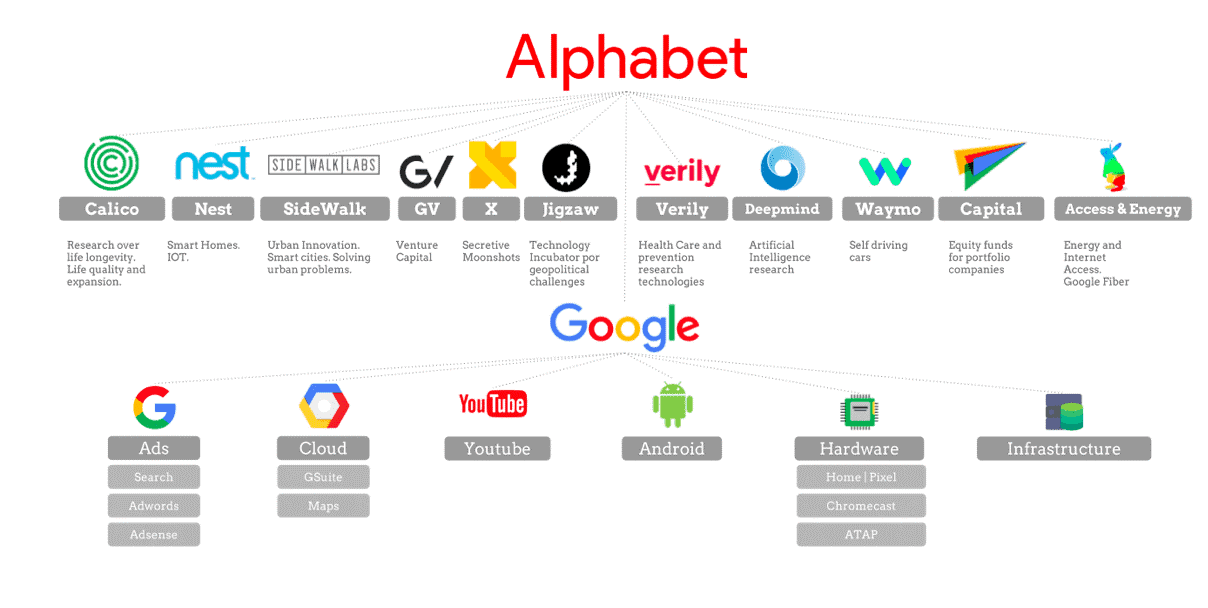
On the other hand, Google Cloud has recently turned the corner into profitability. As businesses migrate to the cloud and demand for high-scale computing increases, this segment has become a critical component of Alphabet’s valuation. Investors view Google Cloud as a high-growth hedge against any potential plateau in the advertising market, providing a necessary pillar for long-term financial health.
Financial Health and Valuation Metrics
Beyond the sheer size of the company, professional investors look at specific financial ratios to determine if Google is “worth” its current price. These metrics provide a more nuanced view of the company’s efficiency and profitability compared to its competitors.
Analyzing the Price-to-Earnings (P/E) Ratio
The P/E ratio is a vital tool for assessing valuation. It measures the current share price relative to its per-share earnings. Historically, Google has traded at a P/E ratio that is often lower than that of Microsoft or Amazon, despite its high growth rates. This suggests that, at various times, the market may actually be “undervaluing” Google relative to its earnings power. A lower P/E ratio in a high-growth tech company often indicates that the market is pricing in risks—such as regulatory scrutiny—but it also offers a margin of safety for value-oriented investors.
Balance Sheet Strength: Cash Reserves and R&D
Google’s worth is also anchored by its massive balance sheet. The company maintains one of the largest cash piles in the corporate world, often exceeding $100 billion in cash and marketable securities. This liquidity allows Google to be incredibly agile. It can fund massive Research and Development (R&D) projects—investing in “Moonshots” like Waymo (autonomous driving) or Verily (life sciences)—without needing to take on debt. This internal funding capability reduces financial risk and allows the company to pursue long-term projects that could become the billion-dollar revenue streams of the future.
Future Outlook: Investing in the AI Revolution
In the current financial climate, a significant portion of Google’s valuation is tied to its potential in Artificial Intelligence (AI). The market is no longer just valuing Google based on what it earned yesterday, but on its ability to lead the next technological epoch.
The Impact of Artificial Intelligence on Monetization
The integration of Gemini (Google’s AI model) into its search and workspace products is a major factor in its current financial valuation. Analysts are watching closely to see how AI-generated search results affect advertising revenue. If Google can successfully monetize AI through premium features and more efficient ad targeting, its valuation could see another massive expansion. Conversely, the high cost of AI compute resources is a financial headwind that the company must manage to maintain its industry-leading margins.

Regulatory Risks and Long-Term Profitability
No discussion of Google’s worth is complete without addressing the “regulatory discount.” Alphabet is currently facing several high-profile antitrust lawsuits from the Department of Justice (DOJ) and the European Union. These legal challenges focus on Google’s dominance in search and advertising technology. The potential for heavy fines or even the forced divestiture of certain business units (like Chrome or its ad-tech stack) introduces a level of uncertainty into its valuation. Investors bake this risk into the stock price, which is why Google often trades at a more “reasonable” multiple than some of its tech peers.
In conclusion, the worth of Google is a complex mosaic of current advertising dominance, burgeoning cloud infrastructure, and a massive bet on the future of AI. While the $1.5 trillion to $2 trillion market cap is a staggering figure, it is supported by robust cash flows, a pristine balance sheet, and a strategic position at the center of the digital economy. For the savvy investor, Google’s value lies not just in its size, but in its ability to continue evolving its business model to meet the demands of a changing technological landscape.
aViewFromTheCave is a participant in the Amazon Services LLC Associates Program, an affiliate advertising program designed to provide a means for sites to earn advertising fees by advertising and linking to Amazon.com. Amazon, the Amazon logo, AmazonSupply, and the AmazonSupply logo are trademarks of Amazon.com, Inc. or its affiliates. As an Amazon Associate we earn affiliate commissions from qualifying purchases.