
Purchasing a car is one of the most significant financial decisions many individuals make, second only to buying a home. For most, this decision hinges critically on the affordability of the monthly car payment. Understanding how this figure is derived, what factors influence it, and how to manage it within your budget is paramount to making a sound financial choice and avoiding future strain. This comprehensive guide will dissect the complexities of car payments, offering insights and actionable strategies to empower you on your vehicle acquisition journey.
Understanding the Core Factors Influencing Your Car Payment
Your monthly car payment isn’t just an arbitrary number; it’s the culmination of several key financial variables that interact to determine your financial obligation. Grasping each of these components is the first step toward predicting and managing your payment.

The Vehicle’s Purchase Price
This is perhaps the most obvious factor. The higher the agreed-upon price of the car, the more money you need to borrow, and consequently, the higher your monthly payment will be. This includes the MSRP (Manufacturer’s Suggested Retail Price) plus any additional features, packages, or dealer add-ons you opt for. Negotiating the best possible purchase price is your primary leverage point in reducing your overall loan amount.
Interest Rates and APR
The interest rate is the cost of borrowing money, expressed as a percentage of the loan amount. The Annual Percentage Rate (APR) is a broader measure that includes the interest rate plus certain fees charged by the lender. A higher interest rate or APR means you’ll pay more over the life of the loan, directly increasing your monthly installments. Your credit score is the most significant determinant of the interest rate you’ll be offered. A strong credit history signals lower risk to lenders, often resulting in more favorable rates. Conversely, a lower credit score typically leads to higher interest rates, significantly inflating your payment.
Loan Term Length
The loan term refers to the duration over which you agree to repay the loan, typically expressed in months (e.g., 36, 48, 60, 72, or even 84 months). A longer loan term will generally result in a lower monthly payment because you’re spreading the total cost over more installments. However, this often comes at the expense of paying more in total interest over the life of the loan. A shorter term means higher monthly payments but less interest paid overall, making it a more cost-effective option if affordable.
Down Payment Amount
A down payment is the initial amount of money you pay upfront toward the purchase of the car. The larger your down payment, the less money you need to borrow, which directly translates to lower monthly payments. A substantial down payment also reduces your loan-to-value (LTV) ratio, potentially making you a more attractive borrower and sometimes qualifying you for better interest rates. Financial experts often recommend a down payment of at least 10-20% for a new car and 10% for a used car.
Trade-In Value
If you’re trading in your current vehicle, its agreed-upon value will act similarly to a down payment. The trade-in value is deducted from the purchase price of the new car, reducing the amount you need to finance. Maximizing your trade-in value through proper maintenance and negotiation can significantly lower your new car payment.
Beyond the Sticker Price: Additional Costs to Consider
While the loan payment itself is a major component, focusing solely on it provides an incomplete picture of the true cost of car ownership. Several other significant expenses contribute to the overall financial burden of owning a vehicle. Ignoring these can lead to budget shortfalls and financial stress.
Sales Tax, Fees, and Registration
Nearly every car purchase involves sales tax, which varies by state and locality. This tax is typically added to the vehicle’s price before financing or paid separately. Beyond sales tax, you’ll encounter various fees, including documentation fees, license plate fees, and registration fees, which are often required annually. These upfront costs can sometimes be rolled into your loan, increasing your financed amount and monthly payment, or they may need to be paid out-of-pocket at the time of purchase.
Car Insurance Premiums
Car insurance is a non-negotiable expense for drivers in most places. The cost of your premium will depend on numerous factors, including your age, driving record, location, the type of car you drive, and the coverage limits you choose. It’s crucial to get insurance quotes before finalizing your car purchase, as the monthly insurance premium can sometimes rival or even exceed the car payment itself, especially for younger drivers or more expensive vehicles.
Maintenance and Fuel Costs
Over the lifespan of your vehicle, you’ll incur costs for routine maintenance (oil changes, tire rotations, brake pads) and unexpected repairs. Newer cars generally have lower maintenance costs initially, but these tend to increase as the car ages. Fuel costs are another significant variable expense, fluctuating with gas prices and your driving habits. These operational costs are critical to budget for, as they are continuous and can significantly impact your monthly finances.
Extended Warranties and Add-ons
Dealers often offer extended warranties, GAP insurance, paint protection, and other add-ons. While some of these might offer value, many are high-profit items for dealerships and can substantially inflate your loan amount if rolled into the financing. Carefully evaluate the necessity and cost-effectiveness of each add-on. If you don’t need it or can get a better deal elsewhere, politely decline.
Calculating Your Monthly Car Payment: Tools and Formulas
Once you understand the variables, the next step is to put them together to estimate your payment. Fortunately, you don’t need a financial degree to do this.

Manual Calculation (The Formula Explained)
For those who like to understand the mechanics, the standard formula for a monthly loan payment (M) is:
M = P [ i(1 + i)^n ] / [ (1 + i)^n – 1]
Where:
- P = Principal loan amount (the car’s price minus your down payment and trade-in value)
- i = Monthly interest rate (annual interest rate divided by 12)
- n = Total number of payments (loan term in years multiplied by 12)
While this formula provides precision, manually calculating it can be cumbersome.
Leveraging Online Car Payment Calculators
The easiest and most common way to estimate your monthly payment is by using an online car payment calculator. Most bank, credit union, and automotive websites offer these tools. You simply input the loan amount, interest rate, and loan term, and the calculator instantly provides your estimated monthly payment. These tools are excellent for playing with different scenarios (e.g., “What if I put down an extra $1,000?” or “How much does a 60-month term cost versus 72 months?”).
Dealer vs. Third-Party Loan Offers
It’s always wise to secure pre-approval for a car loan from your bank or credit union before visiting a dealership. This gives you a benchmark interest rate and loan term. You can then use this pre-approval as leverage when negotiating with the dealer’s financing department. Dealerships often work with multiple lenders and may be able to beat your pre-approved rate, especially for new cars with manufacturer incentives. Having a pre-approval in hand ensures you get the most competitive rate available to you.
Strategies to Lower Your Monthly Car Payment
For many, the goal isn’t just to calculate the payment, but to actively work towards reducing it to a manageable level. Here are several effective strategies.
Increasing Your Down Payment
As discussed, a larger down payment directly reduces the principal amount you need to finance, thereby lowering your monthly payments and the total interest paid over time. If possible, save up more money before buying, or consider selling your current vehicle privately to get a better return than a trade-in, and use that cash towards your down payment.
Opting for a Longer Loan Term (With Caveats)
While a longer loan term does reduce your monthly payment by spreading the cost over more installments, it also means you’ll pay more in total interest over the life of the loan. Furthermore, extending the loan term too far can lead to negative equity (owing more than the car is worth), especially for cars that depreciate quickly. Use this strategy cautiously, balancing affordability with the long-term cost.
Improving Your Credit Score
Before you even start shopping for a car, take steps to improve your credit score. Pay down existing debts, make all payments on time, and dispute any errors on your credit report. A higher credit score can qualify you for significantly lower interest rates, which can shave hundreds, if not thousands, off your total cost and reduce your monthly payment.
Negotiating the Vehicle Price
Never pay the sticker price. Dealers often have significant room to negotiate. Research the market value of the car you’re interested in using resources like Kelley Blue Book (KBB) or Edmunds. Be prepared to walk away if you can’t get a price you’re comfortable with. Even a small reduction in the purchase price can translate to noticeable savings on your monthly payment over several years.
Considering a Used Car or a Less Expensive Model
New cars depreciate rapidly, often losing 20-30% of their value in the first year alone. A lightly used car (1-3 years old) can offer significant savings while still providing reliability and modern features. Alternatively, opting for a less expensive new model with fewer bells and whistles can also dramatically lower your overall purchase price and, consequently, your monthly payment.
Integrating Your Car Payment into Your Overall Financial Plan
A car payment is not an isolated expense; it’s a commitment that needs to fit comfortably within your broader financial landscape. Thoughtful budgeting and planning are crucial to ensure your car doesn’t become a financial burden.
The 20/4/10 Rule and Other Budgeting Guidelines
A popular guideline for car affordability is the “20/4/10 Rule”:
- 20% down payment: Aim for at least 20% to avoid negative equity and secure better terms.
- 4-year loan term: Keep the loan term to four years or less to minimize interest paid and avoid excessive depreciation.
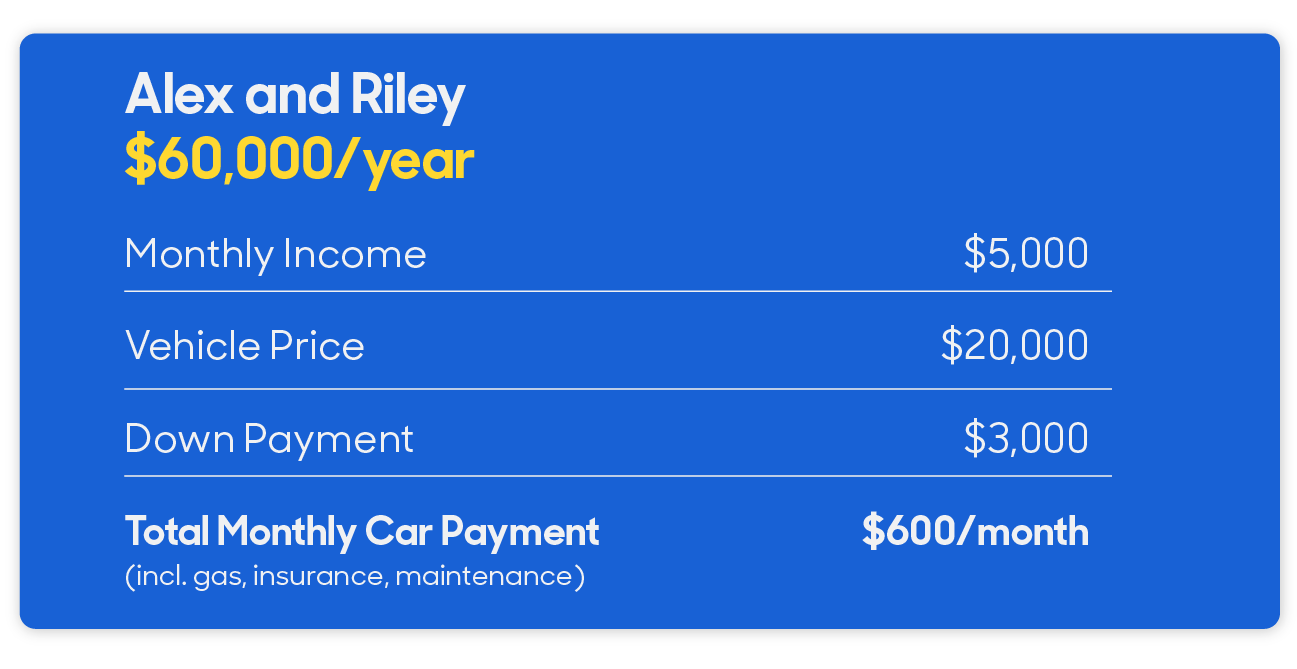
- 10% of gross income: Your total monthly car expenses (payment, insurance, fuel, maintenance) should not exceed 10% of your gross monthly income.
While these are guidelines and not rigid rules, they provide a strong framework for assessing affordability. Many financial advisors also suggest the 50/30/20 budget rule, where 50% of income goes to needs, 30% to wants, and 20% to savings/debt repayment. Your car payment and associated costs should fall within your “needs” or “wants” category, depending on its necessity.
Assessing Affordability and Financial Comfort
Beyond mathematical rules, consider your personal financial comfort level. Can you still comfortably meet all your other financial obligations, save for emergencies, and contribute to retirement with this car payment? Don’t stretch your budget to the limit for a car. Unexpected expenses inevitably arise, and a tight car budget leaves no room for error. Consider worst-case scenarios, such as a job loss or a significant home repair, and how the car payment would impact your ability to weather such storms.
Preparing for Future Financial Commitments
Factor in your future financial goals. Are you planning to buy a home, start a family, or save for a child’s education? A high car payment today could hinder your ability to achieve these larger financial milestones tomorrow. Think long-term and ensure your car purchase aligns with your broader financial trajectory. Sometimes, a more modest vehicle now allows for greater financial flexibility and opportunity later.
In conclusion, determining “how much will my monthly car payment be” involves a nuanced understanding of purchase price, interest rates, loan terms, and down payments, coupled with an awareness of additional running costs. By strategically managing these factors and integrating your car payment into a comprehensive financial plan, you can make an informed decision that enhances your mobility without compromising your financial well-being.
aViewFromTheCave is a participant in the Amazon Services LLC Associates Program, an affiliate advertising program designed to provide a means for sites to earn advertising fees by advertising and linking to Amazon.com. Amazon, the Amazon logo, AmazonSupply, and the AmazonSupply logo are trademarks of Amazon.com, Inc. or its affiliates. As an Amazon Associate we earn affiliate commissions from qualifying purchases.