
For millions of Americans, Social Security benefits represent a cornerstone of their retirement income strategy. It’s a vital program designed to provide a financial safety net for retirees, their families, and those with disabilities. Yet, despite its widespread importance, many individuals find themselves asking the fundamental question: “How much will I truly make on Social Security?” The answer is not simple, as it hinges on a complex interplay of factors, from your lifetime earnings to your age when you decide to claim benefits.
Understanding your potential Social Security benefits is more than just a matter of curiosity; it’s a critical component of informed retirement planning. Without a clear picture of this income stream, it’s challenging to accurately project your future financial security, determine necessary savings rates, or make strategic decisions about when to stop working. This article aims to demystify the calculation process, explore the key variables that influence your payout, and equip you with the knowledge to better estimate and optimize your Social Security income. By delving into the mechanics of the system, we can unlock a clearer vision of what to expect and how to make the most of this invaluable benefit.
The Fundamentals of Social Security Benefits Calculation
The Social Security Administration (SSA) employs a specific and somewhat intricate formula to determine your Primary Insurance Amount (PIA), which is the basic benefit you’re entitled to at your Full Retirement Age (FRA). This calculation isn’t arbitrary; it’s a standardized process rooted in your work history and contributions to the system.
Earning Credits: The Foundation of Eligibility
Before any benefit amount can be calculated, you must first qualify for Social Security benefits. This qualification is based on “credits” you earn through working and paying Social Security taxes. In 2024, you earn one credit for every $1,730 of earnings, up to a maximum of four credits per year. To be eligible for retirement benefits, most people need to accumulate 40 credits, which typically translates to 10 years of work. These credits don’t determine the amount of your benefit, but they are the non-negotiable gateway to receiving any benefits at all. Think of them as your entry ticket into the system. Without 40 credits, you generally won’t qualify for your own retirement benefits, though you might be eligible for spousal or survivor benefits based on someone else’s work record.
Averaging Your Earnings: The AIME Calculation
Once you’ve earned the requisite credits, the SSA calculates your Average Indexed Monthly Earnings (AIME). This is a crucial step that directly impacts your benefit amount. The SSA doesn’t just look at your raw earnings from your entire career. Instead, it focuses on your highest 35 years of earnings. If you have fewer than 35 years of earnings, the missing years are filled in with zeroes, which can significantly lower your overall average.
Crucially, these earnings are “indexed” to account for changes in average wages over time. This indexing process brings past earnings up to a more current value, ensuring that your early career earnings have a similar weight to your later career earnings in real terms. For example, $10,000 earned in 1985 is worth considerably more in today’s dollars, and indexing adjusts for this inflationary effect. The indexed earnings from your highest 35 years are then summed and divided by 420 (the number of months in 35 years) to arrive at your AIME. A higher AIME directly translates to a higher potential benefit.
The PIA Formula: Bending Points and Progressivity
The final step in determining your basic benefit involves applying your AIME to a progressive formula to arrive at your Primary Insurance Amount (PIA). The PIA is the amount you would receive if you claim benefits exactly at your Full Retirement Age (FRA). The formula uses “bending points” to ensure that lower earners receive a higher percentage of their average indexed earnings back as benefits compared to high earners.
For instance, for individuals becoming eligible for retirement benefits in 2024, the PIA is calculated as:
- 90% of the first $1,174 of your AIME
- 32% of your AIME between $1,174 and $7,078
- 15% of your AIME above $7,078
This progressive structure means that Social Security provides a safety net that replaces a larger proportion of pre-retirement income for those with lower lifetime earnings. While higher earners receive a larger absolute dollar amount, the system is designed to be more impactful as a percentage of income for those on the lower end of the earnings spectrum.
Factors That Influence Your Benefit Amount
While the PIA calculation provides a baseline, several personal decisions and circumstances can significantly alter the actual monthly benefit you receive. Understanding these factors is key to maximizing your Social Security income.
Your Earning History: The Cornerstone of Your Payout
As established, your AIME is derived from your highest 35 years of indexed earnings. This means that consistent, higher earnings throughout your career directly contribute to a larger Social Security benefit. There’s an annual maximum earnings limit that is subject to Social Security taxes (and thus counts towards your benefits). For 2024, this limit is $168,600. Earning above this threshold in any given year will not increase your future Social Security benefits, as those additional earnings are not taxed for Social Security.
The implications are clear: working longer if you have fewer than 35 years of earnings, or increasing your income during your peak earning years, can substantially boost your AIME and, consequently, your PIA. Conversely, periods of unemployment, low wages, or working fewer than 35 years can permanently reduce your average indexed earnings and, therefore, your benefits.
Your Full Retirement Age (FRA): A Crucial Benchmark
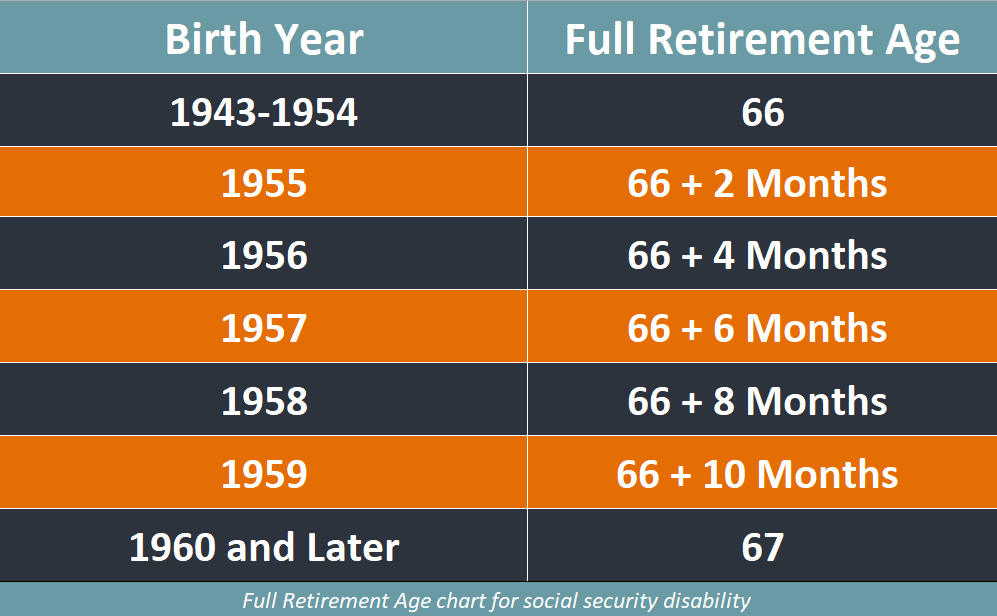
Your Full Retirement Age (FRA) is the age at which you’re entitled to receive 100% of your PIA. This age is not universal; it depends on your birth year. For those born between 1943 and 1954, FRA is 66. For subsequent birth years, FRA gradually increases, reaching 67 for anyone born in 1960 or later. Knowing your specific FRA is paramount because it serves as the benchmark against which all claiming decisions are measured. Claiming before your FRA results in a permanent reduction, while delaying past your FRA leads to a permanent increase.
Deciding When to Claim: Early vs. Delayed Benefits
The age at which you choose to start receiving benefits is arguably the single most impactful decision you’ll make regarding your Social Security income. You have a window of opportunity that typically spans from age 62 up to age 70.
Claiming Early (Age 62): The Reduction Factor
The earliest you can claim retirement benefits is age 62. However, doing so results in a permanent reduction of your monthly benefit. The reduction is approximately 5/9 of 1% for each month before your FRA, up to 36 months, and then 5/12 of 1% for each month beyond that. For someone with an FRA of 67, claiming at age 62 results in a benefit reduction of about 30%. This is a permanent reduction that will apply for the rest of your life. While claiming early provides income sooner, it also means receiving a smaller check every month. This option is often chosen by those who need the income, can no longer work, or have health concerns that suggest a shorter life expectancy.
Claiming at FRA: Your Standard Benefit
Claiming benefits precisely at your Full Retirement Age (FRA) means you will receive 100% of your Primary Insurance Amount (PIA). This is the baseline benefit calculated based on your earnings history. For many, claiming at FRA strikes a balance between receiving a full benefit and not having to wait too long. It’s a common choice for those who are ready to retire but don’t feel the need or have the financial capacity to delay further.
Delaying Benefits (Up to Age 70): Gaining Delayed Retirement Credits
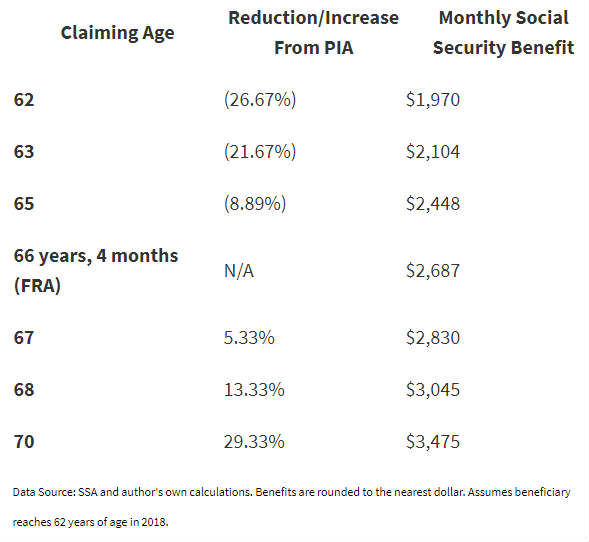
For each year you delay claiming benefits past your FRA, up to age 70, you earn Delayed Retirement Credits (DRCs). These credits permanently increase your monthly benefit. The annual increase is typically 8% per year (or 2/3 of 1% per month). For someone with an FRA of 67, delaying until age 70 would result in a benefit that is 124% of their PIA – a significant 24% increase. This strategy is often appealing to those who can afford to wait, are in good health, and anticipate a long lifespan, as it maximizes the monthly payout and provides a larger inflation-protected income stream later in life.
Beyond Your Own Work Record: Spousal and Survivor Benefits
Social Security isn’t just about your individual work record; it also provides benefits to spouses, former spouses, and survivors, adding another layer of complexity and potential income streams.
Spousal Benefits: Leveraging a Partner’s Record
If you are married or divorced from someone who is eligible for Social Security benefits, you may be able to claim benefits based on their work record. A spouse can receive up to 50% of their partner’s Primary Insurance Amount (PIA) if they claim at their own Full Retirement Age (FRA). If they claim spousal benefits before their FRA, the amount will be reduced. You cannot claim spousal benefits until your spouse has filed for their own benefits, with one exception for a strategy known as “file and suspend” which has largely been eliminated for new filers since 2016. However, if you are divorced, you can claim spousal benefits on your ex-spouse’s record if you were married for at least 10 years, are currently unmarried, and are at least 62 years old, provided your ex-spouse is at least 62. Importantly, your claiming of spousal benefits does not affect your ex-spouse’s benefit amount or the benefits of their current spouse.
Survivor Benefits: Financial Protection for Families
Social Security also provides crucial financial protection for families through survivor benefits. If a worker dies, certain family members may be eligible to receive benefits based on the deceased’s work record. This includes:
- A widow or widower age 60 or older (or age 50 if disabled).
- A widow or widower of any age caring for the deceased’s child who is under age 16 or disabled.
- Unmarried children under age 18 (or 19 if still in high school), or any age if disabled before age 22.
- Dependent parents age 62 or older.
The amount of survivor benefits varies depending on the relationship to the deceased worker and the claimant’s age, but it can be up to 100% of the deceased’s PIA for a widow(er) claiming at their FRA, or a lesser percentage for others. These benefits provide a vital safety net during a difficult time.
Understanding Benefit Reductions and Taxation
Even after your benefit amount is calculated and claiming age is determined, there are additional factors that can reduce your take-home Social Security income, namely earnings limits and taxation.
The Earnings Limit (If Claiming Early)
If you claim Social Security benefits before your Full Retirement Age (FRA) and continue to work, your benefits may be temporarily reduced if your earnings exceed certain annual limits. For 2024, if you are under FRA for the entire year, the SSA will deduct $1 from your benefits for every $2 you earn above $22,320. In the year you reach FRA, a different limit applies: the SSA will deduct $1 for every $3 you earn above $59,520 (for 2024) until the month you reach your FRA. Once you reach your FRA, these earnings limits no longer apply, and you can earn any amount without it affecting your Social Security benefits. It’s important to note that any benefits withheld due to the earnings limit are not lost forever; they are effectively “credited back” to you in the form of a slightly higher monthly benefit once you reach your FRA.
Taxation of Social Security Benefits
Social Security benefits can be subject to federal income tax. Whether or not your benefits are taxed, and to what extent, depends on your “combined income.” Combined income is calculated as your adjusted gross income (AGI) + nontaxable interest + one-half of your Social Security benefits.
- If your combined income is between $25,000 and $34,000 for an individual (or $32,000 and $44,000 for a married couple filing jointly), up to 50% of your benefits may be taxable.
- If your combined income exceeds $34,000 for an individual (or $44,000 for a married couple filing jointly), up to 85% of your benefits may be taxable.
Some states also tax Social Security benefits, so it’s essential to check your state’s tax laws as part of your overall financial planning. This potential taxation is a significant factor to consider when estimating your net Social Security income.
Medicare Premiums
For many retirees, Medicare Part B premiums are automatically deducted from their monthly Social Security benefit checks. While this isn’t a “reduction” of your Social Security benefit per se, it does mean your take-home amount will be lower. The standard Part B premium can change annually, and some higher-income beneficiaries pay a higher premium through the Income-Related Monthly Adjustment Amount (IRMAA). This deduction is an important element in understanding your actual cash flow from Social Security.
Estimating Your Social Security Benefits
Given the numerous variables, how can you get a concrete idea of what your benefits will be? Fortunately, the Social Security Administration provides excellent tools to help you estimate your future income.
Your Social Security Statement: A Personalized Snapshot
The single most important document for estimating your benefits is your personalized Social Security Statement. The SSA mails these statements to individuals age 60 and older who are not yet receiving benefits, but anyone can access their statement online at any age. Creating an account at ssa.gov/myaccount allows you to view your complete earnings record, see estimates of your future benefits at different claiming ages (62, FRA, and 70), and verify that your reported earnings are accurate. This statement is tailored to your specific work history and provides the most reliable estimates available.
Online Calculators: Tools for Projections
The SSA website (ssa.gov) also offers various online calculators that allow you to model different scenarios. You can input hypothetical future earnings, experiment with different claiming ages, and even explore how spousal or survivor benefits might play out. These tools are invaluable for “what-if” planning, allowing you to see the financial impact of delaying retirement for a few years, for example. Third-party financial planning tools also often integrate Social Security benefit estimators, though it’s always wise to cross-reference with official SSA data.
Consulting a Financial Advisor: Expert Guidance
For complex financial situations, such as blended families, significant wealth, or intricate retirement plans, consulting a qualified financial advisor who specializes in retirement planning can be highly beneficial. An advisor can help you integrate your Social Security benefits into your overall retirement strategy, advise on optimal claiming strategies based on your specific circumstances (including life expectancy, other income sources, and spouse’s benefits), and help you navigate the tax implications. They can also provide insights into how Social Security fits with other financial vehicles like 401(k)s, IRAs, and pensions.

Conclusion
The question “How much will I make on Social Security?” delves into the core of retirement planning. As we’ve explored, the answer is a dynamic one, shaped by a confluence of factors including your lifetime earnings, the number of years you’ve worked, your birth year, and perhaps most critically, the age at which you choose to begin receiving benefits. Understanding these variables—from the AIME calculation to the implications of early versus delayed claiming—empowers you to make informed decisions that can significantly impact your financial well-being in retirement.
Social Security is more than just a government program; it’s a guaranteed, inflation-adjusted income stream that forms a foundational element of most Americans’ retirement security. By actively engaging with the resources provided by the Social Security Administration, such as your personalized statement and online calculators, and by considering professional guidance when needed, you can move from uncertainty to clarity. Proactive planning, informed by a solid understanding of how your benefits are determined and optimized, is the surest path to maximizing your Social Security income and achieving a more secure and comfortable retirement. Don’t leave this vital income source to chance; take the steps today to understand and optimize your future Social Security benefits.
aViewFromTheCave is a participant in the Amazon Services LLC Associates Program, an affiliate advertising program designed to provide a means for sites to earn advertising fees by advertising and linking to Amazon.com. Amazon, the Amazon logo, AmazonSupply, and the AmazonSupply logo are trademarks of Amazon.com, Inc. or its affiliates. As an Amazon Associate we earn affiliate commissions from qualifying purchases.