
Retirement planning invariably brings the question of Social Security benefits to the forefront. For many, Social Security represents a foundational pillar of their financial security in their later years. Understanding how your benefit is calculated, the factors that influence its size, and how to estimate your future payments is crucial for effective retirement strategizing. This guide delves into the mechanics of Social Security payouts, offering insights to help you project your financial future.
Understanding the Social Security Benefit Formula
Your Social Security benefit isn’t a fixed amount; it’s a personalized calculation based primarily on your earning history. The core of this calculation involves two key components: your Average Indexed Monthly Earnings (AIME) and your Primary Insurance Amount (PIA).
Average Indexed Monthly Earnings (AIME)
The first step in determining your benefit involves calculating your AIME. The Social Security Administration (SSA) looks at your earnings throughout your career, specifically focusing on your highest 35 years of indexed earnings. “Indexed” means that past earnings are adjusted to reflect changes in general wage levels over time, ensuring that your earnings from decades ago have comparable value to more recent earnings. For instance, a dollar earned in 1980 is worth more in today’s terms when calculating your benefit.
After identifying your 35 highest indexed earning years, the SSA sums these earnings and divides the total by 420 (the number of months in 35 years) to arrive at your Average Indexed Monthly Earnings. If you have fewer than 35 years of earnings, the missing years are counted as zero, which can significantly lower your AIME and, consequently, your benefit. This highlights the importance of a consistent and strong earning record over a long career.
Primary Insurance Amount (PIA)
Once your AIME is determined, the SSA uses a progressive formula to convert it into your Primary Insurance Amount (PIA). Your PIA is the benefit you would receive if you start collecting Social Security at your Full Retirement Age (FRA). The formula is progressive, meaning it replaces a higher percentage of earnings for lower-income workers than for higher-income workers, aiming to provide a safety net for those with more modest earnings.
The PIA formula uses “bend points” – specific dollar amounts that divide your AIME into segments. For the year you become eligible (age 62), your PIA is calculated by taking:
-
90% of the first segment of your AIME (up to the first bend point).
-
32% of the AIME amount between the first and second bend points.
-
15% of the AIME amount above the second bend point.
These percentages and bend points are adjusted annually to account for changes in the national average wage index. The progressive nature ensures that those with lower lifetime earnings receive a proportionately higher benefit relative to their pre-retirement income, while those with higher earnings still receive a larger absolute benefit.
Key Factors Influencing Your Social Security Payout
While AIME and PIA form the foundation, several other crucial factors dictate the exact amount you’ll receive from Social Security. Making informed decisions regarding these factors can significantly impact your retirement income.
Your Earnings History
As established, your earnings record is paramount. The SSA considers your highest 35 years of indexed earnings. Consistent contributions through FICA taxes (Federal Insurance Contributions Act) directly translate to a higher potential benefit. Gaps in employment, periods of low wages, or working fewer than 35 years can all reduce your average earnings and thus your eventual payout. Each year you work and contribute, especially if it’s one of your higher-earning years replacing a lower-earning or zero-earning year in your top 35, you’re potentially increasing your future benefit.
Your Age at Claiming
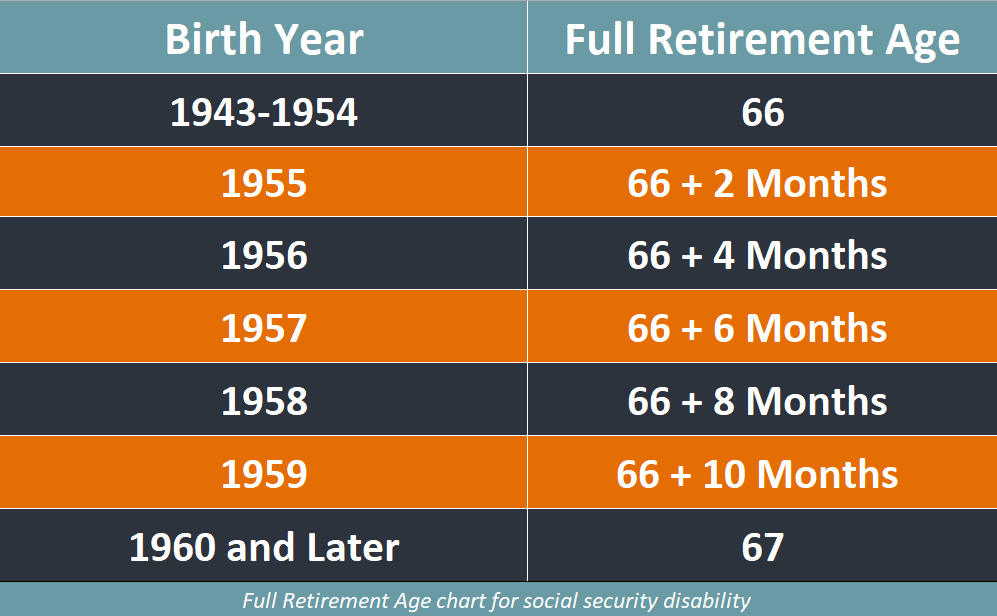
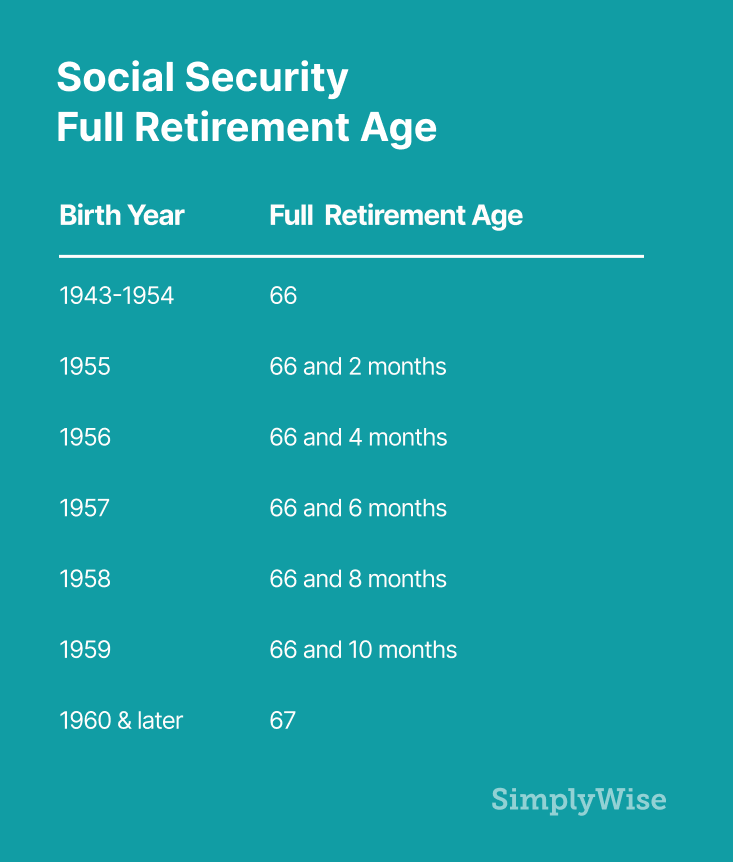
This is arguably the most impactful decision you’ll make regarding your Social Security benefits. Your Primary Insurance Amount (PIA) is the benefit you receive if you claim at your Full Retirement Age (FRA). Your FRA depends on your birth year:
-
Born 1943-1954: FRA is 66
-
Born 1955: FRA is 66 and 2 months
-
Born 1956: FRA is 66 and 4 months
-
Born 1957: FRA is 66 and 6 months
-
Born 1958: FRA is 66 and 8 months
-
Born 1959: FRA is 66 and 10 months
-
Born 1960 or later: FRA is 67
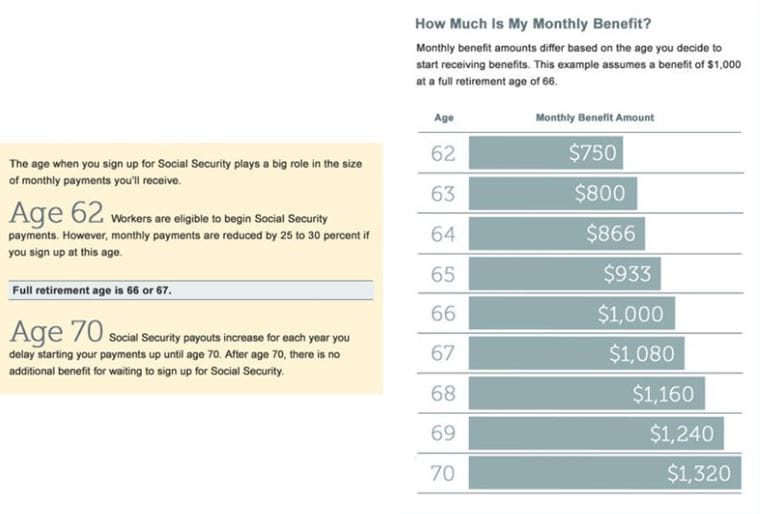
Early Claiming (Age 62): You can start receiving benefits as early as age 62, but doing so results in a permanent reduction. The reduction can be as much as 30% if your FRA is 67, meaning you would receive only 70% of your PIA for the rest of your life. This reduction is applied monthly based on how many months you claim before your FRA.
Delayed Claiming (Up to Age 70): Conversely, delaying your claim past your FRA can significantly increase your monthly benefit. For each year you delay, up to age 70, you earn delayed retirement credits. These credits permanently increase your benefit by a certain percentage each year (typically 8% per year, or two-thirds of 1% per month). This means if your FRA is 67 and you delay until 70, you could receive 124% of your PIA. After age 70, there’s no further benefit to delaying.
The decision of when to claim involves weighing your health, life expectancy, other retirement income sources, and spousal benefits.
Cost-of-Living Adjustments (COLAs)
Once you start receiving Social Security benefits, your payments are generally subject to annual Cost-of-Living Adjustments (COLAs). These adjustments are designed to help your benefits keep pace with inflation and maintain your purchasing power over time. COLAs are determined by the Consumer Price Index for Urban Wage Earners and Clerical Workers (CPI-W). When the CPI-W increases, benefits typically increase in the following year. While COLAs are not guaranteed to keep pace perfectly with your personal inflation rate, they are a vital mechanism for preserving the real value of your benefits.
Other Benefit Types
While the focus is often on individual retirement benefits, Social Security also provides other types of benefits that can affect your total household income:
-
Spousal Benefits: If you are married, divorced, or widowed, you may be eligible for benefits based on your spouse’s or ex-spouse’s earnings record. These can be up to 50% of your spouse’s PIA (if claiming at your own FRA), or 100% as a surviving spouse.
-
Survivor Benefits: If your spouse or former spouse dies, you or your eligible children may be entitled to survivor benefits.
-
Disability Benefits: If you become disabled before retirement age and meet certain medical and work credit requirements, you may be eligible for Social Security Disability Insurance (SSDI).
These additional benefits can significantly impact a household’s overall financial picture in retirement, making it crucial to understand eligibility rules.
How to Estimate Your Social Security Benefits
Accurate estimations are critical for sound retirement planning. Fortunately, the Social Security Administration provides robust tools and resources to help you project your future benefits.
Utilizing Your Social Security Statement
The annual Social Security Statement is your most direct and personal resource. You can access it online by creating a “my Social Security” account. This statement provides:
-
Your estimated benefits: At age 62, at your Full Retirement Age (FRA), and at age 70.
-
A record of your earnings history: Allowing you to verify that the SSA has accurate information.
-
Estimated disability and survivor benefits.
-
Important information about Social Security rules.
Reviewing your statement annually is highly recommended. It allows you to catch any errors in your earnings record, which could negatively impact your future benefits if not corrected.
The Social Security Administration’s Online Tools
The SSA website (SSA.gov) offers several online calculators that provide more dynamic estimations:
-
The Retirement Estimator: This tool allows you to plug in different retirement dates and future earnings scenarios to see how they impact your benefits. It’s an excellent way to model different claiming strategies.
-
The Benefit Calculators: These provide more detailed calculations and scenarios, including spousal and survivor benefits.
-
Your “my Social Security” account: Beyond accessing your statement, this portal provides personalized estimates based on your actual earnings record and allows you to manage your benefits once you start receiving them.
These tools are invaluable for understanding the financial implications of different claiming ages and career paths.
Financial Planning Software and Advisors
For a more comprehensive approach, financial planning software and professional financial advisors can integrate your Social Security estimates into your broader retirement plan. They can help you:
-
Determine the optimal claiming strategy for you and your spouse, considering other assets, pensions, and income sources.
-
Model the impact of Social Security on your overall cash flow throughout retirement.
-
Account for potential taxes on Social Security benefits.
-
Help you adjust your investment and savings strategies based on your projected Social Security income.
A holistic financial plan ensures that Social Security is seen as one component within a larger, integrated retirement strategy.
Integrating Social Security into Your Retirement Strategy
Understanding your Social Security benefits is not just about knowing a number; it’s about integrating that number strategically into your overall retirement plan. It serves a specific, important role, but rarely stands alone.
Social Security as a Foundation, Not the Entire Solution
For most individuals, Social Security is designed to replace only a portion of pre-retirement income – typically around 40% for an average earner. This means it provides a crucial baseline, a guaranteed income stream that’s inflation-adjusted, but it’s generally insufficient to maintain your pre-retirement lifestyle on its own. It’s a foundation upon which you build with personal savings (401(k)s, IRAs, taxable brokerage accounts), pensions, and other income sources. Neglecting personal savings in the belief that Social Security will cover all your needs is a common and potentially disastrous planning error.
Optimizing Claiming Age with Other Income Streams
The decision of when to claim Social Security is highly personal and should be made in the context of your entire financial picture.
-
Good health and sufficient other assets: If you are in good health and have ample savings or other income streams to cover your expenses until age 70, delaying Social Security can be a powerful strategy. The delayed retirement credits offer a guaranteed, inflation-adjusted return that’s hard to beat in the private market. This “longevity insurance” can provide a higher, secure income for your longest years.
-
Poor health or immediate need: If you have health concerns that suggest a shorter life expectancy or if you genuinely need the income to cover essential expenses in your early 60s, claiming early might be the right choice. Even with a reduced benefit, income today can be more valuable than a higher income later.
-
Spousal coordination: For married couples, coordinating claiming strategies can maximize benefits for both spouses, particularly for the surviving spouse. Often, the higher earner delays their claim to age 70, providing a larger survivor benefit for the remaining spouse.
Work with a financial advisor to analyze various claiming scenarios and their impact on your total retirement income.
Understanding Taxation of Benefits
A commonly overlooked aspect is that Social Security benefits can be taxable. If your “combined income” (your adjusted gross income plus any tax-exempt interest income, plus one-half of your Social Security benefits) exceeds certain thresholds, a portion of your benefits may be subject to federal income tax.
-
For single filers, if combined income is between $25,000 and $34,000, up to 50% of your benefits may be taxable. Above $34,000, up to 85% may be taxable.
-
For married couples filing jointly, if combined income is between $32,000 and $44,000, up to 50% may be taxable. Above $44,000, up to 85% may be taxable.
Some states also tax Social Security benefits. Understanding these tax implications is crucial for accurate retirement income projections and tax planning. By strategically managing other income sources, you may be able to minimize the taxable portion of your Social Security benefits.
Planning for Social Security is an integral part of ensuring a secure and comfortable retirement. By understanding its complexities, utilizing available tools, and making informed decisions, you can effectively integrate your expected benefits into a robust financial strategy.
aViewFromTheCave is a participant in the Amazon Services LLC Associates Program, an affiliate advertising program designed to provide a means for sites to earn advertising fees by advertising and linking to Amazon.com. Amazon, the Amazon logo, AmazonSupply, and the AmazonSupply logo are trademarks of Amazon.com, Inc. or its affiliates. As an Amazon Associate we earn affiliate commissions from qualifying purchases.