
For millions of Americans, Social Security represents the bedrock of retirement planning. It is a predictable, inflation-adjusted income stream that provides a safety net for the elderly, the disabled, and survivors of deceased workers. However, the question “How much will I get in Social Security?” does not have a one-size-fits-all answer. Your future benefit is a moving target, influenced by your career longevity, your historical earnings, and the strategic decisions you make regarding when to stop working. Understanding these variables is not just an academic exercise; it is a critical component of personal finance that dictates how much you need to save in private accounts like 401(k)s and IRAs to maintain your desired lifestyle.
The Foundations of the Social Security Calculation
To understand your future payout, you must first understand the “35-year rule.” Unlike some private pension plans that look at your final few years of salary, the Social Security Administration (SSA) looks at your entire work history. Specifically, they take your 35 highest-earning years, index them for inflation, and average them out.
The Role of Average Indexed Monthly Earnings (AIME)
The calculation begins with your Average Indexed Monthly Earnings (AIME). The SSA adjusts your actual earnings to account for changes in average wages since the year the earnings were received. This ensures that your benefits reflect the rise in the standard of living over your working life. If you have worked for fewer than 35 years, the SSA fills in the remaining years with zeros. This can significantly drag down your average, making it vital for those near retirement to consider if working a few extra years to replace lower-earning or “zero” years is financially beneficial.
Primary Insurance Amount (PIA) and Bend Points
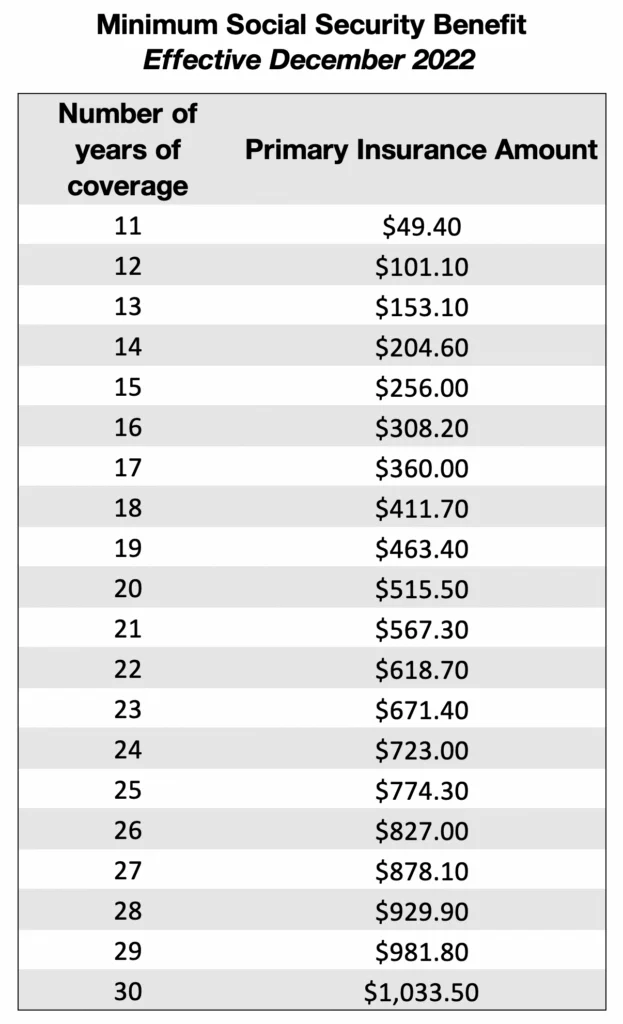
Once your AIME is established, the SSA applies a formula to determine your Primary Insurance Amount (PIA). This is the base amount you would receive if you retire at your Full Retirement Age (FRA). The formula is progressive, meaning it replaces a higher percentage of lower earnings than higher earnings. It uses “bend points”—specific dollar thresholds that change annually. For example, the formula might provide 90% of the first few hundred dollars of your AIME, 32% of the middle range, and only 15% of the earnings above the top threshold. This progressive structure is why Social Security is often described as a social safety net rather than a high-yield investment vehicle for the wealthy.
Cost-of-Living Adjustments (COLA)
One of the most valuable features of Social Security is the Cost-of-Living Adjustment (COLA). Unlike many fixed annuities or private pensions, Social Security benefits are designed to keep pace with inflation. Each year, the SSA evaluates the Consumer Price Index for Urban Wage Earners and Clerical Workers (CPI-W). If inflation has risen, your benefit amount increases accordingly. This protection is essential for long-term financial security, as even moderate inflation can erode the purchasing power of a fixed income over a 20- or 30-year retirement.
Timing Your Claim: The Full Retirement Age vs. Early and Late Filing
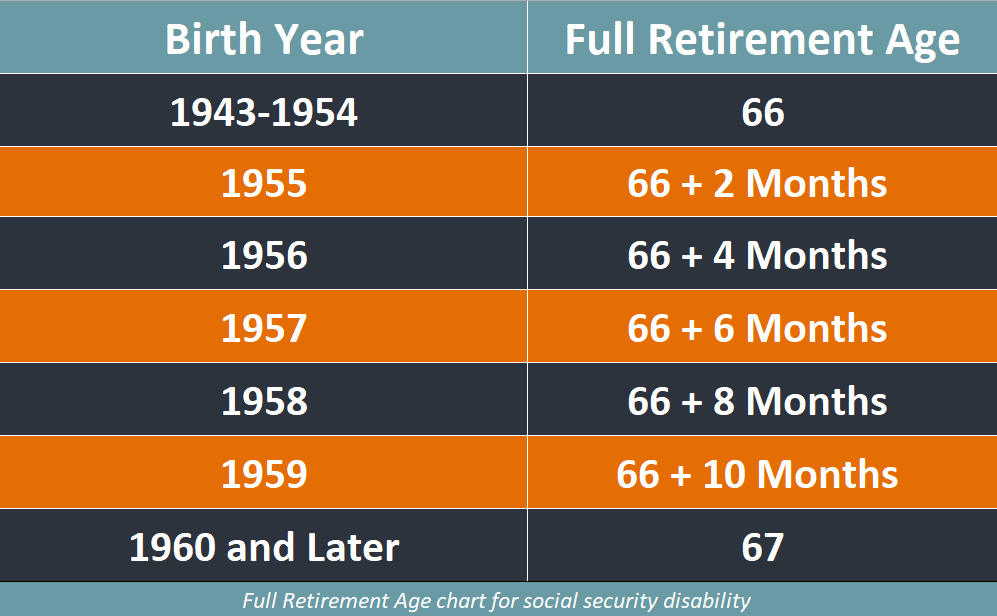
The “when” is just as important as the “how much.” Your Full Retirement Age (FRA) is the age at which you are entitled to 100% of your PIA. For anyone born in 1960 or later, the FRA is 67. If you were born earlier, your FRA may be 66 and a few months. Choosing to claim before or after this specific date has a permanent impact on your monthly check.
The Cost of Early Filing
You can begin claiming Social Security as early as age 62. However, doing so comes with a permanent reduction in benefits. If your FRA is 67 and you claim at 62, your monthly benefit will be reduced by approximately 30%. This reduction is calculated monthly: the benefit is reduced by 5/9 of 1% for each month before FRA, up to 36 months, and 5/12 of 1% for each month beyond that. For those with a shorter life expectancy or an immediate need for cash flow, early filing might make sense, but from a strictly financial growth perspective, it is a significant “discount” on your lifetime income.
The Reward for Delayed Retirement Credits
On the other end of the spectrum is the strategy of delaying benefits past your FRA. For every year you wait beyond your FRA, up to age 70, your benefit increases by 8% annually. This is known as Delayed Retirement Credits. If your FRA is 67 and you wait until 70, you will receive 124% of your PIA. There is no financial incentive to wait past age 70, as the credits stop accumulating. For many retirees, waiting until 70 acts as a form of longevity insurance, providing the highest possible guaranteed monthly payment for as long as they live.
The “Breakeven” Analysis
Financial advisors often perform a “breakeven analysis” to help clients decide when to file. This calculation determines the age at which the total cumulative benefits of waiting (the larger checks) surpass the total cumulative benefits of starting early (the smaller checks received over a longer period). Generally, the breakeven age for waiting until 70 versus starting at 62 is somewhere in the late 70s or early 80s. If you expect to live into your mid-80s or 90s, delaying is almost always the superior financial move.
Maximizing Your Household Income: Spousal and Survivor Benefits
Social Security is not just an individual benefit; it is a family-based insurance program. Understanding how your benefits interact with a spouse’s can drastically change your retirement strategy and your total household “take-home” pay.
Spousal Benefit Calculations
A spouse who has not worked or has low lifetime earnings can receive a benefit based on their partner’s work record. This spousal benefit can be up to 50% of the worker’s PIA, provided the spouse has reached their own FRA. It is important to note that claiming a spousal benefit does not reduce the primary worker’s check. However, if the spouse claims their own benefit early, or the spousal benefit early, the amount is reduced. This provides a crucial income floor for households where one partner stayed home to care for family.
Survivor Benefits and the “Higher Check” Rule
The financial stakes of Social Security timing are highest when considering survivor benefits. When one member of a married couple passes away, the surviving spouse is entitled to the higher of the two checks the couple was receiving, while the smaller check disappears. By the primary earner delaying their benefit until age 70, they are essentially “buying” a larger life insurance policy for their surviving spouse. This ensures that the widow or widower has the maximum possible monthly income to cover housing and healthcare costs later in life.
Divorced Spouse Benefits
Many people are unaware that they may be eligible for benefits based on an ex-spouse’s work record. If you were married for at least 10 years, are currently unmarried, and are age 62 or older, you may be able to claim a benefit based on your ex-spouse’s record (up to 50% of their PIA). This does not affect the ex-spouse’s benefit or the benefit of their current spouse. This is a vital piece of personal finance knowledge for those who may have had interrupted career paths during a long marriage.
The Impact of Taxes and Working While Retired
Your “gross” Social Security benefit is rarely what ends up in your bank account. To truly answer “how much will I get,” you must factor in the “Retirement Earnings Test” and federal income taxes.
The Retirement Earnings Test
If you claim Social Security before your FRA and continue to work, your benefits may be temporarily withheld. As of 2024, if you are under FRA, the SSA deducts $1 from your benefits for every $2 you earn above a certain threshold (roughly $22,320). In the year you reach FRA, the deduction is $1 for every $3 earned above a higher threshold. The good news is that these withheld benefits are not “lost” forever; the SSA recalculates your benefit at FRA to account for the months they were withheld, effectively giving you a small raise.
Taxation of Benefits
Depending on your total “provisional income” (which includes adjusted gross income, tax-exempt interest, and half of your Social Security benefits), you may owe federal income taxes on your benefits. If you are a joint filer and your provisional income is between $32,000 and $44,000, you may pay taxes on up to 50% of your benefits. If your income exceeds $44,000, up to 85% of your benefits may be taxable. Understanding these brackets is essential for tax-efficient withdrawal strategies, such as balancing Social Security with Roth IRA distributions to stay in a lower tax bracket.
Integrating Social Security into a Broader Portfolio
Social Security should be viewed as the “fixed-income” or “bond” portion of your retirement portfolio. Because it is guaranteed and inflation-indexed, it allows you to take more or less risk with your other investments. For example, if your Social Security covers your basic needs (housing and food), you might feel more comfortable keeping a higher percentage of your 401(k) in equities to hedge against long-term inflation. Conversely, if your Social Security benefit is small, your private savings must be managed more conservatively to ensure they don’t run out.
Strategic Steps to Estimate Your Benefit
The final step in determining your future income is using the tools provided by the government and financial professionals. You do not have to guess; the data is available if you know where to look.
The “My Social Security” Account
The most accurate way to find out your projected benefit is to create an account on the SSA website (ssa.gov). Your Social Security Statement provides estimates based on your actual earnings history. It shows what you would get at age 62, at your FRA, and at age 70. Reviewing this document annually is a “financial health” best practice, as it also allows you to verify that your earnings were reported correctly by your employers.
Using Online Calculators for “What-If” Scenarios
While the SSA statement is a great baseline, it assumes you will continue to earn your current salary until you retire. If you plan to “Coast FIRE” (take a lower-paying, less stressful job) or retire early and live off savings until age 70, the SSA’s default estimate will be high. Using advanced online financial tools or working with a financial planner can help you run scenarios where you stop working at 55 but don’t claim until 70. This gives you a realistic view of how your career choices impact your monthly check.

Conclusion: Social Security as a Pillar of Wealth
Ultimately, how much you get from Social Security is the result of decades of labor and a few critical decisions made in your 60s. It is rarely enough to fund a luxury lifestyle on its own, but it is an unparalleled tool for managing the risks of longevity and inflation. By understanding the 35-year rule, the power of delaying benefits, and the tax implications of your income, you can transform Social Security from a mysterious government program into a powerful asset in your personal finance arsenal. Planning today ensures that when you finally do transition out of the workforce, your “paycheck” from the government is as large and as secure as possible.
aViewFromTheCave is a participant in the Amazon Services LLC Associates Program, an affiliate advertising program designed to provide a means for sites to earn advertising fees by advertising and linking to Amazon.com. Amazon, the Amazon logo, AmazonSupply, and the AmazonSupply logo are trademarks of Amazon.com, Inc. or its affiliates. As an Amazon Associate we earn affiliate commissions from qualifying purchases.