
For many Americans, Social Security serves as the foundation of their retirement plan. Yet, despite its importance, the program remains shrouded in mystery for the average worker. “How much will I get?” is perhaps the most frequent question financial advisors hear, and while the answer depends on several variables, it is not an unknowable figure.
Understanding your future Social Security benefits is not just about satisfying curiosity; it is a vital component of personal finance. Knowing your projected monthly check allows you to calculate your “retirement gap”—the difference between what you will receive from the government and what you will need to maintain your lifestyle. This guide explores the mechanics of benefit calculation, the impact of timing, and the strategies you can use to maximize your lifetime payout.
Understanding the Social Security Formula
The Social Security Administration (SSA) does not simply pick a number out of a hat. Your benefit is determined by a complex mathematical formula designed to replace a portion of your pre-retirement income. To estimate your future check, you must first understand the three pillars of the calculation.
The 35-Year Average
The SSA looks at your entire work history, but they only care about your 35 highest-earning years. These earnings are “indexed” to account for changes in average wages over time, ensuring that $20,000 earned in 1985 is weighted appropriately against $80,000 earned in 2023. If you have fewer than 35 years of earnings, the SSA enters a zero for each missing year. This can significantly drag down your average, which is why working at least 35 years is a primary goal for those seeking to maximize their benefits.
Average Indexed Monthly Earnings (AIME) and Bend Points
Once your top 35 years are indexed and averaged, the SSA determines your Average Indexed Monthly Earnings (AIME). This figure is then put through a formula to find your Primary Insurance Amount (PIA)—the amount you receive if you retire at your Full Retirement Age (FRA).
The formula uses “bend points,” which make the system progressive. It replaces a higher percentage of lower-income earnings and a lower percentage of higher-income earnings. For example, the formula might replace 90% of the first $1,100 of your AIME, but only 32% of earnings between $1,100 and $6,700, and 15% of anything above that. This ensures a safety net for lower-wage workers while providing a higher absolute dollar amount for higher earners.
Cost-of-Living Adjustments (COLA)
Social Security is one of the few retirement income sources that is inflation-protected. Each year, the SSA may apply a Cost-of-Living Adjustment (COLA) based on the Consumer Price Index for Urban Wage Earners and Clerical Workers (CPI-W). While these adjustments vary—some years see 0% while others, like 2023, saw 8.7%—they are essential for maintaining your purchasing power over a retirement that could last 30 years or more.
The Impact of Timing: When to Claim
While your earnings history sets the baseline for your benefit, the age at which you choose to claim that benefit is the single most significant factor you can control. You can choose to start receiving checks as early as age 62 or as late as age 70.
Identifying Your Full Retirement Age (FRA)
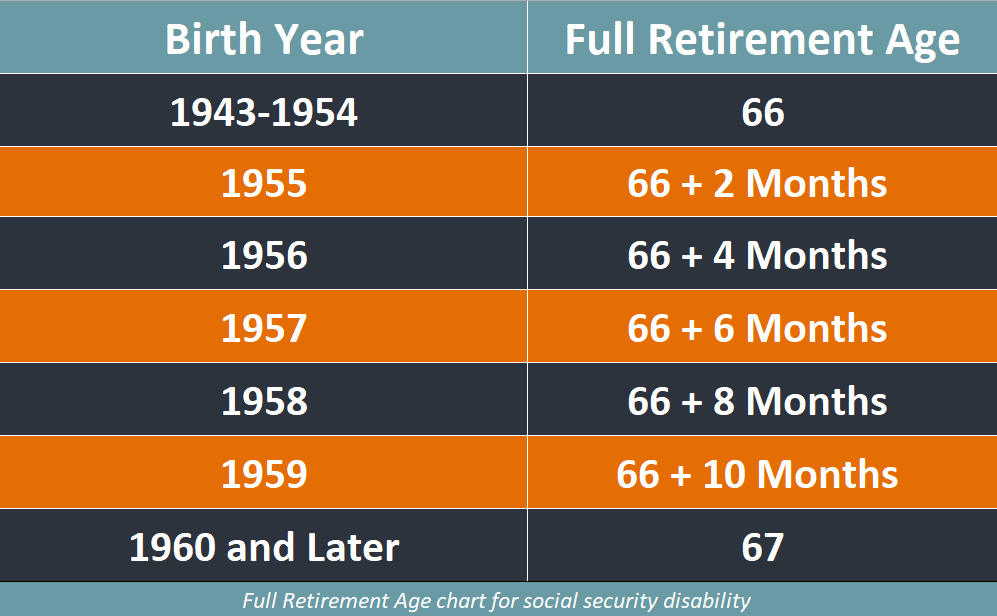
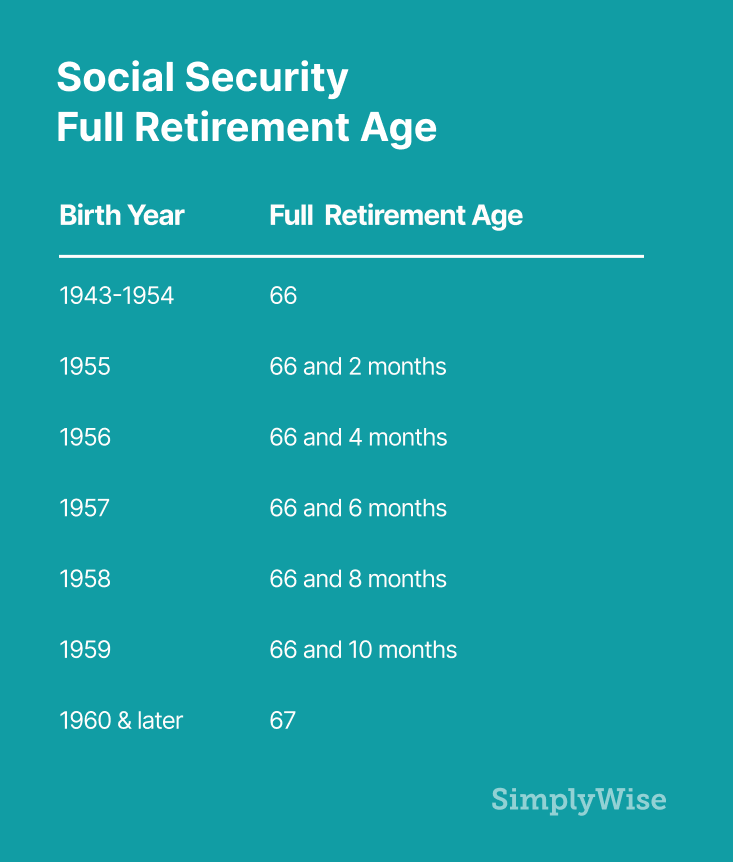
Your Full Retirement Age is the age at which you are entitled to 100% of your calculated benefit. For those born between 1943 and 1954, the FRA is 66. For those born in 1960 or later, the FRA has shifted to 67. If you were born between 1955 and 1959, your FRA increases by two months for every year. Knowing your FRA is the “North Star” of your retirement planning; it is the benchmark against which all early or late filing penalties and credits are measured.
The Cost of Filing Early (Age 62)
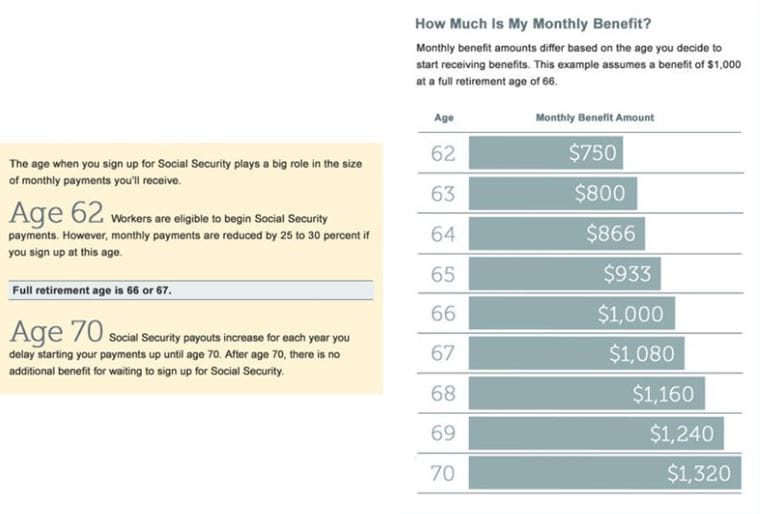
You can claim Social Security as early as age 62, but there is a permanent price for doing so. If your FRA is 67 and you claim at 62, your monthly benefit will be reduced by roughly 30%. This reduction is actuarial; the SSA assumes that by starting earlier, you will receive more checks over your lifetime, so each check must be smaller. For individuals who are in poor health or who lack other assets, filing early might be a necessity, but from a strictly financial growth perspective, it represents a significant loss of monthly cash flow.
The Reward for Delaying (Age 70)
On the other end of the spectrum is the “Delayed Retirement Credit.” For every month you delay claiming past your FRA up until age 70, your benefit increases by approximately 8% per year. If your FRA is 67 and you wait until 70, your benefit will be 124% of your PIA. There is no financial incentive to wait past age 70. This 8% guaranteed annual increase is a return that is virtually impossible to find in any other low-risk financial instrument, making it a powerful tool for those who have the means to live off other savings in their late 60s.
Tools and Resources for Estimation
You do not have to do the math manually to find out where you stand. The SSA provides several high-tech and accessible tools to help you visualize your financial future.
Creating a “my Social Security” Account
The most accurate way to see your projected benefits is to create a “my Social Security” account on the official SSA.gov website. This portal provides a personalized “Social Security Statement” that lists your year-by-year earnings history. It is crucial to review this statement periodically; if an employer failed to report your earnings correctly 20 years ago, it could be lowering your current estimate.
Understanding the Annual Statement
Your statement provides estimates for three scenarios: claiming at age 62, claiming at your FRA, and claiming at age 70. It also provides estimates for disability benefits and what your survivors might receive if you were to pass away. For a worker with average earnings, these numbers often serve as a “reality check,” highlighting the need for additional private savings through a 401(k) or IRA.
Using Online Calculators for Scenario Planning
While the SSA statement is a snapshot based on your current trajectory, various online financial tools allow you to “stress test” your retirement. These calculators allow you to input different future salary projections or hypothetical retirement dates. Some sophisticated tools also factor in the “break-even point”—the age at which the total cumulative value of waiting for a larger check at age 70 surpasses the total value of taking smaller checks starting at 62. Generally, the break-even age is around 78 to 82.
Factors That Can Reduce Your Net Benefit
It is a common misconception that the number you see on your Social Security statement is exactly what will hit your bank account. Several factors can “claw back” a portion of your benefits before you ever see them.
Taxation of Benefits
Depending on your “combined income,” you may have to pay federal income taxes on up to 85% of your Social Security benefits. Combined income is calculated by adding your adjusted gross income, tax-exempt interest, and half of your Social Security benefits. If this sum exceeds $25,000 for individuals or $32,000 for married couples filing jointly, a portion of the benefit becomes taxable. In the world of personal finance, this is known as the “tax torpedo,” and it requires careful tax-bracket management in retirement.
The Retirement Earnings Test
If you claim Social Security before your Full Retirement Age but continue to work, your benefits may be temporarily reduced. For 2024, if you earn more than $22,320, the SSA will withhold $1 in benefits for every $2 you earn over the limit. Once you reach your FRA, this “test” disappears, and the SSA recalculates your benefit upward to account for the months they withheld. However, in the short term, this can create a significant cash flow crunch for those trying to “double dip” with work and benefits.
Medicare Premium Deductions
Most retirees have their Medicare Part B premiums deducted directly from their Social Security checks. As healthcare costs rise, these deductions can eat into your annual COLA. When planning your retirement budget, it is safer to estimate your net benefit after accounting for these standard insurance costs.
Strategic Planning for Your Retirement Income
Social Security was never intended to be a retiree’s sole source of income; it was designed to replace roughly 40% of the average worker’s earnings. To bridge the gap, you must integrate your benefits into a broader financial strategy.
Supplementing with 401(k)s and IRAs
The most effective way to manage your Social Security timing is to have a robust “bridge fund” in a 401(k) or IRA. If you can use your private savings to cover your expenses from age 67 to 70, you lock in that 24% permanent boost in Social Security income. This essentially uses your volatile market assets to purchase a larger, guaranteed, inflation-protected government annuity.
Spousal and Survivor Benefits
Married couples have additional layers of strategy to consider. A lower-earning spouse may be eligible for a “Spousal Benefit,” which can be up to 50% of the higher-earner’s PIA. Furthermore, survivor benefits allow a widowed spouse to inherit the higher of the two checks. For many couples, it makes financial sense for the highest earner to delay claiming until age 70 to ensure that the surviving spouse has the largest possible monthly check for the remainder of their life.
Conclusion
The question “How much will I get from Social Security?” has a dynamic answer that depends on your work history, your discipline in saving, and your patience in claiming. By understanding the 35-year rule, the impact of claiming ages, and the realities of taxation, you can transform Social Security from a confusing government program into a powerful, predictable engine for your financial independence. The best time to start planning for your first check is not the year you retire, but today, by verifying your earnings and aligning your Social Security strategy with your overall investment portfolio.
aViewFromTheCave is a participant in the Amazon Services LLC Associates Program, an affiliate advertising program designed to provide a means for sites to earn advertising fees by advertising and linking to Amazon.com. Amazon, the Amazon logo, AmazonSupply, and the AmazonSupply logo are trademarks of Amazon.com, Inc. or its affiliates. As an Amazon Associate we earn affiliate commissions from qualifying purchases.