
Social Security remains the cornerstone of retirement planning for millions of Americans. It is a fundamental pillar of the American financial landscape, designed to provide a reliable floor of income that one cannot outlive. However, despite its importance, the mechanics of how much an individual will actually receive are often shrouded in complexity. Determining your future benefit is not merely a matter of checking a box; it is the result of a multifaceted formula involving your highest-earning years, the age at which you choose to claim, and the socioeconomic variables of the era in which you retire.
To navigate your financial future effectively, you must understand the variables that dictate your benefit amount. This guide breaks down the essential components of Social Security calculations, the strategic decisions regarding timing, and the external factors that could influence your final monthly check.
1. The Mechanics of the Calculation: How the SSA Determines Your Benefit
The Social Security Administration (SSA) uses a specific, step-by-step process to calculate your Primary Insurance Amount (PIA). This is the base amount you are entitled to if you claim benefits at exactly your Full Retirement Age (FRA). To reach this number, the SSA looks at your entire work history, but focuses specifically on your most productive years.
Understanding Your Average Indexed Monthly Earnings (AIME)
The first step in the “Money” equation of Social Security is calculating your Average Indexed Monthly Earnings (AIME). The SSA looks at your record of lifetime earnings and selects the 35 years in which you earned the most. These earnings are “indexed” to account for changes in average wages since the year the earnings were received. This ensures that a dollar earned in 1990 is weighted fairly against a dollar earned in 2024.
If you have fewer than 35 years of work history, the SSA fills in the remaining years with zeros. This can significantly drag down your AIME, highlighting the importance of maintaining a consistent work history. For high earners, the SSA only considers income up to the “taxable maximum” ($168,600 in 2024). Anything earned above this cap does not contribute to your Social Security calculation.
The Formula: Bend Points and Progressivity
Once your AIME is established, the SSA applies a formula to determine your PIA. This formula is “progressive,” meaning it is designed to provide a higher percentage of income replacement for lower-wage earners than for higher-wage earners. This is achieved through “bend points”—fixed dollar amounts that change annually.
For 2024, the formula takes 90% of the first portion of your AIME, 32% of the middle portion, and 15% of any amount above the second bend point. This tiered system ensures a safety net for all but results in a lower “replacement rate” for those who were high earners during their careers. Understanding where you fall within these bend points is crucial for realistic cash-flow forecasting in retirement.
2. The Power of Timing: When to Claim for Maximum Impact
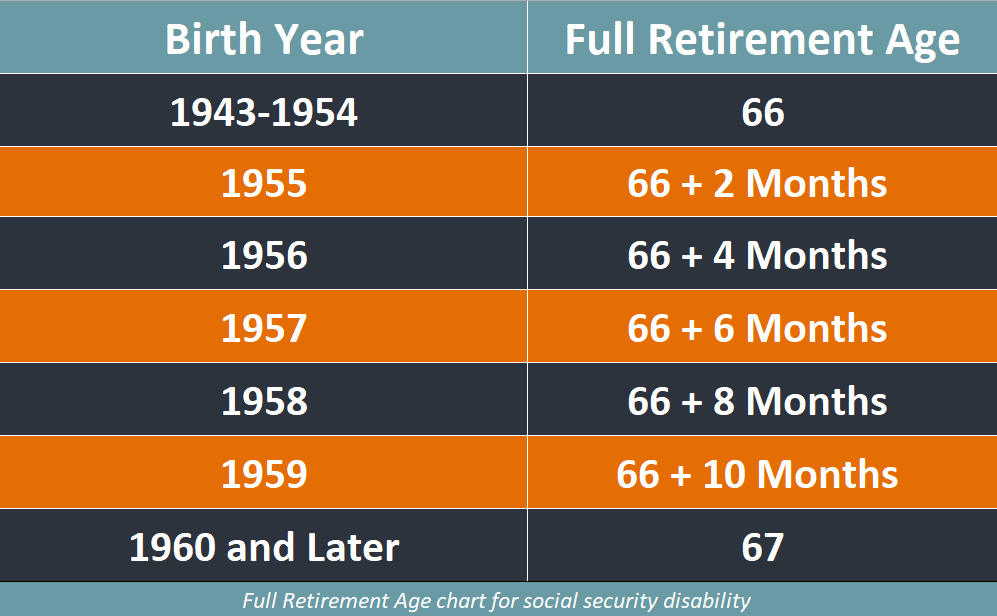
While your work history sets the foundation, your “claiming age” is the most significant lever you have to control the size of your monthly check. The SSA designates a Full Retirement Age (FRA)—currently between 66 and 67 depending on your birth year—as the point where you receive 100% of your calculated benefit.
The Cost of Filing Early
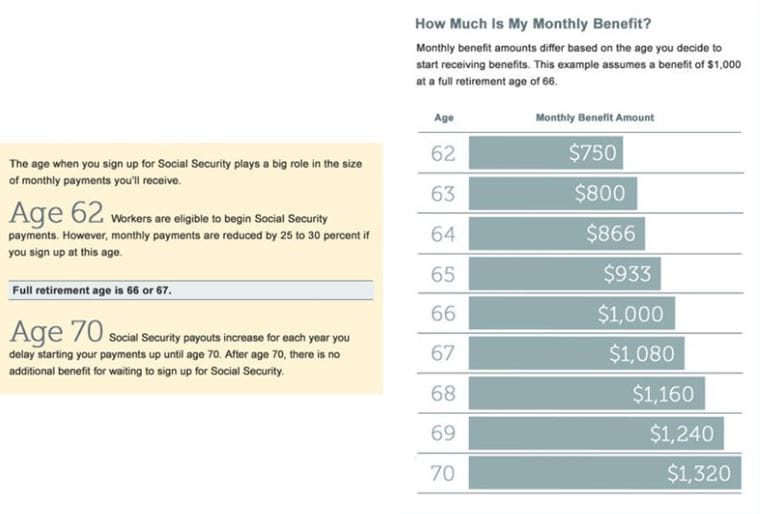
You can begin drawing Social Security as early as age 62, but there is a permanent financial trade-off. If you claim at 62 and your FRA is 67, your monthly benefit will be reduced by approximately 30%. This reduction is actuarial; it accounts for the fact that you will likely receive checks for a longer period.
From a personal finance perspective, filing early is often a choice driven by necessity—such as health issues or job loss—or by a specific investment strategy where the individual believes they can generate better returns by taking the money early and investing it. However, for most, the “guaranteed” return of waiting outweighs the risks of early withdrawal.
The Reward of Delayed Retirement Credits
On the opposite end of the spectrum, you can choose to delay your benefits past your FRA. For every year you wait—up until age 70—your benefit increases by 8% annually. This is known as Delayed Retirement Credits.
There is virtually no other financial instrument that offers a guaranteed, inflation-adjusted 8% annual return. For an individual whose FRA is 67, waiting until age 70 results in a monthly check that is 124% of their PIA. For those in good health with other assets to draw from in their 60s, delaying Social Security to age 70 is often the most effective way to maximize lifetime wealth and provide a hedge against longevity risk.

3. External Factors and Policy Realities
Your Social Security check does not exist in a vacuum. It is subject to taxes, inflation adjustments, and the specific rules governing family structures. To truly know “how much you will draw,” you must account for these “Money” leaks and additions.
The Impact of COLA and Inflation
One of the most valuable features of Social Security is the Cost-of-Living Adjustment (COLA). Unlike most private pensions or annuities, Social Security is indexed to inflation via the Consumer Price Index for Urban Wage Earners and Clerical Workers (CPI-W).
In years of high inflation, the COLA can provide a significant boost to your monthly check. For example, in 2023, retirees saw an 8.7% increase. While this is meant to preserve purchasing power rather than increase wealth, it is a vital component of financial security in an unpredictable economy. When projecting your future draw, it is wise to assume a modest average COLA (historically around 2.6%) to see how your benefit might grow over a 20- or 30-year retirement.
Taxation of Benefits: The “Tax Torpedo”
A common surprise for many retirees is that Social Security benefits can be taxable. If your “provisional income”—which is half of your Social Security benefit plus your other adjusted gross income and tax-exempt interest—exceeds certain thresholds, up to 85% of your benefits may be subject to federal income tax.
The thresholds are currently $25,000 for individuals and $32,000 for married couples filing jointly. Because these thresholds are not indexed for inflation, more and more retirees find themselves paying taxes on their benefits every year. This is often referred to as the “tax torpedo” because it can significantly increase your effective marginal tax rate. Strategic withdrawals from Roth IRAs or other tax-advantaged accounts can help keep your provisional income below these levels.
4. Strategic Planning: Tools and Spousal Considerations
Calculating your own benefit is only half the battle. If you are married, or have been in the past, your “draw” may be influenced by your partner’s earnings. Furthermore, modern financial tools make it easier than ever to run “what-if” scenarios.
Spousal and Survivor Benefits
Social Security offers unique protections for spouses. A lower-earning spouse is entitled to a benefit equal to up to 50% of the higher-earning spouse’s PIA, provided they are at least 62 and the higher earner has filed for their own benefits.
Survivor benefits are even more critical. When one spouse passes away, the survivor can choose to receive 100% of the deceased spouse’s benefit (if it is higher than their own). This makes the decision of the higher earner to delay until age 70 even more impactful; it is not just about their own life, but about providing the largest possible “insurance policy” for the surviving spouse.
Utilizing the “My Social Security” Account
The most accurate way to determine how much you will draw is to move away from estimates and toward real-time data. The Social Security Administration provides a robust online portal, “my Social Security,” which allows you to view your actual earnings history and provides personalized estimates based on different claiming ages.
Financial advisors recommend checking this statement annually. It allows you to verify that your earnings were reported correctly (errors can happen, and they will cost you money) and provides a concrete number to plug into your broader retirement plan. When combined with retirement calculators that account for portfolio drawdowns and tax liabilities, these SSA estimates become the foundation of a sophisticated financial strategy.
Conclusion: Taking Control of Your Financial Future
Knowing how much you will draw from Social Security is not a matter of luck; it is a matter of math and strategy. By understanding the 35-year calculation, the 8% annual growth for delaying, and the implications of taxes and spousal benefits, you can transform Social Security from a mysterious government check into a precision-engineered financial tool.
As you plan your exit from the workforce, remember that Social Security is meant to replace roughly 40% of an average worker’s pre-retirement income. The remaining 60% must come from your personal savings, investments, and other income streams. By maximizing your Social Security draw, you reduce the pressure on your personal portfolio, ensuring a more stable, secure, and prosperous retirement.
aViewFromTheCave is a participant in the Amazon Services LLC Associates Program, an affiliate advertising program designed to provide a means for sites to earn advertising fees by advertising and linking to Amazon.com. Amazon, the Amazon logo, AmazonSupply, and the AmazonSupply logo are trademarks of Amazon.com, Inc. or its affiliates. As an Amazon Associate we earn affiliate commissions from qualifying purchases.