
To understand the current state of global finance and the meteoric rise of digital assets, one must look back at the pivotal year of 2011. While Bitcoin was birthed in 2009, it was 2011 that served as its first true test in the open market. This was the year Bitcoin transitioned from a niche experiment among “cypherpunks” to a financial asset with a measurable, albeit volatile, market value. For investors today, looking at the 2011 price action provides a masterclass in market psychology, liquidity risks, and the sheer power of asymmetric upside.
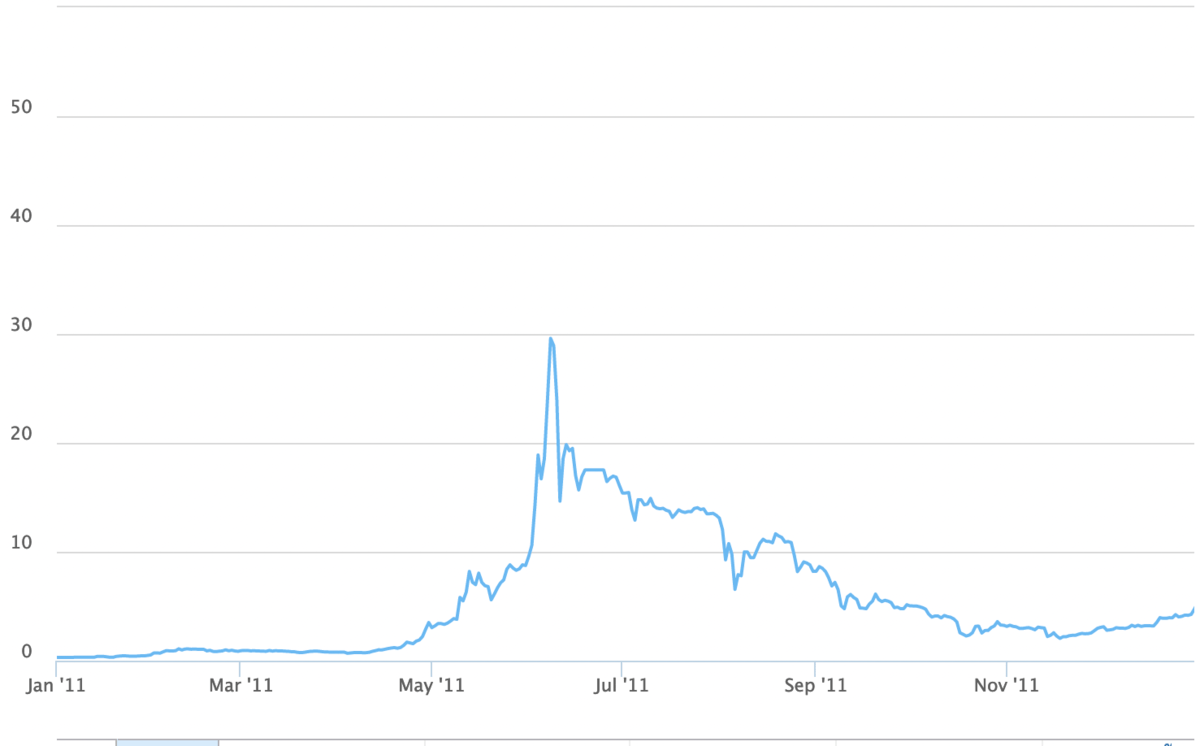
In 2011, Bitcoin’s price was characterized by extreme fluctuations that would make modern “volatility” look tame. The year began with Bitcoin worth less than a dollar and ended with it struggling to stay above the price of a cup of coffee, despite having reached double digits in the interim.
The Financial Timeline: Bitcoin’s Price Action in 2011
The calendar year of 2011 is often cited by financial historians as the “Year of Parity.” When the year opened on January 1, 2011, a single Bitcoin was trading for roughly $0.30. At this stage, there was no institutional interest, no regulated exchanges, and very little infrastructure. Most transactions were peer-to-peer or occurred on the burgeoning Mt. Gox exchange, which had originally been a platform for trading “Magic: The Gathering” cards.
Reaching Dollar Parity
On February 9, 2011, Bitcoin achieved a milestone that many skeptics believed impossible: it reached parity with the US Dollar. For the first time, 1 BTC was equal to $1.00. This was a psychological breakthrough for early adopters. It validated the idea that a decentralized digital currency could actually maintain a 1:1 value with the world’s reserve currency. Following this achievement, the asset began to attract more mainstream media attention, which in turn fueled a speculative frenzy.
The “Great Bubble” of June 2011
By the spring of 2011, the momentum was undeniable. The price climbed steadily through April and May, eventually entering a vertical “moon shot” in early June. On June 8, 2011, Bitcoin reached an all-time high of approximately $31.91. To put this in perspective, an investor who had purchased $1,000 worth of Bitcoin at the start of the year (at $0.30) would have seen their portfolio grow to over $100,000 in just six months.
However, this peak was short-lived. The lack of market depth and the concentration of holdings in a few hands meant that any large sell-off would trigger a cascade. Within days of hitting $31, the price began a precipitous decline, exacerbated by security breaches and the first major “hack” headlines.
The November Bottom
The latter half of 2011 was a sobering period for the crypto market. By November 2011, the price had collapsed to around $2.00. This represented a 93% drawdown from the June peak. Many financial analysts at the time declared Bitcoin dead, citing the massive crash as proof that it was nothing more than a Ponzi scheme or a fleeting fad. Yet, even at its lowest point in late 2011, Bitcoin was still up significantly from its $0.30 starting price, showcasing the resilient upward trajectory that would define the next decade.
The Market Drivers Behind the 2011 Volatility
To understand why Bitcoin moved from $0.30 to $31.00 and back to $2.00, we must look at the specific economic and structural drivers of the time. Unlike today’s market, which is influenced by ETFs, corporate balance sheets, and interest rate hikes from the Federal Reserve, the 2011 market was driven by grassroots adoption and technical fragility.
The Rise and Fragility of Early Exchanges
In 2011, Mt. Gox was the undisputed king of the Bitcoin world, handling over 70% of all global trades. This centralization of liquidity was a double-edged sword. When Mt. Gox was functioning well, it allowed for price discovery. However, in June 2011, the exchange suffered a major security breach. A hacker gained access to a high-level account and “sold” hundreds of thousands of Bitcoins, temporarily driving the price on the exchange down to $0.01. While the exchange reverted these trades, the event shattered investor confidence and was a primary catalyst for the crash from the $31 peak.

Media Coverage and the “Silk Road” Effect
2011 was also the year that Bitcoin found its first “killer app,” albeit a controversial one. The launch of the Silk Road, an anonymous online marketplace, drove significant demand for Bitcoin as a medium of exchange. While this gave Bitcoin a reputation for illicit activity, from a purely financial perspective, it provided the asset with its first consistent use case. Simultaneously, a viral article on Gawker about the Silk Road brought thousands of new speculators into the ecosystem, creating the “demand shock” that led to the June price spike.
The Electronic Frontier Foundation (EFF) and Legitimacy
Not all drivers were controversial. In early 2011, the Electronic Frontier Foundation began accepting Bitcoin donations, signaling that respected organizations in the tech and digital rights space saw value in the protocol. Although they later paused the program due to legal concerns (before resuming years later), this initial acceptance provided a veneer of legitimacy that encouraged early-stage venture capital and tech-savvy investors to take a closer look at the asset’s potential.
Investing in 2011 vs. Today: A Financial Perspective
Looking back at the prices of 2011, it is easy to succumb to “hindsight bias” and wonder why everyone didn’t invest. However, the financial landscape of 2011 made investing in Bitcoin an incredibly high-risk endeavor, far different from the regulated environment of today.
The Risk Profile of an Emerging Asset Class
In 2011, there were no “cold storage” hardware wallets like Ledger or Trezor. Storing Bitcoin required running a full node on a computer and keeping a “wallet.dat” file secure. If your hard drive crashed and you hadn’t backed up your private keys on paper, your investment was gone forever. The “custodial risk” was nearly 100%, as exchanges were unregulated and frequently subject to hacks. Investors in 2011 weren’t just betting on the price of Bitcoin; they were betting that the technology itself wouldn’t fail or be outlawed overnight.
Mining as the Primary Entry Point
In 2011, the most common way to acquire Bitcoin wasn’t through an app on a smartphone, but through mining. This was the era of GPU (Graphics Processing Unit) mining. An individual with a high-end gaming computer could still mine several Bitcoins a day. The “cost of production”—the electricity and hardware depreciation—set a soft floor for the price. As the difficulty of mining increased throughout 2011, the financial incentive shifted from hobbyist mining to speculative purchasing, marking a major transition in how the asset was distributed.
Lessons in Asset Appreciation and Market Cycles
The price movements of 2011 established the “boom and bust” cycle that has repeated in every Bitcoin bull market since. For modern financial planners and crypto investors, 2011 offers three critical lessons:
-
The Magnitude of Drawdowns: Bitcoin’s 93% crash in late 2011 proved that an asset can lose nearly all its value and still remain fundamentally sound. This taught the “HODL” generation that short-term price action is often decoupled from long-term utility.
-
Liquidity is King: The reason the price could jump from $10 to $30 in a week was the lack of liquidity. In 2011, a single trade of $100,000 could move the entire market. This serves as a reminder that as Bitcoin’s market cap grows, its volatility should—theoretically—decrease as more liquidity is required to move the price.
-
Asymmetric Return Potential: 2011 was the year that proved Bitcoin was an asymmetric bet. The downside was limited to the amount invested (100% loss), while the upside was potentially thousands of percentage points. This realization eventually led to the “1% allocation” strategy used by many modern wealth managers.
Conclusion: The Legacy of 2011 on Modern Finance
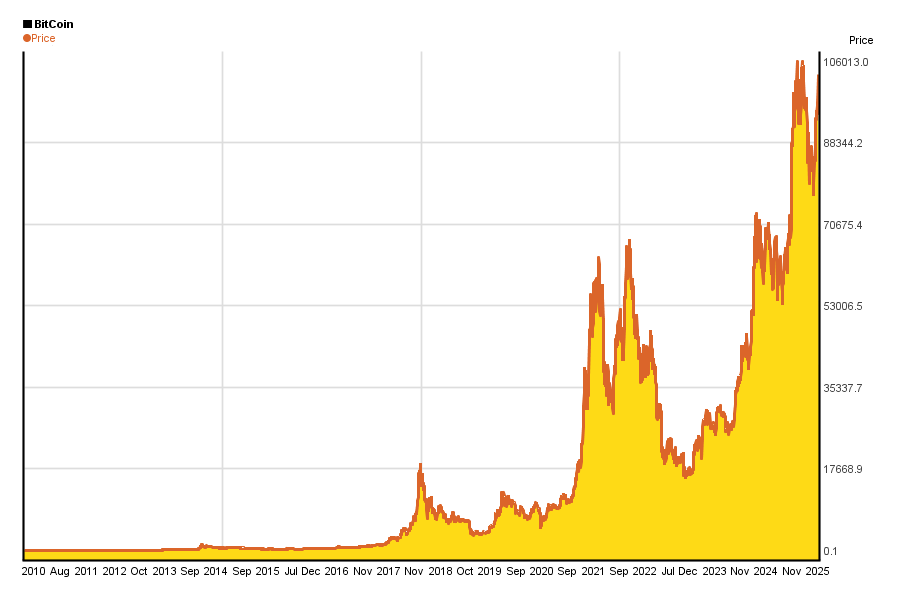
When we ask “how much was Bitcoin worth in 2011,” the answer isn’t just a number; it’s a story of a financial revolution in its infancy. It was a year that saw Bitcoin go from $0.30 to nearly $32.00, only to end the year around $4.70. While the volatility was stomach-churning, the underlying growth was staggering.
The 2011 price action laid the groundwork for everything that followed. It tested the resilience of the network, the robustness of the first exchanges, and the resolve of the earliest investors. For those who had the foresight—or the luck—to hold through the 90% crash of late 2011, those few dollars per coin eventually transformed into a generational wealth-building asset.
Today, Bitcoin is discussed in the halls of Congress and traded on the New York Stock Exchange. But the DNA of its market behavior was written in 2011. It remains a year of “what ifs” for many, but for the financial world, it remains the definitive proof that digital scarcity has a value that the market, however clumsily, will eventually find.
aViewFromTheCave is a participant in the Amazon Services LLC Associates Program, an affiliate advertising program designed to provide a means for sites to earn advertising fees by advertising and linking to Amazon.com. Amazon, the Amazon logo, AmazonSupply, and the AmazonSupply logo are trademarks of Amazon.com, Inc. or its affiliates. As an Amazon Associate we earn affiliate commissions from qualifying purchases.