
The Genesis of a Digital Asset: Bitcoin’s Humble Beginnings
When Bitcoin first started, its monetary value was virtually nonexistent in the conventional sense. The genesis of this revolutionary digital asset can be traced back to the publication of a whitepaper titled “Bitcoin: A Peer-to-Peer Electronic Cash System” by the pseudonymous Satoshi Nakamoto in October 2008. This academic paper outlined a vision for a decentralized digital currency, free from government or institutional control, designed to enable secure and irreversible transactions directly between users. The foundational block of the Bitcoin blockchain, known as the “genesis block” (Block 0), was mined on January 3, 2009. At this precise moment, Bitcoin was a purely conceptual and technical innovation; it had no market price, no trading pair, and no established exchange. Its value was entirely theoretical, embedded within the cryptographic code and the groundbreaking concept it represented.

During these initial months, acquiring Bitcoin was a task reserved for early adopters, tech enthusiasts, and cryptographers who understood the underlying principles of the blockchain. Miners, using standard CPU equipment, contributed their computing power to verify transactions and add new blocks to the chain, receiving Bitcoin as a reward. The cost of mining at this stage was negligible, primarily involving the electricity consumed by a personal computer. Since there were no formal exchanges or platforms for buying and selling Bitcoin, its perceived value was zero to most of the world. Any exchanges of Bitcoin that occurred were typically informal barters between early community members, driven by curiosity, ideological alignment with decentralization, or a speculative long-shot belief in its future potential. This nascent stage was characterized by a profound lack of liquidity and a complete absence of financial infrastructure, making it an uncharted territory for anyone seeking to assign a tangible monetary worth to the digital tokens.
From Zero to Pennies: Bitcoin’s First Price Discovery
The journey from a theoretical concept to an asset with a discernible monetary value was gradual, marked by key historical events that initiated its price discovery. The very first recorded transaction approximating an exchange rate for Bitcoin occurred in October 2009. A user known as “NewLibertyStandard” wanted to demonstrate an exchange between fiat currency and Bitcoin, transacting 5,050 BTC for $5.02 via PayPal. This transaction implicitly valued one Bitcoin at approximately $0.00099. While not a formal market exchange, it served as a rudimentary benchmark, providing the earliest glimpse into what someone was willing to pay for Bitcoin. This moment was crucial as it shifted Bitcoin from a pure technological curiosity to something that could be assigned a nominal financial value.
The most famous early real-world transaction, however, took place on May 22, 2010. Laszlo Hanyecz, an early Bitcoin miner and programmer, paid 10,000 Bitcoins for two pizzas, worth approximately $25-$40 at the time. This event, now famously celebrated as “Bitcoin Pizza Day,” implicitly valued one Bitcoin at somewhere between $0.0025 and $0.004. This was a significant milestone because it demonstrated Bitcoin’s utility as a medium of exchange for tangible goods, albeit on an extremely small scale. Soon after, in March 2010, the first dedicated Bitcoin exchange, BitcoinMarket.com, was established. It listed Bitcoin at a starting price of $0.003 per coin. These early transactions and the advent of the first exchanges were critical in initiating the process of price discovery. For the first time, a nascent market began to form, driven by basic supply and demand dynamics, allowing investors (or extremely early speculators) to buy and sell Bitcoin, moving its value from effectively zero to mere fractions of a cent. This period laid the groundwork for Bitcoin’s eventual emergence as a global financial asset, demonstrating that what started as a purely digital construct could indeed command real-world economic value.
The Early Investment Landscape: High Risk, High Reward
Investing in Bitcoin during its nascent stages was a venture characterized by extreme risk and an equally extreme potential for reward, akin to seed-stage venture capital but with even less established infrastructure. The early investment landscape was devoid of the financial instruments, regulatory frameworks, and widespread understanding that characterize today’s markets. Bitcoin’s value proposition at this time was primarily ideological – a belief in decentralized finance and a peer-to-peer economic system – or purely speculative, betting on the long-shot chance that this obscure digital currency might gain traction. There was no institutional money, no futures markets, and no ETFs. What existed was a pioneering community of cryptographers, libertarians, and tech enthusiasts who were willing to take enormous personal financial risks on an unproven technology.
The barriers to entry for acquiring Bitcoin were high for the average individual. Mining was the primary method, requiring technical knowledge and the willingness to incur electricity costs for an asset with an unknown future value. Direct peer-to-peer trades were also common, often facilitated through online forums and requiring a high degree of trust between unverified individuals. The profile of an early Bitcoin investor was someone who was highly tech-savvy, possessed a strong tolerance for volatility and uncertainty, and had a forward-thinking perspective on disruptive technologies. They were not driven by quarterly earnings reports or market caps but by a vision for a new financial paradigm. The total market capitalization of Bitcoin was minuscule, making it highly susceptible to price swings based on relatively small buy or sell orders. This environment meant that while the potential for exponential returns was extraordinary, so was the probability of complete financial loss. Those who ventured into this uncharted territory were truly charting a new course in investment, making decisions based on conviction rather than conventional financial analysis.
The Power of Perspective: Bitcoin’s Trajectory and Lessons for Investors
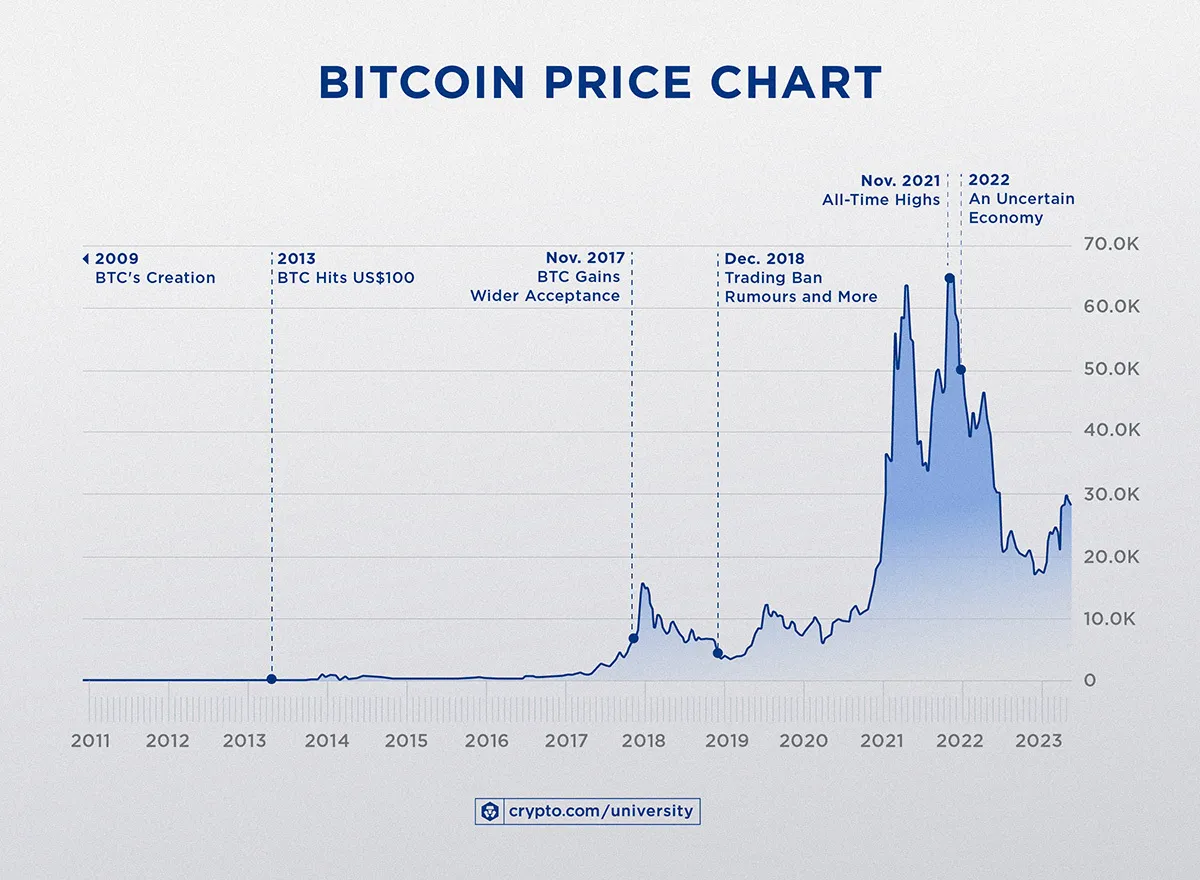
The incredible trajectory of Bitcoin’s value from fractions of a cent to tens of thousands of dollars provides one of the most compelling case studies in financial history for understanding the power of early adoption and long-term investment in disruptive technologies. For an investor who bought Bitcoin at its initial recorded exchange rate of $0.00099 or even during the “Pizza Day” era at $0.0025, the returns have been truly astronomical, reaching millions of percent. This illustrates a fundamental principle in finance: the greatest potential for exponential growth often lies in assets that are misunderstood, undervalued, and dismissed in their earliest stages. The sheer scale of Bitcoin’s appreciation underscores the importance of identifying and having conviction in innovative concepts before they gain mainstream acceptance.
However, Bitcoin’s journey has been anything but a smooth ascent. Its history is replete with dramatic price swings, often seeing valuations plummet by 80% or more during extended bear markets. Early investors who achieved monumental gains were not just those who bought early, but critically, those who held through these periods of intense volatility and skepticism. This highlights the indispensable role of a long-term investment horizon in speculative markets. Short-term fluctuations, while often terrifying, can obscure the underlying growth trajectory of a truly transformative asset. The lesson for modern investors is clear: patience, conviction, and the ability to weather significant market downturns are paramount when investing in high-growth, high-risk assets. Trying to time the market, especially in nascent stages, is often futile; a “hodl” strategy, derived from a misspelling of “hold,” proved to be incredibly lucrative for those who understood the long-term potential.
Beyond mere price, understanding Bitcoin’s intrinsic value is crucial. Its initial “worthlessness” was a reflection of its novelty and lack of integration into existing financial systems, not a judgment on its fundamental innovation. Bitcoin introduced concepts like digital scarcity, immutable ledgers, and decentralized consensus, which are now recognized as foundational technologies. Its value today is not solely speculative but is also derived from its properties as a censorship-resistant store of value, a global payment network, and a hedge against traditional financial systems. This dual nature – technological innovation driving financial utility – explains its enduring resilience and appeal.

The Enduring Legacy: Financial Implications Today
Bitcoin’s humble beginnings and spectacular ascent have left an indelible mark on the global financial landscape, profoundly influencing how investors and institutions view digital assets and emerging technologies. Its journey from a valueless concept to a multi-billion-dollar asset serves as a powerful testament to the disruptive potential of decentralized systems. Bitcoin didn’t just introduce a new currency; it pioneered blockchain technology, which has since catalyzed the creation of thousands of other cryptocurrencies and countless applications across finance, supply chain, healthcare, and more. For the financial world, Bitcoin’s early pricing history acts as an invaluable case study for evaluating other nascent assets, prompting a re-evaluation of traditional valuation models to account for network effects, technological innovation, and speculative growth.
The lessons gleaned from Bitcoin’s early days are incredibly pertinent for modern investors navigating today’s complex and rapidly evolving digital asset markets. Firstly, the importance of fundamental due diligence cannot be overstated. Understanding the underlying technology, the problem it aims to solve, and the community supporting it is crucial, rather than merely chasing speculative hype. Secondly, Bitcoin’s volatility underscores the necessity of robust risk assessment and capital allocation. While the potential for outsized returns exists in emerging technologies, so does the risk of complete capital loss. This necessitates a balanced portfolio approach where speculative assets form a calculated, diversified portion rather than the entirety of an investment strategy.
Finally, Bitcoin’s enduring success has validated the idea that truly disruptive innovations can emerge from unconventional origins, challenging established norms and creating entirely new asset classes. It has forced financial institutions to adapt, leading to the development of new financial products, regulatory frameworks, and investment strategies tailored to digital assets. The story of “how much was Bitcoin when it first started” is not just an anecdote about past prices; it’s a foundational narrative that continues to inform and shape the future of investing in the digital age, emphasizing the immense opportunities and inherent risks associated with pioneering finance.
aViewFromTheCave is a participant in the Amazon Services LLC Associates Program, an affiliate advertising program designed to provide a means for sites to earn advertising fees by advertising and linking to Amazon.com. Amazon, the Amazon logo, AmazonSupply, and the AmazonSupply logo are trademarks of Amazon.com, Inc. or its affiliates. As an Amazon Associate we earn affiliate commissions from qualifying purchases.