
To understand the current state of the global financial market, one must often look back at the humble beginnings of its most disruptive assets. For Bitcoin, the year 2015 represents a pivotal era of consolidation, recovery, and the quiet birth of an institutional asset class. While today we discuss Bitcoin in the context of exchange-traded funds (ETFs) and sovereign nation reserves, in 2015, the conversation was centered on a much simpler question: can this digital currency survive?
In this retrospective, we analyze the price action of Bitcoin in 2015, the financial milestones that defined the year, and the wealth-building lessons that modern investors can glean from that period of extreme volatility and skepticism.
Analyzing the 2015 Price Action: From Volatility to Stability
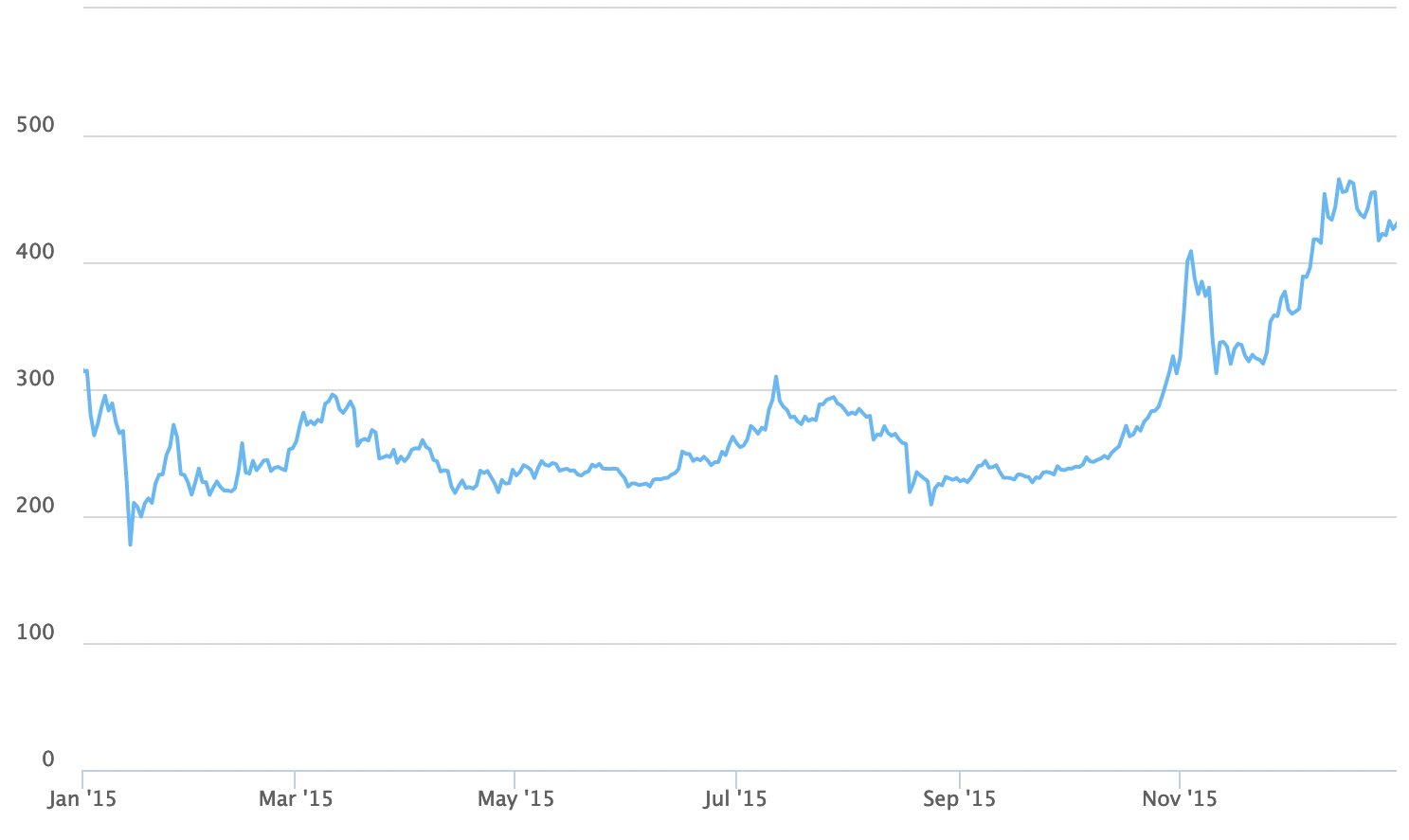
The price of Bitcoin in 2015 was a far cry from the five and six-figure valuations we see today. It was a year characterized by a “bottoming out” process following the catastrophic collapse of the Mt. Gox exchange in 2014. For the disciplined investor, 2015 was a period of accumulation; for the skeptic, it was the “death” of a fad.
The January Crash and the Year-Low
Bitcoin entered 2015 with a whimper, not a bang. On January 1, 2015, the price hovered around $314. However, the first two weeks of the year were brutal for holders. By mid-January, the price plummeted to a yearly low of approximately $171. This 45% drop in just a matter of days was fueled by lingering fears of regulatory crackdowns and the liquidations of underwater traders.
At $171, Bitcoin’s market capitalization was a fraction of what it is today, making it susceptible to massive price swings based on relatively small buy or sell orders. From a money management perspective, this was the “maximum pain” point where many early adopters capitulated, selling their holdings at a loss, while sophisticated contrarian investors began to see value in the sub-$200 range.
Recovery and the Rise to $400+
Following the January lows, Bitcoin spent the majority of 2015 in a state of quiet accumulation, trading mostly between $220 and $280 for several months. This period of sideways movement is often referred to by financial analysts as “boring” price action, but it served a vital purpose: it established a strong support floor.
The final quarter of 2015 saw a significant bullish shift. By late October and early November, Bitcoin broke through the $300 and $400 psychological barriers, reaching a yearly high of nearly $495 in mid-December. By the time the clock struck midnight on December 31, 2015, Bitcoin was trading at approximately $430. This represented a year-to-date return of roughly 37%—an impressive performance for any traditional asset class, yet only a hint of the parabolic growth that was to follow.
Why 2015 Was the Foundation of Modern Crypto Investing
While price is the most cited metric, the financial infrastructure built in 2015 is what allowed Bitcoin to transition from an experimental digital token into a legitimate financial instrument. For the “Money” niche, 2015 is significant because it marked the beginning of professionalized trading and regulation.
The Shift from “Internet Play Money” to an Asset Class
Before 2015, Bitcoin was often dismissed as “magic internet money” used primarily for niche tech experiments or illicit transactions. However, 2015 saw the narrative shift toward “Digital Gold.” This was the year that the financial industry began to recognize Bitcoin’s fixed supply of 21 million units as a potential hedge against the inflationary practices of central banks.
In 2015, we saw the launch of the Gemini exchange by the Winklevoss twins, which was built with a specific focus on regulatory compliance and institutional security. This move signaled to the broader financial world that Bitcoin was being prepared for Wall Street. When an asset moves from unregulated “wild west” exchanges to platforms seeking government oversight, its risk profile changes, often attracting a more conservative class of capital.
Regulatory Milestones: The NYDFS BitLicense
One of the most significant financial developments of 2015 was the implementation of the “BitLicense” by the New York State Department of Financial Services (NYDFS). This was the first comprehensive regulatory framework designed specifically for businesses dealing in digital currencies.

From an investment standpoint, regulation is a double-edged sword. While it introduced compliance costs and slowed down some innovation, it provided the legal certainty necessary for institutional money to enter the fray. Financial tools and investment vehicles require a clear legal landscape; the 2015 regulatory push in New York laid the groundwork for the eventual approval of Bitcoin futures and ETFs years later. For the personal finance enthusiast, this was the moment Bitcoin moved from the “speculative gamble” column closer to the “alternative investment” column.
Comparing Bitcoin 2015 to Today: A Financial Perspective
To truly appreciate the price of Bitcoin in 2015, one must look at it through the lens of purchasing power and market evolution. The financial landscape of 2015 was vastly different, and the opportunity cost of not investing then has become a hallmark lesson in modern wealth management.
Market Capitalization and Liquidity Growth
In 2015, the total market capitalization of Bitcoin fluctuated between $3 billion and $7 billion. In the world of finance, this made Bitcoin a “micro-cap” asset, comparable to a small-cap stock. Low market cap equates to low liquidity, which explains the 10-15% daily price swings that were common at the time.
Today, with a market cap exceeding $1 trillion at various peaks, Bitcoin is a “mega-cap” asset. The liquidity provided by thousands of global exchanges and institutional desks means that it takes significantly more capital to move the price. For an investor, buying Bitcoin in 2015 was an exercise in venture-capital-style risk: high probability of total loss, but astronomical upside. Today, the risk-return profile has shifted; while the 100x gains are less likely, the asset is far more stable and integrated into the global financial system.
Purchasing Power and Inflation Hedging
In 2015, the average price of a gallon of gas in the United States was about $2.40, and the median home price was roughly $290,000. If an investor had put $1,000 into Bitcoin at the 2015 average price of $250, they would have acquired 4 BTC.
By today’s standards, that $1,000 investment would be worth hundreds of thousands of dollars, vastly outperforming the S&P 500, gold, and real estate combined. This highlights the concept of “asymmetric risk”—a financial strategy where the potential downside (losing $1,000) is dwarfed by the potential upside. In 2015, Bitcoin was the ultimate asymmetric bet, a financial tool that allowed individuals to opt-out of the traditional monetary system’s inflationary pressures.
Lessons in Long-Term Wealth: The Psychology of HODLing
The price history of 2015 offers a masterclass in the psychology of investing. The term “HODL”—a misspelling of “hold” that became a rallying cry for crypto investors—was tested severely during this year.
Risk Management and Diversification
Investors in 2015 who succeeded didn’t necessarily “bet the farm.” They practiced sound risk management by allocating a small percentage of their portfolio (often 1-5%) to Bitcoin. Because the price was so low—ranging from $200 to $400—it didn’t take a large capital outlay to acquire a significant stake in the network.
The financial lesson here is that diversification doesn’t just mean owning different stocks; it means owning different types of assets. In 2015, Bitcoin was the ultimate diversifier because its price movement was largely uncorrelated with the stock market. When the traditional markets wobbled, Bitcoin often moved according to its own internal cycles of adoption and halving events.
The Cost of Waiting for a “Perfect” Entry
Perhaps the most enduring lesson from 2015 is the danger of “analysis paralysis.” Many investors in 2015 waited for the price to drop back to $100 or $50 before buying. They missed the $200 entry, then the $300 entry, and eventually found themselves buying at $1,000 in 2017.
In personal finance, “time in the market” almost always beats “timing the market.” Those who looked at Bitcoin in 2015 and recognized its long-term potential as a decentralized ledger and store of value—regardless of whether the price was $200 or $400—are the ones who built generational wealth. The 2015 price reminds us that by the time an asset feels “safe” to buy, the greatest gains have often already been realized.

Conclusion: The Legacy of 2015
When we ask “how much was Bitcoin in 2015,” the answer is more than just a numerical value of $300 or $400. The answer is that Bitcoin was a burgeoning financial system finding its footing. It was a year of resilience, where the asset survived internal crises and external regulatory pressure to emerge stronger.
For the modern investor, 2015 serves as a reminder that the best financial opportunities are often found in periods of uncertainty. While we may never see Bitcoin at $300 again, the principles of that era—identifying asymmetric risk, understanding the impact of supply and demand, and maintaining a long-term perspective—remain the cornerstones of successful wealth management in any age.
aViewFromTheCave is a participant in the Amazon Services LLC Associates Program, an affiliate advertising program designed to provide a means for sites to earn advertising fees by advertising and linking to Amazon.com. Amazon, the Amazon logo, AmazonSupply, and the AmazonSupply logo are trademarks of Amazon.com, Inc. or its affiliates. As an Amazon Associate we earn affiliate commissions from qualifying purchases.