
The question “how much to save monthly” is one of the most fundamental yet complex inquiries in personal finance. It’s a question without a single, universal answer, as the optimal amount varies wildly depending on individual circumstances, goals, income, and lifestyle. However, understanding the principles behind effective saving is paramount for anyone aspiring to build wealth, achieve financial independence, or simply gain peace of mind. This guide will delve into the various factors that influence your ideal monthly savings, offer practical strategies, and illuminate the pathways to making your money work harder for you.
At its core, saving is about deferring current consumption for future benefit. Whether you’re planning for a comfortable retirement, a significant down payment, your children’s education, or simply building an emergency buffer, consistent monthly saving is the bedrock upon which all financial security is built. It’s not just about accumulating money; it’s about creating options, reducing stress, and ultimately, achieving the freedom to live the life you desire.
The Foundations of Monthly Savings: Why and What For?
Before we can determine the “how much,” we must first understand the “why” and “what for.” Your savings strategy should be purpose-driven, aligning with your short-term desires and long-term aspirations.
Understanding Your “Why”: Defining Financial Goals
Clarifying your financial goals is the first, most critical step. Without a destination, any road will do, but without a clear objective, your savings efforts might lack direction and motivation. Common financial goals include:
-
Emergency Fund: This is non-negotiable. Aim to save 3-6 months’ worth of essential living expenses in an easily accessible, liquid account. This fund acts as a financial safety net for unexpected events like job loss, medical emergencies, or car repairs.
-
Retirement: This is often the largest and most long-term savings goal. Contributing consistently to retirement accounts like 401(k)s, IRAs, or Roth IRAs is crucial for ensuring a comfortable future where you’re not solely reliant on social security or a reduced income.
-
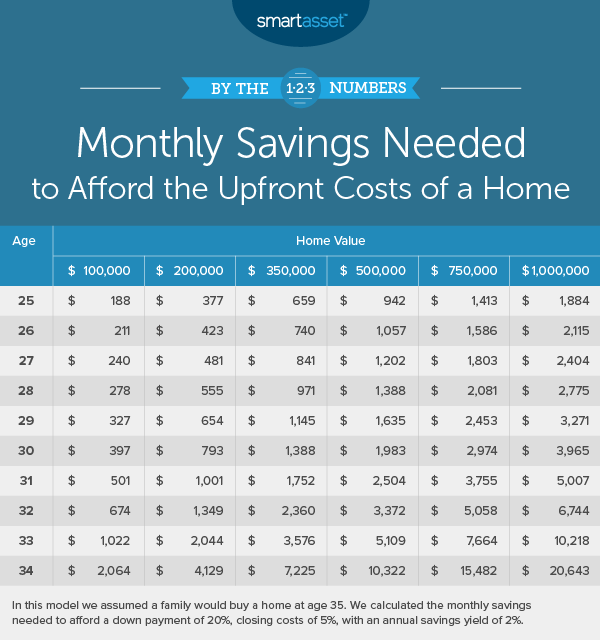
Down Payment: Whether it’s for a house, car, or other significant purchase, saving a substantial down payment can reduce interest costs and monthly payments in the long run.
-
Education: Funding your own education or that of your children requires foresight and consistent contributions, often into dedicated educational savings plans.
-
Large Purchases or Experiences: Saving for a dream vacation, a new gadget, or a home renovation can make these aspirations a reality without incurring debt.
Each goal will have a different time horizon and required amount, which directly impacts how much you need to save monthly. Breaking down large goals into smaller, manageable monthly targets can make them seem less daunting.
The “How Much” Rule of Thumb: The 50/30/20 Budget
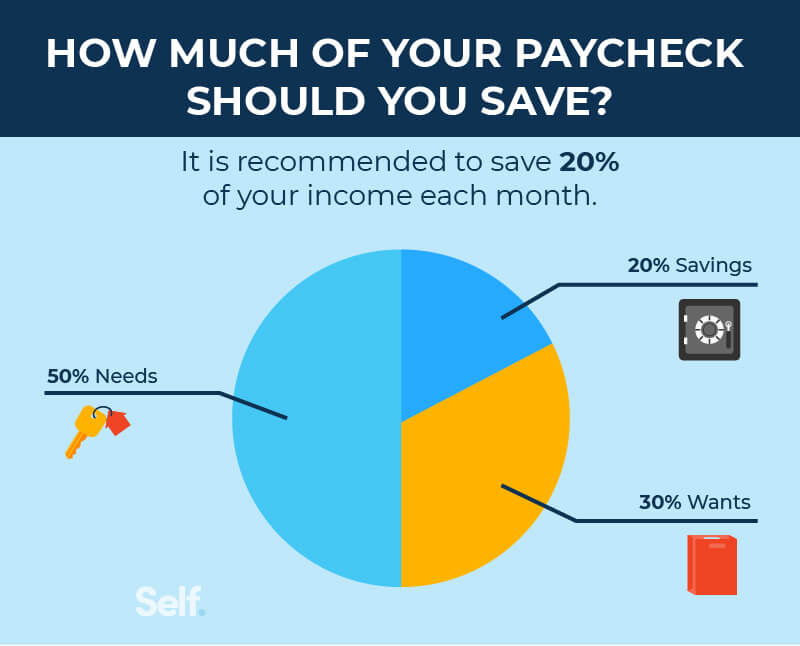
A popular and highly effective budgeting guideline is the 50/30/20 rule. This framework suggests allocating your after-tax income as follows:
-
50% for Needs: This covers essential expenses like housing, utilities, groceries, transportation, insurance, and minimum loan payments.
-
30% for Wants: This includes discretionary spending on things like dining out, entertainment, hobbies, vacations, and shopping for non-essentials.
-
20% for Savings and Debt Repayment: This crucial portion is dedicated to building your emergency fund, contributing to retirement accounts, investing, and paying down any debt beyond minimums (e.g., student loans, credit cards).
While the 20% dedicated to savings and debt repayment is a great starting point, it’s merely a guideline. Many financial experts advocate for saving even more, particularly for those with higher incomes or ambitious financial goals. The flexibility of this rule allows you to adjust percentages based on your unique situation; for instance, if you have significant high-interest debt, you might temporarily allocate more than 20% to debt repayment before shifting focus back to pure savings.
The Power of Compounding: Starting Early and Consistently
Perhaps the most potent argument for saving monthly is the incredible power of compound interest. Compounding means earning returns on your initial investment and on the accumulated interest from previous periods. The longer your money is invested, the more time it has to compound, leading to exponential growth.
Starting early, even with small amounts, can have a dramatically greater impact than starting later with larger contributions. A person who saves $200 a month from age 25 to 35 and then stops will likely have more money at retirement than someone who starts saving $200 a month at 35 and continues until 65, assuming similar returns. Consistency is key; uninterrupted contributions allow compounding to work its magic over decades.
Tailoring Your Savings Plan: Factors Influencing Your Monthly Contribution
While general rules offer a good starting point, a truly effective savings plan must be personalized. Several key factors will influence how much you realistically can and should save each month.
Income Levels and Fixed Expenses
Your income is the primary determinant of your savings capacity. Naturally, higher incomes often allow for larger savings contributions. However, it’s not just about the gross amount; your disposable income after fixed expenses is what truly matters. Fixed expenses like rent/mortgage, car payments, insurance premiums, and utilities consume a significant portion of many budgets. Understanding your net income and fixed outflow helps you identify how much truly remains for discretionary spending and, most importantly, for savings. Those with lower incomes might find it challenging to reach the 20% savings mark but should still strive to save something, even if it’s a small percentage, to build the habit.
Age and Life Stage
Your age and current life stage play a critical role in shaping your savings priorities and capacity.
-
Young Professionals (20s-30s): This is often the prime time to establish strong saving habits. While income might be lower, responsibilities (like dependents or mortgages) are often fewer. Prioritize building an emergency fund, contributing to retirement (especially to maximize employer match), and potentially saving for a down payment. The long runway to retirement makes compound interest your best friend.
-
Mid-Career (30s-50s): Income often peaks during these years, but so do financial responsibilities (mortgage, children’s education, healthcare). It’s crucial to balance these demands with robust retirement contributions. This stage might involve increasing your monthly savings target to catch up or accelerate progress towards goals.
-
Nearing Retirement (50s-60s): The focus shifts to maximizing retirement savings and potentially de-risking investment portfolios. If retirement savings are lagging, this is the time to make “catch-up” contributions allowed in many retirement accounts.
Risk Tolerance and Investment Horizon
The “how much” also depends on where you plan to put your savings and your comfort level with risk. If you have a low-risk tolerance and plan to keep your money in low-interest savings accounts, you’ll need to save a larger monthly sum to reach your goals. Conversely, if you’re comfortable with a diversified investment portfolio that includes stocks, you might achieve your goals with slightly lower monthly contributions over the long term, thanks to potentially higher returns (though with higher associated risk). Your investment horizon (how long until you need the money) directly impacts the level of risk you can afford to take. Short-term goals typically require lower-risk vehicles, while long-term goals can accommodate higher-risk, higher-reward investments.
Existing Debt Obligations
High-interest debt, such as credit card balances or personal loans, can act as a significant drag on your financial progress. Many financial advisors recommend prioritizing the repayment of high-interest debt before aggressively saving for non-retirement goals. The logic is simple: the interest rate you pay on debt is often higher than the returns you’d earn on savings, making debt repayment a guaranteed “return” on your money. Once high-interest debt is under control, you can reallocate those funds directly to savings and investments. However, even when tackling debt, it’s wise to maintain a basic emergency fund to prevent falling back into debt for unexpected expenses.
Practical Strategies to Optimize Your Monthly Savings
Knowing how much to save is one thing; actually doing it is another. Implementing effective strategies can transform your intentions into tangible results.
Automate Your Savings
This is arguably the most powerful savings strategy. Set up automatic transfers from your checking account to your savings or investment accounts immediately after you get paid. Treating savings as a non-negotiable “bill” ensures that you prioritize it before other expenses. “Pay yourself first” is a timeless financial principle for a reason; it removes the decision-making and willpower from the equation, making saving effortless and consistent.
Track Your Spending and Identify Savings Opportunities
You can’t manage what you don’t measure. Regularly tracking your income and expenses is crucial for understanding where your money goes. Utilize budgeting apps, spreadsheets, or even a simple notebook to categorize your spending. This process often reveals “money leaks” – areas where you’re spending unnecessarily, such as subscription services you don’t use, excessive dining out, or impulse purchases. Identifying these opportunities allows you to redirect funds towards your savings goals without feeling deprived.
Increase Your Income
While cutting expenses is important, there’s a limit to how much you can cut. Increasing your income, however, has virtually no upper limit. Explore opportunities to boost your earnings through:
-
Side Hustles: Freelancing, gig work, or starting a small business can provide additional income streams.
-
Salary Negotiations: Periodically review your market value and negotiate for higher compensation at your current job or when seeking new employment.
-
Upskilling: Investing in new skills or certifications can make you more valuable in the job market and lead to higher earning potential.
Even a modest increase in income can significantly accelerate your savings progress, especially if you commit to saving a large portion of any new earnings.
Cut Unnecessary Expenses
Take a critical look at your “wants” category. While budgeting doesn’t mean eliminating all enjoyable spending, it does mean making conscious choices. Can you reduce your entertainment budget by finding free or low-cost activities? Can you cook at home more often? Can you negotiate better rates on insurance, internet, or phone bills? Small, consistent cuts can add up to substantial savings over time, freeing up more money to contribute to your financial goals.
Review and Adjust Regularly
Your financial situation is not static. Life changes – incomes fluctuate, expenses shift, and goals evolve. Make it a habit to review your budget and savings plan at least once a quarter, or whenever a major life event occurs (e.g., marriage, new baby, job change). This allows you to adjust your monthly savings target, reallocate funds between different goals, and ensure your financial strategy remains aligned with your current reality and future aspirations. Flexibility is key to long-term financial success.
Where to Keep Your Savings: Maximizing Your Money’s Potential
Once you’ve determined how much to save, the next critical step is deciding where to put that money. Different savings goals require different types of accounts and investment vehicles.
Emergency Fund
Your emergency fund should be held in a highly liquid and secure account. High-yield savings accounts or money market accounts are ideal. While they won’t offer high returns, their primary purpose is safety and accessibility. You need to be able to access these funds quickly without penalty when an emergency strikes, so avoid accounts with lock-in periods or significant market volatility.
Short-to-Medium Term Goals
For goals you plan to achieve within 1-5 years (e.g., a down payment, a new car, a large vacation), you might consider options that offer slightly higher returns than a basic savings account but still maintain a relatively low risk profile. Certificates of Deposit (CDs) can offer better interest rates if you’re willing to lock up your money for a specific term. Short-term bond funds or conservative mutual funds could also be considered, but remember that even low-risk investments carry some degree of market fluctuation.
Long-Term Goals (e.g., Retirement)
For goals more than five years away, especially retirement, a diversified investment portfolio is generally recommended. This typically includes a mix of stocks, bonds, and other assets tailored to your risk tolerance and time horizon. Key accounts for long-term savings include:
-
401(k) / 403(b): Employer-sponsored retirement plans, often with employer matching contributions (which are essentially free money). Contributions are typically pre-tax, reducing your taxable income now.
-
IRA (Individual Retirement Account): Offers tax-deferred growth. Contributions may be tax-deductible depending on income and other retirement plan participation.
-
Roth IRA: Contributions are made with after-tax money, but qualified withdrawals in retirement are tax-free.
-
Taxable Brokerage Accounts: For savings beyond retirement accounts, these offer flexibility but don’t provide the same tax advantages.
Working with a financial advisor can help you select the appropriate investment vehicles and construct a portfolio that aligns with your long-term goals and risk appetite.

Diversification and Risk Management
No matter where you choose to save or invest, diversification is crucial. Spreading your investments across various asset classes, industries, and geographies helps mitigate risk. Don’t put all your eggs in one basket. Regularly rebalance your portfolio to ensure it remains aligned with your desired risk level as market conditions change and you approach your goals.
Determining “how much to save monthly” is not a one-time calculation but an ongoing journey. It requires self-awareness, discipline, and regular adjustments. By understanding your goals, applying proven budgeting techniques, leveraging practical strategies, and choosing the right savings vehicles, you can build a robust financial future. Start today, stay consistent, and empower yourself to achieve true financial security and the freedom it brings.
aViewFromTheCave is a participant in the Amazon Services LLC Associates Program, an affiliate advertising program designed to provide a means for sites to earn advertising fees by advertising and linking to Amazon.com. Amazon, the Amazon logo, AmazonSupply, and the AmazonSupply logo are trademarks of Amazon.com, Inc. or its affiliates. As an Amazon Associate we earn affiliate commissions from qualifying purchases.