
The question “how much to invest” is one of the most fundamental and frequently asked queries in the realm of personal finance. It’s a deceptively simple question with a complex answer, as the optimal amount is deeply personal, varying significantly from one individual to another based on a myriad of factors. There’s no one-size-fits-all magic number, but rather a strategic approach informed by your current financial situation, future aspirations, risk tolerance, and the broader economic landscape. Understanding how to determine your personal investment capacity is crucial for building wealth, achieving financial independence, and securing your future. This guide will walk you through the essential considerations, frameworks, and practical steps to confidently answer this pivotal question for yourself.
Understanding Your Financial Foundation
Before you even consider allocating funds to investment vehicles, it’s imperative to establish a robust financial foundation. This bedrock ensures that your investments are sustainable and that you’re not jeopardizing your immediate financial security for future gains.
The Importance of an Emergency Fund
The first and arguably most critical step in your financial journey is building an adequate emergency fund. Life is unpredictable, and unexpected expenses — a medical emergency, job loss, car repair, or home repair — can derail even the most meticulously planned investment strategy. An emergency fund acts as a financial safety net, preventing you from having to sell investments at an inopportune time or, worse, going into high-interest debt to cover unforeseen costs.
Generally, financial experts recommend having enough savings to cover three to six months of essential living expenses. For those with less stable income or dependents, aiming for six to twelve months might be more prudent. This fund should be held in a highly liquid, easily accessible account, such as a high-yield savings account, separate from your everyday checking account. Prioritizing this fund before significant investing is non-negotiable.
Debt Management: Good Debt vs. Bad Debt
Debt can be a significant impediment to your investment goals, but not all debt is created equal. Distinguishing between “good” and “bad” debt is crucial for determining how much capital you can free up for investments.
Bad debt typically refers to high-interest, non-deductible debt, such as credit card balances, personal loans, or payday loans. This type of debt often carries exorbitant interest rates that can quickly compound, making it incredibly difficult to pay off. The interest you pay on bad debt can easily outpace any returns you might hope to achieve from investing. Therefore, a core principle is to aggressively pay down high-interest debt before allocating substantial amounts to investments, often prioritizing it even over building a full emergency fund if the interest rates are sufficiently punitive (e.g., above 10-15%).
Good debt, on the other hand, is typically lower-interest debt that can help you acquire appreciating assets or generate income. Examples include a mortgage on a primary residence (especially if the interest rate is low and fixed), student loans with reasonable interest rates, or business loans that fuel growth. While these debts should still be managed responsibly, the returns from your investments might realistically exceed the interest rate on good debt, allowing you to invest simultaneously. The decision to pay down good debt versus investing often comes down to comparing the interest rate on the debt with your expected investment returns and your personal risk tolerance.
Budgeting and Tracking Your Expenses
You can’t manage what you don’t measure. A clear understanding of your income and expenditures is foundational to determining your investment capacity. Budgeting isn’t about restriction; it’s about awareness and intentionality. By meticulously tracking where your money goes each month, you can identify areas where you can cut back, reallocate funds, and ultimately free up more capital for saving and investing.
Tools range from simple spreadsheets and pen-and-paper methods to sophisticated budgeting apps. The key is consistency. Once you have a clear picture of your disposable income after essential expenses and debt payments, you can begin to quantify how much you can realistically contribute to your investment portfolio each month.
Defining Your Investment Goals and Timeline
Your investment strategy, and consequently the amount you should invest, is inextricably linked to your financial goals and the timeframe within which you hope to achieve them. Different goals demand different approaches.
Short-Term vs. Long-Term Goals
It’s vital to differentiate between short-term and long-term financial goals, as this dictates both the urgency of your investments and the types of assets you should consider.
Short-term goals typically have a timeline of less than five years. Examples include saving for a down payment on a house, a new car, a wedding, or a significant vacation. For these goals, stability and liquidity are paramount. Investing heavily in volatile assets like stocks might be too risky, as a market downturn could jeopardize your ability to reach your goal on schedule. Instead, funds for short-term goals are often best kept in low-risk vehicles such as high-yield savings accounts, money market accounts, or short-term Certificates of Deposit (CDs). The focus here is capital preservation, not aggressive growth.
Long-term goals, conversely, span five years or more, often extending into decades. Retirement, a child’s college education, or significant wealth accumulation fall into this category. With a longer time horizon, you have the luxury of weathering market fluctuations. This allows you to invest in growth-oriented assets like stocks, exchange-traded funds (ETFs), and mutual funds, which historically have provided higher returns over the long run, despite short-term volatility. The longer timeframe also allows the power of compounding to work its magic more effectively.
Risk Tolerance Assessment
Your personal comfort level with the potential for financial loss (risk tolerance) is a critical determinant of your investment choices and, indirectly, how much you might be willing to invest in growth-oriented assets. Some individuals are naturally more aggressive, willing to take on higher risk for the potential of greater returns. Others are more conservative, prioritizing capital preservation over aggressive growth.
A realistic assessment of your risk tolerance involves understanding that higher returns typically come with higher risk. If a market downturn would cause you significant stress or prompt you to sell your investments at a loss, you might have a lower risk tolerance than you initially thought. Online questionnaires, discussions with financial advisors, and honest self-reflection can help you gauge your true risk tolerance. This assessment will guide your asset allocation decisions and influence the percentage of your portfolio dedicated to more volatile investments.
Inflation and Purchasing Power
While not directly dictating how much to invest, understanding inflation is crucial for setting effective investment goals and appreciating the necessity of investing. Inflation is the rate at which the general level of prices for goods and services is rising, and consequently, the purchasing power of currency is falling. If your money isn’t growing at a rate that at least matches inflation, you are effectively losing purchasing power over time.
For example, if inflation is 3% per year and your money is sitting in a savings account earning 0.5% interest, your real return is -2.5%. This means your money is buying less each year. Investing is one of the primary ways to combat the erosive effects of inflation, ensuring that your wealth not only grows but maintains or even increases its purchasing power over the long term. This underscores why simply saving money isn’t enough; you must invest it.
The Core Principle: The Percentage-Based Approach
Once your foundation is solid and your goals are clear, a practical way to determine how much to invest is through a percentage-based approach. This method provides a clear, actionable guideline that can be adapted to various income levels and financial situations.
The 50/30/20 Rule (and variations)
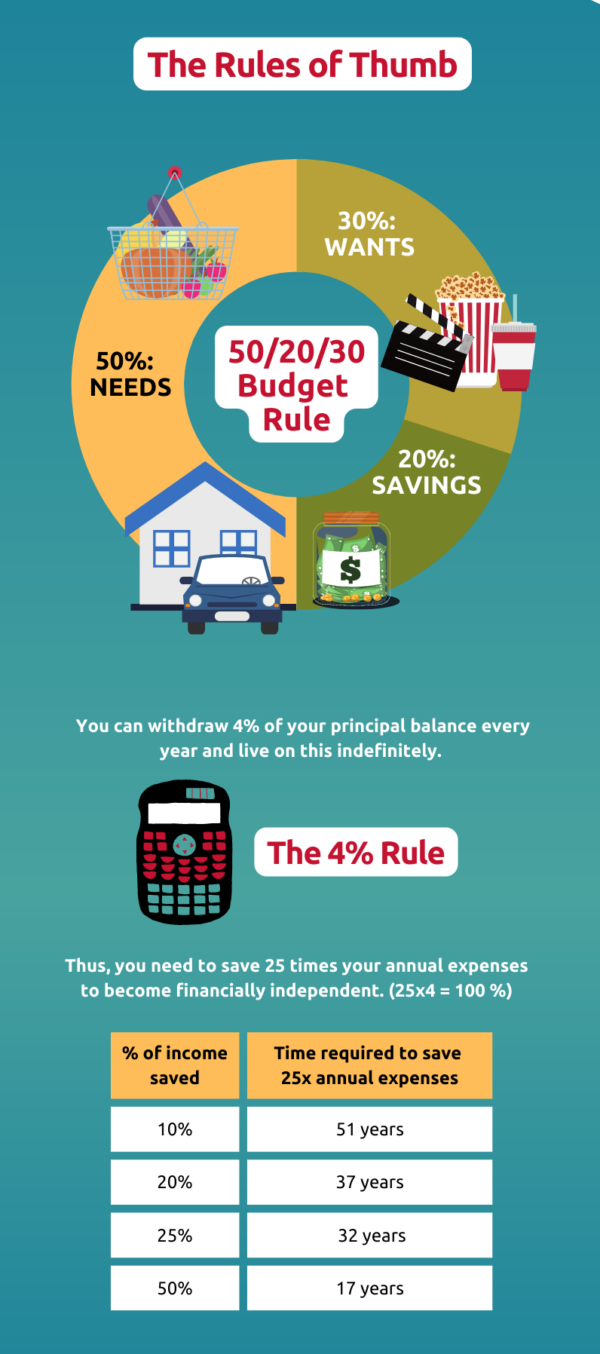
One of the most popular budgeting frameworks that directly informs investment capacity is the 50/30/20 rule:
-
50% for Needs: This category covers essential living expenses like housing, utilities, groceries, transportation, insurance, and minimum debt payments.
-
30% for Wants: This includes discretionary spending such as dining out, entertainment, hobbies, travel, and non-essential shopping.
-
20% for Savings & Debt Repayment: This crucial 20% is dedicated to building your emergency fund, making additional debt payments above the minimum, and, most importantly, investing.
For many, allocating 20% of their net income (after taxes) to savings and investments is an excellent starting point and a robust goal. However, this is a guideline, not a rigid rule. Some individuals, especially those with higher incomes or ambitious financial goals, might aim for 30%, 40%, or even 50% savings rates. Conversely, if you’re just starting out or have significant high-interest debt, you might begin with a lower percentage and gradually increase it as your financial situation improves. The key is to find a sustainable percentage that you can consistently maintain.
Automating Your Investments
The easiest way to ensure you stick to your chosen investment percentage is to automate the process. Set up automatic transfers from your checking account to your investment accounts (e.g., brokerage accounts, 401(k), IRA) on a regular schedule, ideally coinciding with your paydays. This “pay yourself first” strategy removes the temptation to spend the money and ensures that your investments are consistently funded.
Automation leverages the principle of “out of sight, out of mind” and dramatically increases the likelihood of long-term investment success. Most employer-sponsored retirement plans (like 401(k)s or 403(b)s) already offer this feature, deducting contributions directly from your paycheck. Extend this practice to your individual retirement accounts (IRAs) and taxable brokerage accounts.
The Power of Compounding
A fundamental reason why you should invest, and why starting early with even modest amounts is so impactful, is the power of compounding. Compounding is the process of earning returns on your initial investment and on the accumulated returns from previous periods. It’s often referred to as “interest on interest” and is a powerful engine for wealth creation over time.
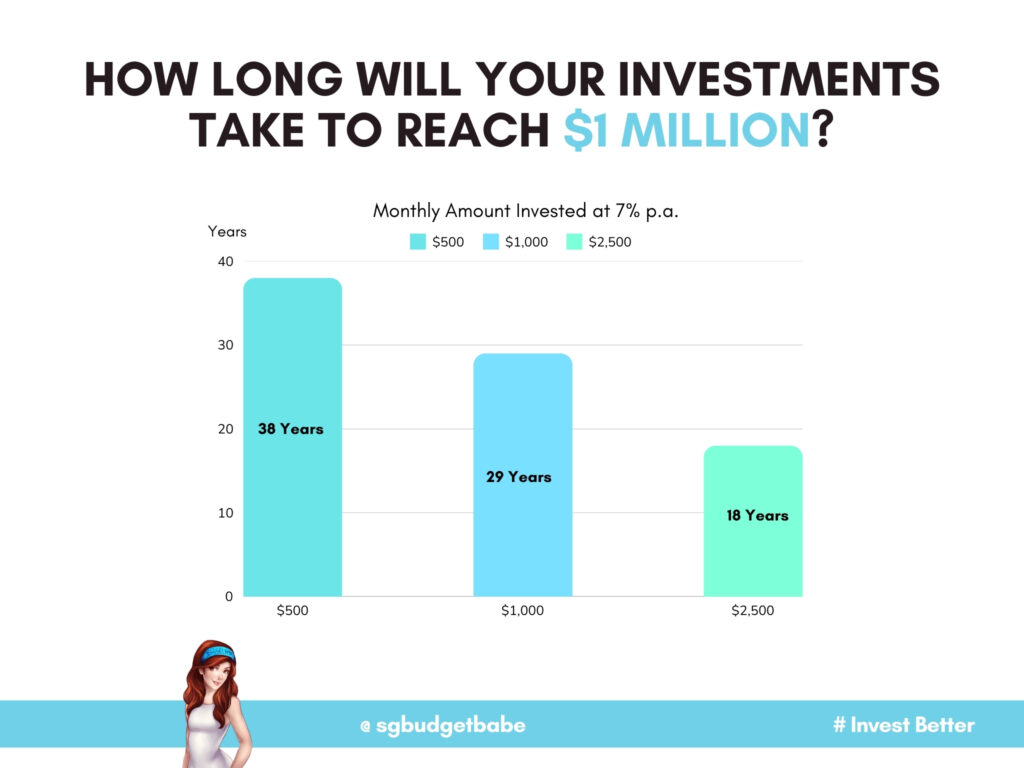
For example, if you invest $100 per month and earn an average annual return of 7%, after 30 years, you would have contributed $36,000. However, thanks to compounding, your investment could be worth over $120,000. If you waited 10 years to start, that same $100 per month for 20 years might only yield around $50,000. The earlier you start and the more consistently you contribute, the greater the impact of compounding. This emphasizes that while the “how much” is important, the “how soon” is equally, if not more, critical.
Factors Influencing Your Investment Amount
While the percentage-based approach provides a solid framework, several personal circumstances will influence the exact amount you can and should invest.
Age and Career Stage
Your age and career stage play a significant role in determining both your investment capacity and strategy.
-
Younger Investors (20s-30s): Typically have a longer investment horizon, allowing them to take on more risk and allocate a higher percentage to growth-oriented assets like stocks. They also benefit most from compounding, so starting early with consistent contributions, even if they’re smaller, is paramount. They might be in a lower income bracket but have more time for their investments to grow.
-
Mid-Career Investors (30s-50s): Often experience higher income levels, which can translate into greater investment capacity. They might be balancing multiple financial goals (e.g., retirement, child’s education, mortgage). While still benefiting from a long horizon, they might start to temper their risk slightly as retirement approaches.
-
Pre-Retirement Investors (50s-60s): The focus shifts towards capital preservation and generating income. Risk tolerance typically decreases, and the portfolio may become more diversified with a higher allocation to bonds and less volatile assets. The “how much to invest” might involve maximizing catch-up contributions to retirement accounts.
Income Level and Discretionary Income
Your current income level directly impacts your ability to save and invest. Naturally, individuals with higher incomes generally have more discretionary income available after covering essential needs, allowing them to invest a larger absolute dollar amount or a higher percentage of their earnings.
However, a high income doesn’t automatically translate to high investment. Lifestyle inflation – where spending increases proportionally with income – can hinder investment efforts. Conversely, individuals with moderate incomes can become impressive investors by adhering to strict budgeting, avoiding lifestyle inflation, and consistently saving a significant portion of their earnings. The key is to optimize your spending relative to your income, ensuring that a meaningful portion is consistently channeled towards investments.
Existing Assets and Liabilities
Your existing balance sheet — what you own (assets) versus what you owe (liabilities) — also informs your investment strategy. If you already have substantial assets (e.g., equity in a home, existing investment accounts), your focus might shift from initial accumulation to diversification and optimization. If you have significant liabilities (e.g., a large mortgage, student loans), your immediate priority might be balancing debt repayment with investment, carefully considering the interest rates on your debt compared to potential investment returns.
For instance, if you’re carrying a mortgage at 3% interest, investing in an S&P 500 index fund with a historical average return of 10% might be a more financially advantageous decision than aggressively paying down the mortgage. However, if your mortgage rate is 7%, the calculus might shift, making early repayment more attractive, as it represents a guaranteed 7% “return.”
Where to Invest Your Money
Once you’ve determined how much to invest, the next logical step is deciding where to put that money. This involves understanding different investment vehicles and the importance of diversification.
Diversification Strategies
Diversification is the strategy of spreading your investments across various assets, industries, and geographies to reduce risk. The old adage, “Don’t put all your eggs in one basket,” perfectly encapsulates this principle. If one investment performs poorly, the impact on your overall portfolio is mitigated by the performance of others.
Diversification can be achieved in several ways:
-
Asset Allocation: Spreading investments across different asset classes like stocks, bonds, real estate, and commodities.
-
Industry Diversification: Investing in companies across various sectors (e.g., tech, healthcare, consumer goods, finance).
-
Geographic Diversification: Investing in companies located in different countries or regions.
-
Company Size Diversification: Investing in a mix of large-cap, mid-cap, and small-cap companies.
Well-diversified portfolios tend to offer a smoother ride over the long term, reducing volatility without necessarily sacrificing returns.
Common Investment Vehicles
A myriad of investment vehicles are available, each with its own risk and return profile:
-
Stocks: Represent ownership in a company. They offer high growth potential but also carry higher risk and volatility.
-
Bonds: Represent loans made to governments or corporations. They are generally less volatile than stocks and provide fixed income, making them suitable for balancing a portfolio.
-
Mutual Funds: Professionally managed portfolios of stocks, bonds, or other investments. They offer instant diversification and professional management but typically come with management fees.
-
Exchange-Traded Funds (ETFs): Similar to mutual funds but trade like stocks on an exchange. They often have lower fees and are popular for their diversification and flexibility. Index ETFs, which track specific market indices like the S&P 500, are particularly favored for their low cost and broad market exposure.
-
Real Estate: Can be a direct investment (e.g., rental properties) or indirect (e.g., Real Estate Investment Trusts – REITs). It can provide income and appreciation but requires significant capital and often has lower liquidity.
-
Cryptocurrencies: A nascent and highly volatile asset class. While offering explosive growth potential, they also carry extreme risk and are generally not recommended for a significant portion of a typical investor’s portfolio, especially for those new to investing.
For most individual investors, a portfolio primarily composed of low-cost, broadly diversified index ETFs or mutual funds (tracking major stock and bond markets) offers an excellent balance of growth potential, diversification, and affordability.
Seeking Professional Guidance
While this guide provides a comprehensive overview, personal finance can be intricate, and your situation is unique. For complex financial scenarios, specific tax implications, or if you simply prefer professional oversight, consulting a qualified financial advisor can be invaluable. A good advisor can help you:
-
Refine your financial goals.
-
Assess your true risk tolerance.
-
Create a personalized investment plan.
-
Optimize your portfolio for tax efficiency.
-
Stay disciplined during market ups and downs.
Ensure you choose a fee-only fiduciary advisor who is legally bound to act in your best interest, rather than one who earns commissions from selling specific products.
Conclusion
Determining “how much to invest” is less about finding a definitive number and more about embracing a holistic, disciplined approach to your finances. It begins with establishing a strong financial foundation, understanding your goals, and then implementing a consistent, percentage-based investment strategy that aligns with your risk tolerance and life stage. By paying yourself first, leveraging the power of compounding, diversifying your investments, and periodically reviewing your plan, you can build substantial wealth over time, secure your financial future, and ultimately achieve your most ambitious financial aspirations. The journey starts with a single, informed step, and that step is understanding your investment capacity.
aViewFromTheCave is a participant in the Amazon Services LLC Associates Program, an affiliate advertising program designed to provide a means for sites to earn advertising fees by advertising and linking to Amazon.com. Amazon, the Amazon logo, AmazonSupply, and the AmazonSupply logo are trademarks of Amazon.com, Inc. or its affiliates. As an Amazon Associate we earn affiliate commissions from qualifying purchases.