
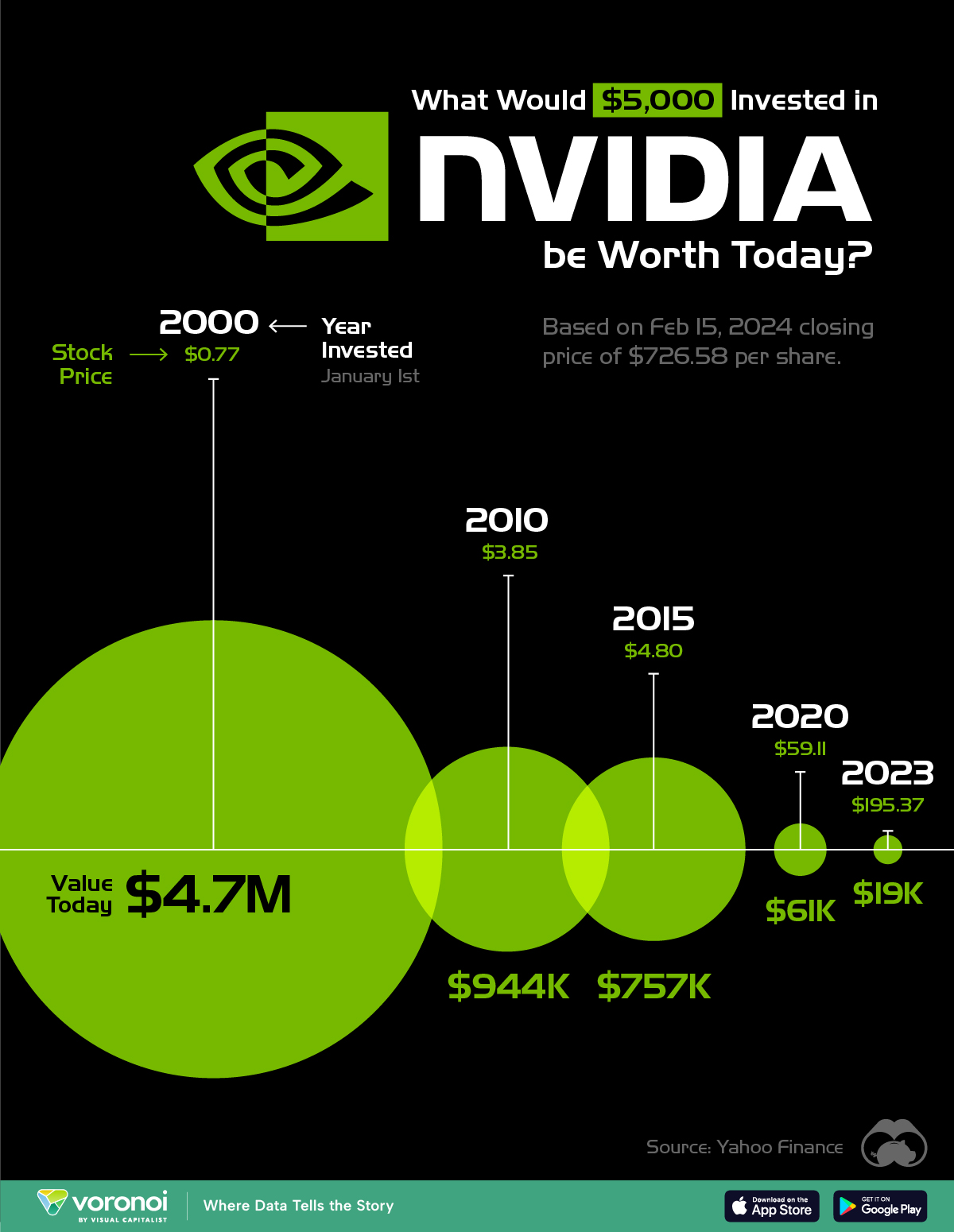
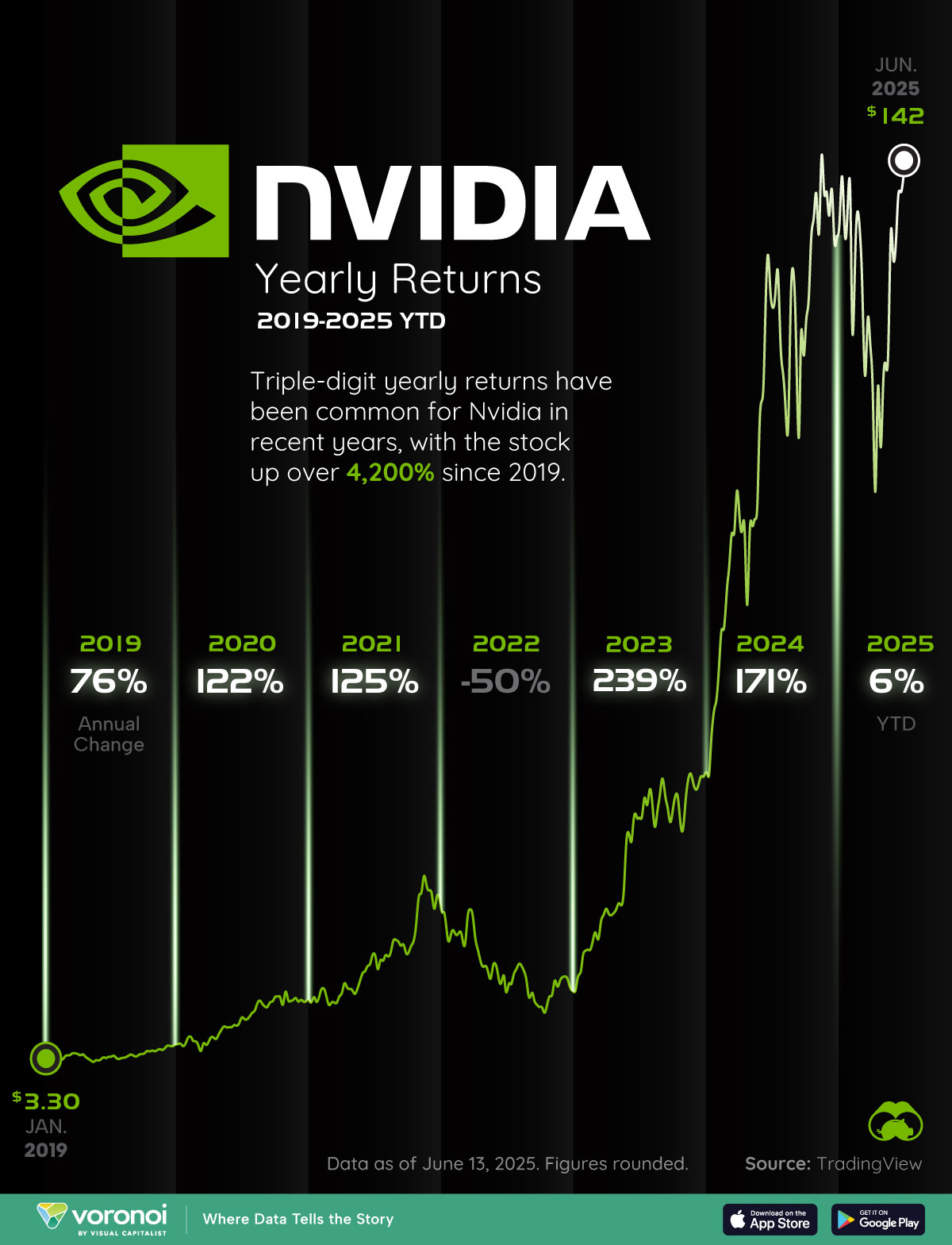
The meteoric rise of Nvidia (NVDA) has transformed it from a niche hardware manufacturer into a global financial powerhouse, often serving as the bellwether for the artificial intelligence revolution. For individual investors, the question is no longer just whether to own the stock, but specifically how much to invest in Nvidia stock. Determining the right position size requires a delicate balance between capturing exponential growth and mitigating the idiosyncratic risks associated with high-growth technology sectors.
In the world of personal finance and institutional investing, “how much” is often more important than “which.” Over-allocation can lead to catastrophic losses during market corrections, while under-allocation might result in missed opportunities that could have redefined a financial future. This guide explores the financial frameworks, valuation metrics, and risk management strategies necessary to determine an appropriate investment level in Nvidia.
Determining Your Investment Capacity and Risk Tolerance
Before putting a single dollar into a high-volatility asset like Nvidia, an investor must establish a baseline of financial health. Investment capacity is not determined by the stock’s potential, but by the investor’s current balance sheet.
Assessing Your Financial Foundation
The first step in deciding how much to invest is ensuring that your “financial house” is in order. This means having an emergency fund covering 3–6 months of living expenses and ensuring that high-interest debt, such as credit card balances, is eliminated. Because Nvidia is a growth stock that can experience 20% to 30% drawdowns in a short period, the capital allocated to it should be “patient capital.” This is money you do not expect to need for at least five to ten years. If the capital is required for a down payment on a house in two years, the amount invested should be significantly lower—or perhaps zero.
The Role of Risk Profile in Stock Selection
Your risk tolerance is a psychological and financial measure of how much volatility you can stomach without panic-selling. Nvidia operates in a cyclical industry (semiconductors) and is currently priced based on aggressive future growth expectations. Conservative investors might limit their exposure to 1% or 2% of their total portfolio. In contrast, aggressive investors who are in the early stages of their careers might feel comfortable allocating 5% to 10%. Understanding where you fall on this spectrum is the primary filter for determining your position size.
Valuation Metrics: Is Nvidia Priced for Growth or Perfection?
To determine “how much” to invest, one must look at the price of entry. Investing a large sum when a stock is at an all-time high valuation requires a different risk assessment than investing during a market dip.
Understanding the Price-to-Earnings (P/E) Ratio
Nvidia often trades at a high P/E ratio compared to the broader S&P 500. For a value investor, this might signal that the stock is overpriced. However, for a growth-oriented money manager, a high forward P/E ratio is acceptable if the earnings growth rate (EGR) justifies it. When deciding on your investment amount, look at the Forward P/E. If Nvidia’s forward P/E is significantly higher than its three-year average, it may be prudent to start with a smaller “starter position” and wait for a valuation contraction before adding more capital.
Evaluating the PEG Ratio and Future Cash Flows
The Price/Earnings-to-Growth (PEG) ratio is often a more accurate metric for a company like Nvidia. It balances the P/E ratio against the expected growth of the company. A PEG ratio near 1.0 is often considered fair value for a growth stock. If Nvidia’s PEG ratio begins to climb toward 2.0 or 3.0, it suggests that the market has already “priced in” several years of success. In such a scenario, a cautious investor might reduce their planned investment amount to avoid “buying the top.”
Strategic Allocation: The Percentage Rule
Modern Portfolio Theory suggests that diversification is the only “free lunch” in investing. When deciding how much to invest in Nvidia, you must view it within the context of your entire portfolio.
The Core-Satellite Strategy
Many successful investors use a “Core-Satellite” approach. The “Core” consists of low-cost index funds or ETFs that track the total market (like VTI or VOO). This should represent 70% to 80% of your holdings. Nvidia would then fall into the “Satellite” portion of the portfolio—individual stocks intended to provide outsized returns. Within this satellite portion, no single stock should generally exceed 10% to 15% of the total satellite allocation. If the satellite portion is 20% of your total wealth, a 10% allocation within that niche means Nvidia would represent 2% of your total net worth.
Diversification vs. Concentration
There is a school of thought, popularized by investors like Charlie Munger, that “diworsification” is a mistake and that one should concentrate bets on their highest-conviction ideas. If you have done extensive research and believe Nvidia’s dominance in data centers and AI software is unassailable, you might choose a concentrated position of 10% to 20%. However, this comes with extreme “concentration risk.” If a competitor like AMD or a shift in Big Tech’s internal chip development occurs, a 20% position could lead to a permanent impairment of your personal wealth.
Market Entry Strategies: Lump Sum vs. Dollar-Cost Averaging
Once you have decided on a total dollar amount—for example, $10,000—the next question is how to deploy that capital. The timing of your investment can be as impactful as the amount.
The Benefits of Periodic Investing
Dollar-Cost Averaging (DCA) is the practice of investing a fixed dollar amount at regular intervals, regardless of the stock price. If you want to invest $10,000 in Nvidia, you might choose to invest $1,000 a month for ten months. This strategy is particularly effective for high-growth tech stocks. When the price is high, your $1,000 buys fewer shares; when the price drops, your $1,000 buys more. This mathematically lowers your average cost basis over time and removes the emotional stress of trying to “time the market.”
Managing Volatility Through Phased Entry
Another variation is the “Phased Entry” based on technical levels or market corrections. An investor might decide to put 25% of their intended capital in immediately to ensure they don’t miss further gains, while keeping the remaining 75% in a high-yield savings account or money market fund. This “dry powder” is then deployed only when the stock experiences a 10% or 15% pullback. This disciplined approach ensures that you are not over-investing at local peaks.
Exit Strategies and Rebalancing Your Position
The final component of deciding how much to invest is knowing when to take money off the table. A successful investment in Nvidia can quickly grow to become an outsized portion of your portfolio, creating an unintended risk profile.
Setting Profit Targets and Stop-Loss Orders
Professional money management involves setting “sell rules” before the buy order is even placed. You might decide that if Nvidia doubles in price, you will sell half of your position to recoup your initial investment. This “playing with house money” strategy allows you to maintain exposure to the upside while eliminating the risk of losing your principal. Alternatively, setting a trailing stop-loss of 20% can protect you from a sudden shift in market sentiment or a breakdown in the company’s fundamental growth story.
The Importance of Periodic Portfolio Rebalancing
If you started with a 5% allocation in Nvidia and the stock outperforms the rest of your portfolio, it may grow to represent 15% or 20% of your holdings. While it is tempting to “let your winners run,” this increases your vulnerability to a sector-specific crash. Financial advisors often recommend rebalancing at least once or twice a year. By selling a portion of your Nvidia gains and moving that money into underperforming or more stable assets (like bonds or value stocks), you are effectively “selling high” and maintaining your desired risk-reward ratio.
In conclusion, there is no universal “right” amount to invest in Nvidia. The ideal figure is a product of your current liquidity, your long-term financial goals, and your psychological ability to endure volatility. By utilizing structured allocation strategies like the Core-Satellite model and disciplined entry methods like Dollar-Cost Averaging, you can gain exposure to one of the most significant technological shifts of our time without compromising your long-term financial security. Investment in Nvidia should be viewed not as a gamble, but as a calculated component of a broader, diversified wealth-building strategy.
aViewFromTheCave is a participant in the Amazon Services LLC Associates Program, an affiliate advertising program designed to provide a means for sites to earn advertising fees by advertising and linking to Amazon.com. Amazon, the Amazon logo, AmazonSupply, and the AmazonSupply logo are trademarks of Amazon.com, Inc. or its affiliates. As an Amazon Associate we earn affiliate commissions from qualifying purchases.