
Investing in solar energy has transitioned from a niche environmental statement to a sophisticated capital allocation strategy for homeowners and businesses alike. When asking “how much solar do I need,” the answer is rarely a simple calculation of square footage. Instead, it is a nuanced financial equation that balances upfront capital expenditure (CapEx) against long-term operational savings and internal rates of return (IRR).
In the modern financial landscape, solar panels are an asset class—one that offers a hedge against utility inflation and provides a predictable, tax-advantaged yield. To determine the optimal size of your solar investment, you must evaluate your energy consumption through the lens of personal finance, tax efficiency, and property valuation.
Calculating the Break-Even Point: The ROI of Solar Power
The primary motivation for most solar installations is the reduction of long-term liabilities—specifically, the monthly utility bill. To understand how much solar you need, you first have to calculate the ROI (Return on Investment) and the “payback period,” which is the point at which the cumulative energy savings equal the initial cost of the system.
Understanding Levelized Cost of Energy (LCOE)
The Levelized Cost of Energy (LCOE) is a critical metric used in business finance to compare different methods of energy production. For a homeowner, it represents the average cost per kilowatt-hour (kWh) of your solar system over its 25-year lifespan. By dividing the total cost of the system (including maintenance) by the total expected energy production, you can compare this figure to your local utility’s rising rates. If your utility charges $0.18 per kWh and your solar LCOE is $0.06, you are essentially “pre-buying” 25 years of electricity at a 66% discount. The “how much” then becomes a question of how much of that expensive utility power you want to replace with cheap, self-generated power.
Factoring in Federal and State Tax Incentives
In the United States, the Investment Tax Credit (ITC) is the most significant driver of solar profitability. Currently, the federal government allows a 30% credit on the total cost of a solar installation against your federal income tax liability. This is not a deduction, but a dollar-for-dollar credit. When sizing your system, you must ensure you have enough tax liability to move this credit. For many, this 30% “discount” drastically alters the break-even analysis, often shortening the payback period from 10–12 years down to 6–8 years. Additionally, some states offer Solar Renewable Energy Credits (SRECs), allowing you to sell “credits” for the clean energy you produce back to the market, creating a passive income stream that contributes to the system’s overall financial performance.
Sizing Your System Based on Cash Flow and Utility Tariffs
Determining the physical size of your solar array requires an audit of your historical cash flow directed toward energy. Most financial advisors suggest looking at at least 12 months of utility bills to account for seasonal fluctuations. However, the “optimal” size isn’t always 100% of your usage; it is often dictated by the specific “Tariff” or net metering policy of your utility provider.
The Impact of Net Metering Policies on Your Wallet
Net metering is a billing mechanism that credits solar energy system owners for the electricity they add to the grid. From a financial perspective, the grid acts as a “free battery.” If your utility offers 1-to-1 net metering, every kWh you export during the day is credited at the full retail rate to be used at night. In this scenario, sizing your system to cover 100% of your annual usage makes perfect financial sense. However, many utilities are moving toward “Net Billing” or “Time-of-Use” (TOU) rates, where the credit you receive for exporting power is lower than the price you pay to buy it. In these markets, over-sizing a system can actually lead to diminishing returns, as the excess power is sold back at wholesale prices (pennies on the dollar), destroying the marginal ROI of those extra panels.
Offset Percentage: Finding the Financial “Sweet Spot”
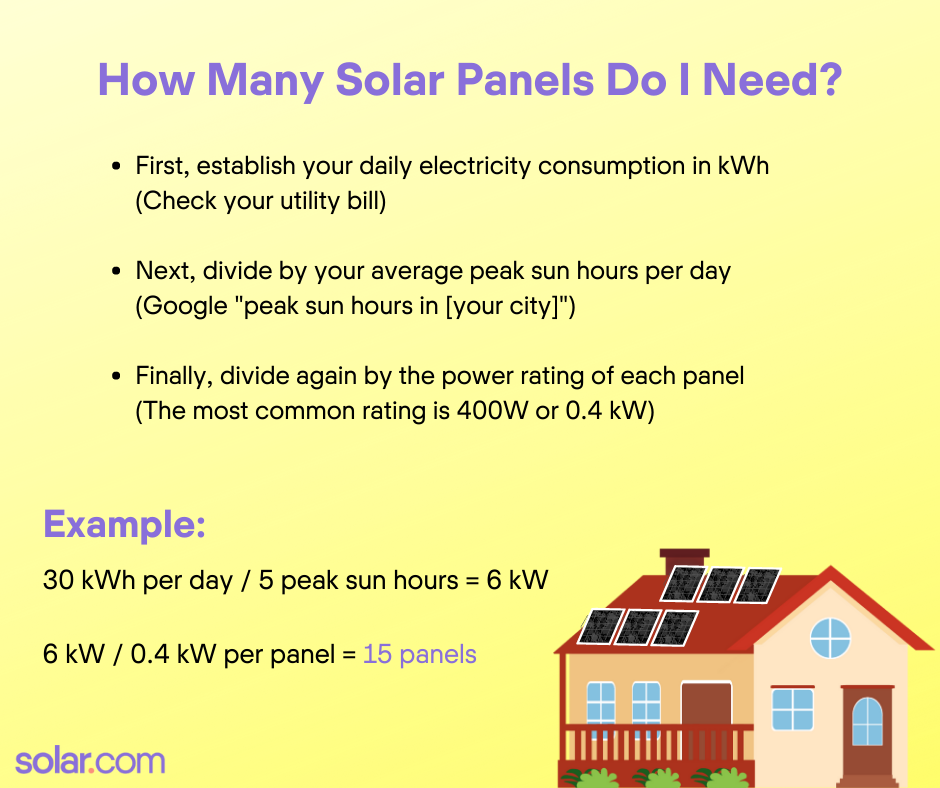
The “offset percentage” refers to how much of your annual electricity bill is covered by solar. While it is tempting to aim for a 100% offset to reach “Net Zero,” the most efficient financial move is often an 80% to 90% offset. This is because the last 10% of energy production often requires extra hardware or more expensive roof placements (like North-facing slopes) that increase the cost-per-watt. By focusing on the highest-producing areas of your property, you maximize the “Bang for your Buck,” ensuring that every dollar invested in a panel is yielding the highest possible amount of electricity.
Financing Your Investment: Cash vs. Loans vs. PPAs
Once you have determined the ideal capacity of your system, the next financial hurdle is determining how to pay for it. The method of financing is just as important as the hardware itself when it comes to the total cost of ownership.
The Long-Term Gains of Direct Ownership
Purchasing a solar system with cash or a specialized solar loan generally yields the highest lifetime savings. When you own the system, you are the sole beneficiary of the 30% federal tax credit and any local rebates. From a personal finance perspective, a solar loan is often “cash-flow positive” from day one. This means the monthly loan payment is lower than the previous monthly utility bill. By swapping a variable, inflating expense (the utility bill) for a fixed, expiring expense (the loan), you effectively lock in your energy costs for the next two to three decades, protecting your household budget from the volatility of the energy market.
Evaluating Solar Leases and Power Purchase Agreements (PPAs)
Solar Leases and Power Purchase Agreements (PPAs) are third-party ownership models where a company installs panels on your roof and sells you the power at a discounted rate. While these require $0 down, they are generally less lucrative than ownership. In these models, the third-party company—not you—receives the 30% tax credit and the SRECs. For an investor-minded homeowner, a PPA is a missed opportunity for asset appreciation. However, for those who lack the tax liability to take advantage of the ITC, a PPA can still provide a “side-hustle” style saving by reducing monthly overhead without any capital risk.
Protecting Your Asset: Maintenance, Insurance, and Value Appreciation
A solar array is a 25-year financial asset. To ensure it continues to pay dividends, it must be managed like any other part of an investment portfolio. This involves accounting for maintenance, insurance, and the eventual impact on your home’s resale value.
Impact on Residential Property Value
One of the most overlooked aspects of “how much solar I need” is the equity it adds to the property. Studies by organizations like Zillow and the Lawrence Berkeley National Laboratory have consistently shown that homes with solar installations sell for a premium—often around 4% higher than comparable non-solar homes. Unlike a kitchen remodel, which might only return 60% of its cost, solar is an investment in “infrastructure” that buyers value because it represents a guaranteed reduction in future living expenses. In a high-interest-rate environment, a home with a $0 electricity bill is a highly attractive asset for a prospective buyer.
Operational Expenses and Future-Proofing Your Energy Portfolio
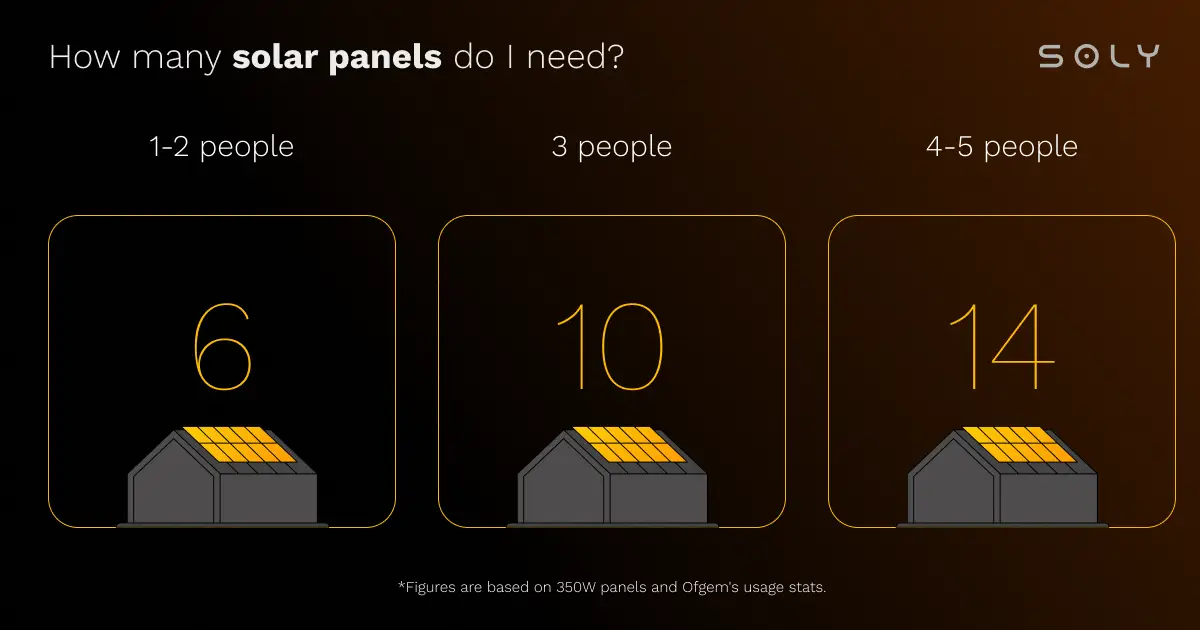
While solar panels have no moving parts, they are not entirely maintenance-free. To maintain peak financial performance, you should budget for occasional cleaning and a potential inverter replacement around year 15. Furthermore, as we transition toward Electric Vehicles (EVs) and heat pumps, your future energy needs will likely increase. Smart financial planning suggests sizing your system with a 10-20% “buffer” if you plan to purchase an EV in the next five years. It is significantly cheaper to add capacity during the initial installation than to mobilize a crew for a small add-on project later. By anticipating these future capital needs, you ensure that your solar investment remains robust and continues to hedge against the total energy costs of your lifestyle.
In conclusion, determining how much solar you need is an exercise in strategic financial planning. By analyzing your LCOE, maximizing tax incentives, and choosing the right financing vehicle, you can transform a standard utility expense into a high-yield, tax-advantaged asset that provides both immediate cash flow and long-term wealth preservation.
aViewFromTheCave is a participant in the Amazon Services LLC Associates Program, an affiliate advertising program designed to provide a means for sites to earn advertising fees by advertising and linking to Amazon.com. Amazon, the Amazon logo, AmazonSupply, and the AmazonSupply logo are trademarks of Amazon.com, Inc. or its affiliates. As an Amazon Associate we earn affiliate commissions from qualifying purchases.