
The dream of harnessing the sun’s abundant energy for your home is more accessible than ever, offering a path to energy independence, reduced utility bills, and a smaller carbon footprint. However, one of the most common and critical questions homeowners face early in their journey is: “How much solar do I actually need for my house?” This isn’t a simple one-size-fits-all answer; it requires a deep dive into your specific energy profile, the technical capabilities of solar technology, and the unique characteristics of your property. Understanding these technical nuances is paramount to designing a solar system that is both effective and economically sound, ensuring you invest in a solution perfectly tailored to your needs.
Deciphering Your Home’s Energy Consumption
The foundation of any accurate solar system sizing begins with a thorough understanding of your current and projected energy consumption. Think of it as creating a detailed energy blueprint for your home. Without this crucial data, any attempt to size a solar array would be speculative at best, risking either an underpowered system that leaves you reliant on the grid or an oversized one that represents an unnecessary expense.
Analyzing Your Historical Energy Usage
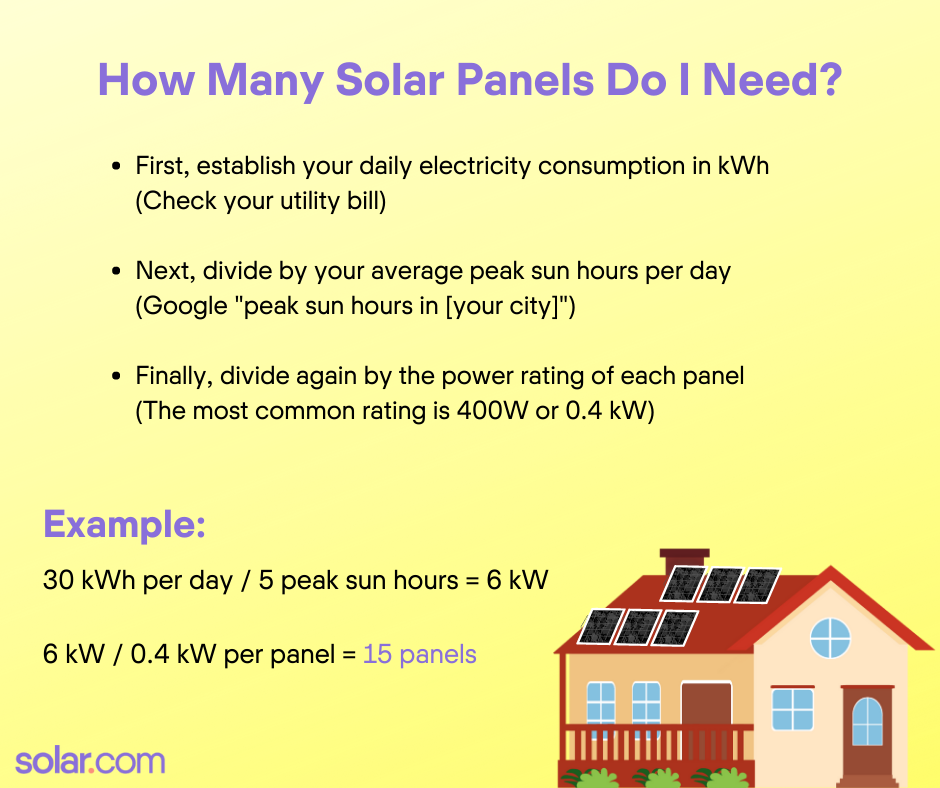
The most straightforward way to gauge your energy needs is to look at your past electricity bills. Utility companies typically provide a breakdown of your monthly energy consumption in kilowatt-hours (kWh). Gather at least 12 months of bills to capture seasonal variations. You’ll notice that energy usage often fluctuates significantly throughout the year, with peaks during hot summers due to air conditioning or cold winters for heating, depending on your climate and heating source.
By averaging your monthly kWh usage over a year, you get a solid baseline for your home’s energy demands. For example, if your average monthly consumption is 900 kWh, your annual usage is approximately 10,800 kWh. This annual figure is the primary target your solar system will aim to offset. Many utility providers also offer online portals where you can track daily or even hourly usage, providing even finer granularity to pinpoint energy-hungry periods or appliances. This granular data can inform not just the size of your solar array but also potential energy efficiency upgrades that could reduce your overall solar requirements.
Projecting Future Energy Demands
While historical data is crucial, a forward-thinking approach is equally important. Your home’s energy needs aren’t static; they evolve. Are you planning to purchase an electric vehicle (EV) in the near future? EVs can significantly increase electricity consumption, often adding thousands of kWh per year. Do you anticipate expanding your family, adding new energy-intensive appliances like a hot tub or a second refrigerator, or undertaking a home renovation that might introduce new electrical loads?
Consider future lifestyle changes as well. If you work from home more frequently, your daytime electricity usage might increase. Conversely, if children are moving out, your household consumption might decrease. It’s vital to factor these potential changes into your calculations. An experienced solar consultant can help you project these future demands, ensuring your initial solar investment remains relevant and sufficient for years to come. Overlooking future needs can lead to an undersized system requiring costly expansions later or, worse, negating the savings you initially anticipated.
Understanding Peak vs. Base Load
Beyond total kWh, understanding the pattern of your energy consumption is critical, particularly when considering battery storage solutions. Your “base load” refers to the continuous, minimal amount of electricity your home consumes 24/7 – think of refrigerators, internet routers, and standby power for electronics. Your “peak load,” on the other hand, represents periods of high demand, such as when your air conditioner kicks in, multiple appliances run simultaneously, or an EV is charging.
Solar panels generate power primarily during daylight hours. If your peak consumption occurs after sundown, a system designed purely for daytime generation might not fully cover your needs without additional components. This distinction becomes particularly relevant if you aim for maximum self-sufficiency or want to minimize reliance on the grid during peak pricing hours. While the core “how much solar” question is about total kWh, understanding peak vs. base load informs decisions about battery storage, which falls under advanced system design within the Tech category, ensuring a truly comprehensive and resilient energy solution.
Core Technical Factors for Solar Sizing
Once you have a clear picture of your energy consumption, the next step involves translating those needs into the technical specifications of a solar photovoltaic (PV) system. This requires evaluating several key environmental and technological factors that directly impact how much electricity your panels can realistically generate. These elements dictate the efficiency and output potential of your solar array, making them indispensable considerations for accurate sizing.
Sunlight Availability and Peak Sun Hours
The most fundamental factor affecting solar output is the amount of sunlight your location receives. This isn’t just about how many hours the sun is visible, but rather the intensity of that sunlight, quantified as “peak sun hours.” One peak sun hour is equivalent to one hour of full sun exposure at 1,000 watts per square meter. Most regions in the U.S. average between 4 to 6 peak sun hours per day, but this varies significantly by geographic location, season, and even specific microclimates.
Online resources and solar irradiance maps can provide average daily peak sun hours for your specific address. This metric is crucial because it directly correlates with how much energy your panels can produce. For example, a 1 kW solar array in an area with 5 peak sun hours per day will produce roughly 5 kWh of electricity daily, whereas in an area with only 3 peak sun hours, it would produce 3 kWh. This variation means that a home in a sunnier climate might need fewer panels than an identical home in a less sunny region to achieve the same energy offset.
Available Roof Space and Orientation for Optimal Yield
Your roof is the primary real estate for your solar panels, and its characteristics play a massive role in system sizing.
- Available Space: Large, unobstructed roof sections are ideal. Obstructions like chimneys, vents, skylights, and even neighboring trees casting shadows can reduce the effective area for panel placement. Each standard residential solar panel typically measures around 65 x 40 inches and weighs about 40-50 pounds, requiring approximately 17-20 square feet of usable space per panel.
- Orientation: In the Northern Hemisphere, south-facing roofs receive the most direct and prolonged sunlight throughout the day, maximizing energy production. West-facing roofs can be advantageous for capturing late-afternoon sun, which aligns with peak electricity demand and pricing in many areas. East-facing roofs are less ideal but still viable. North-facing roofs are generally avoided due to significantly lower production.
- Tilt Angle: The optimal tilt angle for solar panels usually corresponds to your geographical latitude, allowing the panels to capture the sun’s rays most directly throughout the year. While fixed mounts are common, adjustable mounts exist but add complexity and cost. A professional assessment will evaluate your roof’s pitch and suggest the most efficient panel placement.
Solar Panel Efficiency and Degradation
Not all solar panels are created equal. Panel efficiency refers to the percentage of sunlight hitting the panel that is converted into usable electricity. Modern residential panels typically range from 17% to 22% efficiency. Higher efficiency panels generate more power per square foot, which is advantageous if you have limited roof space. While a 1% increase in efficiency might seem small, over 20-30 panels and decades of operation, it translates into significant additional kWh production.
It’s also important to consider panel degradation. All solar panels experience a slight decrease in power output over time. Most quality manufacturers guarantee that their panels will still produce 80-85% of their original rated power after 25 years. This slow degradation needs to be factored into the initial sizing; you might slightly oversize the system to ensure it meets your needs even two decades down the line.
Inverter Technology and System Losses
Beyond the panels themselves, the inverter is a critical piece of technology in your solar system. It converts the direct current (DC) electricity produced by the panels into alternating current (AC) electricity usable by your home appliances and the grid. There are several types of inverters:
- String Inverters: Traditional inverters where panels are wired in “strings.” If one panel in a string is shaded or underperforms, it can affect the output of the entire string.
- Microinverters: Installed on individual panels, converting DC to AC at each panel. This optimizes each panel’s output independently, mitigating the impact of shading and allowing for panel-level monitoring.
- Power Optimizers: Hybrid technology that works with a central string inverter but optimizes output at each panel, similar to microinverters, before sending DC to the central inverter.
Each inverter type has its own efficiency rating and operational characteristics that influence overall system performance. Furthermore, real-world solar systems experience various “system losses” that reduce the theoretical output. These losses can come from wiring resistance, temperature effects (panels are less efficient in very hot conditions), dust and dirt accumulation, and the efficiency losses within the inverter itself. Typically, a 15-25% derating factor is applied to the theoretical output to account for these real-world inefficiencies. Accounting for these technical factors accurately ensures your estimated solar production aligns closely with actual output.
The Sizing Equation: From Consumption to Panels
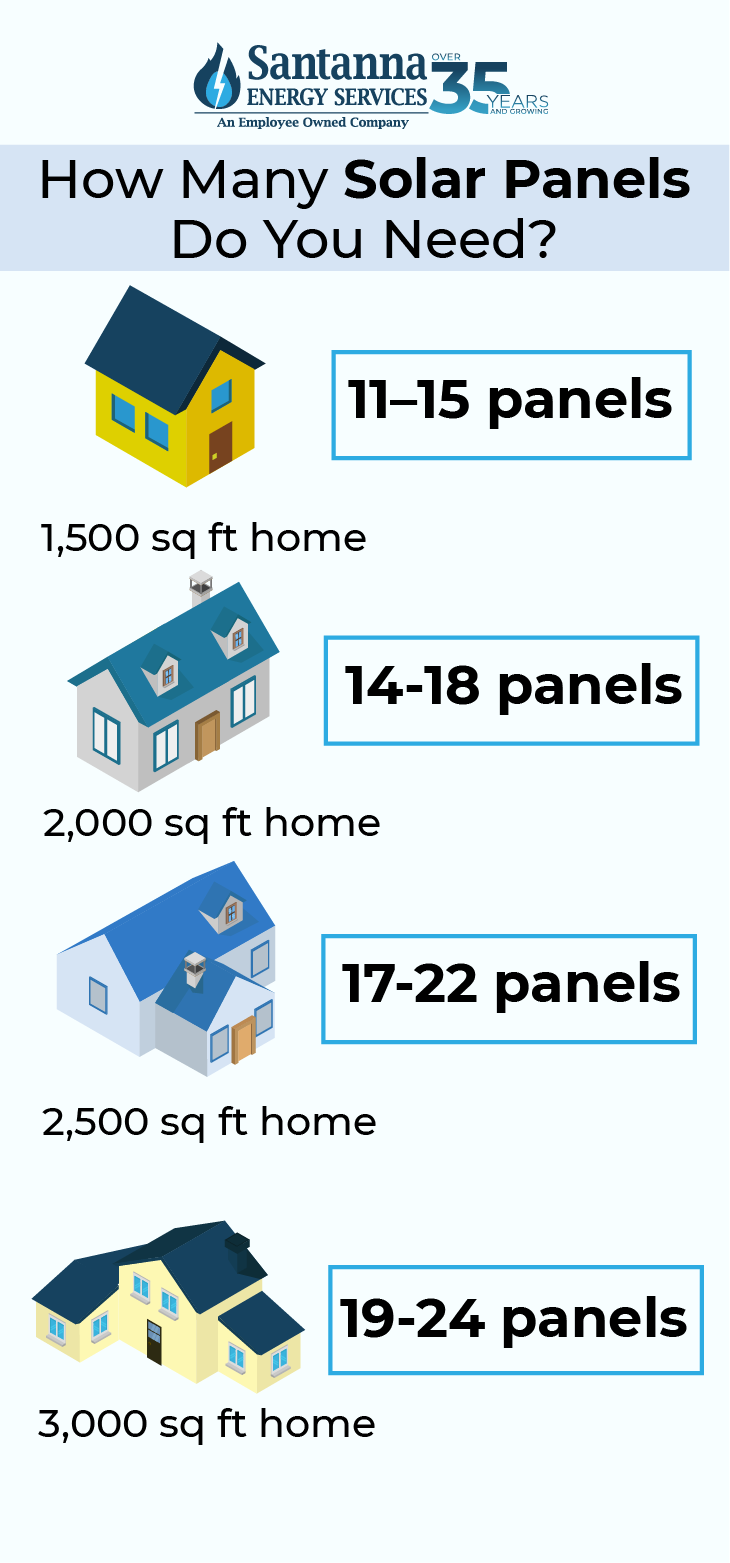
With a clear understanding of your energy needs and the technical performance factors, we can now move into the core calculation: determining the precise wattage and number of solar panels required to meet your objectives. This involves a series of logical steps that translate your energy consumption into a tangible solar system size.
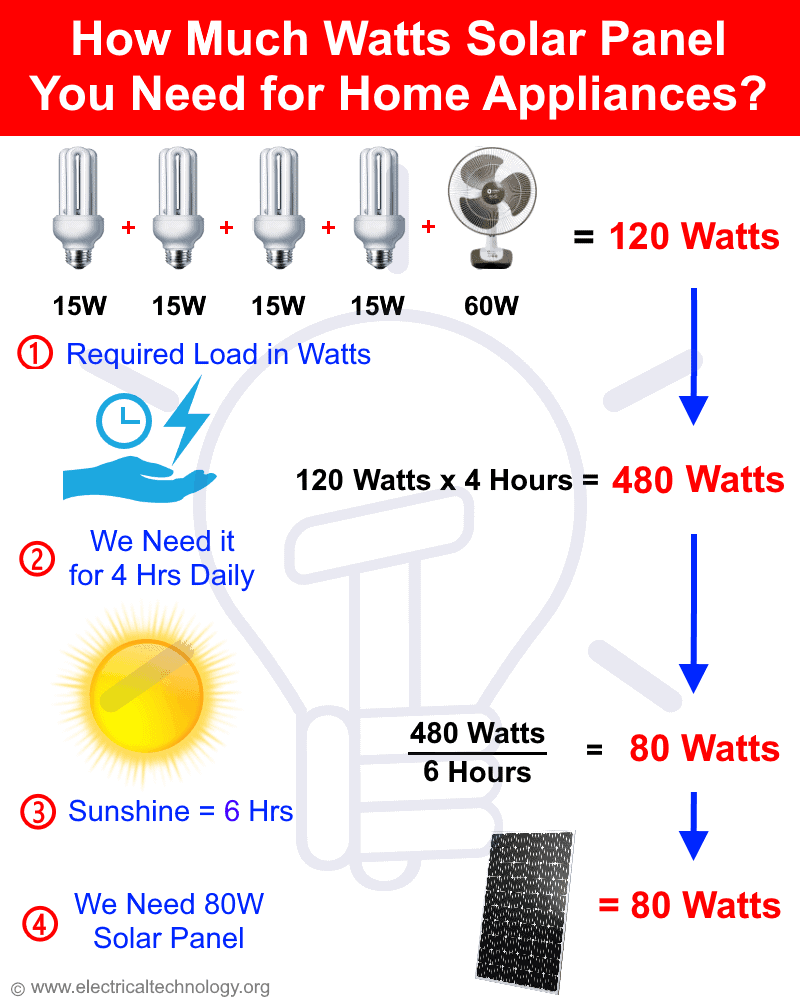
Calculating Your Daily and Annual kWh Needs
As established earlier, your annual energy consumption in kWh is the starting point. Let’s assume, for example, your annual consumption is 10,800 kWh.
To calculate your average daily need, you simply divide the annual consumption by 365 days:
10,800 kWh / 365 days = ~29.59 kWh per day.
This daily figure represents the amount of energy your solar system needs to produce on average each day to fully offset your consumption.
Determining the Required System Output (kW)
Now, we translate your daily kWh need into the required system capacity, measured in kilowatts (kW). This step incorporates the peak sun hours for your location and the system loss factors.
The formula is:
System Size (kW) = (Daily kWh Need) / (Average Daily Peak Sun Hours * System Loss Factor)
Let’s use an example:
- Daily kWh Need: 29.59 kWh
- Average Daily Peak Sun Hours: Let’s assume 5 hours for your location.
- System Loss Factor: Typically, 0.75 to 0.85 (representing 15-25% losses). Let’s use 0.80 (20% loss).
System Size (kW) = 29.59 kWh / (5 hours * 0.80)
System Size (kW) = 29.59 kWh / 4 hours
System Size (kW) = 7.3975 kW
So, in this example, you would need approximately a 7.4 kW solar system to meet your energy demands. This is the DC rating of the solar panels you’d need.
Translating kW into Number of Panels
Once you have the required system size in kW, you can determine the number of individual solar panels needed. This depends on the wattage of the panels you choose. Modern residential panels typically range from 350 to 450 watts (W) per panel.
To convert kW to W, multiply by 1000. So, a 7.4 kW system is 7400 W.
Number of Panels = Total System Wattage (W) / Wattage Per Panel (W)
If you choose 400 W panels:
Number of Panels = 7400 W / 400 W per panel
Number of Panels = 18.5 panels
Since you can’t install half a panel, you would round up to 19 panels to ensure you meet your target, assuming you have the roof space. This slight oversizing also helps account for any minor underperformance or future degradation.
Considering Battery Storage Integration
While not directly part of the “how much solar” calculation for generation, battery storage profoundly impacts how much of that generated solar energy you use and your overall energy independence. Batteries store excess solar electricity produced during the day for use at night or during power outages.
Integrating battery storage changes the sizing objective slightly. Instead of just aiming to offset annual kWh, you might be looking to achieve a certain level of daily self-sufficiency or provide backup power for critical loads. If you plan for batteries, your solar system might need to be slightly larger to ensure enough surplus energy is generated to fully charge the batteries after meeting immediate household demands. Sizing batteries involves understanding your critical load usage during an outage and how long you want to sustain it, a distinct but complementary technical calculation to solar panel sizing.
Beyond the Numbers: Optimizing and Future-Proofing Your System
Designing a solar system isn’t just about crunching numbers; it’s about making informed technological choices that optimize performance, comply with regulations, and ensure your investment remains valuable for decades. This forward-looking perspective, firmly rooted in the Tech category, transforms a basic installation into a sophisticated energy solution.
The Impact of Net Metering and Local Regulations
Net metering is a crucial policy that allows homeowners to send excess solar electricity generated back to the utility grid and receive credits on their electricity bill, often offsetting future usage. The specific rules of net metering (e.g., full retail rate, wholesale rate, or net billing) vary widely by state and utility provider. These policies directly influence your solar sizing strategy.
If your utility offers favorable net metering, oversizing your system slightly might make economic sense, as you essentially “bank” excess electricity. However, some utilities limit the size of residential solar systems that qualify for net metering or offer less attractive compensation for overproduction, which could discourage significant oversizing. Understanding these local regulations is paramount. Additionally, local building codes, homeowner association (HOA) rules, and permitting requirements can all influence panel placement, aesthetics, and even the maximum allowable system size. A professional installer will be intimately familiar with these rules.
Smart Home Integration and Energy Management
Modern solar systems are increasingly integrated into broader smart home ecosystems, offering unprecedented levels of control and insight into your energy usage and production. Technologies like smart inverters, energy monitoring platforms, and smart thermostats can work in concert to optimize energy flow.
- Energy Monitoring: Detailed apps allow you to track real-time solar production, home consumption, and battery status. This data empowers you to adjust habits, identifying energy hogs or optimizing appliance usage for times of peak solar production.
- Load Management: Smart home devices can be programmed to automatically shift energy-intensive tasks (e.g., running the dishwasher, charging an EV) to when solar production is abundant or electricity rates are lowest, further maximizing self-consumption and savings.
- EV Charging Integration: Dedicated smart EV chargers can communicate with your solar inverter and battery system to ensure your car charges predominantly from solar power, optimizing the use of self-generated electricity.
These integrations represent the cutting edge of residential energy technology, allowing your solar system to become a dynamic, responsive part of a holistic smart home.
Professional Assessment: Why Expert Consultation is Crucial
While this guide provides a comprehensive framework, accurately sizing and designing a solar system is a complex task best handled by experienced professionals. A reputable solar installer will perform a detailed site assessment, which includes:
- Shade Analysis: Using specialized tools to map potential shading from trees, chimneys, and neighboring structures throughout the year, identifying optimal panel locations.
- Roof Inspection: Evaluating the structural integrity, age, and material of your roof to ensure it can support the weight of the panels and to identify any necessary repairs before installation.
- Electrical Panel Evaluation: Assessing your existing electrical system capacity to ensure it can safely handle the new solar input and integrate with any battery storage or smart home components.
- Customized Design: Creating a bespoke system design that factors in all technical parameters, your energy goals, and local regulations, providing detailed production estimates.
Their expertise extends beyond mere calculations; they understand the nuances of panel placement, wiring, inverter selection, and the critical balance between upfront costs and long-term energy yields. Engaging with certified professionals ensures your solar system is not only correctly sized but also safely installed, fully compliant, and optimally configured to deliver reliable, clean energy for your home for decades to come. The right technical guidance transforms an ambitious idea into a powerful, sustainable reality.
aViewFromTheCave is a participant in the Amazon Services LLC Associates Program, an affiliate advertising program designed to provide a means for sites to earn advertising fees by advertising and linking to Amazon.com. Amazon, the Amazon logo, AmazonSupply, and the AmazonSupply logo are trademarks of Amazon.com, Inc. or its affiliates. As an Amazon Associate we earn affiliate commissions from qualifying purchases.