
Social Security remains the cornerstone of retirement planning for millions of Americans. While it was never intended to be a person’s sole source of income, it provides a guaranteed, inflation-adjusted stream of revenue that serves as a vital safety net. However, the question “How much Social Security will I get?” is rarely met with a simple number. The answer is a moving target, influenced by your lifetime earnings, the age at which you choose to claim benefits, and the evolving legislative landscape of federal finance.
To build a robust financial plan, you must look beyond the vague estimates and understand the mechanics of the Social Security Administration (SSA) formula. This guide breaks down the variables that determine your monthly check, the strategic decisions that can increase your payout, and the tools available to help you project your future financial standing.
1. The Mechanics of the Calculation: How the SSA Determines Your Benefit
The Social Security benefit formula is designed to be progressive, meaning it replaces a higher percentage of pre-retirement earnings for lower-wage earners than for higher-wage earners. To understand what you will receive, you must first understand the two primary components of the calculation: your earnings history and the “bend points.”
The 35-Year Rule and AIME
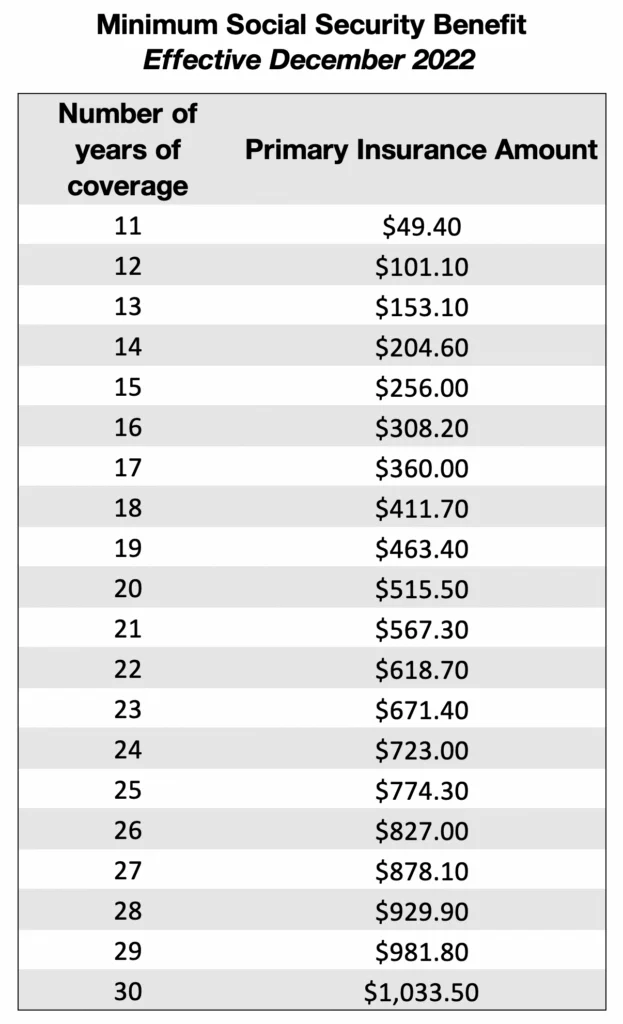
The SSA calculates your benefit based on your Average Indexed Monthly Earnings (AIME). To find this, the administration looks at your entire work history and selects your 35 highest-earning years. These earnings are “indexed” to account for changes in average wages over time, ensuring that $20,000 earned in 1985 is compared fairly to $60,000 earned in 2023.
If you have fewer than 35 years of covered earnings, the SSA enters zeros for the remaining years. This is a critical point for personal finance planning: working just a few more years to replace a “zero” or a low-earning year from your youth can significantly boost your final AIME, and consequently, your monthly check.
Primary Insurance Amount (PIA) and Bend Points
Once your AIME is established, the SSA applies a formula to determine your Primary Insurance Amount (PIA). The PIA is the base amount you would receive if you retire exactly at your Full Retirement Age (FRA). The formula uses “bend points”—specific dollar thresholds that change annually.
For 2024, the formula takes 90% of the first portion of your AIME, 32% of the middle portion, and 15% of any earnings above the top threshold. This weighted system ensures a floor of support for all workers while capping the benefits for those at the highest income brackets.
2. The Impact of Timing: When You Claim Changes Everything
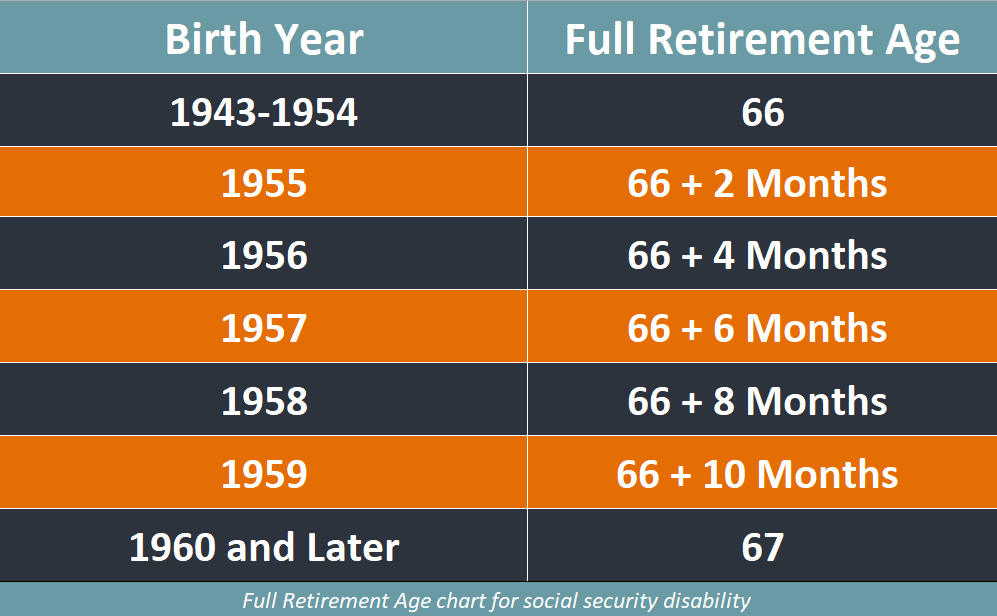
While your earnings history sets the foundation, your “claiming strategy” is the most significant variable under your control. The Social Security Administration designates a “Full Retirement Age” (FRA) based on your birth year, but you have a window from age 62 to 70 to start receiving payments.
The Cost of Filing Early
You can begin receiving Social Security benefits as early as age 62. However, doing so comes at a steep price. If you claim at 62, your monthly benefit is permanently reduced by as much as 30% compared to what you would have received at your FRA. This reduction is calculated month-by-month; the earlier you claim, the greater the haircut. For individuals without pressing health issues or immediate cash flow needs, filing at 62 can lead to a significant loss of cumulative wealth over a 20- or 30-year retirement.
The Reward for Delaying: Credits Until Age 70
Conversely, if you delay claiming benefits past your FRA, you earn “delayed retirement credits.” For every year you wait—up until age 70—your benefit increases by approximately 8%. This is a guaranteed, risk-free return that is virtually unmatched by any traditional market investment.
For someone born in 1960 or later, their FRA is 67. If they wait until age 70 to claim, their monthly check will be 24% higher than it would have been at age 67, and significantly higher than the amount at age 62. From a financial planning perspective, delaying Social Security is often the most effective way to “insure” against longevity risk—the danger of outliving your money.
3. External Variables: Earnings Caps, Taxes, and COLA
Your Social Security check is not a static figure. Several external financial factors can influence the net amount that actually lands in your bank account each month.
The Maximum Taxable Earnings Limit
There is a ceiling on how much of your income is subject to Social Security taxes, and consequently, how much of your income counts toward your benefit calculation. In 2024, this limit is $168,600. Any earnings above this threshold are not taxed for Social Security, nor do they increase your future benefit. For high earners, this means that Social Security will replace a much smaller fraction of their total income, necessitating a heavier reliance on 401(k)s, IRAs, and other private investments.
The Taxation of Benefits
A common surprise for retirees is that Social Security benefits can be taxable. If your “combined income” (adjusted gross income + untaxed interest + half of your Social Security benefits) exceeds certain thresholds, you may owe federal income tax on up to 85% of your benefits.
- Individuals: If income is between $25,000 and $34,000, 50% may be taxable. Above $34,000, up to 85% may be taxable.
- Joint Filers: If income is between $32,000 and $44,000, 50% may be taxable. Above $44,000, up to 85% may be taxable.
Cost-of-Living Adjustments (COLA)
To protect the purchasing power of retirees against inflation, the SSA applies an annual Cost-of-Living Adjustment (COLA). This increase is based on the Consumer Price Index for Urban Wage Earners and Clerical Workers (CPI-W). While COLA ensures that your benefit grows as prices rise, it is important to remember that Medicare Part B premiums are often deducted directly from Social Security checks. If Medicare costs rise faster than the COLA, your net “take-home” pay may not increase as much as the headline percentage suggests.
4. Specialized Benefits: Spousal and Survivor Considerations
Social Security is more than an individual retirement plan; it is a family insurance program. Understanding how your benefits interact with a spouse’s earnings is essential for maximizing household income.
Spousal Benefits
Even if a spouse has never worked or has a limited work history, they may be eligible for a spousal benefit. This can be up to 50% of the higher-earning spouse’s PIA. To qualify, the higher earner must already be claiming their own benefit, and the spouse must be at least 62. However, if the spouse claims before their own FRA, the 50% amount is reduced. This provides a crucial buffer for households where one partner stayed home or had a lower-paying career.
Survivor Benefits
The financial impact of a spouse’s death can be devastating, but Social Security provides a safety net through survivor benefits. When one spouse dies, the survivor is generally entitled to the higher of the two monthly checks the couple was receiving, but not both. This “drop” from two checks to one is a major hurdle in financial planning. To mitigate this risk, it is often recommended that the higher-earning spouse delay their claim until age 70 to lock in the highest possible survivor benefit for the remaining partner.
5. Strategic Tools for Accurate Estimation
Guessing your Social Security benefit is a recipe for a shortfall. Because the formula is complex and your earnings history is unique, you should utilize official financial tools to get an accurate projection.
The “my Social Security” Portal
The most reliable way to find out “how much” is to create an account on the SSA’s official website. Your “Social Security Statement” provides a year-by-year breakdown of your earnings history and provides estimates for three scenarios: claiming at 62, claiming at FRA, and claiming at 70. Reviewing this document annually is vital for catching errors in your reported earnings, which could negatively impact your check if left uncorrected.
Integrating Social Security into a Broader Portfolio
Social Security should be viewed as the “fixed-income” or “bond” portion of your retirement portfolio. Because it is backed by the federal government and adjusted for inflation, it allows you to be potentially more aggressive with your other investments, such as equities. Financial advisors often use “retirement calculators” to determine a “safe withdrawal rate” from private accounts. By knowing your exact Social Security estimate, you can lower the withdrawal pressure on your 401(k) and ensure your total capital lasts as long as you do.
The Role of Financial Modeling
For those with complex situations—such as a history of divorce (which may qualify you for benefits based on an ex-spouse’s record) or government work (which may trigger the Windfall Elimination Provision)—using specialized financial software or consulting a fee-only financial planner is recommended. These models can run “what-if” scenarios to find the optimal month and year to file, potentially adding six figures to your lifetime cumulative benefit.

Conclusion
Determining how much Social Security you will get is a process of balancing your work history, your life expectancy, and your immediate financial needs. While the formula may seem daunting, the variables are manageable once you identify your Primary Insurance Amount and understand the mathematical advantages of delaying your claim. By monitoring your “my Social Security” statement and integrating those figures into a holistic financial plan, you can transform Social Security from a mysterious federal program into a powerful tool for a secure and predictable retirement.
aViewFromTheCave is a participant in the Amazon Services LLC Associates Program, an affiliate advertising program designed to provide a means for sites to earn advertising fees by advertising and linking to Amazon.com. Amazon, the Amazon logo, AmazonSupply, and the AmazonSupply logo are trademarks of Amazon.com, Inc. or its affiliates. As an Amazon Associate we earn affiliate commissions from qualifying purchases.