
For millions of Americans, the age of 67 represents more than just a chronological milestone; it is the gateway to financial independence. As the designated Full Retirement Age (FRA) for everyone born in 1960 or later, age 67 is the point at which you become eligible to collect 100% of your promised Social Security retirement benefits. However, calculating exactly how much you will receive is not a matter of simple arithmetic. It involves a complex interplay of your lifetime earnings, the year of your birth, and the economic variables managed by the Social Security Administration (SSA).
Understanding the mechanics of your Social Security payout is vital for robust retirement planning. Whether you are a decade away from 67 or just around the corner, gaining clarity on your projected income allows you to adjust your savings strategies, investment portfolios, and lifestyle expectations accordingly.
Understanding the Significance of Age 67: The Full Retirement Age Milestone
The concept of “Full Retirement Age” has evolved significantly since the Social Security Act was first signed into law. While age 65 was the standard for decades, legislative changes in 1983 implemented a gradual increase to ensure the long-term solvency of the program. For the modern workforce, age 67 has become the new anchor for retirement planning.
What is Full Retirement Age (FRA)?
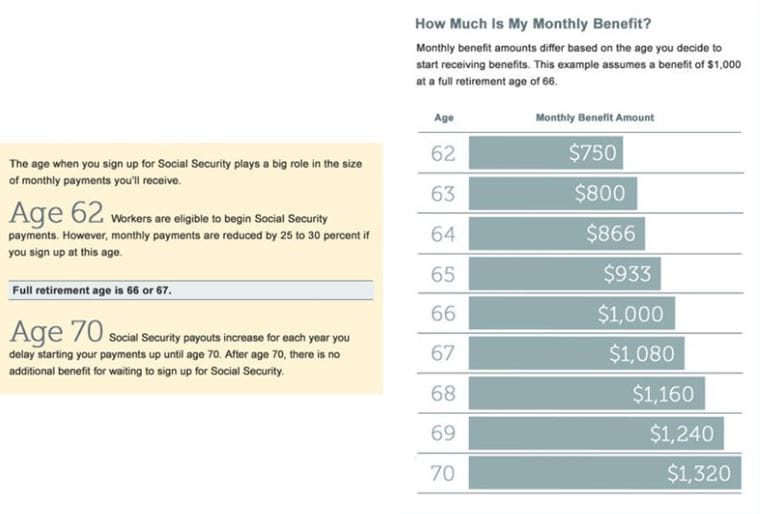
Full Retirement Age is the specific age at which a worker can claim their unreduced Social Security retirement benefit. This is known as the Primary Insurance Amount (PIA). If you claim benefits before this age—as early as 62—your monthly check is permanently reduced. If you delay claiming beyond this age—up to age 70—your monthly check increases. At age 67, you hit the “sweet spot” where you receive exactly what the government’s formula says you have earned based on your work history, without any penalties for early filing.
The Shift from 65 to 67
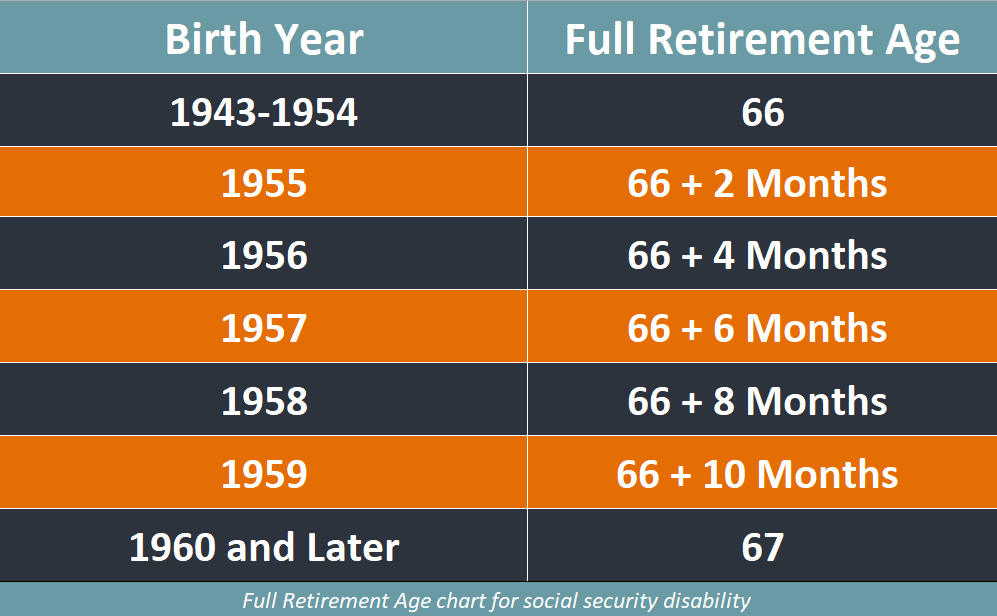
The transition to age 67 as the FRA was a response to increased life expectancy and the demographic shift of the “Baby Boomer” generation. For those born between 1943 and 1954, the FRA was 66. For those born between 1955 and 1959, the FRA increased by two months for every birth year. For anyone born in 1960 or later, the age is firmly set at 67. Understanding this distinction is crucial because filing just one year “early” at 66 when your FRA is 67 results in a roughly 6.7% permanent reduction in your monthly income.
How the Social Security Administration Calculates Your Monthly Payment
Your Social Security benefit is not a flat rate; it is a personalized figure based on your specific contributions to the system throughout your working life. The SSA uses a multi-step formula to translate your decades of hard work into a monthly check.
Your Top 35 Years of Earnings
The foundation of your benefit is your “highest 35 years” of earnings. The SSA looks at your entire work history and selects the 35 years in which you earned the most, indexed for inflation to ensure that wages earned in 1990 are comparable to wages earned in 2024. If you worked fewer than 35 years, the SSA fills in the remaining years with zeros, which can significantly drag down your average and, consequently, your monthly check. This is why many financial advisors suggest working at least 35 years, even if some of those years involve part-time or lower-paying “encore careers.”
Average Indexed Monthly Earnings (AIME) and Primary Insurance Amount (PIA)
Once your top 35 years are selected and indexed, they are averaged and divided by 12 to find your Average Indexed Monthly Earnings (AIME). The SSA then applies a formula to this average to determine your Primary Insurance Amount (PIA).
This formula is progressive, meaning it is designed to replace a higher percentage of income for lower-wage earners than for higher-wage earners. The formula uses “bend points”—specific dollar thresholds that change annually. For example, in 2024, the formula takes 90% of the first portion of your AIME, 32% of the middle portion, and 15% of the amount above the second bend point. This weighted structure is why a person who earned double your salary will not necessarily receive a check that is double the size of yours.
Estimating Your Benefit: Factors That Influence the Final Number
While the formulas are complex, estimating your benefit at 67 is more accessible than ever thanks to digital tools and transparent reporting. However, several variables can still cause your actual check to differ from your initial estimates.
Using the “my Social Security” Account
The most accurate way to see your projected benefit at age 67 is to create a “my Social Security” account on the official SSA website. This portal provides a “Social Security Statement” that displays your actual earnings history and provides personalized estimates for filing at 62, 67, and 70. It is essential to review this statement annually to ensure your earnings were reported correctly by your employers, as mistakes in your record can result in a lower benefit for the rest of your life.
The Impact of Early vs. Delayed Filing
While your benefit at 67 is your “base” amount, it is helpful to understand the context of that number. If your benefit at 67 is projected to be $2,500:
- Filing at 62: You would receive approximately $1,750 (a 30% reduction).
- Filing at 70: You would receive approximately $3,100 (a 24% increase via delayed retirement credits).
Knowing these numbers allows you to perform a “break-even analysis.” For many, the total lifetime value of Social Security is maximized by waiting until 67 or even 70, provided they have the health and alternative assets to bridge the gap.
Spousal and Survivor Benefits
Your benefit at 67 might not be based solely on your own work record. If you are married, you may be eligible for a spousal benefit, which can be up to 50% of your spouse’s PIA at their full retirement age. If you are a widow or widower, you may be eligible for 100% of your deceased spouse’s benefit. At age 67, you are eligible to receive the full amount of these auxiliary benefits without the reductions that apply if you claim them earlier.
Strategies to Increase Your Payout Before Reaching 67
If you find that your projected benefit at 67 is lower than you anticipated, there are proactive steps you can take within the “Money” niche to bolster that figure before you reach your FRA.
Working Longer to Replace Low-Earning Years
Because the SSA uses your top 35 years, you can “scrub” your record of low-earning years from your youth or periods of unemployment by working longer at your current, presumably higher, salary. Every year you work at a high salary can replace a $0 or low-income year from decades ago, incrementally raising your AIME and your final benefit at 67.
Strategic Income Management
For business owners and those with side hustles, the way you report income can impact your Social Security. While it is tempting to maximize deductions to lower your tax bill today, doing so lowers your reported “net earnings from self-employment.” Since Social Security is based on those reported earnings, you are essentially trading a lower tax bill today for a lower Social Security check in the future. Finding a balance with your CPA can ensure you are contributing enough to the system to secure a respectable payout at 67.
Taxes and Inflation: Protecting Your Retirement Income
The amount you “get” at 67 is the gross amount, but in the world of personal finance, the net amount is what truly matters. You must account for the two silent killers of retirement income: taxes and inflation.
Is Social Security Taxable?
Many retirees are surprised to learn that their Social Security benefits may be subject to federal income tax. Whether you pay taxes depends on your “combined income,” which is the sum of your adjusted gross income, non-taxable interest, and half of your Social Security benefits.
- If you are a single filer and your combined income is between $25,000 and $34,000, you may pay income tax on up to 50% of your benefits.
- If it is above $34,000, up to 85% of your benefits may be taxable.
Strategic withdrawals from Roth IRAs (which don’t count toward combined income) can help keep your total income below these thresholds, allowing you to keep more of your Social Security check.
Cost-of-Living Adjustments (COLA)
One of the greatest strengths of Social Security compared to private annuities or fixed pensions is the Cost-of-Living Adjustment (COLA). Each year, the SSA reviews the Consumer Price Index (CPI-W) and adjusts benefits to keep pace with inflation. This means that if you retire at 67, your purchasing power is protected. While some years see small adjustments (1–2%), periods of high inflation can see significant jumps, such as the 8.7% increase seen in 2023. This feature makes Social Security an invaluable hedge against the rising costs of healthcare and housing during your later years.

Final Thoughts on Reaching 67
Determining how much Social Security you will get at 67 is a foundational step in retirement planning. While the average monthly benefit in the United States hovers around $1,900 as of 2024, your personal number could be much higher—reaching as high as $3,822 for those who consistently earned at the maximum taxable limit.
By understanding your FRA, monitoring your earnings record, and planning for the tax implications of your benefits, you can transform Social Security from a mysterious government program into a predictable, powerful component of your financial independence. At age 67, the goal is not just to receive a check, but to receive the maximum benefit you have earned through a lifetime of contribution.
aViewFromTheCave is a participant in the Amazon Services LLC Associates Program, an affiliate advertising program designed to provide a means for sites to earn advertising fees by advertising and linking to Amazon.com. Amazon, the Amazon logo, AmazonSupply, and the AmazonSupply logo are trademarks of Amazon.com, Inc. or its affiliates. As an Amazon Associate we earn affiliate commissions from qualifying purchases.