
For millions of Americans, Social Security represents a cornerstone of their financial security in retirement. It’s not just a government program; it’s a promise, built on decades of contributions and designed to provide a safety net for retirees, their families, and individuals facing disability. Yet, despite its prevalence, many people find themselves asking a fundamental question: “How much Social Security will I draw?” The answer is rarely simple, varying significantly from person to person based on a multitude of factors. Understanding these variables and how they interlink is crucial for effective retirement planning and ensuring you maximize the benefits you’ve earned. This comprehensive guide will demystify the complexities of Social Security, helping you estimate your future benefits and make informed decisions about your financial future.
Understanding the Fundamentals of Social Security Benefits
Before diving into calculations, it’s essential to grasp the basic principles that underpin the Social Security system. It’s a pay-as-you-go program, meaning today’s workers fund today’s retirees, with a trust fund serving as a buffer. Your individual benefit amount is not a direct return on your personal contributions, but rather a calculation based on your lifetime earnings.
What is Social Security?
Social Security is a social insurance program administered by the U.S. government. It provides monthly benefits to qualified retirees, their spouses, and children, as well as to survivors of deceased workers and individuals with disabilities. Funding primarily comes from payroll taxes (FICA taxes) paid by employees, employers, and self-employed individuals. These taxes are allocated to Old-Age and Survivors Insurance (OASI) and Disability Insurance (DI) trust funds. The fundamental goal is to provide a base level of income replacement, though it was never intended to be the sole source of retirement income.
Key Factors Influencing Your Benefit Amount
Several critical factors determine the size of your Social Security check. The most significant include your earnings history, the age at which you claim benefits, and your Full Retirement Age (FRA). Other elements, such as spousal benefits, survivor benefits, and certain government pensions, can also play a role. Understanding the weight of each factor allows for strategic planning, potentially leading to a higher benefit payout. It’s a common misconception that everyone receives the same amount; in reality, benefits are highly individualized.
The Role of Your Earnings Record
Your earnings record is arguably the most crucial component in determining your Social Security benefit. The Social Security Administration (SSA) calculates your benefit based on your 35 highest-earning years. If you work for fewer than 35 years, the non-worked years are counted as zero-earning years, which can significantly reduce your benefit. This highlights the importance of consistent employment and earning a steady income throughout your career. Each year, your past earnings are “indexed” to account for changes in average wages over time, ensuring that earlier earnings have comparable value to more recent ones when calculating your benefit. This indexing mechanism prevents inflation from eroding the value of your historical contributions.
Calculating Your Primary Insurance Amount (PIA)
Your Primary Insurance Amount (PIA) is the monthly benefit you would receive if you start receiving benefits at your Full Retirement Age (FRA). It’s the foundation upon which all other benefit calculations are built, whether you claim early or delay. The SSA uses a complex formula involving your Average Indexed Monthly Earnings (AIME) to arrive at your PIA.
The Average Indexed Monthly Earnings (AIME) Formula
To calculate your AIME, the SSA first takes your earnings from your 35 highest-earning years, indexing them to reflect changes in national average wages. These indexed earnings are then summed and divided by the number of months in those 35 years (420 months) to arrive at your Average Indexed Monthly Earnings (AIME). This AIME figure is then subject to a progressive benefit formula designed to provide a higher replacement rate for lower-income workers. This means that a larger percentage of lower earners’ pre-retirement income is replaced by Social Security benefits compared to higher earners.
Bend Points and Progressive Benefit Calculation
The progressive nature of Social Security benefits is implemented through what are known as “bend points.” The PIA formula applies different percentages to specific segments of your AIME. For example, for a worker becoming eligible in 2024, the formula is:
-
90% of the first $1,174 of AIME
-
32% of AIME between $1,174 and $7,078
-
15% of AIME over $7,078
These dollar amounts (the “bend points”) are updated annually. This progressive structure ensures that Social Security provides a safety net for all income levels, with a relatively higher benefit for those who earned less throughout their working lives. Understanding these bend points helps clarify why your benefit isn’t simply a flat percentage of your career earnings.
The Impact of Working Beyond Full Retirement Age
While your PIA is established at your FRA, continuing to work beyond this age can further increase your benefit. Firstly, if you are still working and earning a significant income, these later high-earning years might replace lower-earning years in your 35-year average, thereby increasing your AIME. Secondly, if you delay claiming benefits past your FRA, you accrue Delayed Retirement Credits (DRCs). These credits add a certain percentage (currently 8% per year) to your PIA for each year you delay, up until age 70. These credits can significantly boost your monthly payout, making delayed claiming a powerful strategy for maximizing benefits.
Navigating Your Full Retirement Age (FRA)
Your Full Retirement Age (FRA) is a crucial concept in Social Security planning. It’s the age at which you are entitled to receive 100% of your Primary Insurance Amount (PIA). Claiming benefits before or after your FRA will result in a permanent adjustment to your monthly payment.
Determining Your FRA
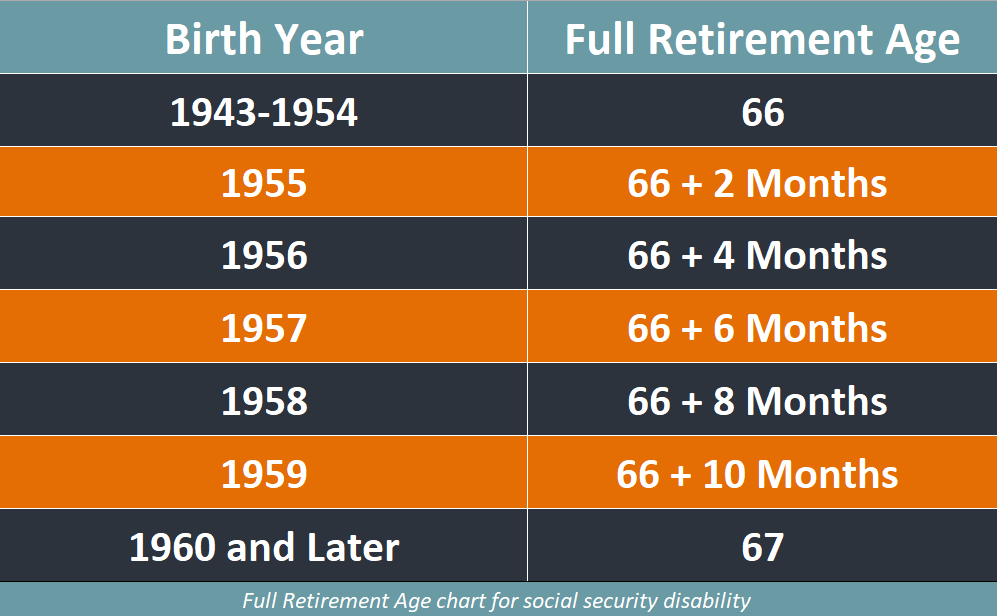
Your Full Retirement Age is determined by your birth year. For those born in 1943 through 1954, FRA is 66. It gradually increases for those born after 1954, reaching 67 for anyone born in 1960 or later. Knowing your specific FRA is fundamental, as it serves as the benchmark for calculating early or delayed retirement benefits. The SSA provides clear charts and tools to help you identify your precise FRA, which is often a specific age and number of months.
The Advantages and Disadvantages of Claiming Early
You can start receiving Social Security benefits as early as age 62. However, claiming early comes with a significant and permanent reduction in your monthly benefit. The reduction is approximately 5/9 of 1% for each month before your FRA, up to 36 months, and 5/12 of 1% for each additional month. This can lead to a reduction of up to 30% if you claim at 62 when your FRA is 67.
Advantages of claiming early:
-
You receive benefits sooner, which can be critical if you need the income or are unable to work due to health issues or job loss.
-
You get to enjoy your benefits over a potentially longer period.
Disadvantages of claiming early:
-
A permanently reduced monthly benefit, which means less income over your lifetime, especially if you live a long life.
-
If you continue to work while claiming early benefits, your benefits may be temporarily withheld if your earnings exceed a certain annual limit (the “earnings test”). This limit only applies until you reach your FRA.
Maximizing Benefits by Delaying Claiming
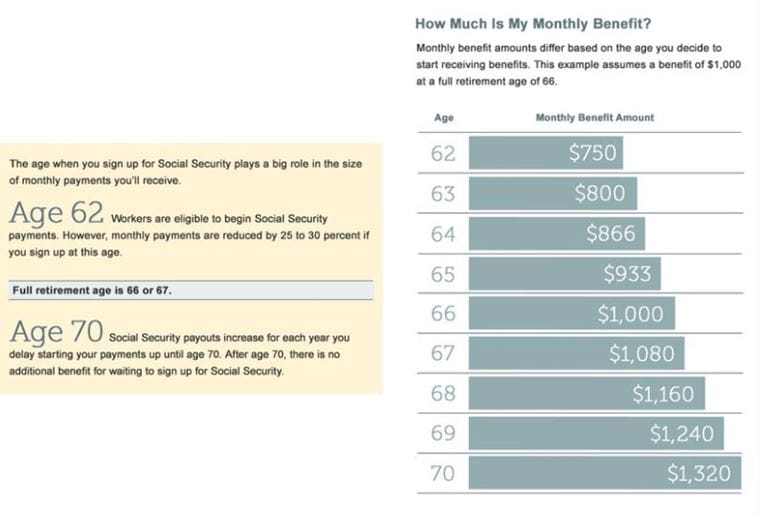
Conversely, delaying the start of your Social Security benefits past your FRA can substantially increase your monthly payment. As mentioned earlier, for each year you delay past your FRA, up to age 70, you earn Delayed Retirement Credits (DRCs). These credits permanently increase your benefit by 8% per year.
Advantages of delaying claiming:
-
A significantly higher monthly benefit for the rest of your life. This is particularly advantageous for those with a longer life expectancy.
-
Enhanced survivor benefits for your spouse, as their benefit is based on your increased amount.
-
No earnings test applies once you reach your FRA, allowing you to work and receive full benefits simultaneously.
Disadvantages of delaying claiming:
-
You forgo benefits for several years, which might be a challenge if you need the income immediately.
-
If you have a shorter life expectancy, the total cumulative benefits might not outweigh the years of foregone income.
The decision of when to claim is deeply personal and depends on your health, financial needs, other retirement income sources, and marital status. It’s a strategic choice that deserves careful consideration and often professional advice.
Other Factors Affecting Your Social Security Payout
Beyond your earnings and claiming age, several other elements can influence the amount you ultimately receive from Social Security. These factors range from tax implications to benefits for family members and specific provisions for certain types of employment.
Taxation of Social Security Benefits
It’s a common misconception that Social Security benefits are entirely tax-free. In reality, a portion of your benefits may be subject to federal income tax, depending on your “provisional income.” Provisional income is the sum of your adjusted gross income (AGI), tax-exempt interest, and half of your Social Security benefits.
-
If your provisional income is between $25,000 and $34,000 (single filer) or $32,000 and $44,000 (married filing jointly), up to 50% of your benefits may be taxable.
-
If your provisional income exceeds $34,000 (single filer) or $44,000 (married filing jointly), up to 85% of your benefits may be taxable.
Some states also tax Social Security benefits, though most do not. It’s crucial to factor these potential taxes into your retirement income planning, as they can reduce your net benefit.
Spousal and Survivor Benefits
Social Security isn’t just for individual retirees; it extends a safety net to families.
-
Spousal benefits: If you are married, your spouse may be eligible to receive benefits based on your earnings record, even if they never worked or had low earnings. A spouse can receive up to 50% of your full retirement benefit. This benefit might be reduced if they claim early.
-
Survivor benefits: If you pass away, your eligible survivors (spouse, divorced spouse, children, or dependent parents) may receive benefits based on your earnings record. A surviving spouse at their FRA can receive up to 100% of your benefit. This provides crucial financial protection for families after the loss of a primary wage earner. Strategic claiming by the higher-earning spouse can also maximize the survivor benefit for the surviving spouse.
Cost-of-Living Adjustments (COLAs)
Social Security benefits are periodically adjusted to keep pace with inflation through Cost-of-Living Adjustments (COLAs). These annual increases are designed to ensure that the purchasing power of your benefits doesn’t erode over time. COLAs are typically announced in October and apply to benefits starting the following January. The adjustment is based on the Consumer Price Index for Urban Wage Earners and Clerical Workers (CPI-W). While not guaranteed every year, COLAs are a vital feature that helps maintain your standard of living in retirement.
The Windfall Elimination Provision (WEP) and Government Pension Offset (GPO)
For individuals who worked in jobs not covered by Social Security (e.g., some government employees or teachers) but also had Social Security-covered employment, two provisions can affect their benefits:
-
Windfall Elimination Provision (WEP): If you receive a pension from a job where you didn’t pay Social Security taxes, WEP may reduce your Social Security benefit based on your covered earnings. It essentially modifies the PIA formula to prevent what’s considered an “unfair advantage” for those with both non-covered pensions and covered Social Security earnings.
-
Government Pension Offset (GPO): If you receive a government pension based on work not covered by Social Security, and you are also eligible for a Social Security spousal or survivor benefit, the GPO may reduce or entirely eliminate that spousal/survivor benefit. The reduction is typically two-thirds of the amount of your government pension.
These provisions can significantly impact benefits for certain workers and their families, making it essential to understand if they apply to your situation.
Accessing Your Personal Social Security Information
Given the individualized nature of Social Security benefits, the most accurate way to determine “how much Social Security will I draw” is by directly accessing your personal information from the Social Security Administration.
The Importance of My Social Security Account
The SSA offers a free online service called “My Social Security Account.” Creating an account is highly recommended for anyone aged 18 or older. This secure portal provides a wealth of personalized information. Through your account, you can:
-
View your earnings record and verify its accuracy.
-
Get personalized estimates of your future retirement, disability, and survivor benefits.
-
Review your Social Security Statement.
-
Manage your benefits if you are already receiving them.
This online account is an indispensable tool for retirement planning, allowing you to project different claiming scenarios and understand their financial implications.
Reviewing Your Earnings Statement
Your Social Security Statement, accessible through your My Social Security account, is a critical document. It provides a detailed breakdown of your yearly earnings as reported to the SSA. It’s crucial to review this statement regularly to ensure that all your earnings are accurately recorded. Errors can occur, and if not corrected, they can negatively impact your future benefit amount. If you identify any discrepancies, you should contact the SSA promptly with supporting documentation (like W-2 forms or tax returns) to rectify them.

Utilizing Online Calculators and Resources
Beyond your personalized statement, the SSA website offers various online calculators that can help you estimate your benefits under different scenarios. These include:
-
Retirement Estimator: Provides immediate, personalized estimates of your future benefits based on your actual earnings record.
-
Benefit Calculators: Tools to help you estimate benefits for specific situations, such as early or delayed retirement, spousal benefits, or disability.
These tools allow you to experiment with different claiming ages and project the impact on your monthly benefit, empowering you to make the most informed decision for your financial future. Financial advisors specializing in retirement planning can also offer invaluable assistance in navigating these complex calculations and integrating Social Security into your broader financial strategy.
Ultimately, the question of “How much Social Security will I draw?” requires a personalized approach. While the system has inherent complexities, understanding the underlying factors, utilizing the resources available, and engaging in proactive planning can help you accurately estimate your future benefits and make strategic decisions that maximize your financial security in retirement. Social Security is a powerful component of your retirement puzzle; knowing how it works is the first step to assembling a complete and secure picture.
aViewFromTheCave is a participant in the Amazon Services LLC Associates Program, an affiliate advertising program designed to provide a means for sites to earn advertising fees by advertising and linking to Amazon.com. Amazon, the Amazon logo, AmazonSupply, and the AmazonSupply logo are trademarks of Amazon.com, Inc. or its affiliates. As an Amazon Associate we earn affiliate commissions from qualifying purchases.