
Understanding your potential Social Security benefits is a cornerstone of effective retirement planning. For many Americans, Social Security represents a significant, if not primary, source of income in their later years. The question “how much Social Security can I draw?” is not merely academic; it’s a critical inquiry that shapes financial strategies, influences retirement timelines, and determines lifestyle expectations. Far from a simple, fixed amount, your Social Security benefit is a dynamic figure, intricately linked to your work history, earnings, age at which you claim benefits, and even broader economic factors.
Navigating the complexities of the Social Security Administration’s (SSA) rules and calculations can seem daunting. However, by demystifying the core components that determine your benefit, you can make informed decisions that optimize your financial future. This article will break down the key factors influencing your Social Security check, explain how benefits are calculated, and offer strategic insights into maximizing the amount you receive, ensuring you approach retirement with clarity and confidence.
Understanding Social Security Benefits
Before diving into the specifics of calculation, it’s essential to grasp the fundamental nature and purpose of Social Security and who is eligible to receive its benefits.
What is Social Security?
Social Security is a comprehensive federal insurance program in the United States designed to provide financial protection to millions of Americans. It serves as a social safety net, offering retirement benefits, disability benefits, and survivor benefits. Funded primarily through payroll taxes (FICA or SECA taxes), the system operates on a “pay-as-you-go” basis, meaning current workers’ contributions largely fund current retirees’ and beneficiaries’ payments. Its primary goal is to replace a portion of pre-retirement income, helping to ensure a basic level of financial security for workers and their families when income is lost due to retirement, disability, or death.
Eligibility Requirements
To be eligible for Social Security retirement benefits, you generally need to accumulate a sufficient number of “work credits.” These credits are earned through your employment and earnings over your working life.
-
Work Credits: The SSA awards up to four work credits each year, based on your annual earnings. In 2024, you earn one credit for every $1,730 of earnings, up to the maximum of four credits for earning $6,920.
-
Required Credits: Most people need 40 work credits, earned over at least 10 years of work, to qualify for retirement benefits.
-
Age: While you can start receiving benefits as early as age 62, this is considered early retirement and comes with a permanent reduction in your monthly benefit amount. Your “Full Retirement Age” (FRA) is the age at which you are entitled to receive 100% of your primary insurance amount (PIA), and it varies based on your birth year.
Key Factors Influencing Your Benefit Amount
Your Social Security benefit isn’t a one-size-fits-all figure. Several critical variables come into play, creating a personalized calculation based on your unique circumstances.
Your Earnings Record
The most significant factor determining your benefit is your lifetime earnings. The SSA uses your highest 35 years of earnings, adjusted for inflation (indexed), to calculate your Average Indexed Monthly Earnings (AIME).
-
Indexing Earnings: Your earnings from past years are “indexed” to reflect changes in general wage levels since the year the earnings were paid. This ensures that your past earnings are expressed in terms of their current value, giving a more accurate picture of your average earnings over your career.
-
Top 35 Years: If you work more than 35 years, the years with the lowest (or zero) indexed earnings are dropped from the calculation. If you work fewer than 35 years, the remaining years will be filled with zeros, which will lower your average. This highlights the importance of consistent earnings over a long career.
Your Birth Year and Full Retirement Age (FRA)
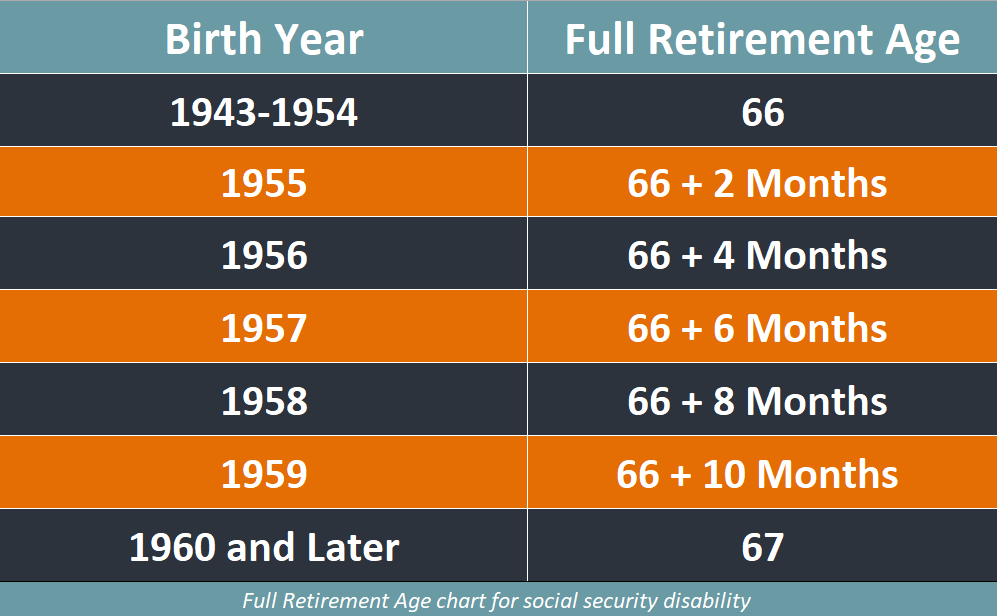
Your Full Retirement Age (FRA) is a crucial benchmark. It’s the age at which you qualify for 100% of the benefit amount calculated from your earnings record. Claiming benefits before or after your FRA will either reduce or increase your monthly payment, respectively.
-
FRA Schedule:
-
Born 1943-1954: FRA is 66
-
Born 1955: FRA is 66 and 2 months
-
Born 1956: FRA is 66 and 4 months
-
Born 1957: FRA is 66 and 6 months
-
Born 1958: FRA is 66 and 8 months
-
Born 1959: FRA is 66 and 10 months
-
Born 1960 or later: FRA is 67
-
When You Decide to Claim Benefits
This is perhaps the most controllable variable in determining your benefit amount.
-
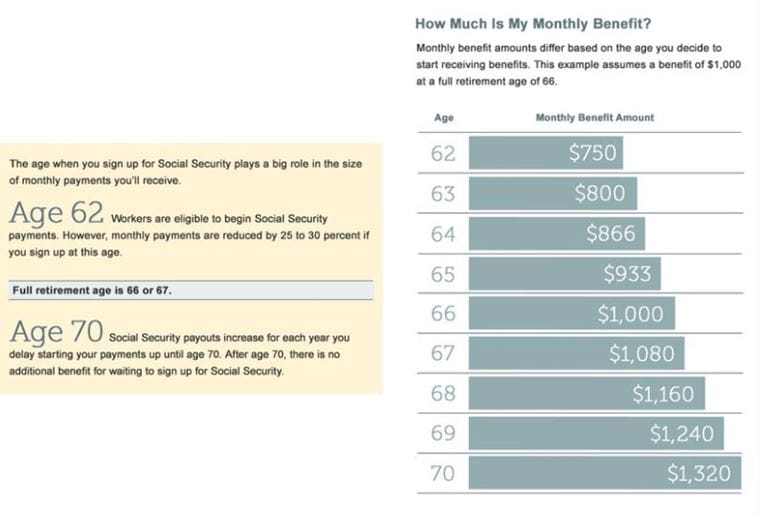
Early Claiming (Age 62 to FRA): If you claim benefits before your FRA, your monthly payment will be permanently reduced. The reduction is approximately 5/9 of 1% for each month before FRA, up to 36 months, and then 5/12 of 1% for each month beyond that. For someone with an FRA of 67, claiming at age 62 results in a roughly 30% reduction.
-
Claiming at Full Retirement Age (FRA): At your FRA, you receive 100% of your Primary Insurance Amount (PIA).
-
Delayed Claiming (FRA to Age 70): For every month you delay claiming benefits past your FRA, up to age 70, you earn Delayed Retirement Credits (DRCs). These credits permanently increase your monthly benefit. DRCs accrue at a rate of 8% per year (or 2/3 of 1% per month). This can lead to a significant increase in your monthly payment – for example, delaying from FRA 67 to age 70 results in a 24% increase. There is no additional benefit to delaying past age 70.
Spousal and Survivor Benefits
Social Security also provides benefits to certain family members based on the worker’s earnings record.
-
Spousal Benefits: A spouse can claim up to 50% of the primary worker’s PIA, provided they are at least age 62 (with reductions) or reach their own FRA. If they are eligible for their own retirement benefit, they will generally receive the higher of the two amounts.
-
Survivor Benefits: Widows, widowers, and eligible children may receive benefits based on the deceased worker’s earnings record. A surviving spouse can receive up to 100% of the deceased worker’s benefit if they claim at their own FRA.
Calculating Your Primary Insurance Amount (PIA)
The Primary Insurance Amount (PIA) is the monthly benefit you are entitled to if you claim at your Full Retirement Age. It’s the starting point for all other benefit calculations.
The AIME Calculation
As mentioned, the SSA calculates your Average Indexed Monthly Earnings (AIME) using your 35 highest earning years.
-
Step 1: Index Earnings: Historical earnings are adjusted to current wage levels.
-
Step 2: Select High 35: The 35 highest indexed earning years are selected.
-
Step 3: Sum and Divide: These 35 years of indexed earnings are summed up and then divided by 420 (35 years x 12 months) to arrive at the AIME.
Bend Points and the PIA Formula
Once your AIME is determined, the SSA uses a progressive formula with “bend points” to calculate your PIA. This formula is designed to replace a higher percentage of earnings for lower-income workers than for higher-income workers, ensuring a basic level of income replacement across the spectrum. For workers who become eligible for retirement benefits in 2024, the formula is:
-
90% of the first $1,174 of AIME
-
32% of AIME between $1,174 and $7,078
-
15% of AIME over $7,078
These “bend points” are adjusted annually. The sum of these three calculated amounts is your PIA. This progressive structure means that someone with a lower AIME will have a larger percentage of their earnings replaced compared to someone with a very high AIME, though the dollar amount will naturally be smaller.
Strategies for Maximizing Your Social Security Benefits
Maximizing your Social Security benefits isn’t about finding loopholes, but rather understanding the rules and making strategic choices throughout your working life and into retirement.
Work Longer and Earn More
This is the most straightforward way to boost your benefit.
-
Replace Low-Earning Years: If you’re still working and have any years with low or zero earnings in your top 35, continuing to work and earn more can push those lower years out of the calculation, increasing your AIME.
-
Increase Overall Earnings: Higher earnings during your working career directly translate to a higher AIME, and subsequently, a higher PIA.
-
Eliminate “Zero” Years: If you’ve had periods out of the workforce, earning enough to complete 35 years of substantial earnings will significantly impact your final benefit.
Delaying Benefits Past Your FRA
As discussed, delaying your claim past your Full Retirement Age (up to age 70) earns you Delayed Retirement Credits (DRCs). This is often the most powerful strategy for individuals who are in good health and do not immediately need the income.
-
Compounding Growth: The 8% annual increase (for those born 1943 or later) is a substantial, guaranteed return that few other investments can match with similar risk-free certainty.
-
Spousal Benefits: Delaying also potentially increases the benefit for a surviving spouse, as their survivor benefit is based on your benefit amount.
Coordinating with Your Spouse
For married couples, coordinating claiming strategies can yield a higher combined lifetime benefit.
-
Higher Earner Delays: Often, it makes sense for the higher-earning spouse to delay claiming until age 70, maximizing their own benefit and thus the potential survivor benefit for the lower-earning spouse.
-
Lower Earner Claims Early/At FRA: The lower-earning spouse might claim their own benefit earlier, providing some income while the higher earner’s benefit grows. Once the higher earner claims, the lower-earner may be able to switch to a higher spousal benefit (50% of the higher earner’s PIA) if it’s more than their own.
-
“File and Suspend” and “Restricted Application”: While these specific strategies have been largely eliminated for those born after January 1, 1954, older individuals may still benefit from specific rules. It’s crucial to check with the SSA or a financial advisor on these nuanced rules.
Understanding Taxation of Benefits
While not directly impacting the amount you draw, understanding how your Social Security benefits may be taxed is crucial for financial planning.
-
Provisional Income: If your “provisional income” (adjusted gross income + tax-exempt interest + 50% of your Social Security benefits) exceeds certain thresholds, a portion of your benefits may be subject to federal income tax.
-
Up to 50% of benefits taxable if provisional income is between $25,000 and $34,000 for individuals ($32,000 and $44,000 for married filing jointly).
-
Up to 85% of benefits taxable if provisional income exceeds $34,000 for individuals ($44,000 for married filing jointly).
-
-
State Taxes: Some states also tax Social Security benefits. Research your state’s specific laws.
Essential Tools and Resources for Planning
You don’t have to navigate Social Security planning alone. Several valuable tools and resources are available to help you understand your options.
Your Social Security Statement
This is arguably the most important document for your Social Security planning.
-
Access Online: You can create an account at my Social Security (ssa.gov/myaccount) to view your personalized statement anytime.
-
What It Shows: Your statement provides an estimate of your future benefits at different claiming ages (early, FRA, and age 70), a summary of your lifetime earnings, and information about disability and survivor benefits.
-
Check for Errors: It’s vital to review your earnings record for accuracy. Errors could negatively impact your future benefits.
Online Calculators and Planning Tools
The SSA website offers various calculators to help you model different scenarios.
-
Retirement Estimator: Provides personalized estimates based on your actual earnings record.
-
Benefit Calculators: Allow you to project benefits under different claiming ages and scenarios.
-
Third-Party Tools: Many financial planning websites and software offer sophisticated Social Security calculators that can integrate with your overall retirement plan.
Seeking Professional Advice
For complex situations or a comprehensive retirement strategy, consulting a qualified financial advisor is highly recommended.
-
Specialized Knowledge: Advisors specializing in retirement planning can help you integrate Social Security into your broader financial picture, considering other income sources, investments, and tax implications.
-
Personalized Strategies: They can help analyze your unique circumstances, including health, longevity expectations, and family needs, to develop an optimal claiming strategy for you and your spouse.

Conclusion
The question “how much Social Security can I draw?” is a crucial starting point for effective retirement planning. While the answer is multifaceted, influenced by your earnings, birth year, and claiming age, the good news is that you have a significant degree of control over the final amount. By understanding the core mechanics of how benefits are calculated, strategizing your claiming age, and leveraging available resources, you can make informed decisions that maximize your lifetime income from Social Security. This essential benefit, when thoughtfully integrated into your overall financial strategy, can provide a robust foundation for a secure and comfortable retirement. Start planning today by accessing your Social Security statement and exploring your options.
aViewFromTheCave is a participant in the Amazon Services LLC Associates Program, an affiliate advertising program designed to provide a means for sites to earn advertising fees by advertising and linking to Amazon.com. Amazon, the Amazon logo, AmazonSupply, and the AmazonSupply logo are trademarks of Amazon.com, Inc. or its affiliates. As an Amazon Associate we earn affiliate commissions from qualifying purchases.