
For millions of Americans, Social Security represents a cornerstone of their retirement planning, a vital safety net providing financial security in their later years. Yet, despite its widespread importance, the intricacies of how benefits are calculated and the factors influencing their amount often remain a mystery. Understanding your potential Social Security benefits is not just about a future payment; it’s about empowering yourself to make informed decisions that can significantly impact your financial well-being throughout retirement.
Navigating the landscape of Social Security can seem daunting, with its acronyms, age requirements, and various claiming strategies. This comprehensive guide aims to demystify the process, breaking down the key elements that determine your benefit amount and offering insights into how you can optimize your claiming strategy. Whether you’re years away from retirement or approaching the decision to file, gaining clarity on your Social Security benefits is a critical step towards securing a stable financial future.
Understanding the Foundation of Social Security Benefits
Before delving into specific calculations, it’s crucial to grasp the fundamental principles upon which Social Security operates. It’s not a savings account in your name; rather, it’s a social insurance program funded by current workers and their employers through payroll taxes. These taxes, known as FICA (Federal Insurance Contributions Act) taxes, fund benefits for current retirees, survivors, and individuals with disabilities.
What is Social Security, and Who Funds It?
Social Security is a federal program that provides financial protection to millions of Americans. Its primary purpose is to offer income support for retirees, disabled workers, and survivors of deceased workers. It operates on a “pay-as-you-go” system, meaning that today’s workers’ contributions largely fund today’s beneficiaries. The system’s long-term solvency is a frequent topic of debate, but its fundamental role in providing a basic level of financial security remains unchallenged. The program is funded through a dedicated payroll tax: 6.2% from employees and 6.2% from employers, totaling 12.4% on earnings up to a certain annual limit (the “taxable maximum”). Self-employed individuals pay the full 12.4%.
The Concept of “Work Credits” and Eligibility
To qualify for Social Security benefits, you need to accumulate “work credits” over your career. The Social Security Administration (SSA) awards these credits based on your annual earnings. In 2024, you earn one work credit for every $1,730 in earnings, up to a maximum of four credits per year. Most people need 40 credits, which typically translates to 10 years of work, to be eligible for retirement benefits. It’s important to note that these credits don’t need to be consecutive; they simply accumulate over your working life. While 40 credits are needed for retirement, fewer may be required for disability or survivor benefits, depending on your age and the type of benefit.
Types of Social Security Benefits Available
While retirement benefits are the most commonly discussed, Social Security offers a broader range of protections:
- Retirement Benefits: Paid to eligible workers when they retire, based on their earnings history.
- Disability Benefits: Provided to workers who are unable to work due to a severe medical condition expected to last at least a year or result in death.
- Survivors Benefits: Paid to eligible family members (spouses, children, parents) of a deceased worker who had earned enough work credits.
- Spousal Benefits: Available to a spouse or divorced spouse of a retired or disabled worker, even if they haven’t worked or earned enough credits on their own record.
Understanding these different categories is crucial, as eligibility and calculation methods can vary.
Key Factors That Determine Your Benefit Amount
Your personal Social Security benefit is not a one-size-fits-all figure. It’s a highly individualized calculation influenced by several critical factors throughout your working life. Knowing what these factors are empowers you to estimate your benefits and plan accordingly.
Your Earnings History: The Foundation of Your Benefit
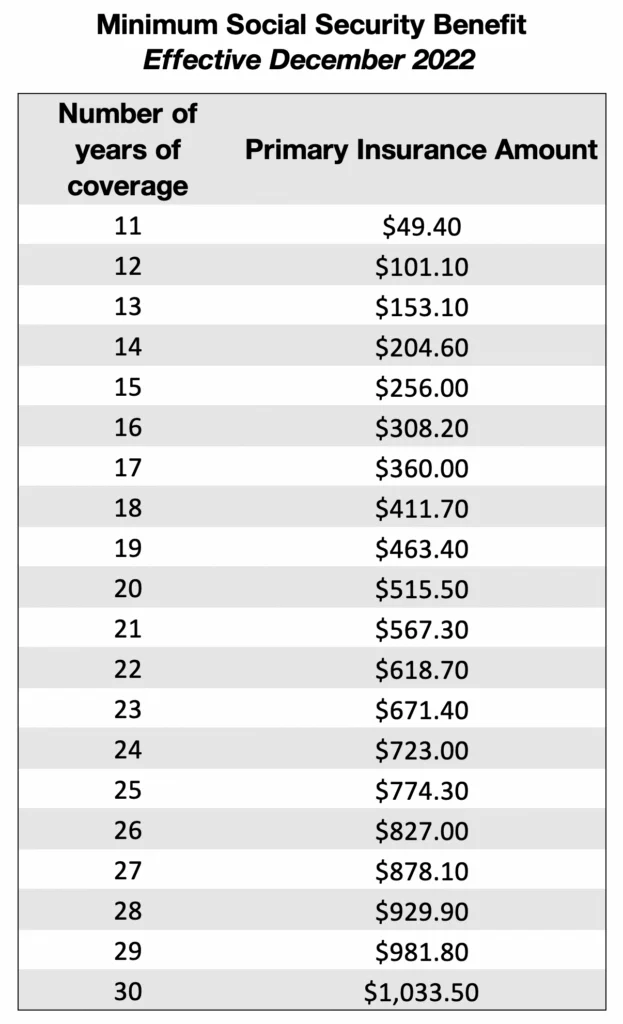
The most significant determinant of your Social Security benefit is your lifetime earnings. The SSA uses your “highest 35 years of earnings” to calculate your Primary Insurance Amount (PIA), which is the benefit you would receive if you started claiming at your Full Retirement Age (FRA).
- Inflation Adjustment: Your earnings from past years are first adjusted for inflation to reflect their value in today’s dollars, a process called “wage indexing.”
- Average Monthly Earnings: The indexed earnings from your 35 highest-earning years are then summed and divided by 420 (the number of months in 35 years) to arrive at your Average Indexed Monthly Earnings (AIME).
- Bend Points: The SSA applies a progressive formula using “bend points” to your AIME to determine your PIA. This formula is designed to replace a higher percentage of earnings for lower-income workers than for higher-income workers, making the system more progressive. If you have fewer than 35 years of earnings, zero earnings years will be included in the calculation, which will reduce your overall average. This highlights the importance of consistent employment.
Your Age at Claiming: A Crucial Decision Point
While your earnings history sets your PIA, the age at which you decide to start receiving benefits is perhaps the single most impactful decision you’ll make regarding your monthly payment amount.
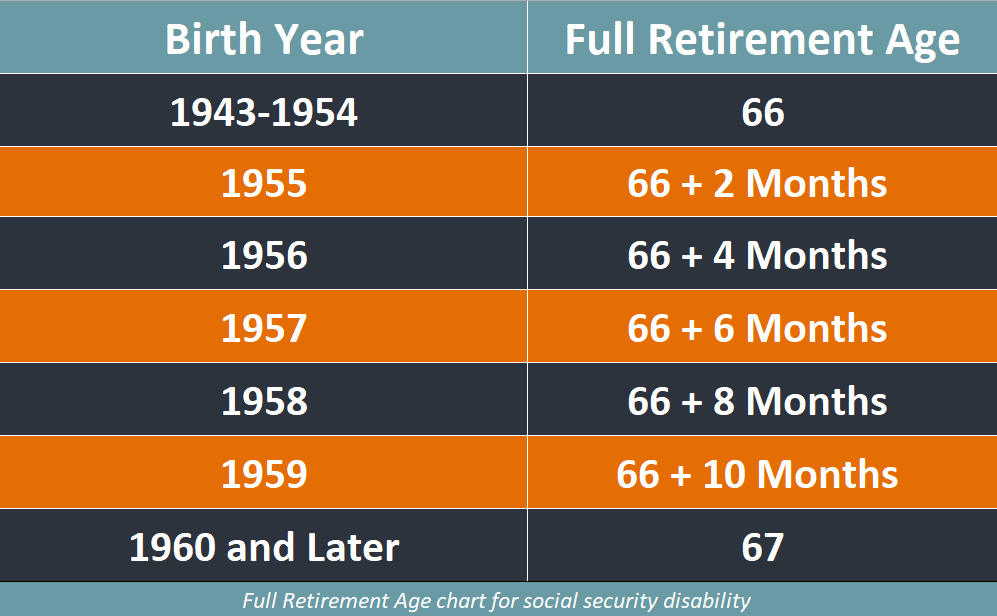
- Full Retirement Age (FRA): This is the age at which you are entitled to 100% of your PIA. FRA varies based on your birth year. For those born between 1943 and 1954, it’s 66. For those born after 1960, it’s 67. For birth years in between, it gradually increases.
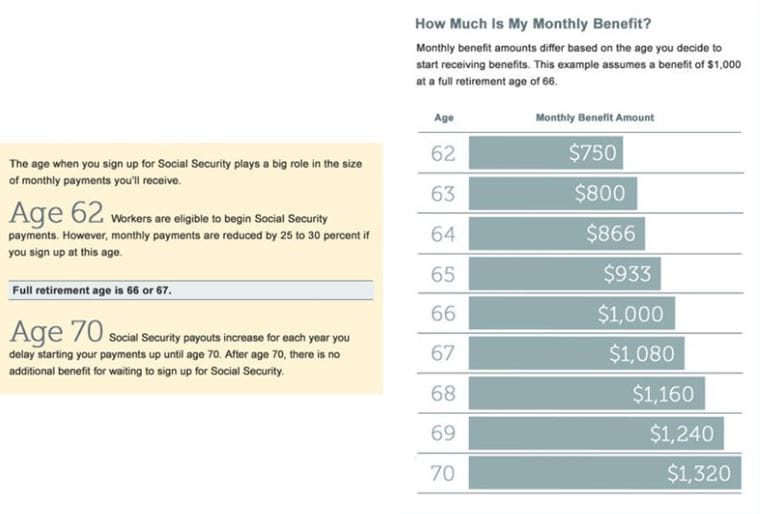
- Early Claiming (Age 62): You can start receiving benefits as early as age 62, but your monthly benefit will be permanently reduced. The reduction can be substantial, up to 30% if your FRA is 67. While appealing for immediate income, this permanent reduction needs careful consideration.
- Delayed Claiming (Up to Age 70): For each month you delay claiming past your FRA, up to age 70, your benefit amount increases. These are called “Delayed Retirement Credits” (DRCs). DRCs add 8% per year to your benefit, meaning that by waiting until age 70, you could receive a benefit 24% to 32% higher than your FRA benefit, depending on your specific FRA. This is often cited as one of the best “returns” on an investment available.
Cost-of-Living Adjustments (COLAs)
Once you begin receiving benefits, your payments are generally adjusted annually to keep pace with inflation. These are called Cost-of-Living Adjustments (COLAs). COLAs are determined by changes in the Consumer Price Index for Urban Wage Earners and Clerical Workers (CPI-W). If the CPI-W increases, your benefits will increase by the same percentage, helping to preserve your purchasing power over time. While not a factor in your initial benefit calculation, COLAs are crucial for maintaining the real value of your benefits throughout your retirement.
Other Influencing Factors
Beyond earnings and claiming age, other scenarios can affect your benefit:
- Spousal and Survivor Benefits: If your spouse has a higher earnings record, you might be eligible for a spousal benefit (up to 50% of their FRA benefit) or a survivor benefit (up to 100% of their benefit).
- Working While Receiving Benefits: If you claim benefits before your FRA and continue to work, your benefits may be temporarily reduced if your earnings exceed a certain limit. These withheld benefits are not lost; they typically result in a higher monthly benefit once you reach your FRA.
- Taxation of Benefits: A portion of your Social Security benefits may be subject to federal income tax if your “provisional income” (adjusted gross income + tax-exempt interest + 50% of your Social Security benefits) exceeds certain thresholds. Some states also tax Social Security benefits.
Maximizing Your Social Security Benefits
Given the various factors at play, a proactive approach to Social Security planning can significantly enhance your retirement income. Strategic decisions, especially concerning your claiming age, can translate into thousands of additional dollars over your lifetime.
The Power of Delayed Claiming: Weighing the Trade-offs
The decision to delay claiming benefits until age 70 is often the most impactful strategy for maximizing your monthly payout. As noted, each year you delay past your FRA adds 8% in Delayed Retirement Credits, culminating in a potentially 24-32% higher monthly check. This strategy is particularly advantageous for individuals who are in good health, have other sufficient income sources to cover expenses in their early retirement years, and have a family history of longevity.
However, delaying isn’t for everyone. If you have immediate financial needs, poor health, or no other retirement income, claiming early might be a necessary or even optimal choice. The key is to weigh the higher monthly payout against the foregone income during the delay period and your personal health and financial circumstances. This involves break-even analysis – calculating how long it would take for the higher delayed benefit to compensate for the early benefits you missed.
Coordinated Claiming Strategies for Couples
For married couples, Social Security planning becomes more complex but also offers greater opportunities for optimization. A coordinated claiming strategy can significantly increase the couple’s combined lifetime benefits.
- Higher Earner Delaying: Often, the strategy involves the higher-earning spouse delaying benefits until age 70 to maximize their individual benefit, which will also result in a higher survivor benefit for the surviving spouse should the higher earner pass away first.
- Lower Earner Claiming Early/FRA: The lower-earning spouse might claim their benefits at their FRA or even earlier, providing some income while the higher earner’s benefit grows.
- Spousal Benefits: A spouse can claim a spousal benefit (up to 50% of their partner’s FRA benefit) if their own benefit is less than their spousal benefit and their partner has already filed for their benefits. This can be combined with their own delayed claiming strategy, though specific rules apply based on birth year.
Consulting with a financial advisor specializing in Social Security can be invaluable for couples to navigate these complex rules and identify their optimal strategy.
Understanding Earnings Limits While Working
If you decide to claim Social Security benefits before your Full Retirement Age (FRA) and continue to work, your benefits may be temporarily reduced if your earnings exceed certain annual limits.
- Before FRA: For 2024, if you are under your FRA, $1 in benefits will be withheld for every $2 you earn above $22,320.
- In the Year You Reach FRA: In the year you reach FRA, a higher limit applies, and $1 in benefits will be withheld for every $3 you earn above $59,520 (for 2024), but only counting earnings before the month you reach FRA.
Once you reach your FRA, there are no limits on how much you can earn while receiving Social Security benefits; your benefits will not be reduced, no matter how much you earn. Importantly, any benefits withheld due to these earnings limits are not permanently lost. When you reach your FRA, your monthly benefit amount will be recalculated to account for the months benefits were withheld, effectively increasing your monthly payment for the rest of your life.
Navigating the Application Process
Once you’ve determined your optimal claiming strategy, the next step is to apply for your benefits. The application process is generally straightforward, but requires attention to detail and a timely submission.
When and How to Apply
The earliest you can apply for Social Security retirement benefits is four months before you want your benefits to start. For example, if you want your benefits to begin in January, you can apply in September of the previous year.
The Social Security Administration offers several convenient ways to apply:
- Online: The easiest and fastest way for most people to apply for retirement, spouse’s, or Medicare-only benefits is through the SSA’s website (www.ssa.gov). The online application typically takes less than 15 minutes to complete.
- By Phone: You can call the SSA’s toll-free number at 1-800-772-1213 to speak with a representative and apply.
- In Person: You can visit your local Social Security office. It’s often advisable to call ahead and schedule an appointment to minimize waiting times.
Required Documents and Information
Regardless of how you apply, you’ll need to provide certain documents and information. Having these ready in advance can expedite the process:
- Your Social Security number (and your spouse’s, if applicable).
- Your birth certificate or other proof of birth.
- Proof of U.S. citizenship or lawful alien status (if you were not born in the U.S.).
- Your marriage certificate (if applying for spousal benefits).
- Your W-2 forms and/or self-employment tax returns for the previous year.
- Bank account information for direct deposit.
- Information about any military service.
- The dates of any prior marriages if applying as a divorced spouse.
The SSA website provides a comprehensive checklist of necessary documents.
What Happens After You Apply and Appealing Decisions
After you submit your application, the SSA will review it and notify you of their decision. This usually takes a few weeks to a few months. If your application is approved, you will receive a letter detailing your benefit amount, the start date of your payments, and information about direct deposit. Benefits are typically paid on a specific day of the month, depending on your birth date.
If your application is denied, or if you disagree with the benefit amount, you have the right to appeal the decision. The appeal process generally involves several levels: reconsideration, a hearing by an administrative law judge, a review by the Appeals Council, and finally, a review by a federal court. It’s important to understand the deadlines for each stage of appeal and to gather any additional documentation that supports your claim.
Planning for Retirement Beyond Social Security
While Social Security provides a vital income stream, it is generally intended to be a foundational layer of your retirement income, not the sole source. To achieve a truly comfortable and secure retirement, it’s essential to build upon this foundation with other savings and investment strategies.
The Role of Social Security in Your Overall Retirement Plan
Financial experts often suggest that Social Security will replace approximately 40% of an average worker’s pre-retirement income. For lower earners, it might replace a higher percentage, and for higher earners, a lower percentage. This means a significant portion of your retirement income will need to come from other sources. Viewing Social Security as one pillar among several – alongside personal savings, investments, and potentially part-time work – is crucial for holistic retirement planning. It provides a guaranteed, inflation-adjusted income stream that can cover basic living expenses, but rarely affords a lavish lifestyle on its own.
Supplementing Your Social Security Income
To bridge the gap between your Social Security benefits and your desired retirement lifestyle, a diversified approach to saving and investing is paramount.
- Employer-Sponsored Plans: Maximize contributions to 401(k)s, 403(b)s, and other workplace retirement plans. Take full advantage of any employer matching contributions, which are essentially free money.
- Individual Retirement Accounts (IRAs): Utilize Traditional or Roth IRAs. Traditional IRAs offer tax-deductible contributions (in most cases) and tax-deferred growth, while Roth IRAs offer tax-free withdrawals in retirement.
- Taxable Investment Accounts: For those who have maxed out tax-advantaged accounts, brokerage accounts holding stocks, bonds, and mutual funds can provide additional growth potential and income.
- Other Income Streams: Consider real estate investments, annuities, or even a part-time job during early retirement to supplement your income.
Consulting a Financial Advisor and Staying Informed
Navigating the complexities of Social Security and integrating it into a broader retirement plan can be challenging. A qualified financial advisor who specializes in retirement planning can provide personalized guidance. They can help you:
- Estimate your benefits accurately.
- Analyze optimal claiming strategies for your unique situation (especially for couples).
- Develop a comprehensive retirement income plan that coordinates Social Security with your other assets.
- Address potential tax implications of your benefits.
Furthermore, staying informed about potential changes to Social Security legislation is important. While major overhauls are difficult to pass, ongoing discussions about the program’s solvency can lead to adjustments that might affect future benefits. Reliable sources like the Social Security Administration’s website, reputable financial news outlets, and professional financial advisors can help you stay up-to-date.
In conclusion, understanding “how much Social Security benefits will I receive” is more than just a calculation; it’s a critical component of your overall financial security blueprint. By appreciating the factors that shape your benefits, strategically planning your claiming age, and integrating Social Security into a comprehensive retirement strategy, you can confidently build a financially stable and comfortable future.
aViewFromTheCave is a participant in the Amazon Services LLC Associates Program, an affiliate advertising program designed to provide a means for sites to earn advertising fees by advertising and linking to Amazon.com. Amazon, the Amazon logo, AmazonSupply, and the AmazonSupply logo are trademarks of Amazon.com, Inc. or its affiliates. As an Amazon Associate we earn affiliate commissions from qualifying purchases.