
Managing your finances effectively requires a shift in perspective from focusing on gross income to understanding your true net earnings. For many professionals, especially those navigating the world of freelancing, entrepreneurship, or side hustles, the question of how much to save for taxes is more than a clerical concern—it is a fundamental pillar of business sustainability. Unlike traditional employees who see their tax obligations settled before their paycheck hits their bank account, independent earners and investors must act as their own payroll department. This responsibility requires a disciplined approach to cash flow management and a deep understanding of the various layers of taxation that apply to modern income.
Understanding Your Tax Obligation: The Foundation of Financial Planning
To determine a precise savings goal, one must first understand the architecture of the tax system. In most jurisdictions, income is not taxed at a single flat rate; rather, it is subject to a progressive system where different portions of your income fall into different brackets. Furthermore, the type of work you do dictates the specific taxes you owe.
Identifying Your Income Sources
The first step in tax planning is categorizing your income. W-2 employees have federal income tax, Social Security, and Medicare withheld by their employers. However, if you earn income through a 1099 contract, a small business, or capital gains from investments, you are responsible for the entire tax burden. This includes the “employer” portion of payroll taxes, which is often a surprise to new entrepreneurs. Additionally, if you earn dividends or realize gains from selling assets like stocks or real estate, these may be taxed at different rates than your ordinary income.
The Difference Between W-2 and 1099 Income
For a traditional employee, the employer pays half of the FICA (Federal Insurance Contributions Act) taxes, which cover Social Security and Medicare. For the self-employed, the “Self-Employment Tax” covers both the employee and employer portions, totaling 15.3% on top of standard income tax. This is why a freelancer earning $100,000 must save significantly more than a salaried employee earning the same amount. Recognizing this gap is the first step toward avoiding a liquidity crisis during tax season.
Marginal Tax Rates vs. Effective Tax Rates
A common misconception in personal finance is that if you fall into the 22% tax bracket, your entire income is taxed at 22%. In reality, you pay a lower rate on the first “chunk” of your income, a slightly higher rate on the next, and so on. Your effective tax rate—the actual percentage of your total income that goes to the government—is usually lower than your top marginal bracket. When saving for taxes, it is safer to estimate based on your marginal rate to ensure you have a buffer for any unexpected income spikes.
Determining the Ideal Percentage to Set Aside
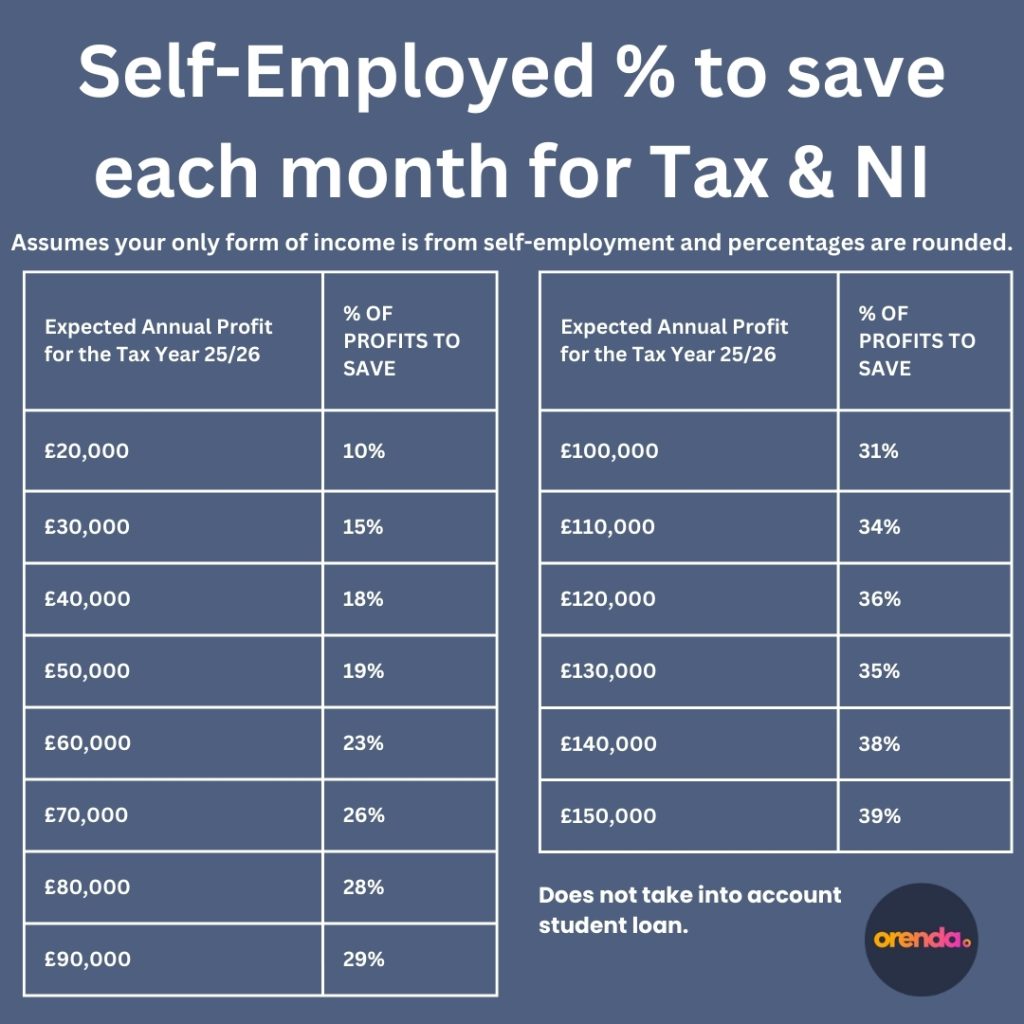
While the “correct” amount varies based on location and income level, financial experts generally suggest a range that provides both safety and flexibility. For most individuals in the United States, saving between 25% and 35% of gross income is the gold standard for tax readiness.
The 30% Rule for Self-Employed Professionals
A reliable rule of thumb for freelancers and small business owners is to set aside 30% of every payment received. This percentage is designed to cover federal income tax, the 15.3% self-employment tax, and a modest state income tax. While 30% might feel aggressive, it accounts for the lack of employer-sponsored withholding and ensures that you are never caught off guard. If your state has a high income tax (such as California or New York), you may need to push this figure closer to 35% or 40%.
Calculating Self-Employment Tax (Social Security and Medicare)
The self-employment tax rate is 15.3%, consisting of 12.4% for Social Security and 2.9% for Medicare. It is important to note that this tax is calculated on your net earnings—your business income minus your business expenses. By diligently tracking your expenses, you reduce the base amount upon which this 15.3% is calculated, which is one of the most effective ways to lower your overall tax bill.
Factoring in State and Local Taxes
While federal taxes are the largest hurdle, state and local taxes cannot be ignored. Some states, like Texas or Florida, have no state income tax, allowing residents to save a smaller percentage. Others have tiered systems similar to the federal government. Researching your specific state’s tax brackets is essential for a precise savings strategy. If you live in a city with a local income tax, such as Philadelphia or New York City, that small additional percentage must also be factored into your monthly savings plan.
Strategies for Effective Tax Savings and Asset Protection
Saving for taxes shouldn’t just be about putting money in a “do not touch” pile; it should involve strategic moves that lower your total liability while building long-term wealth. The tax code provides numerous incentives for those who proactively manage their finances.
The Power of Tax-Advantaged Accounts
One of the most effective ways to reduce how much you owe the government is to contribute to tax-advantaged accounts like a 401(k), a Traditional IRA, or a Health Savings Account (HSA). Contributions to these accounts are often “pre-tax,” meaning they are deducted from your gross income before your tax bill is calculated. For example, if you earn $80,000 and contribute $10,000 to a SEP IRA, the government only taxes you as if you earned $70,000. This not only builds your retirement nest egg but also immediately lowers the amount you need to save for the upcoming tax year.
Tracking Business Expenses and Deductions
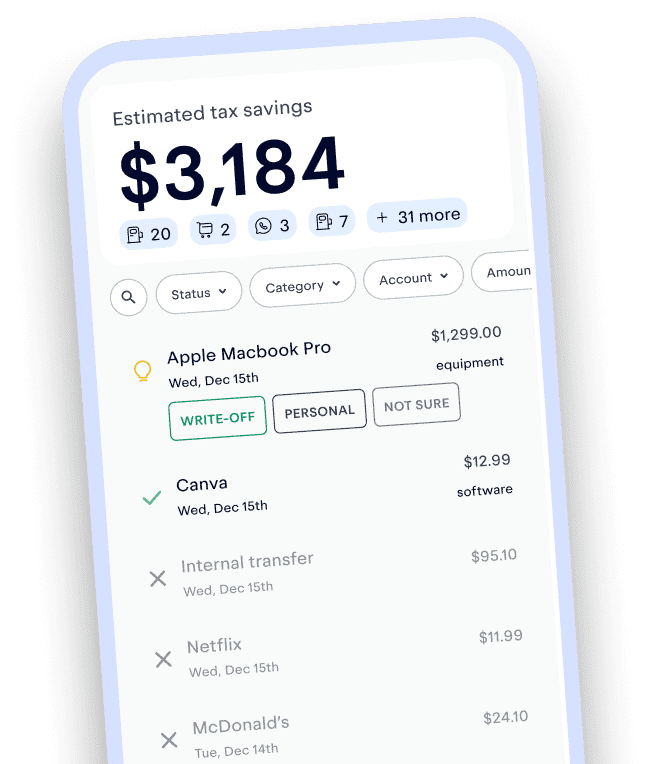
For business owners, every dollar spent on a legitimate business expense is a dollar that isn’t taxed. This includes office supplies, software subscriptions, a portion of your home internet, and professional development. Using robust financial tools or accounting software to categorize these expenses in real-time prevents the “shoebox of receipts” panic in April. Maximizing deductions is not about “beating the system”; it is about using the legal framework provided to ensure you are only paying tax on your actual profit, not your gross revenue.
Estimating Quarterly Payments to Avoid Penalties
The IRS operates on a “pay-as-you-go” system. If you expect to owe more than $1,000 in taxes for the year, you are generally required to make quarterly estimated tax payments. Failing to do so can result in underpayment penalties. To stay compliant, you should divide your estimated annual tax bill by four and send those payments by the designated deadlines (usually April, June, September, and January). Making these payments throughout the year also makes the final tax deadline much less stressful, as the bulk of the obligation has already been met.
Organizing Your Cash Flow for Seamless Tax Management
The biggest challenge in tax planning is often psychological. When a large payment hits your bank account, it is tempting to view the entire sum as “spendable” income. Creating a system that automates the separation of tax funds is the best way to ensure financial stability.
Using Separate Bank Accounts for Tax Reserves
A “mental note” is rarely sufficient for tax planning. Many successful entrepreneurs maintain a separate high-yield savings account exclusively for taxes. When a client pays an invoice, 30% of that money is immediately transferred into the tax account. By keeping these funds separate from your operating capital and personal spending money, you remove the temptation to dip into your tax reserves for lifestyle expenses or business investments.
Leveraging High-Yield Savings Accounts (HYSA)
Since tax money often sits for several months before it is paid to the government, it should be working for you. By placing your tax reserves in a High-Yield Savings Account, you can earn a modest return on that capital. While the interest earned is itself taxable income, the extra yield can help offset some of the costs of tax preparation or professional advice, essentially giving you a “discount” on your tax bill through smart cash management.
Automation: The Secret to Stress-Free Tax Preparation
In the modern financial landscape, there is no reason to calculate tax savings manually. Many digital banks and accounting platforms allow you to set up “rules” where a percentage of every incoming deposit is automatically moved to a sub-account. This “set it and forget it” approach ensures that your tax savings grow in tandem with your income, providing a frictionless path to financial readiness.
Long-Term Financial Health: Beyond the Annual Return
Tax planning is not a seasonal event; it is a continuous process that evolves as your income grows and your financial goals shift. A proactive stance on taxes allows you to make better-informed decisions regarding investments, large purchases, and business expansions.
Tax Diversification in Your Investment Portfolio
Just as you diversify your assets to manage risk, you should diversify your tax liability. This involves holding a mix of taxable accounts (like a standard brokerage account), tax-deferred accounts (like a 401(k)), and tax-free accounts (like a Roth IRA). By having different “buckets” of money to draw from in the future, you can control your taxable income in retirement, potentially staying in a lower tax bracket even if you have a high net worth.
The Role of Professional Tax Advice
As your financial situation becomes more complex—perhaps involving rental properties, international income, or employee stock options—the ROI on professional tax advice increases exponentially. A Certified Public Accountant (CPA) or tax strategist can identify credits and incentives that you might overlook. While a professional fee is an upfront cost, the amount saved through strategic planning and the avoidance of costly errors often far outweighs the expense.
Preparing for Life Changes and Shifting Tax Brackets
Marriage, the birth of a child, buying a home, or moving to a different state can all drastically change your tax profile. Every major life milestone should trigger a review of your tax savings strategy. For instance, the “Marriage Penalty” or “Marriage Bonus” can shift your marginal bracket, while a new mortgage might provide interest deductions that lower your overall liability. Staying agile and adjusting your savings percentage in real-time ensures that you remain on the path toward financial independence, regardless of how your personal or professional life evolves.
aViewFromTheCave is a participant in the Amazon Services LLC Associates Program, an affiliate advertising program designed to provide a means for sites to earn advertising fees by advertising and linking to Amazon.com. Amazon, the Amazon logo, AmazonSupply, and the AmazonSupply logo are trademarks of Amazon.com, Inc. or its affiliates. As an Amazon Associate we earn affiliate commissions from qualifying purchases.