
The question of how much to save every month is one of the most fundamental yet complex inquiries in the world of personal finance. For some, the answer is a fixed percentage; for others, it is a shifting target dictated by life stages, income fluctuations, and long-term aspirations. In an era of economic volatility and rising living costs, finding the “sweet spot” for savings is no longer just about discipline—it is about strategic planning and financial literacy.
While there is no “one-size-fits-all” figure, there are proven frameworks and mathematical principles that can help you determine the ideal amount for your specific situation. This guide explores the foundational rules of saving, how to prioritize your financial goals, and the psychological shifts necessary to maintain a sustainable savings rate.
The Foundations of a Solid Savings Strategy
Before determining a specific dollar amount, it is essential to establish a framework. Savings should not be viewed as “whatever is left over” at the end of the month. Instead, saving should be a primary line item in your budget—a concept known in financial circles as “paying yourself first.”
The 50/30/20 Rule: A Starting Point
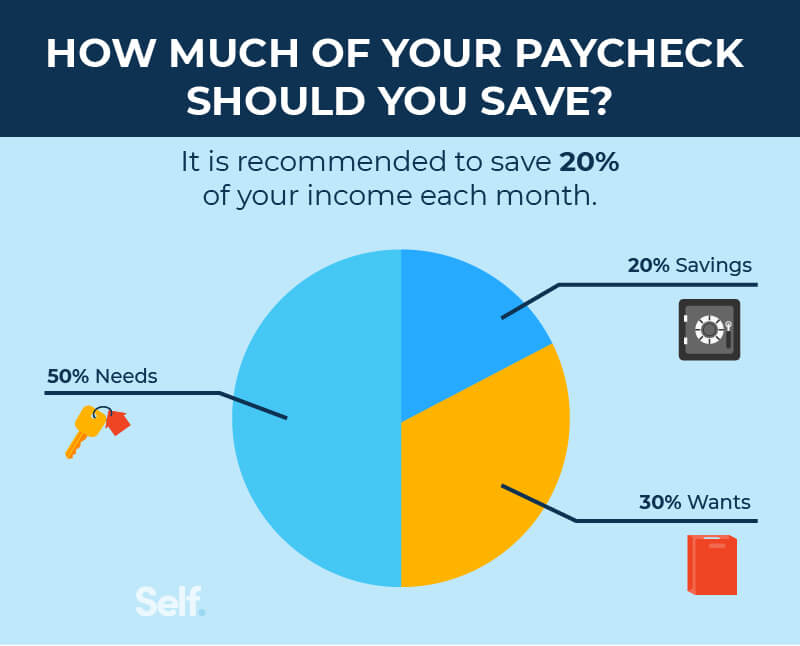
One of the most popular and effective benchmarks for monthly savings is the 50/30/20 rule. Popularized by Senator Elizabeth Warren, this rule suggests a simple split of your after-tax income:
- 50% for Needs: This includes non-negotiable expenses like rent or mortgage, utilities, groceries, insurance, and minimum debt payments.
- 30% for Wants: This covers lifestyle choices, such as dining out, hobbies, streaming subscriptions, and travel.
- 20% for Savings and Debt Repayment: This is the core of your wealth-building strategy.
Under this model, if your take-home pay is $5,000 per month, you should aim to allocate $1,000 toward savings and aggressive debt reduction. While 20% is a gold standard, it is important to remember that this is a target. If you are currently saving 0%, jumping to 5% is a victory. The goal is to trend toward 20% over time as your income grows or your expenses stabilize.
Understanding Your “Why”
Saving without a purpose often leads to “saver’s fatigue.” To maintain a high savings rate, you must categorize your goals. Are you saving for a safety net, a down payment on a home, or early retirement? When your savings have a name and a destination, the psychological friction of not spending that money decreases. This clarity allows you to differentiate between short-term sacrifices and long-term gains.
Prioritizing Your Savings Buckets
Once you have decided on a percentage, the next question is: where does that money go? Financial experts generally agree on a specific hierarchy of savings to ensure maximum security and growth.
The Emergency Fund: Your Financial Shield
The first and most critical destination for your monthly savings is an emergency fund. Life is unpredictable; medical emergencies, car repairs, or sudden job loss can derail even the best-laid financial plans.
Most experts recommend saving three to six months’ worth of essential living expenses. If you are a freelancer or work in a volatile industry, aiming for nine to twelve months may be more appropriate. This fund should be kept in a liquid, low-risk account—such as a High-Yield Savings Account (HYSA)—where it is easily accessible but separate from your daily checking account.
Retirement Planning and Compound Interest
After securing an emergency fund, your focus should shift toward retirement. This is where the power of compound interest becomes your greatest ally. If your employer offers a 401(k) match, your first priority should be contributing enough to capture the full match. This is effectively a 100% return on your investment.
Beyond the match, consider contributing to a Roth IRA or a traditional IRA. The goal for retirement savings is generally 15% of your gross income. Because of the way interest compounds over decades, saving $500 a month in your 20s is often more impactful than saving $1,500 a month in your 40s.
Goal-Oriented Savings (Sinking Funds)
Once the “must-haves” (emergency fund and retirement) are addressed, you can begin saving for “wants.” These are often referred to as “sinking funds.” A sinking fund is a way to save for a specific, known expense in the future, such as a wedding, a new car, or a summer vacation. By breaking these large costs down into monthly increments, you avoid the need to rely on high-interest credit cards when the bill finally comes due.
Factors That Influence Your Monthly Savings Goal

While the 20% rule is a great benchmark, several personal factors will dictate whether you need to save more or can afford to save less.
Cost of Living and Debt-to-Income Ratio
Your geographic location plays a massive role in your ability to save. In high-cost-of-living (HCOL) areas, housing might consume 40% or 50% of your income, making the 50/30/20 rule difficult to follow. In these cases, you may need to be more aggressive in cutting “wants” to protect your savings rate.
Additionally, high-interest debt—specifically credit card debt—should be treated as a “negative saving.” If you are paying 24% interest on a credit card balance, putting money into a savings account earning 4% is mathematically inefficient. In this scenario, your “savings” portion of the budget should be redirected entirely toward debt elimination until the high-interest balances are gone.
Life Stage and Future Milestones
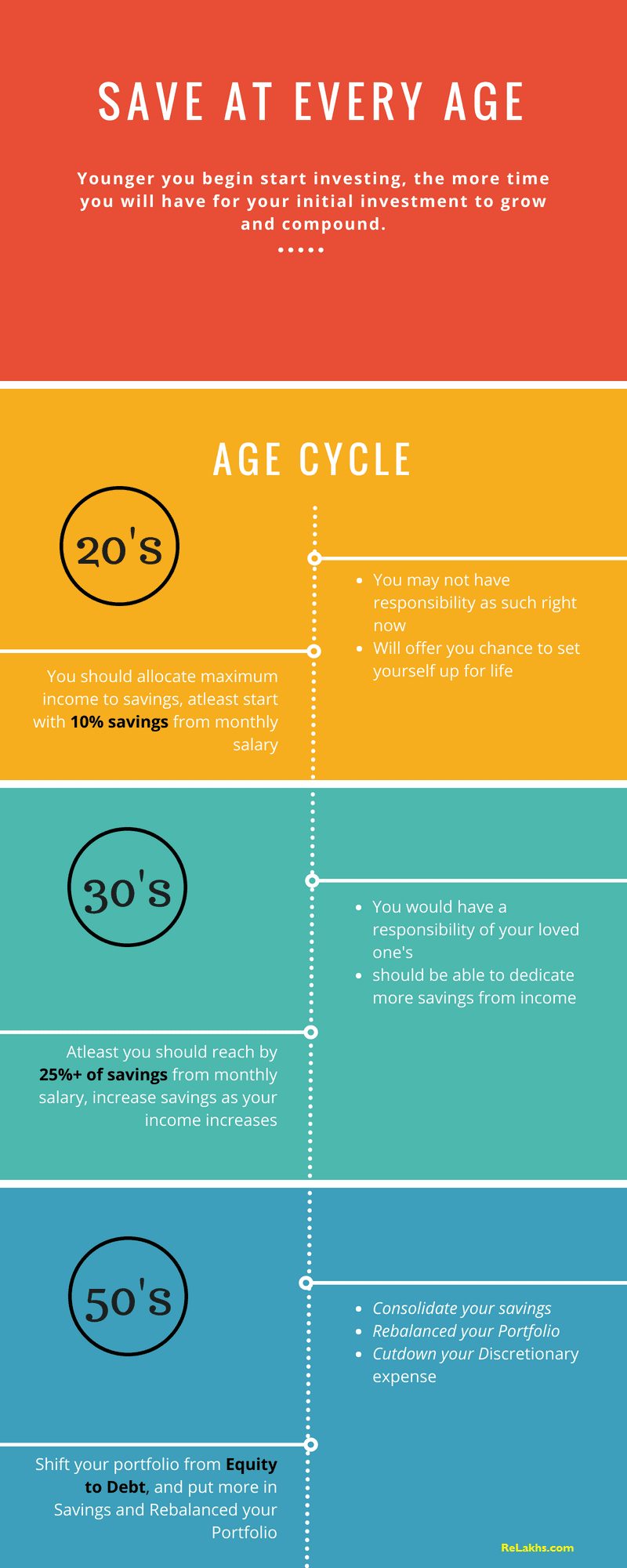
Your savings rate will naturally fluctuate throughout your life. A young professional with few responsibilities may find it easy to save 30% or 40% of their income (often called “aggressive saving” or “FIRE” – Financial Independence, Retire Early). Conversely, a parent balancing childcare costs and a mortgage might find that 10% is all they can manage.
The key is to avoid “lifestyle inflation.” When you receive a raise or a bonus, instead of increasing your spending to match your new income, redirect a significant portion of that increase directly into your savings or investments.
Leveraging Tools and Technology to Automate Growth
In the digital age, manual saving is an unnecessary hurdle. The most successful savers are those who remove human emotion and “willpower” from the equation through automation.
The Power of Automation
The simplest way to ensure you save every month is to automate the process. Most employers allow you to split your direct deposit into multiple accounts. By sending a fixed percentage or dollar amount directly to a savings or brokerage account, you never “see” the money in your checking account, reducing the temptation to spend it. If your employer doesn’t offer this, most banks allow you to set up recurring transfers on payday.
High-Yield Savings Accounts and Financial Tools
In a low-interest environment, traditional brick-and-mortar savings accounts often offer negligible returns. To maximize your monthly savings, utilize High-Yield Savings Accounts (HYSAs) or Money Market Accounts (MMAs). These accounts often provide interest rates significantly higher than the national average, allowing your cash reserves to keep pace with—or even beat—inflation.
Additionally, budgeting apps and financial dashboards can help you track your net worth and savings rate in real-time. Seeing the visual progress of your “wealth bar” growing can provide the positive reinforcement needed to stick to your goals during leaner months.
Navigating Challenges and Staying Consistent
The journey to financial security is rarely a straight line. Economic downturns, health issues, and family emergencies can all impact your ability to save.
Overcoming Lifestyle Inflation
Lifestyle inflation occurs when your expenses rise in tandem with your income. You get a promotion, so you buy a nicer car; you get a bonus, so you upgrade your apartment. While enjoying the fruits of your labor is important, lifestyle inflation is the primary reason many high-earners still live paycheck to paycheck. To combat this, implement a “waiting period” for large purchases and always prioritize your savings percentage over new recurring expenses.
Adjusting Your Strategy During Economic Volatility
When inflation rises or the stock market becomes volatile, it is tempting to stop saving or pull investments. However, history shows that consistent saving through “dollar-cost averaging”—the practice of investing a fixed amount regardless of market conditions—is the most effective way to build long-term wealth. If the cost of living spikes, you may need to temporarily reduce your savings rate, but the goal should always be to keep the habit alive, even if the amount is smaller.
Conclusion
So, how much should you save every month? The answer is: as much as your current situation allows while keeping your 20% long-term goal in sight.
Saving is not merely an act of deprivation; it is an act of self-care for your future self. By establishing a 3-6 month emergency fund, contributing at least 15% to retirement, and using automation to stay consistent, you build a foundation of freedom. Financial peace of mind does not come from the total amount in your bank account, but from the knowledge that you have a plan in place for whatever challenges or opportunities the future may hold. Start where you are, use the tools available to you, and remember that in the world of personal finance, consistency is always more important than perfection.
aViewFromTheCave is a participant in the Amazon Services LLC Associates Program, an affiliate advertising program designed to provide a means for sites to earn advertising fees by advertising and linking to Amazon.com. Amazon, the Amazon logo, AmazonSupply, and the AmazonSupply logo are trademarks of Amazon.com, Inc. or its affiliates. As an Amazon Associate we earn affiliate commissions from qualifying purchases.