
Determining how much of a loan you qualify for is a pivotal first step in any major financial milestone, whether you are eyeing a new home, expanding a business, or consolidating high-interest debt. To a lender, the answer is not a single number but a calculation of risk based on several interlocking financial metrics. While every financial institution uses proprietary algorithms, the underlying principles of borrowing power remain consistent across the industry.
Understanding these variables allows you to view your finances through the lens of a lender, giving you the power to optimize your profile before you ever submit an application.
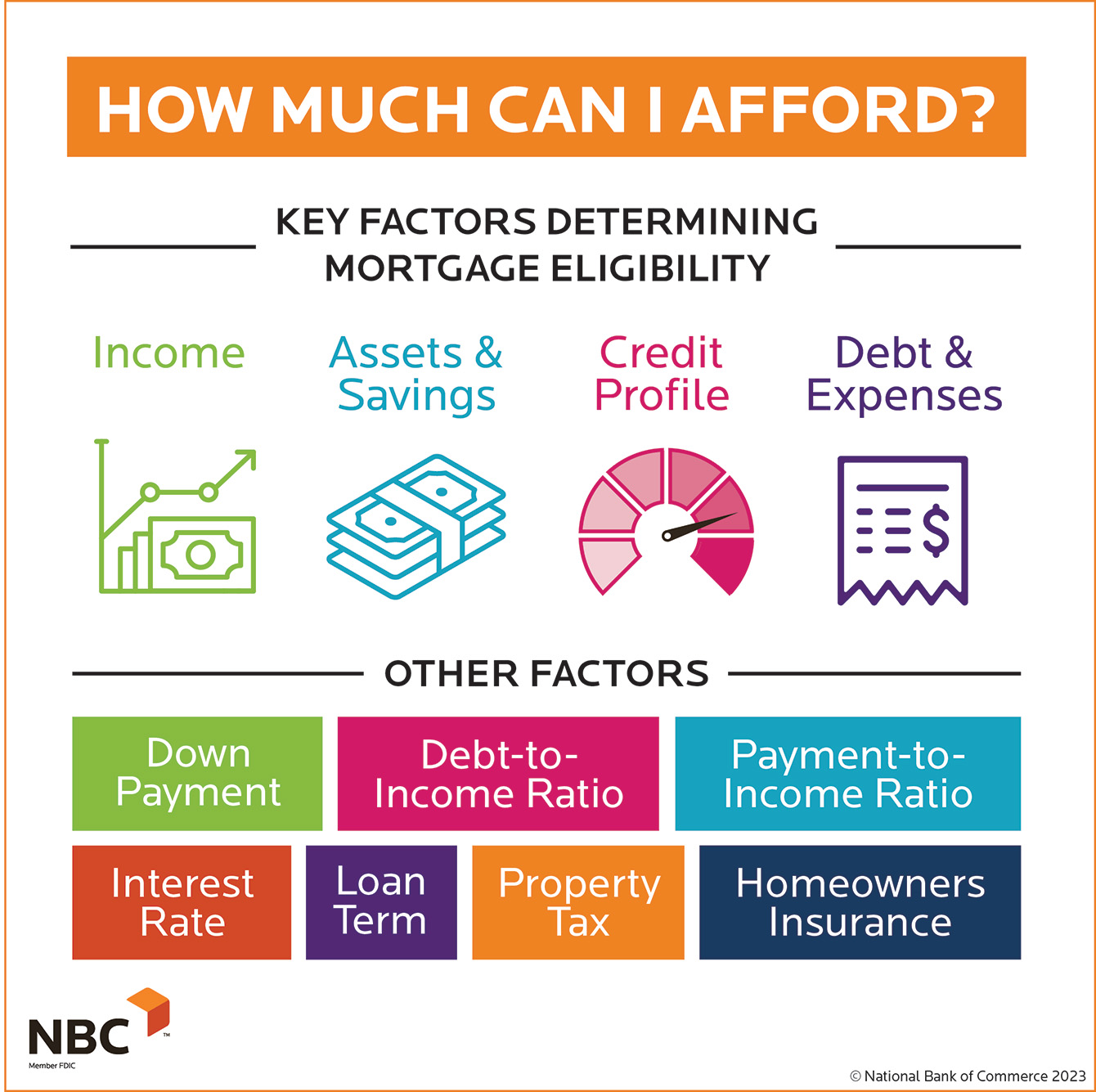
The Core Pillars of Loan Qualification
Lenders evaluate your “repayment capacity” by looking at your financial past, present, and projected future. This evaluation generally rests on three primary pillars: your income, your existing debt obligations, and your history of managing credit.
Debt-to-Income Ratio (DTI)
The Debt-to-Income ratio (DTI) is perhaps the most significant mathematical factor in determining your loan limit. It is a percentage that represents how much of your gross monthly income goes toward paying debts.
Lenders typically look at two types of DTI:
- Front-End Ratio: This is specifically used in mortgage lending and represents the percentage of your income that would go toward your future housing expenses (mortgage principal, interest, taxes, and insurance). Most lenders prefer this to stay below 28%.
- Back-End Ratio: This is the more universal metric. It includes your proposed loan payment plus all other monthly debt obligations, such as car payments, student loans, and credit card minimums. For most conventional loans, a back-end DTI of 36% to 43% is the ceiling. However, some government-backed programs like FHA loans may allow for DTIs as high as 50% in specific circumstances.
To calculate your own DTI, divide your total monthly debt payments by your gross monthly income (before taxes). If the resulting number is high, your qualification limit will naturally be lower, as the lender perceives a higher risk of default if your income were to fluctuate.
Credit Score and History
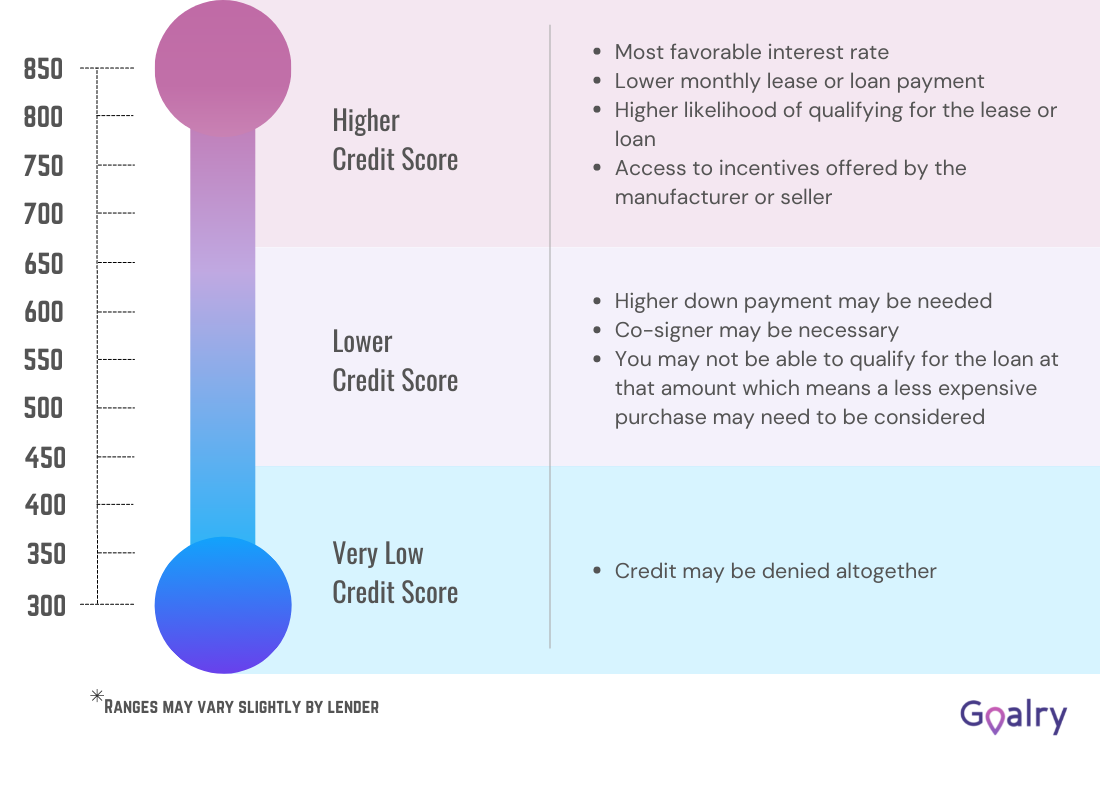
While your income determines the size of the loan you might qualify for, your credit score determines the cost of that loan and whether you qualify at all. A high credit score signals to a lender that you are a disciplined borrower.
In the eyes of a lender, credit scores generally fall into tiers:
- 740–850 (Excellent): You qualify for the highest loan amounts and the lowest interest rates.
- 670–739 (Good): You will likely qualify for most loan products, though you may not get the absolute “teaser” rates.
- 580–669 (Fair): You may face stricter limits on how much you can borrow, and interest rates will be significantly higher to offset the lender’s risk.
- Below 580 (Poor): Qualification becomes difficult for traditional unsecured loans or conventional mortgages, often requiring specialized subprime products or significant collateral.
Employment Stability and Income Consistency
Lenders do not just care about how much you make; they care about how long you have been making it. A “stable” borrower is someone who has been in the same industry or with the same employer for at least two years.
If you are a W-2 employee, verification is straightforward. However, if you are self-employed, a freelancer, or a business owner, lenders will typically average your net income from your last two years of tax returns. This can often result in qualifying for a lower amount than your actual “cash flow” might suggest, as lenders focus on taxable income after business deductions.
Understanding Loan-to-Value (LTV) and Collateral
When applying for a secured loan—such as a mortgage or an auto loan—the asset you are purchasing acts as collateral. This introduces a new variable: the Loan-to-Value (LTV) ratio.
Mortgage LTV vs. Personal Loan Requirements
The LTV ratio is the percentage of the asset’s value that the lender is willing to finance. For a home worth $500,000, an 80% LTV means the lender will provide a $400,000 loan, requiring you to provide the remaining $100,000 as a down payment.
If the appraisal of the asset comes back lower than the purchase price, your loan qualification amount will drop immediately, regardless of your income. Lenders use the “lower of” the purchase price or the appraised value to determine the maximum loan amount.
The Impact of Down Payments
A larger down payment does more than just lower your monthly payment; it reduces the lender’s risk. By putting more “skin in the game,” you may find that lenders are willing to be more flexible with other qualification metrics, such as a slightly higher DTI or a marginally lower credit score. Furthermore, in the mortgage world, reaching an LTV of 80% or lower allows you to avoid Private Mortgage Insurance (PMI), which increases your overall borrowing power by removing a non-principal expense from your monthly budget.
Type-Specific Qualification Requirements
Different loan products have different “math” behind their qualification limits. Understanding which product you are applying for is essential to estimating your borrowing capacity.
Mortgage Loans (Conventional, FHA, VA)
Mortgage qualification is the most rigorous. Conventional loans usually require a higher credit score (620+) and a lower DTI. FHA loans, backed by the Federal Housing Administration, are more lenient, allowing for lower credit scores and higher DTIs, though they come with mandatory mortgage insurance premiums. VA loans, available to veterans and service members, are unique because they often allow for 100% financing (0% down) and use a “residual income” calculation—looking at how much money you have left over after all bills—rather than just a strict DTI percentage.
Personal Loans and Unsecured Debt
Personal loans are generally unsecured, meaning there is no collateral. Because of this, lenders rely almost exclusively on your credit score and DTI. Qualification amounts for personal loans usually cap out around $50,000 to $100,000, depending on the institution. For these loans, your “utilization ratio” on existing credit cards is a major factor; if you are already using 90% of your available credit, a lender is unlikely to extend a large personal loan, fearing you are “credit hungry.”
Business Loans and Cash Flow Analysis
Business loan qualification shifts the focus from personal income to business revenue. Lenders look at the Debt Service Coverage Ratio (DSCR), which compares the business’s annual net operating income to its total annual debt service. A DSCR of 1.25 is a common benchmark, meaning the business generates $1.25 in income for every $1.00 of debt payment. If you are applying for a business loan, your personal credit score still matters (especially for small businesses), but the “loan amount” is dictated by the proven cash flow of the entity.
Advanced Strategies to Increase Your Borrowing Capacity
If you find that you do not currently qualify for the amount you need, there are strategic steps you can take to move the needle.
Strategic Debt Paydown
Since DTI is a ratio, you can improve it by either increasing the numerator (income) or decreasing the denominator (debt). Paying off a small car loan or a few credit cards can disproportionately increase your loan qualification. For example, eliminating a $400 monthly car payment could, in some interest rate environments, increase your mortgage qualification by $50,000 or more.
Optimizing Your Credit Utilization
Your credit score can fluctuate based on how much of your credit limits you are using. To maximize your score before a loan application, aim to keep your utilization below 10% on every individual card. This might involve making a mid-cycle payment to ensure that when the credit bureau “snaps” a picture of your account, the balance appears low.
Including Non-Traditional Income Sources
Many borrowers leave money on the table by not reporting all legal forms of income. This can include:
- Consistent overtime or bonuses (usually averaged over two years).
- Alimony or child support payments.
- Rental income from other properties.
- Dividend income or interest from investments.
- Social Security or pension distributions.
Ensuring these are documented and presented to the lender can provide the extra cushion needed to qualify for a higher tier.
Avoiding Over-Leveraging: How Much Should You Actually Borrow?
There is a significant difference between what a bank says you can borrow and what you should borrow. Qualification is a measure of maximum capacity, not a recommendation for financial health.
The Difference Between Qualification and Affordability
Lenders base their calculations on gross income, but you live your life on net (after-tax) income. Furthermore, lenders do not account for your specific lifestyle costs—such as childcare, private school tuition, travel, or hobbies. A “qualified” loan amount may leave you “house poor,” where so much of your income goes toward debt service that you are unable to save for retirement or emergencies.
A wise approach is to create a “reverse budget.” Determine what monthly payment you are comfortable with based on your actual spending habits, and then work backward to find the loan amount that fits that payment.

Factoring in Future Interest Rates and Economic Shifts
If you are looking at variable-rate loans (like a HELOC or an ARM), your qualification is based on today’s rates. However, your future affordability depends on where those rates go. Always stress-test your own finances by asking: “If my interest rate rose by 2%, could I still make this payment?”
By combining the mathematical reality of lender requirements with a sober assessment of your personal financial goals, you can navigate the borrowing process with confidence, ensuring that the loan you qualify for is a tool for growth rather than a source of stress.
aViewFromTheCave is a participant in the Amazon Services LLC Associates Program, an affiliate advertising program designed to provide a means for sites to earn advertising fees by advertising and linking to Amazon.com. Amazon, the Amazon logo, AmazonSupply, and the AmazonSupply logo are trademarks of Amazon.com, Inc. or its affiliates. As an Amazon Associate we earn affiliate commissions from qualifying purchases.