
Retirement is no longer a specific age; it is a financial state. For decades, the conventional wisdom suggested that turning 65 was the universal signal to exit the workforce. However, in today’s volatile economic landscape, retirement has evolved into a mathematical milestone. The question “How much money will I have?” is often followed by the more critical inquiry: “Will it be enough?”
Predicting your retirement balance requires a blend of historical market data, disciplined saving habits, and an understanding of the variables that remain within your control. This guide explores the mechanics of wealth accumulation, the impact of external economic forces, and the strategies you can employ to ensure your golden years are financially secure.
The Foundation of Retirement Projections: Understanding Your “Number”
Before you can determine how much you will have, you must first calculate how much you need. Financial planners often refer to this as your “Retirement Number.” This figure is not arbitrary; it is a reflection of your anticipated lifestyle, longevity, and spending habits.
The 4% Rule and the Replacement Ratio
A common benchmark in personal finance is the “Replacement Ratio.” Most experts suggest that you will need approximately 70% to 85% of your pre-retirement annual income to maintain your current standard of living. This accounts for the disappearance of work-related expenses (like commuting and professional wardrobes) and the cessation of retirement savings contributions themselves.
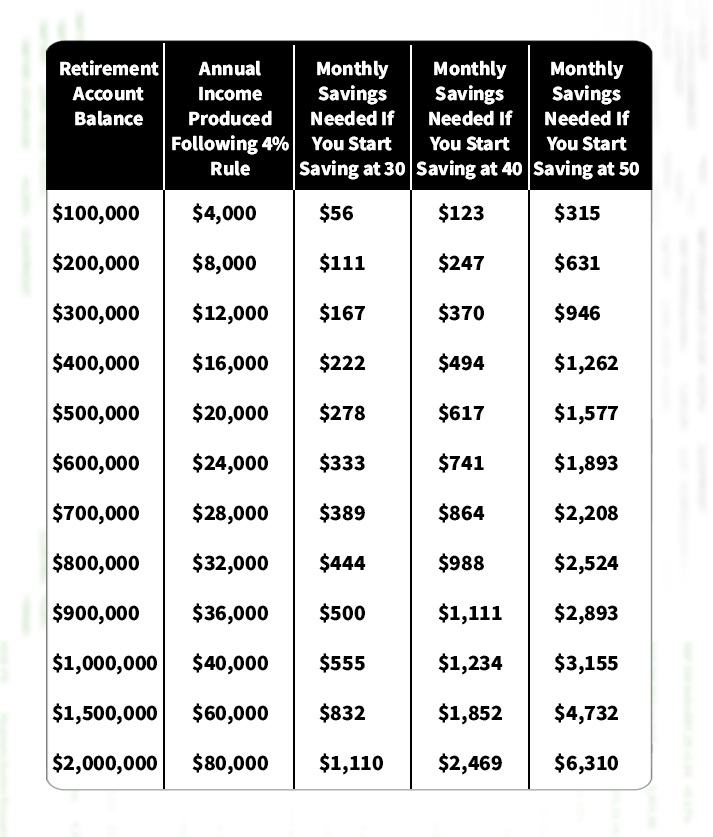
To turn this annual need into a lump sum, many utilize the “4% Rule.” This rule suggests that if you withdraw 4% of your total portfolio in the first year of retirement and adjust that amount for inflation every year thereafter, your money has a high probability of lasting 30 years. Consequently, if you need $80,000 per year, your target nest egg would be roughly $2 million.
Factoring in Lifestyle Expectations and Healthcare
Not all retirements are created equal. A retiree planning to travel internationally three times a year will require a significantly different portfolio than one planning to volunteer locally and spend time with grandchildren. Furthermore, healthcare remains the largest “X-factor.” According to recent data, a healthy 65-year-old couple may need over $300,000 just to cover out-of-pocket medical expenses throughout retirement. When projecting your future balance, you must account for these non-negotiable costs.
Key Factors Influencing Your Final Portfolio Balance
Your final retirement balance is the result of a long-term equation involving time, contribution rates, and the rate of return. While you cannot control the stock market, you can control the other variables.
The Power of Compound Interest and Time
The most potent tool in your financial arsenal is time. Compound interest is the process where your earnings earn earnings. For example, a 25-year-old who invests $500 a month until age 65 (assuming a 7% annual return) will end up with approximately $1.2 million. If that same individual waits until age 35 to start, their total at 65 drops to roughly $560,000—less than half, despite only missing ten years of contributions. The earlier you begin, the less heavy lifting your capital has to do.
Maximizing Contribution Limits and Employer Matching
To maximize what you will have, you must take full advantage of tax-advantaged accounts. For many, the 401(k) or 403(b) is the primary vehicle. If your employer offers a “match,” this is essentially a 100% return on your investment before market fluctuations are even considered. Failing to contribute enough to receive the full match is equivalent to leaving a portion of your salary on the table. Additionally, utilizing Individual Retirement Accounts (IRAs) allows for further growth, with total contribution limits increasing periodically to account for inflation.
The Impact of Inflation and Purchasing Power
A million dollars today will not buy a million dollars’ worth of goods in thirty years. Inflation is the “silent thief” of retirement planning. Historically, inflation averages around 2% to 3% per year. This means that while your account balance might look large on paper, its actual purchasing power may be diminished. When calculating how much you will have, it is vital to use “real” rates of return (market return minus inflation) to get an accurate picture of your future standard of living.
Strategic Investment Vehicles for Wealth Accumulation
Where you put your money is just as important as how much you put away. The “location” of your assets determines how much you eventually keep after the government takes its share.
Tax-Advantaged Growth: Roth vs. Traditional
When projecting your future wealth, you must distinguish between your “gross” balance and your “net” balance. In a Traditional 401(k) or IRA, contributions are tax-deductible now, but withdrawals in retirement are taxed as ordinary income. If you have $1 million in a Traditional account, you may only “own” $750,000 of it after taxes.
Conversely, a Roth IRA or Roth 401(k) uses after-tax dollars today in exchange for tax-free withdrawals later. A $1 million Roth account is worth exactly $1 million to you. Diversifying your “tax buckets” allows you to manage your tax bracket effectively during your retirement years.
Asset Allocation and Risk Management
How much you will have depends heavily on your asset allocation—the mix of stocks, bonds, and cash in your portfolio. Stocks offer higher growth potential but come with higher volatility. Bonds provide stability and income but often fail to outpace inflation significantly over the long term.
As you approach retirement, your strategy should shift from “wealth accumulation” to “wealth preservation.” This typically involves a “glide path,” where your portfolio becomes more conservative as your retirement date nears. However, being too conservative too early can result in a shortfall, as you need your money to continue growing even after you stop working.
Estimating Secondary Income Streams and Social Security
Your personal savings are only one piece of the puzzle. Most retirees will have additional layers of income that reduce the pressure on their investment portfolios.
The Role of Social Security Benefits
While there is often debate about the long-term solvency of Social Security, it remains a cornerstone of American retirement. The amount you receive depends on your highest 35 years of earnings and, crucially, the age at which you claim benefits.
Claiming at 62 results in a permanent reduction in monthly payments, while delaying until 70 maximizes your monthly check. When estimating your future finances, use the Social Security Administration’s online tools to get a personalized estimate based on your actual earnings history.
Passive Income, Pensions, and Side Hustles
The modern retiree is increasingly likely to have “hybrid” income. This might include:
- Real Estate: Rental properties can provide a steady, inflation-adjusted cash flow.
- Dividends: A portfolio of high-quality dividend-paying stocks can offer a “paycheck” without requiring you to sell off shares.
- The “Gig” Economy: Many retirees choose to work part-time or consult in their former fields. This “Barista FIRE” approach allows your main nest egg to remain untouched for several more years, significantly increasing its longevity.
Closing the Gap: Actionable Steps to Increase Your Nest Egg
If your current projections show a shortfall, there are several levers you can pull to change the trajectory of your retirement balance.
Catch-Up Contributions and Expense Auditing
For those over age 50, the IRS allows “catch-up contributions” to 401(k)s and IRAs. This allows you to shield more income from taxes and accelerate your savings in the final decade of your career. Simultaneously, auditing your current expenses can reveal “leaks” in your budget. Redirecting even $200 a month from discretionary spending into a low-cost index fund can result in a six-figure difference over twenty years.
Regular Portfolio Audits and Rebalancing
The market is dynamic. Over time, a portfolio that started as 70% stocks and 30% bonds may shift to 85% stocks due to a bull market. This exposes you to more risk than intended. Regular rebalancing—selling high and buying low—ensures that you stay on track with your risk tolerance. Furthermore, paying attention to investment fees (expense ratios) is crucial. A 1% fee might seem small, but over 30 years, it can strip away hundreds of thousands of dollars from your final balance.
Final Thoughts on Your Retirement Journey
Ultimately, the amount of money you will have in retirement is a reflection of the decisions you make today. While you cannot predict the exact movements of the stock market or the future of tax policy, you can control your savings rate, your asset allocation, and your retirement timeline.
Retirement planning is not a “set it and forget it” activity. It requires periodic adjustments as your life circumstances change. By staying informed, remaining disciplined in your contributions, and understanding the mechanics of compound growth, you can move toward your retirement date with the confidence that your financial resources will support the lifestyle you’ve envisioned. The best time to start optimizing your retirement balance was ten years ago; the second best time is today.
aViewFromTheCave is a participant in the Amazon Services LLC Associates Program, an affiliate advertising program designed to provide a means for sites to earn advertising fees by advertising and linking to Amazon.com. Amazon, the Amazon logo, AmazonSupply, and the AmazonSupply logo are trademarks of Amazon.com, Inc. or its affiliates. As an Amazon Associate we earn affiliate commissions from qualifying purchases.